
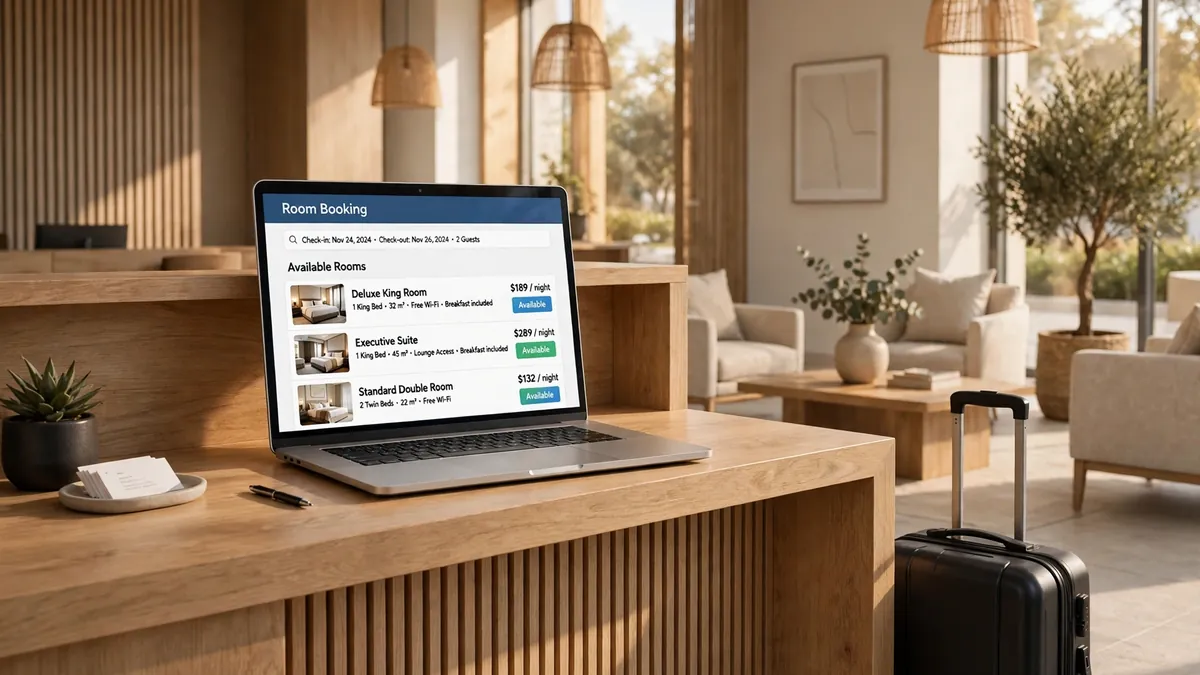
Best booking software for hotels in 2027 does far more than put a booking form on a website. The right system takes a reservation, updates availability everywhere at once, collects payment, sends confirmation messages and keeps the front desk, housekeeping and revenue picture in step. For a small guesthouse, that means no more double bookings from a phone call and a website order arriving at the same time. For a hotel with fifty rooms or more, it means rates and availability change once and appear correctly on the hotel website, on booking channels and at reception.
The best booking software for hotels earns its place by removing the manual work that causes mistakes. Guests expect to see live availability, choose a room type, add breakfast or an early check-in and pay securely without waiting for an email reply. Staff expect a clear calendar, a simple way to move a booking, and reports that show occupancy, average rate and cancellations without exporting data to a spreadsheet. The platforms in this guide were chosen for that everyday usefulness, for channel management, payment handling and ease of use, not for a long feature list that nobody opens during a busy check-in.
This shortlist covers eight platforms, from simple booking engines for independent hotels and bed and breakfasts to full property management systems for larger hotels and groups. Prices change often, so treat every starting price here as a guide and check current pricing before you sign a contract. What does not change is the test that matters: can your team take a booking, change it, charge for it and welcome the guest without double entry or confusion?
Key takeaways
- Cloudbeds is the best overall choice for most independent hotels, with a booking engine, channel manager and property management system in one place.
- Little Hotelier is the best value option for small hotels, guesthouses and bed and breakfasts that need a simple, affordable setup.
- Mews is the best choice for modern, design-led hotels that want automation, contactless check-in and a cloud-first front desk.
- Check the commission, channel fees and payment fees before you commit, because the headline monthly price is rarely the full cost.
- Avoid a system that cannot update availability in real time across your website and booking channels, because that gap causes overbookings.
At a glance: the shortlist
| Product | Best for | Starting price | Standout limit |
|---|---|---|---|
| Cloudbeds | Most independent hotels | Check current pricing | Some advanced tools need higher plans |
| SiteMinder | Channel distribution | From about $85 per month | Full property tools cost extra |
| Mews | Modern and boutique hotels | Check current pricing | Best with a modern tech setup |
| Little Hotelier | Small hotels and guesthouses | From about $109 per month | Suits smaller room counts |
| Hotelogix | Budget and mid-range hotels | From about $65 per month | Design feels dated in places |
| RoomRaccoon | Independent hotels in Europe | Check current pricing | Smaller channel list than rivals |
| eZee Absolute | Hotels wanting a full suite | Check current pricing | Setup takes longer |
| Beds24 | Small properties and apartments | From about $19 per month | Fewer built-in guest tools |
Cloudbeds — Best overall
Cloudbeds is a cloud platform that combines a booking engine, a channel manager and a property management system. A hotel can take direct bookings on its own website, list rooms on major booking channels, manage reservations, housekeeping and payments from one dashboard.
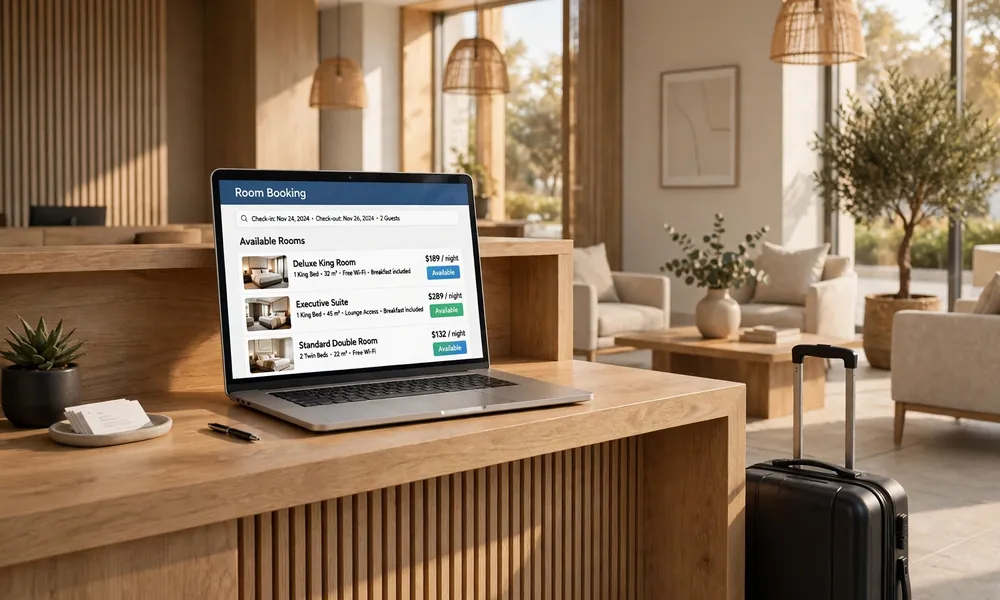
The booking engine is clean and mobile friendly, which matters because a large share of hotel bookings now start on a phone. Guests can see room types, photos, rates, cancellation terms and extras without leaving the hotel website. The channel manager updates availability and rates across connected channels when a booking is made, which reduces the risk of selling the same room twice. Payment tools support deposits, full payment and secure card handling, and the system can send automatic confirmation and pre-arrival messages.
Cloudbeds also includes reporting on occupancy, revenue, booking sources and lead time, so a hotel can see which channels bring the most profitable bookings and which room types sell first. For a hotel that wants one system to run bookings from website to checkout, it is a strong starting point. A hotel that also runs a restaurant will find useful context in our guide to the best restaurant management software, which covers systems that handle tables, orders and kitchen work alongside guest service.
Pros: Booking engine, channel manager and property system in one platform; strong channel coverage; clear reporting; mobile-friendly direct booking.
Cons: Pricing is quoted rather than listed in full; some advanced features need higher plans; larger hotels may need extra training time.
SiteMinder — Best for channel distribution
SiteMinder is best known for its channel manager, which connects a hotel to hundreds of booking channels and travel sites. Its strength is distribution: a hotel sets rates and availability once, and SiteMinder pushes the update to connected channels and pulls reservations back into one place. For hotels that depend on online travel agencies for a large share of bookings, that reach and reliability matter more than any single extra feature.
The booking engine supports rate plans, promotions, extras and secure payments, and it is designed to encourage direct bookings that avoid agency commission. The interface is straightforward, and the channel connections are the part most users praise, because a missed update on one channel is exactly how an overbooking happens.
SiteMinder suits hotels that already have a front desk system they like but need better distribution, as well as hotels that want to grow direct bookings step by step. Hotels should also check which channels are included in their plan, because the full list is not always part of the entry price.
Pros: Very wide channel coverage; reliable real-time updates; strong direct booking engine; useful for hotels that rely on online travel agencies.
Cons: Full property tools cost extra; entry price covers distribution first; some features need a higher plan.
Mews — Best for modern and boutique hotels
Mews is a cloud property management system built for modern hotels, hostels, serviced apartments and boutique properties. It is designed around automation and a guest journey that can run with little paper and little queuing at reception. Guests can check in online, receive a digital key where supported, pay in advance and message the hotel, while staff work from a timeline view that shows arrivals, departures, housekeeping and payments in one place.
The booking engine is clean and fast, and it supports rate plans, packages, upsells and flexible cancellation rules. Mews connects to a large marketplace of integrations, covering channel managers, payment providers, revenue tools, guest messaging and housekeeping apps, so a hotel can build a modern stack around it.
Mews suits design-led and city hotels, aparthotels and properties that want contactless check-in and automated messaging. Pricing is quoted, so a hotel should ask for a full quote that includes payments, messaging and any marketplace apps it plans to use.
Pros: Modern cloud design; strong automation and online check-in; wide integration marketplace; clear timeline view for staff.
Cons: Pricing is quoted, not listed; best for hotels that embrace automation; small properties may find it more than they need.
Little Hotelier — Best for small hotels and guesthouses
Little Hotelier is made for small hotels, guesthouses, inns and bed and breakfasts, typically with up to a few dozen rooms. It combines a booking engine, a channel manager and a simple front desk system in one affordable package. The aim is to give a small property the same core tools as a larger hotel without a long setup, a consultant visit or a monthly bill that only makes sense at scale.
The booking engine lets guests book direct from the hotel website, with room photos, rates, extras and secure payment. The channel manager keeps availability in step across connected booking sites, and the front desk calendar shows arrivals, departures and housekeeping in a single view.
Little Hotelier is easy to learn, and its support is used to helping owners who are not technology specialists. For a small independent property that wants direct bookings, fewer overbookings and less admin, it is one of the best value choices in this guide.
Pros: Affordable for small properties; simple setup; booking engine, channel manager and front desk in one place; good support for non-technical owners.
Cons: Suits smaller room counts; fewer advanced revenue tools; less suited to large hotels or groups.
Hotelogix — Best for budget and mid-range hotels
Hotelogix is a cloud property management system aimed at budget, mid-range and independent hotels, including small groups. It covers reservations, front desk work, housekeeping, billing, channel management and a booking engine, so a hotel can run daily operations from one login. Its price point is one of the reasons it appears on so many shortlists for independent hotels that need a full system without enterprise cost.
The front desk view is practical rather than flashy: reservations, room status, guest folios, payments and reports are easy to find, and staff can move a booking, split a bill or add a charge without leaving the reservation. The booking engine supports direct bookings, promotions and extras, and the channel manager updates connected booking sites when availability changes.
The trade-off is polish. Some screens feel dated next to newer systems such as Mews, and some integrations are narrower. Hotels with very specific integration needs should check the integration list before committing, and confirm which features are included in the plan they are quoted.
Pros: Affordable full property system; covers front desk, housekeeping and billing; channel manager included; useful mobile app for managers.
Cons: Interface feels dated in places; narrower integration list than some rivals; advanced tools may need a higher plan.
RoomRaccoon — Best for independent hotels in Europe
RoomRaccoon is a hotel management system built for independent hotels, bed and breakfasts and boutique properties, with a strong base in Europe. It combines a booking engine, channel manager and property management system, and it adds revenue tools that help small hotels price rooms more actively. That combination suits owners who want to raise direct bookings and improve average rate without hiring a revenue manager.
The booking engine is designed to convert: it shows room types, rates, availability and extras clearly, and it supports packages, promotions and secure payments. The channel manager keeps connected booking sites in step, and the front desk calendar covers reservations, housekeeping and guest notes.
RoomRaccoon works well for independent hotels that want a modern system with revenue features included rather than added later. Pricing is quoted, so owners should ask for the full monthly cost, including any payment or channel fees, before comparing it with a fixed-price rival.
Pros: Booking engine, channel manager and property system in one place; useful revenue and upsell tools; good for independent and boutique hotels; clear guest messaging.
Cons: Smaller channel list than the largest rivals; pricing is quoted; best suited to independent properties rather than large groups.
eZee Absolute — Best for hotels wanting a full suite
eZee Absolute is a full hotel management suite from eZee Technosys, covering the property management system, booking engine, channel manager, restaurant point of sale and guest feedback tools. It suits hotels that want one supplier for most of their front-of-house and back-of-house software, rather than buying a booking engine from one company and a restaurant system from another.
The property system handles reservations, check-in, housekeeping, billing and reporting, and the booking engine supports direct bookings with rates, packages and extras. The channel manager connects to major booking sites, and the wider eZee suite can add a website, a restaurant system and review management.
The trade-off is setup time. A full suite takes longer to configure than a simple booking engine, and staff training matters more when the system covers so many jobs. eZee Absolute suits mid-range hotels, resorts and small groups that will use the breadth of the suite. A very small guesthouse that only needs a booking engine and a calendar may find a simpler tool faster to launch.
Pros: Full suite covering property, booking, channels and restaurant tools; good for hotels that want one supplier; strong folio and billing handling.
Cons: Setup takes longer than a simple booking engine; pricing is quoted; more system than a very small property needs.
Beds24 — Best for small properties and apartments
Beds24 is a channel manager and booking system aimed at small properties, apartments, holiday rentals, hostels and small hotels. Its appeal is price and flexibility: from about $19 per month, a small property can connect to booking channels, take direct bookings and manage availability from one calendar. For an owner with a handful of rooms or apartments, that low entry cost is a real advantage.
The system covers channel management, a booking engine, a booking page, payment links and basic property management, with integrations for payment providers and other tools. The calendar view makes it easy to see which units are booked, which are free and where a gap needs filling.
Beds24 is less suited to a larger hotel that needs full housekeeping workflows, detailed guest folios or deep reporting. Its strength is for small properties that need reliable distribution and direct bookings without a large monthly bill. Owners should check which channels and features are included at their price tier, because the entry plan covers the essentials and higher tiers add more connections and tools.
Pros: Very affordable starting price; good for apartments, rentals and small hotels; flexible rates, minimum stays and extras; reliable channel updates.
Cons: Fewer built-in guest and housekeeping tools than full property systems; interface is practical rather than modern; larger hotels will outgrow it.
How to choose
Start with your room count and your booking mix. A guesthouse with ten rooms that takes most bookings direct needs a simple booking engine and a channel manager, not a full enterprise system. A hotel with eighty rooms that sells through many booking channels needs reliable real-time updates, strong reporting and a front desk system that can handle group bookings, split bills and housekeeping. Write down where your bookings come from today, and choose a system that is strong on those channels first.
Next, check the full cost, not just the monthly subscription. Ask about channel fees, payment processing fees, commission on direct bookings, setup fees and the cost of extra users or properties. A system that looks cheap at $65 per month can cost far more once payment and channel fees are added, while a quoted system may include more than it first appears. Ask for a written quote that lists every fee, and compare systems on total cost for your actual booking volume.
Then test the booking journey as a guest would. Open the booking engine on a phone, try to book a room for two nights, add breakfast, change the dates and cancel under the stated terms. If that journey is slow, confusing or broken on mobile, guests will leave and book elsewhere. Also test the staff side: move a booking, add a charge, check a guest in and mark a room clean. If staff need a manual to do those everyday jobs, the system will slow the front desk down rather than speed it up.
Finally, check integrations and support before you sign. Clear calendars matter in every booking, as our guide to the best meeting scheduling software shows. Confirm that the system connects to your accounting tool, your payment provider and any revenue or guest messaging tool you already use. Ask how support works, what hours it covers and whether help is available by phone during check-in hours, not only by email. Take the free trial or demo with real data, including your actual room types and rates, so you can see whether the system fits your hotel rather than a demo hotel.
Checklist: before you pay
- Take a free trial or demo using your real room types, rates and cancellation terms.
- Confirm real-time availability updates across your website and every booking channel you use.
- Get a written quote listing the subscription, channel fees, payment fees and any setup cost.
- Test the full guest booking journey on a phone, including payment, extras and cancellation.
- Check that you can export your bookings, guest data and reports if you leave.
- Confirm support hours, response times and whether help is available during check-in.
Frequently asked questions
What is hotel booking software?
Hotel booking software is a system that lets guests check availability, choose a room and pay online, while keeping the hotel calendar, rates and booking channels in step. Most systems in this guide combine a booking engine for the hotel website, a channel manager for booking sites and a property management system for front desk work.
How much does hotel booking software cost?
Prices range from about $19 per month for a small channel manager such as Beds24 to several hundred dollars per month, or a quoted price, for a full property system. The total cost also includes payment processing and sometimes channel fees, so ask for a full quote and check current pricing before you commit.
Do I need a channel manager as well as a booking engine?
Yes, if you list rooms on booking sites as well as your own website. A booking engine takes direct bookings, while a channel manager updates availability and rates across booking sites in real time. Without that link, the same room can be sold twice. Many systems in this guide include both.
Can hotel booking software stop double bookings?
It can greatly reduce them, but only if availability updates in real time across every channel. A booking made on one site must immediately close that room on the others. When you test a system, make a test booking and check that the room disappears from the other channels straight away.
Which booking software is best for a small hotel?
Little Hotelier and Beds24 are strong choices for small hotels, guesthouses and apartments, because they are affordable and simple to set up. Cloudbeds is a good step up when a small hotel wants a fuller system with stronger reporting and more channels. The right choice depends on room count, booking mix and budget.
Is it better to take bookings direct or through booking sites?
Direct bookings usually cost less, because the hotel avoids agency commission, and they give the hotel the guest relationship. Booking sites still bring guests who would not find the hotel otherwise, so most hotels use both. Guests also need reliable internet when they travel, and our guide to the best VPN services for hotel WiFi explains how hotels and guests think about secure connections on hotel networks. The best mix is enough direct bookings to keep costs down, with booking sites filling the rooms that direct traffic does not reach.
The bottom line
For most independent hotels, Cloudbeds is the safest first choice, because it covers direct booking, channel management and front desk work in one system. Little Hotelier is the best value pick for a small hotel or guesthouse, Mews is the best pick for a modern boutique hotel that wants automation, and SiteMinder is the best pick when distribution across booking channels is the top priority. Beds24 is the cheapest way for a very small property to get reliable channel management.
Whatever you choose, test it with real rooms, real rates and a real guest booking on a phone before you pay. The system that wins is the one your guests can book on without friction and your staff can run without double entry, because that is what turns a booking into a smooth stay and a returning guest.



