Artificial intelligence is offering new hope for stroke patients in Alaska, according to reporting by STAT, and the story matters far beyond one state. Where the nearest specialist can be hundreds of miles away by air, the time between a stroke and treatment has always been the hardest problem in medicine to solve. AI tools that read brain scans in minutes, flag the most dangerous blockages, and connect small hospitals with distant specialists are now closing that gap.
The promise is not that software replaces doctors. It is that software shortens the deadliest part of stroke care: the wait. Every minute a stroke goes untreated, roughly two million brain cells die, and the best treatments only work inside a narrow window of a few hours. In a small Alaskan hospital, a scan read in five minutes rather than fifty can be the difference between walking out of hospital and living with a permanent disability.
That is why the Alaska story has drawn attention from clinicians well outside the state. If AI-assisted stroke care can work in the most geographically difficult part of the United States, it can work almost anywhere. Remote communities and rural hospitals face the same basic problem Alaska does, even if the distances are shorter: too few specialists, too much distance, and too little time.
Key takeaways
- STAT reported that artificial intelligence is offering new hope for stroke patients in Alaska, where distance and specialist shortages make fast stroke care especially difficult.
- AI tools can analyse brain scans in minutes, flag large vessel blockages, and alert stroke specialists far away, cutting the time between arrival and treatment.
- The core benefit is speed and reach: the same scan can be reviewed by software and a remote specialist at the same time, even in a small hospital.
- AI does not diagnose or treat on its own; a clinician still makes the final decision, and the software works as an early-warning system.
- What is not yet confirmed in the available reporting is which specific hospitals and software vendors are involved in Alaska, or how many patients have been treated this way so far.
What STAT reported about AI and stroke care in Alaska
STAT reported that artificial intelligence is bringing new hope to stroke patients in Alaska, a state often called the Last Frontier because of its size, remoteness, and the difficulty of moving patients quickly to specialist care. The reporting describes a setting where geography itself is a medical risk factor: communities separated by mountains, water, and weather, far from any hospital with a stroke specialist on site.
In that setting, the standard stroke pathway breaks down at the first step. A patient at a small community hospital needs a brain scan, and that scan needs to be read by someone who can tell, quickly, whether a clot is blocking a major artery. In a large city hospital, a neuroradiologist may be down the corridor. In Alaska, that expertise may be in another city entirely, and the weather may decide whether a patient can be flown out at all.
The hope described in the reporting is therefore specific, not general. It is not that AI will cure strokes or replace stroke units. It is that AI can compress the most dangerous delay in stroke care, the delay between the scan and the decision, in exactly the places where that delay is longest. Our report on the best AI tools for medical diagnosis explains how this class of software is used across different conditions, and stroke is one of the clearest cases for it.
How AI-assisted stroke care actually works
The workflow begins as stroke care always has: a patient arrives with symptoms such as sudden weakness on one side, slurred speech, or a drooping face, and the emergency team orders a CT scan of the brain. What changes is what happens next. AI software trained on large numbers of brain scans examines the images for signs of a blocked artery or bleeding, and produces a result in minutes.
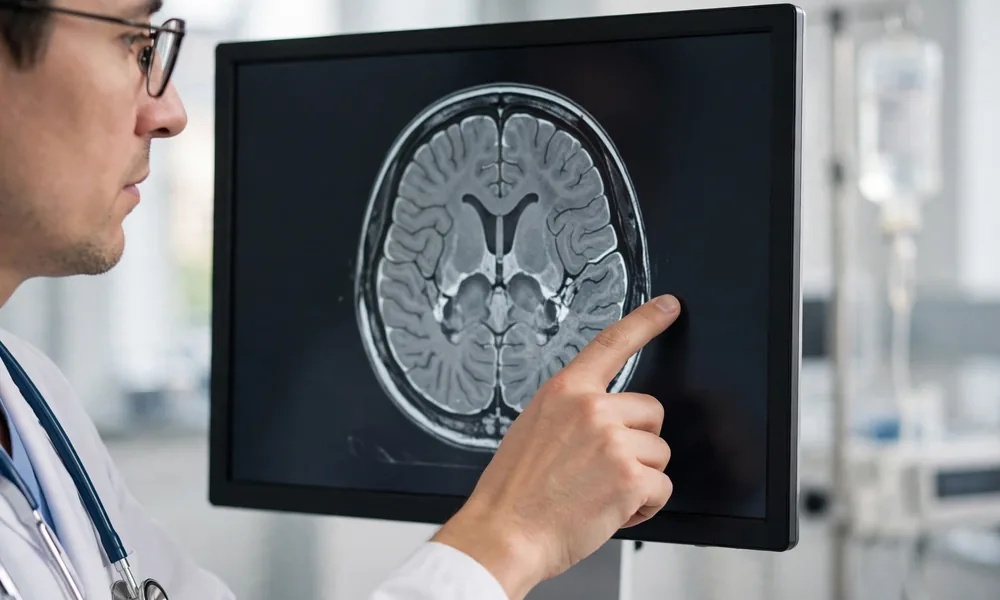
That speed matters because the two main stroke treatments are both time-sensitive. Clot-busting drugs work best within a few hours of symptoms starting, and mechanical thrombectomy, in which a specialist threads a device through an artery to remove the clot, also depends on reaching the patient before too much brain tissue is lost. The software performs neither treatment. Its job is to make sure the right people know, as early as possible, that the patient may need one of them.
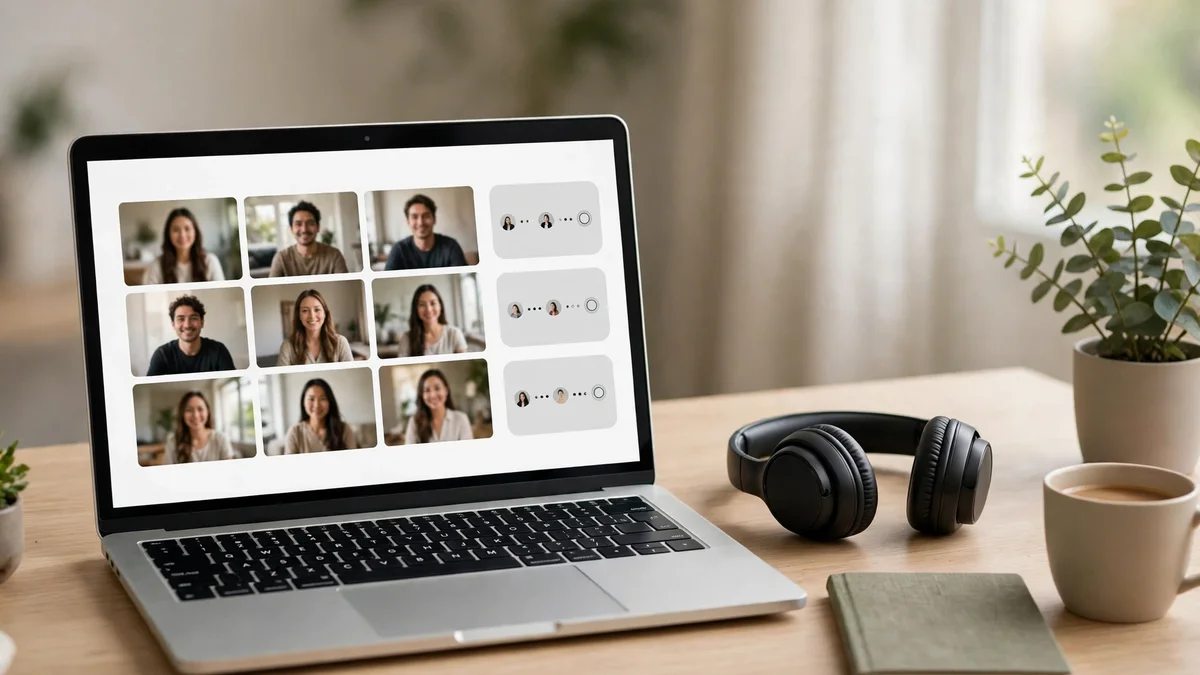
The second part of the system is communication. Many AI stroke platforms send the scan, the automated findings, and a secure alert directly to the stroke team, including specialists who are not in the building. A neurologist hundreds of miles away can open the images, review the AI analysis, and speak to the local team by video while the patient is still being assessed. This is the telestroke model, and AI makes it faster by doing the first pass on the images before any human has opened them. Our guide to the best AI tools for healthcare covers how these alerting systems fit into wider hospital workflows.
There is also a quieter benefit. Small hospitals see fewer strokes than large stroke centres, which means their teams get less practice recognising the most severe cases. An AI system that flags a suspected large vessel occlusion gives a less experienced team an early prompt to escalate and to prepare the patient for treatment. In that sense the software acts as a second pair of eyes, one that has effectively seen thousands of scans and never gets tired at three in the morning.
Why Alaska is the hardest test for this technology
Alaska covers more than 660,000 square miles, and much of it has no road connection to a major hospital at all. Patients in remote communities may need to travel by small aircraft or boat to reach care, and bad weather can ground flights for hours. A stroke does not wait for the weather to clear, which is why any technology that shortens the in-hospital part of the journey matters so much there.
The state also faces a familiar rural-health problem: recruiting and keeping specialists. Neurologists and neuroradiologists tend to cluster in large cities, and a small hospital may have none of them on staff, so it depends on remote expertise and fast, reliable information. Clinicians elsewhere are watching Alaska closely: if the tools prove useful where distances are greatest and specialists are scarcest, the case for using them in other rural areas becomes much stronger.
The caveats that matter
Enthusiasm for AI in stroke care should be kept in proportion. The tools are impressive, but they are not perfect, and the evidence base is still developing. An AI system can miss a blockage, or flag a scan that turns out to be normal, and either error has consequences. That is why every system in clinical use is designed with a human clinician making the final call, and why regulators treat these tools as decision support rather than independent diagnosticians.
There are also practical questions that the available reporting does not yet answer for Alaska. The specific hospitals, software vendors, and number of patients treated so far have not been confirmed in the material available for this article, and those details matter. A pilot in one hospital is a different story from a statewide programme. Readers should treat the Alaska reporting as an encouraging early signal rather than a finished verdict.
| Detail | What is known |
|---|---|
| Reported by | STAT, describing AI offering new hope for stroke patients in Alaska |
| Setting | Alaska, where distance and specialist shortages delay stroke care |
| What the AI does | Analyses brain scans in minutes and flags suspected large vessel blockages |
| Main benefit | Shorter time from scan to treatment decision, especially in remote hospitals |
| How specialists are involved | Alerts and images are shared with remote stroke teams, who make the final decision |
| Key treatments | Clot-busting drugs and mechanical thrombectomy, both highly time-sensitive |
| Role of the software | Decision support and early warning, not an independent diagnosis |
| Not yet confirmed | Specific hospitals, vendors, and patient numbers in Alaska |
The cost question is also unresolved. AI stroke platforms require software licences, integration with hospital imaging systems, staff training, and ongoing maintenance, and smaller hospitals operate on tight budgets. Whether the investment pays for itself through faster treatment and fewer long-term disabilities is a reasonable expectation, but it is an expectation, not yet a settled finding in the Alaskan context.
Finally, there is the question of equity. AI tools can narrow the gap between urban and remote care, but only if remote hospitals can actually obtain and run them. Reliable internet, compatible imaging equipment, and trained staff are prerequisites, and the hospitals that need the technology most are often the ones least able to afford the infrastructure around it.
Checklist: judging AI stroke stories honestly
Use these checks before sharing a story about AI in medicine or drawing conclusions from it.
- Check whether the story names specific hospitals, tools, and patient numbers, or only describes the technology in general terms.
- Ask whether a clinician still makes the final decision, or whether the reporting implies the software decides alone.
- Look for the time saved: minutes from scan to alert is the key number.
- Separate trial results from real-world use, since a tool can perform differently in a busy rural hospital.
- Ask what happens when the AI is wrong, both when it misses a stroke and when it raises a false alarm.
- Check whether the benefit depends on infrastructure, such as fast internet, that not every hospital has.
Frequently asked questions
How does AI help stroke patients?
AI software analyses brain scans within minutes and flags patterns suggesting a blocked artery or other urgent problem. That early alert helps the care team and remote specialists start the treatment conversation sooner, which matters because stroke treatments work best within a few hours.
Can AI diagnose a stroke on its own?
No. The tools are designed as decision support: they highlight suspicious findings and prioritise scans, but a qualified clinician reviews the images and makes the diagnosis and treatment decision.
Why is Alaska a particularly important test case?
Alaska combines vast distances, limited road access, weather-dependent transport, and a shortage of on-site stroke specialists. If AI-assisted stroke care can shorten treatment delays there, it is a strong sign the same approach can help other rural communities.
What is a large vessel occlusion, and why does it matter?
A large vessel occlusion is a blockage in one of the brain’s major arteries. It causes the most severe strokes, but it can often be treated with mechanical thrombectomy if the patient reaches a specialist centre in time. Spotting it early is therefore one of the most valuable things AI stroke software can do.
Does AI stroke software replace the need to transfer patients?
No. In many cases the software does the opposite: by identifying severe strokes sooner, it helps start the transfer process earlier. Patients who need clot removal still need to reach a centre with the right specialists.
What is still unconfirmed about the Alaska story?
The available reporting does not confirm which specific hospitals and software vendors are involved in Alaska, or how many patients have been treated with AI assistance so far. Those details matter for judging how far the programme has spread. Clinics exploring similar tools can also look at our roundup of the best AI chatbots for medical clinics for other ways AI is reaching patients.
The bottom line
AI is offering new hope for stroke patients in Alaska because it attacks the exact problem that makes stroke care hardest there: time lost to distance. By reading brain scans in minutes and alerting remote specialists at once, the technology gives small, far-flung hospitals a faster path to the decisions that save brain tissue and, in many cases, save lives.
What happens next will depend on evidence, not enthusiasm. Hospitals, health systems, and policymakers should watch for confirmed details on which tools are in use, how many patients have benefited, and whether the gains hold up as the programmes grow. If the early signal from Alaska holds, the same approach could change stroke care in every place where the nearest specialist is too far away.