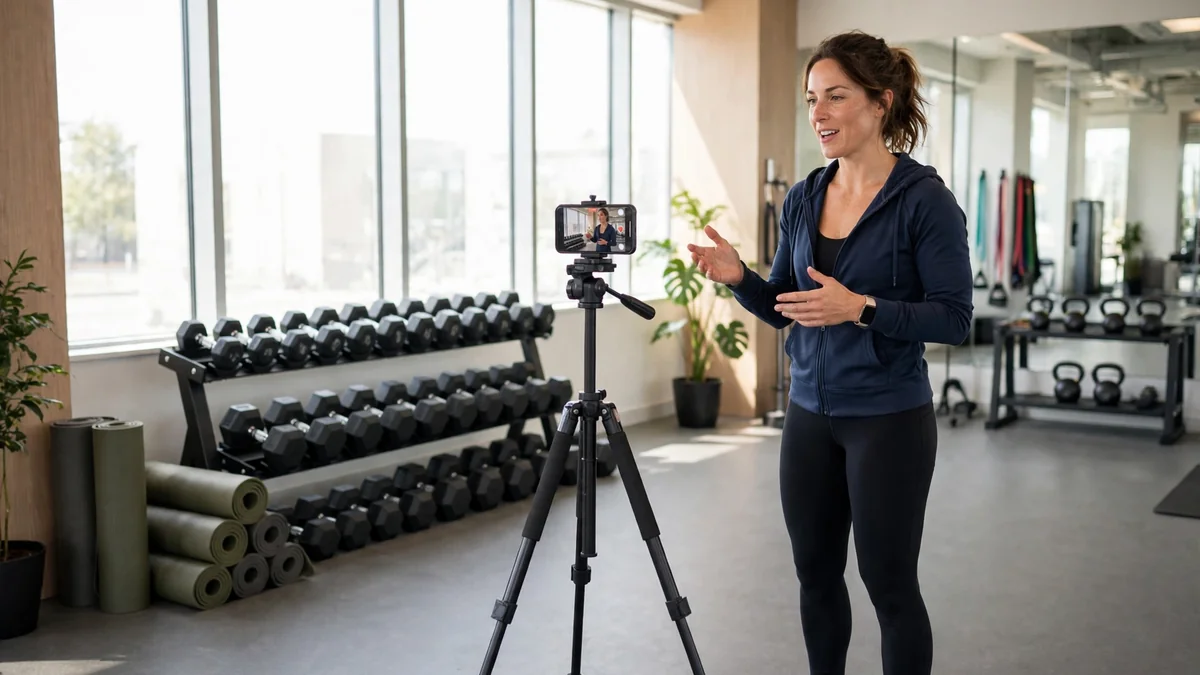
Fitness businesses live or die on social media. A gym, a studio, or an online coach can fill classes and sell programs through Reels, TikTok clips, and YouTube Shorts — but only if posting stays consistent. The best social media management tools for fitness in 2027 let coaches plan a month of content in one sitting, schedule it across every channel, and see which posts actually bring in members.
What matters most for fitness brands is not the longest feature list. It is visual scheduling, because fitness content is almost entirely video and photos; short-form video support, because Reels and TikTok drive most discovery; and simple analytics, because a busy coach needs to know in one glance whether class promos or transformation stories are working. Price matters too, since most fitness businesses are small.
This guide compares seven tools for fitness businesses, from solo trainers to gym chains. Later leads for visual planning, Hootsuite leads for teams, and Buffer leads for coaches who want the simplest workflow. Every price below is approximate — check current pricing before you buy.
Key takeaways
- Later is the best overall pick for fitness brands, with a visual planner and strong Instagram and TikTok support.
- Buffer is the best budget option for solo trainers, with a free plan and paid plans from about $6 per channel.
- Hootsuite is the best choice for gyms with multiple locations or a small team.
- Short-form video scheduling and a visual calendar matter more than advanced reporting for most fitness businesses.
- Test the free trial with your real content before committing to an annual plan.
At a glance: the shortlist
| Tool | Best for | Starting price | Standout limit |
|---|---|---|---|
| Later | Visual Instagram and TikTok planning | About $25 per month | Lower-tier plans cap scheduled posts |
| Hootsuite | Multi-location gyms | About $99 per month | One account on the entry plan |
| Buffer | Solo trainers on a budget | Free; paid from about $6 per channel per month | Basic analytics on cheaper plans |
| Sprout Social | Studios needing deep reporting | About $199 per month | High price for small businesses |
| SocialPilot | Agencies with several fitness clients | About $25.50 per month | Dated interface in places |
| Metricool | Budget analytics-first planning | Free; paid from about $18 per month | Limited approval workflows |
| Planoly | Instagram-first brands | About $16 per month | Weaker TikTok and YouTube support |
Later — Best overall
Later is built around a visual calendar, which is exactly how fitness content works. Coaches drag workout clips, class photos, and before-and-after images onto a grid, preview how the Instagram feed will look, and schedule Reels and TikToks with hashtags saved for reuse. The media library keeps branded templates and exercise demos in one place, so a trainer can repurpose one filmed session into a week of posts.

Later also covers link-in-bio pages, which matter for fitness businesses selling programs, challenges, and class passes through a single link. Its analytics show which post types drive profile visits and link clicks, so a studio can tell whether transformation stories or class timetables convert better. Pairing it with the right back-office software helps too — our guide to the best CRM software for fitness studios covers tools that turn those social leads into paying members.
Pros: Excellent visual planner; strong Instagram and TikTok scheduling; useful link-in-bio pages. Cons: Post limits on lower plans; reporting is lighter than Sprout Social.
Hootsuite — Best for multi-location gyms
Hootsuite is the established all-rounder for gyms that run more than one location or a small marketing team. It supports the widest range of networks, lets managers approve posts before they go live, and keeps comments and messages in one inbox. A franchise owner can give each location its own account while keeping templates and approval rules central.
The trade-off is price and complexity. The entry plan starts at about $99 per month for a single user, so a small studio may find it heavy. But for a gym group that needs team permissions, social listening, and reporting across locations, Hootsuite is the most complete option here.
Pros: Broad network support; team approvals and permissions; unified inbox for comments and messages. Cons: Expensive for small studios; interface can feel busy for beginners.
Buffer — Best for solo trainers on a budget
Buffer is the simplest tool on this list, and for a solo personal trainer that is a feature, not a weakness. The free plan covers a few channels and a handful of scheduled posts — enough to test a consistent posting habit. Paid plans start at about $6 per channel per month, so a trainer who only needs Instagram and TikTok pays little.
Buffer’s queue is genuinely quick: paste a caption, attach a clip, and move on. Its AI assistant drafts caption variations, and its analytics answer the one question a trainer cares about — which posts got the most engagement. It lacks a true visual grid planner, so Instagram feed aesthetics need more manual care, but for speed and price it is hard to beat.
Pros: Free plan available; very low starting price; fast, simple scheduling. Cons: No visual feed planner; analytics are basic on lower plans.
Sprout Social — Best for deep reporting
Sprout Social is the premium option, suiting studios and franchises that treat social media as a serious marketing channel. Its reporting goes beyond likes: it tracks audience growth by campaign, compares performance across locations, and produces client-ready reports a gym owner can actually read.
The catch is the price, from about $199 per month per user. That only makes sense when social media is directly responsible for membership sales. For a single-location studio it is overkill; for a growing chain that needs to prove marketing return on investment, Sprout Social earns its fee.
Pros: Best-in-class reporting and inbox; strong team workflows; reliable scheduling. Cons: High price; more than most small fitness businesses need.
SocialPilot — Best for agencies managing fitness clients
SocialPilot is the value pick for anyone managing several fitness brands at once, such as a freelance manager with five gym clients. Plans start at about $25.50 per month and include generous scheduling limits, bulk upload, and client approvals. It covers all major networks, including Google Business Profile for local map searches.
Its interface is less polished than Later or Buffer, and its analytics are solid rather than spectacular. But for the price, the volume of posts and accounts it supports is unmatched, and a solo manager who bills per client will find SocialPilot pays for itself quickly.
Pros: Great value for multiple accounts; bulk scheduling; Google Business Profile support. Cons: Interface feels dated; analytics are average.
Metricool — Best analytics-first budget pick
Metricool combines scheduling, analytics, and ad reporting in one dashboard, which appeals to fitness businesses that run paid ads alongside organic posts. The free plan covers one brand, and paid plans start at about $18 per month. Its best-time-to-post recommendations are genuinely useful, since class promos perform very differently at 6 a.m. and 6 p.m.
Metricool also tracks competitors, so a studio can see how nearby gyms post and which offers get traction. Its approval workflows are limited compared with Hootsuite, and its mobile app is less refined than Later’s, but as an all-in-one planning and measurement tool at this price, it is a strong choice.
Pros: Strong analytics and ad reporting; competitor tracking; affordable paid plans. Cons: Limited approval workflows; mobile app is less polished.
Planoly — Best for Instagram-first fitness brands
Planoly started as an Instagram planner. Its visual grid, story scheduling, and hashtag management are excellent for fitness brands whose audience lives on Instagram. Plans start at about $16 per month, and its selling feature lets coaches link programs directly from posts.
The weakness is breadth: TikTok and YouTube support are weaker than Later or Hootsuite, and analytics are Instagram-heavy. If your fitness business earns most of its leads from Instagram, Planoly is a focused, affordable fit. If TikTok matters as much, pick Later instead.
Pros: Excellent Instagram grid planner; affordable; built-in selling features. Cons: Weaker TikTok and YouTube support; analytics are Instagram-focused.
How to choose
Start with where your audience is. If Instagram and TikTok drive your bookings, choose Later or Planoly for visual planning. If you manage several locations or a team, Hootsuite’s approvals and inbox justify its price. If you are a solo trainer watching every dollar, Buffer’s free plan or Metricool’s $18 plan will cover you.
Next, test the workflow with your real content. Film one workout, cut it into three clips, and try scheduling them in your top two contenders. The tool that gets that done fastest is usually the right one, because consistency beats features. Also confirm the tool supports Reels, TikTok, and Shorts properly — some still publish video with limitations, so check before paying.
Finally, think about the rest of your business. Social media brings the leads, but your website and booking flow close them. Our guide to the best web hosting for personal trainers covers reliable hosting for trainer websites that turn visitors into booked sessions.
Checklist: before you pay
- Use the free trial with your real workout clips and class photos.
- Confirm Reels, TikTok, and Shorts publish natively without watermarks.
- Check the scheduled-post limit on the plan you would buy, not the top plan.
- Read the renewal price — several tools discount the first year, then charge more.
- Make sure you can cancel monthly and export scheduled content if you leave.
- Check analytics include link clicks, since that is how you measure sign-ups.
Frequently asked questions
What is the best social media management tool for a small gym?
Later is the best overall pick for most small gyms: its visual planner fits photo and video content, and it handles Instagram and TikTok well. If budget is tight, Buffer or Metricool cover the essentials for far less.
Do I need a paid tool, or is a free plan enough?
A free plan is enough while you test a posting habit on one or two channels. Once you post daily, run more than three accounts, or need analytics and approvals, a paid plan is worth it — usually from about $16 to $25 per month.
Can these tools schedule Instagram Reels and TikTok videos?
Yes, all seven schedule short-form video, but details differ. Some publish directly while others send a mobile reminder for the final step. Check the exact behaviour for Reels and TikTok during your trial.
How many posts per week should a fitness business publish?
Three to five posts per week across your main channels is a realistic target. One class promo, one educational clip, one member story, and one offer per week covers the mix without burning out whoever films it.
Which tool is best for a personal trainer who only uses Instagram?
Planoly is the best fit for an Instagram-only trainer, thanks to its visual grid and hashtag tools, with Later a close second. Both are affordable and keep the workflow focused on the one channel.
Should social media tools connect to my email marketing?
Yes — social media fills the top of the funnel, and email converts followers into clients. Our guide to the best email marketing software for YouTubers covers creator-friendly email tools whose list-building ideas transfer well to coaches running challenges and lead magnets.
The bottom line
For most fitness businesses in 2027, Later is the right default: it plans visual content the way coaches create it, handles Instagram and TikTok cleanly, and fits a small studio’s budget. Solo trainers on a tight budget should start with Buffer or Metricool, while multi-location gyms will get more from Hootsuite or Sprout Social.
Whichever tool you pick, the tool is not the strategy. Film consistently, post on a schedule your audience can rely on, and measure which posts bring in class bookings — then do more of what works. Prices change often, so check current pricing before you commit to an annual plan.