A phone can be a daily camera, communication hub, and payment tool, so the best choice is the one that fits how you actually use it. The best phones 2026 picks span premium, value, Android, Apple, foldable, battery-focused, and senior-friendly options. Their strengths matter most when they match your routine.
This roundup weighs price, camera quality, battery endurance, screen, performance, and software support. The right balance depends on what you do each day, how long you plan to keep the phone, and how much you want to spend.
Some people need a dependable camera and smooth apps; others care most about battery life, a large display, or simple controls. No single model suits every budget or every kind of use. The picks ahead help you compare options without treating one rating as the whole story.
Key Takeaways
- Set a spending limit before comparing phones.
- Choose the operating system and screen style you prefer.
- Check camera, battery, and software support for your daily needs.
- Confirm US availability and carrier compatibility for the exact model.
- Compare ongoing service costs when choosing a senior-friendly phone.
Set a spending limit and choose the two features you rely on most before comparing models.
Best Phones 2026 by Budget and Use
A useful 2026 shortlist starts with your budget band, then separates phones by what they do best. Price and purpose help narrow the field before you weigh a specific screen, camera, or software system.
Flagship phones start at $800, mid-range phones cost $500-$799, and budget phones cost below $500. Those bands make it easier to compare phones with similar price points and intended uses.
How the top 10 phones in the world in 2026 shortlist is organized
The top 10 phones in the world in 2026 are best treated as a needs-based shortlist, not an objective global ranking. It covers the iPhone 17, Samsung Galaxy S26 Ultra, Google Pixel 11, Samsung Galaxy Z Fold 8, Google Pixel 10a, Samsung Galaxy A17 5G, Samsung Galaxy S26, Google Pixel 11 Pro XL, OnePlus 15, and Oppo Find X9 Ultra.
The models represent different operating systems, price bands, and designs. Some have regional market limits, so check US availability before choosing a phone that may be sold elsewhere.
Use a top-phone list to find models worth comparing, not to name one universal winner.
Five standout phones for common buyer priorities
The top 5 best phones in the world in 2026 will change if camera quality, battery, or price matters most. These five picks match common priorities: the iPhone 17 for everyday iOS, the Samsung Galaxy S26 Ultra for premium Android, and the Google Pixel 11 for Google-led Android.
The Google Pixel 10a suits lower-cost Android buyers, while the Samsung Galaxy Z Fold 8 serves people who want a large folding screen. A phone shortlist by budget and use can help you compare similar choices.
- Budget: Set the highest price you are comfortable paying.
- Operating system: Pick iOS or Android based on your preference.
- Camera needs: Decide whether you need zoom, portraits, or simple snapshots.
- Battery expectations: Consider how long you spend away from a charger.
- Software support: Match the support period to your planned ownership.
Treat the category label as a starting point, not a substitute for checking carrier compatibility.
What Consumer Reports smartphone ratings measure
Consumer Reports’ 2026 ratings cover 73 smartphone models, but the six leaders are separated by only 2 points in Overall Score. That narrow gap means category details can matter more than a small difference in rank.
Overall Score = Consumer Reports’ combined smartphone rating based on results across its ease-of-use, messaging, browsing, display, voice, calling, battery, portability, and video evaluations. The score helps compare broad quality, but it does not show that phones perform alike in every task.
How the Overall Score is built
Consumer Reports evaluates ease of use, messaging, online browsing, display quality, voice quality, calling, battery life, portability, and video quality. A phone can score well across many areas while still falling short in one feature you value.
Lab tests help create repeatable comparisons. Real-world reviews add useful context about sustained daily use, camera scenes, and how a phone feels in your hand.
A reviewer may test portraits, moving subjects, or long video sessions that a broad lab score cannot describe on its own. Those details can clarify which display or camera fits your habits.
Why battery test results need context
The top smartphone models in Consumer Reports’ 2026 battery tests last 30 to 50 hours per charge. That range comes from a defined test, not a promise that every person will get the same runtime.
Daily battery life changes with screen time and the tasks you run. Video, calls, navigation, and weak network signals can use power at different rates.
Use the category results that match your routine rather than choosing by a small difference in the overall rating.
Samsung Galaxy S26 Ultra: premium Android with a privacy screen
The Galaxy S26 Ultra is the premium Android pick for buyers who want a large screen, fast wired charging, and built-in control over who can see it. Its standout draw is the Privacy Display, paired with a roomy 6.9-inch screen.
Samsung lists the Galaxy S26 Ultra at $1,299.99 before trade-in in 2026. CNET scored it 9.3 in its 2026 Android-phone rankings, and its wired charging test beat 32 other phones.
Hardware, charging, and Privacy Display
The 6.9-inch display gives you space for maps, documents, video, and split-screen work. Samsung says the built-in Privacy Display can hide the full screen, selected apps, or incoming notifications.
That feature can help when you check banking details or sensitive messages in public. It works differently from a privacy-screen protector, which is a separate cover placed over a display.
The phone is 7.9 millimeters thick and weighs 214 grams. That weight may feel noticeable during long calls or one-handed use.
Samsung lists a 5,000mAh battery and rates it for up to 31 hours of video playback. The company says charging can reach 75% in around 30 minutes.
Who should pay for the Ultra
The Ultra suits you if you use a large display for work or media and want privacy controls built into the phone. Fast wired charging can also help when short charging breaks matter.
Its high price makes less sense if you mainly call, message, browse, and take casual photos. A smaller or less costly Android phone may cover those needs without the extra size.
Handle a 214 g phone in person if pocket comfort or one-handed use is a priority.
Google Pixel 11 and the leading Android alternatives
The Pixel 11 is a strong alternative for someone who wants a premium Android experience without choosing Samsung’s Ultra model. Google’s software and camera approach make it a distinct option for everyday use.
CNET scored the Google Pixel 11 9.0 and lists it at $899 in 2026. The larger Google Pixel 11 Pro XL has a 6.8-inch display, may last up to two days, and includes seven years of software updates.
What the Pixel 11 offers
The Pixel 11 fits buyers who want Google’s Android software and a camera-led phone. Its $899 listing puts it in the flagship band, so compare its features with the Galaxy S26 Ultra before paying more.
The Pixel 11 Pro XL is the larger-screen alternative. Its bigger display and possible two-day battery life may suit people who spend long stretches using a phone away from an outlet.
Seven years of software updates can also support longer ownership. The Pro XL is a higher tier, so its size and support matter most when they meet a real need.
Ten Android phones to compare
These Android phones cover different budgets and uses, rather than a fixed order of quality. Some have limited US availability, which is separate from their appeal in international reviews.
- Samsung Galaxy S26 Ultra: premium features for power users.
- Google Pixel 11: Google software and camera-focused use.
- Samsung Galaxy Z Fold 8: a folding screen for multitasking.
- Google Pixel 11 Pro XL: a larger Pixel experience.
- Samsung Galaxy S26: a standard Samsung flagship.
- Google Pixel 10a: a value-focused Android phone.
- Samsung Galaxy A17 5G: a lower-cost phone with long support.
- OnePlus 15: a performance-focused option.
- Nothing Phone (4a) Pro: a camera-focused mid-range choice.
- Oppo Find X9 Ultra: a camera-oriented premium model.
Five Android picks by buyer type
For five distinct needs, start with the Galaxy S26 Ultra for premium features, Pixel 11 for Google software and cameras, and Z Fold 8 for a folding screen. The Pixel 10a suits value buyers, while the Galaxy A17 5G offers a lower-cost choice with long support.
A CNET Pixel 11 review covers its camera, software, and performance. Compare the Pixel 11 with the larger Pro XL only if the screen size and extra battery headroom are worth the higher tier.
Which iPhone fits your budget and screen preference?
An iPhone buyer who wants a balanced everyday model should start with the iPhone 17, while a larger-screen and camera-focused buyer can consider the Pro Max. The standard model costs less and still includes a fast-refresh display.
The iPhone 17 lists at $799, while the iPhone 17 Pro Max lists at $1,199. The price gap comes with a larger screen and more camera flexibility on the Pro Max.
iPhone 17 for most buyers
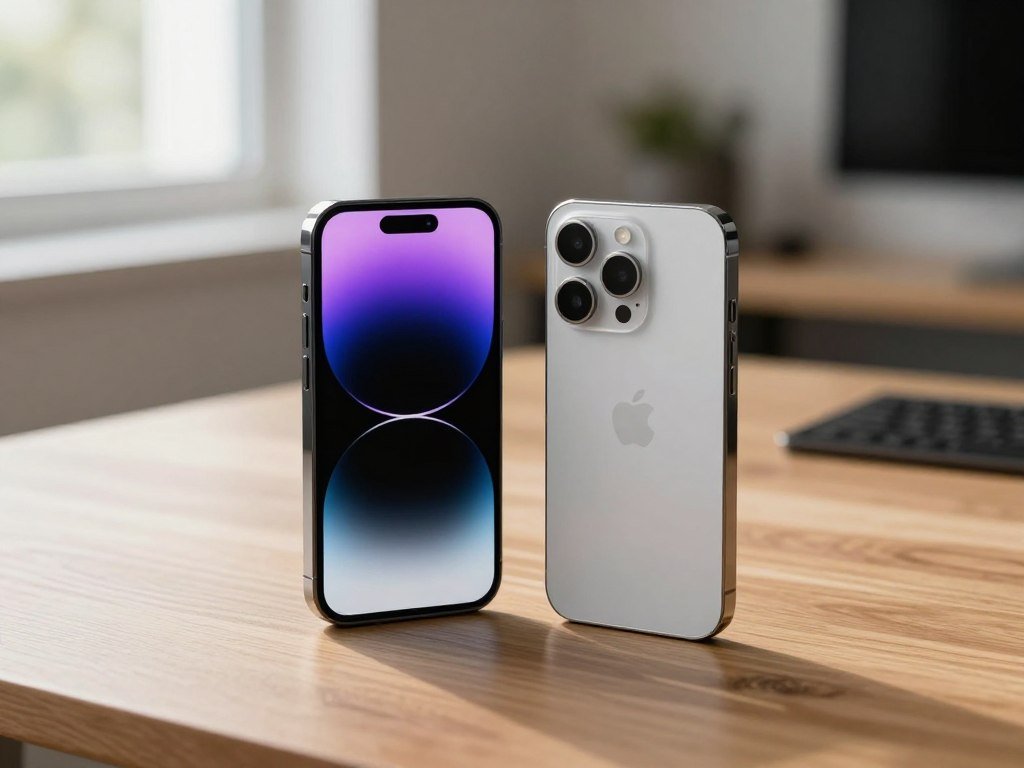
The iPhone 17 has a 6.3-inch OLED display with a 120Hz refresh rate and up to 30 hours of video playback. That mix suits people who want smooth scrolling, a manageable size, and long video viewing.
iPhone 17 Pro Max for the largest premium experience
The iPhone 17 Pro Max has a 6.9-inch OLED display and 48MP rear cameras. Its larger screen and multi-camera system benefit buyers who want more framing options for photos and video.
- Choose iPhone 17 for a balanced size, price, and everyday feature set.
- Choose iPhone 17 Pro Max for a larger display and camera flexibility.
The Pro Max’s size can make one-handed use harder, and its price is a meaningful jump. A larger model is not an automatic upgrade if you rarely use its extra screen space or camera options.
Choose the Pro Max only if its larger screen and camera options solve a need you actually have.
Is the Samsung Galaxy Z Fold 8 worth choosing?
The Galaxy Z Fold 8 makes the most sense when you will regularly use its opened screen for more than occasional video watching. The inner display can serve as a wider workspace for reading, multitasking, and side-by-side apps.
CNET scored the Samsung Galaxy Z Fold 8 8.6 and lists its starting price at $1,900 in 2026. Its book-style hinge opens from a phone-sized outer screen into a larger internal display.
What a book-style foldable changes
The outer screen handles quick messages and calls without opening the phone. Unfold it, and the wider display gives more room for a book, a video, or two apps at once.
That design can reduce switching between tasks. It may appeal to you if a small tablet-like view helps with reading, planning, or work on the go.
Occasional video watching alone may not justify the added cost. A conventional phone may be easier to carry when you do not need the inner screen.
The price and practical compromises
A foldable adds bulk compared with a standard phone, both folded and open. Its moving screen is also more delicate than a conventional fixed display.
Consider how often you will open the device and whether its folded shape fits your usual pocket. The starting price puts it well above many premium phones.
Try both folded and unfolded handling before committing to a phone that changes size in your pocket.
Affordable Android phones under $500
The Samsung Galaxy A17 5G is the lowest-priced smartphone in this comparison, while the Pixel 10a and Nothing Phone (4a) Pro sit at the $499 mark. Each offers a different kind of value, so the lowest price is not the only useful measure.
The A17 5G costs $250 and includes six years of software and security updates. The other two cost more, with camera features that may matter to some buyers.
Pixel 10a for a camera-friendly value pick
The Google Pixel 10a lists at $499 in 2026 and has a strong camera reputation. It suits you if you want a value-oriented Pixel rather than the lowest possible price.
For a closer look at choices in this price range, compare budget phones under $500 by screen, storage, camera, battery, and updates.
Galaxy A17 5G and Nothing Phone (4a) Pro
The Galaxy A17 5G keeps its appeal simple: a $250 price and six years of software and security updates. The Nothing Phone (4a) Pro costs $499 and has a 50MP telephoto camera.
| Phone | Listed price | Standout fit |
|---|---|---|
| Google Pixel 10a | $499 | Value-oriented Pixel with strong camera reputation |
| Samsung Galaxy A17 5G | $250 | Lower price and six years of software and security updates |
| Nothing Phone (4a) Pro | $499 | 50MP telephoto camera |
Camera flexibility, update duration, and asking price are three different ways to judge value. A long support period may matter more than a zoom lens, while a lower price may leave room in your budget for service.
Favor the A17 if price and update coverage lead, and compare the two $499 options by the features you will use most.
When does the standard Samsung Galaxy S26 make sense?
The Galaxy S26 is a reasonable step-up choice for a buyer whose budget reaches $700 but does not stretch to the Ultra tier. It offers a middle ground for people who want a familiar Samsung Android phone without paying for every premium feature.
CNET lists the Samsung Galaxy S26 at $700 at Amazon in its 2026 Android-phone rankings. A standard flagship may suit you if you value Samsung’s familiar design and daily performance more than Ultra-level extras.
The price is high enough to compare carefully with mid-range options. It may be a sensible fit if your budget has room for a flagship but you do not need the largest screen or every advanced feature.
A PCMag Galaxy S26 review includes a Wi-Fi video-streaming test that ran 15 hours and 10 minutes at maximum screen brightness. That result reflects one test method, not every user’s battery life.
Check the selected storage version and final checkout total before comparing it with another model.
Which phones stand out for battery life?
The OnePlus 15 and Oppo Find X9 Ultra both pair large batteries with long PCMark results, but those results do not equal a guaranteed number of days for every user. Test method matters when you compare battery life across phones.
The OnePlus 15 scored 26 hours and 40 minutes in the PCMark battery test. The Oppo Find X9 Ultra scored 25 hours and 36 minutes in that same test.
Large batteries and independent test results
| Phone | Battery capacity | Result and measure |
|---|---|---|
| OnePlus 15 | 7,300mAh | 26 hours 40 minutes, PCMark battery test |
| Oppo Find X9 Ultra | 7,050mAh | 25 hours 36 minutes, PCMark battery test |
| Samsung Galaxy S26 Ultra | 5,000mAh | Up to 31 hours of video playback, manufacturer-rated figure |
The OnePlus and Oppo models have large battery capacities and measured PCMark results. The Galaxy S26 Ultra figure is a manufacturer-rated video playback claim, not the same kind of test.
Read endurance figures by test method
PCMark and video playback measure different kinds of phone use, so their results are not directly comparable. A capacity number also does not tell you exactly how long a phone will last between charges.
Screen brightness, signal strength, gaming, and camera use can change real-world endurance. A bright display outdoors or long gaming sessions can use more power than light messaging.
Compare phones using the same test method whenever a reliable like-for-like result is available.
Which phone cameras suit your kind of photography?
Camera shoppers should first decide whether they value portraits, distant zoom, low-light scenes, or stable video most. Different scenes need different strengths, and no single camera number covers them all.
Resolution alone does not guarantee better photos. Lens choice, image processing, and how the camera handles movement can matter just as much as megapixels.
Flexible camera hardware for zoom and wide shots
The Samsung Galaxy S26 Ultra has a 200MP wide camera, a 50MP telephoto camera, and a 50MP ultrawide camera. That mix gives you several views, from broad scenes to distant subjects.
The Oppo Find X9 Ultra has a 200MP main camera, a 50MP ultrawide camera, a 200MP 3x telephoto camera, and a 50MP 10x telephoto camera. Its camera set is built for several zoom ranges.
A telephoto camera can help with distant subjects, while an ultrawide lens fits more into a frame. Neither setup guarantees the best result in every scene.
Photo processing, video, and everyday use
Portraits often depend on natural skin tones and background separation. Low-light scenes need good processing, while moving video benefits from steady capture and quick focus.
The Pixel line is a strong option for buyers who favor computational photography, which uses software to shape the final image. Processing can affect color, detail, and exposure even when two cameras have similar resolution.
Check sample images from the kind of scene you photograph often, not only the highest megapixel number.
How long should your phone receive software updates?
A longer support window can make an initially pricier phone a better long-term fit if you plan to keep it for years. Support length affects value because an older phone needs security fixes and system updates.
Several named models offer six or seven years of support, while the Galaxy S25 FE updates run through 2032. The exact promise depends on the model and the policy stated for it.
Support periods across price tiers
- Samsung Galaxy S26 Ultra: seven years of software updates.
- Google Pixel 11 Pro XL: seven years of software updates.
- Samsung Galaxy A17 5G: six years of software and security updates.
- Google Pixel 10a: seven years of support.
- Samsung Galaxy S25 FE: updates through 2032.
What an update promise means for long-term value
A support promise helps only when the remaining period fits how long you intend to own the phone. If you plan to replace a device soon, a longer promise may matter less than price or ease of use.
Software updates can add system features or changes, while security updates address risks that could affect your data. The Galaxy A17 5G policy names both software and security updates.
Support terms can differ by model and regional version. Check the support end date for the exact model and regional version before buying.
Best phones 2026 for seniors: compare costs and plans
The least expensive device in this group is the $59 IRIS Easy Flip, but its $10 activation fee and monthly plan also count toward the total. The full cost has three parts: device, activation, and service.
Prices in this senior-phone comparison were checked in July 2026. Monthly plans can add a much larger cost over time than the one-time device price.
Simple phones with activation fees
| Phone | Device price | Activation fee | Monthly plan |
|---|---|---|---|
| Consumer Cellular IRIS Easy Flip | $59 | $10 | $20-$50 |
| Lively Jitterbug Smart5 | $119.99 | $35 | $19.99-$44.99 |
| Lively Jitterbug Flip3 | $79.99 | $35 | $14.99-$44.99 |
Simple phones may suit people who prefer physical controls, while smartphone plans can support broader app use. A senior phone and plan comparison can help caregivers weigh the total monthly cost.
Smartphone options and monthly plans
- AT&T iPhone 17: $830 device price and $50-$90 monthly plan.
- T-Mobile Samsung Galaxy A16 5G: $189.99 device price and $50-$90 monthly plan.
- T-Mobile iPhone 17e: $600 device price and $50-$90 monthly plan.
Device cost, activation, and recurring service are separate parts of the budget. A low device price does not by itself mean the total cost will be low.
Confirm the current plan, network, and activation charge before signing up.
Which senior phones are easiest to use day to day?
A flip phone can simplify calling, while a larger-screen smartphone is better suited to familiar apps and browsing. The user’s comfort with buttons or touch controls should guide the choice.
The IRIS Easy Flip combines a 2.8-inch screen with Wi-Fi, browsing, and M4/T4 hearing-aid compatibility. Its stated battery life is seven hours.
Flip phones for calls and simple controls
| Phone | Screen | Stated battery life | Format |
|---|---|---|---|
| IRIS Easy Flip | 2.8 inches | 7 hours | Flip phone with Wi-Fi, browsing, and M4/T4 hearing-aid compatibility |
| Jitterbug Smart5 | 6.75 inches | Up to 48 hours | Smartphone |
| Jitterbug Flip3 | 3.2 inches | Up to 12 hours | Flip phone |
The IRIS Easy Flip adds basic browsing and Wi-Fi, while its small screen keeps the device compact. The Jitterbug Flip3 uses a larger 3.2-inch screen and has stated battery life of up to 12 hours.
Larger-screen smartphones for familiar apps
The Jitterbug Smart5 has a 6.75-inch screen and stated battery life of up to 48 hours. It may suit someone who already uses touchscreens or wants more room for apps.
The AT&T iPhone 17 has a 6.3-inch screen and up to 30 hours of battery life. The T-Mobile Samsung Galaxy A16 5G offers a 6.7-inch screen and up to 47 hours, while the T-Mobile iPhone 17e has a 6.1-inch screen and up to 26 hours.
These stated battery figures come from different product comparisons, so they do not promise identical real-world use. Let the intended user try the keypad, screen contrast, and call controls before settling on a format.
When is the RAZ Memory Cell Phone a better fit?
The RAZ Memory Cell Phone is designed for people who need a simpler way to call familiar contacts. Its contact-first screen can reduce the steps needed to reach someone.
The 6.5-inch display shows up to six contacts by default and can hold up to 50 contacts. It supports voice and video calls, while text messaging, email, and web browsing are unavailable by default.
A simplified contact screen
The large contact buttons make the phone’s main task clear. A person can call a familiar contact without sorting through a typical set of apps.
This design suits people with cognitive decline who need a simpler interface. It is not a general smartphone replacement for someone who depends on email, browsing, or text messages.
Caregiver controls and limits
Caregivers can manage the phone remotely through the RAZ Care app and add contacts. They can also limit incoming calls to saved contacts.
The RAZ Memory Cell Phone is unlocked for use with any wireless provider. Carrier service still depends on compatibility, so caregivers should confirm that their chosen network supports the device.
Ask the intended user and caregiver which communication features should remain accessible before setting up the phone.
What should you check before choosing an Android phone?
A phone can look compelling in a global comparison and still be a poor US purchase if local support or carrier access is uncertain. Regional fit matters as much as a model’s features.
OnePlus is leaving the North American market in 2026, and neither the Oppo Find X9 Pro nor Find X9 Ultra is available in the United States. A product name alone does not ensure local sales or service.
Before committing to an Android phone, check these four practical details:
- Confirm the exact US model.
- Check carrier network compatibility.
- Verify warranty and repair access.
- Review the remaining software-support period.
A global review may cover a version that differs from the US model. Carrier access, warranty terms, and repair options can also vary by region.
A global product name does not guarantee US availability, carrier access, or local repair support.
Confirm regional availability and carrier compatibility before placing an order.
Conclusion
The strongest choice is the phone that handles your everyday needs without making you pay for features you will rarely use. Your budget and routine matter more than any single ranking.
Camera quality, battery life, screen size, and software support can change how useful a phone feels over time. Think about which two features affect your day most, then compare models that fit your spending limit.
Shortlist two models, then compare their current US price, network compatibility, and support period. Write down your budget and two must-have features, then compare those against two finalists before buying.
FAQ
How many years should a phone last before you replace it?
Keep a phone as long as it meets your needs and still receives software and security support. There is no required replacement interval. Compare the phone’s remaining support period with how long you plan to own it. A phone that still works well may be a poor choice for sensitive tasks if security updates have ended.
Is a phone’s stated battery life the same as everyday battery life?
No, a stated battery figure does not predict the same runtime for every person. Brightness, signal strength, gaming, and camera use all affect battery drain. Test methods also differ: video playback, mixed use, and PCMark tests measure different activities. Compare like-for-like results, then treat them as a guide rather than a personal guarantee.
Is a 120Hz display worth it on a phone?
A 120Hz display can make scrolling and moving images look smoother. The difference may stand out when you move through menus or play games, but some people prefer a standard refresh rate. Screen settings and use can affect battery drain, too. If smooth motion matters to you, compare the display in person before deciding.
How much should you spend on a good Android phone?
A good Android phone can cost below $500, $500-$799, or $800 and above, depending on its tier. Budget phones cost less than $500, mid-range phones span $500-$799, and flagships start at $800. Choose the band that fits your budget, then compare camera, battery, screen, and support within it.
Can an unlocked phone work with any carrier?
No, an unlocked phone does not automatically work with every carrier. The model must support the carrier’s network bands and meet its compatibility rules. Service also depends on the carrier’s coverage where you use the phone. Check the exact model and network before relying on an unlocked device.
What is the difference between a flip phone and a smartphone for seniors?
A flip phone favors physical controls and basic calling, while a smartphone offers a larger touchscreen and app access. A flip design may feel easier for someone who prefers buttons and simple call controls. A smartphone can suit someone comfortable with touchscreens, browsing, and familiar apps. Choose based on the user’s comfort and daily needs.