A phone upgrade does not have to mean paying flagship prices, but a low sticker price is only a good deal if the phone fits your daily use. In 2026, the U.S. market for phones under $300 grew 8% year over year, even as the broader smartphone market shrank 3%. Prepaid demand and plan-linked promotions helped drive that shift, but a low price alone does not make every phone good value.
Here, “budget” means a price-conscious purchase, not one fixed spending limit. You can compare practical price tiers, battery life, camera needs, displays, performance, carrier deals, and refurbished choices. An IP rating is a standardized classification of a device’s protection against dust and water entering its enclosure. The right choice depends on the features you use and how long you plan to keep your phone. Compare the total cost and expected support period before choosing a model.
Key Takeaways
- Galaxy A17 5G is the general low-cost pick for most shoppers.
- Moto G Play costs less than $200, but makes clear hardware tradeoffs.
- Choose a phone for its display, battery, cameras, and daily performance.
- Check update support if you plan to keep a phone for years.
- Compare carrier offers by total deal cost, not monthly payment alone.
- A refurbished phone can save money, but only with support and return protection.
Best Budget Phones for 2026: Which Picks Fit Each Budget?
The Galaxy A17 5G is the strongest all-around pick for most shoppers, while the Moto G Play and standard Moto G serve narrower low-price needs. It earns the general recommendation through its mix of cost, support, and everyday features.
Choose by the tradeoff you can live with, not by price alone. Here is a quick shortlist of budget phones across the main spending range.
| Phone | 2026 price | Best fit | Main tradeoff |
|---|---|---|---|
| Galaxy A17 5G | $174.99 | Strong general value and long support | Secondary cameras trail the main camera |
| Moto G Play | $169 | Lowest-cost named touchscreen smartphone | Limited storage, low-resolution display, mediocre cameras |
| Standard Moto G | $199 | Everyday 5G use with Android 16 | Two promised OS upgrades |
A low price is useful only when the phone still handles the tasks you need and gets support for long enough.
The best budget Android phone in 2026 for most buyers is the Galaxy A17 5G, but your priorities may point elsewhere. If you need the lowest listed cost, the Moto G Play is an option, while its compromises may affect daily use. The standard Moto G offers 5G and Android 16, though its shorter OS-upgrade promise matters if you keep phones for years.
For a wider range of models and price levels, compare these budget phones under $500. The right value depends on the total deal cost, storage needs, and how long you expect to use the device. Use the table as a shortlist, then check which tradeoff would bother you most in daily use.

Which Phone Should You Buy Below $200?
For a phone to keep for years, choose the Galaxy A17 5G; for a newer everyday Android option, consider the Moto G (2026). The A17 is the safer long-term choice, while Motorola puts more emphasis on battery capacity and charging.
Below $200, weigh future support against the hardware you get today. The Moto G Play costs less than the standard Moto G, but low price should not be your only test.
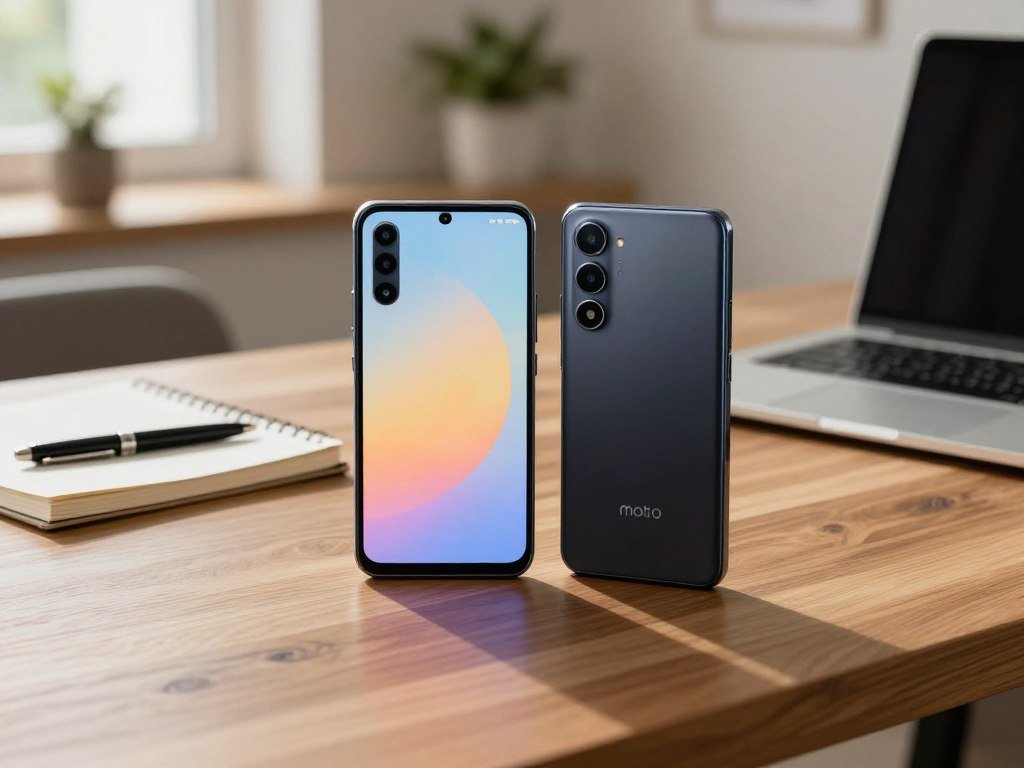
Samsung Galaxy A17 5G for long-term value
The Galaxy A17 5G is PCMag’s affordable-phone pick for most people in 2026. Its longer support promise makes it easier to justify if you prefer keeping one phone instead of replacing it often.
That value matters even if you do not use every feature. A phone that remains supported for longer can be a better buy than one with a lower starting price and a shorter useful life. For everyday calls, messages, maps, and video, it is a balanced option.
Moto G (2026) for everyday Android use
The Moto G (2026) has a 5,200mAh battery, 30W wired charging, 4GB of RAM, and 128GB of storage. Its battery and charging are appealing if you often use your phone through a long day. You also get a current Android option for common tasks.
Four gigabytes of RAM can limit how many demanding apps stay active at once. It does not mean basic browsing or messaging will fail. The Moto G Play is harder to recommend if you need more onboard storage, a sharper display, or stronger cameras. The low listed price comes with compromises that can frustrate everyday use. Treat 4GB of RAM as a limit for demanding multitasking, not as a reason to reject basic browsing and messaging.
Is the Galaxy A25 Worth Paying Over $300?
The Galaxy A25 5G is worth considering above $300 if a bright 120Hz AMOLED screen is a priority. Its screen is the main reason to spend more, especially if you watch video or use your phone outdoors.
The A25 costs $319.99 at Amazon and has a 6.5-inch display with 1,000-nit peak brightness. AMOLED panels can make colors and dark scenes look rich, while high brightness helps the screen remain easier to see in daylight.
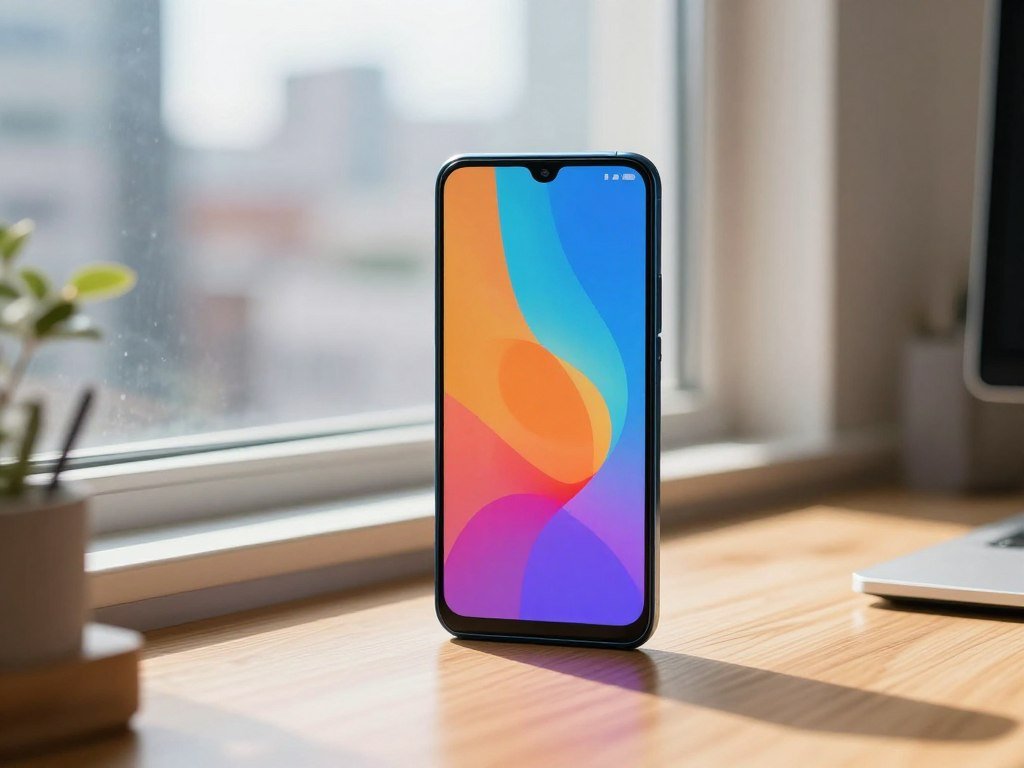
A 120Hz refresh rate can make scrolling and supported motion look smoother than on a standard-rate display. The effect is easy to notice when you move through menus and feeds, but it does not automatically improve every app or task.
The A25 costs substantially more than the less expensive Galaxy A17 5G. That extra spend makes sense when you care about the screen and want a more premium viewing experience. If you mostly call, message, browse, and want long update support, you may not need to move up.
Think about how you use a phone each day. A bright display can be useful for video and outdoor reading, yet it is not a substitute for a longer support period or better performance in every app. Choose it for the screen, not on the assumption that a higher price guarantees better performance in every task.
What Can You Buy Below $150?
Below $150, the clearest named option is a basic 5G flip phone, not a touchscreen smartphone. The TCL Flip 4 5G costs $109.99 at T-Mobile and offers 5G and Wi-Fi connectivity, but it is a different kind of phone.
The TCL Flip 4 is above a strict $100 cap, and the named Moto G Play costs $169. A budget of 10,000 rupees calls for India-market prices and models; U.S. dollar prices do not convert into a reliable local shortlist.
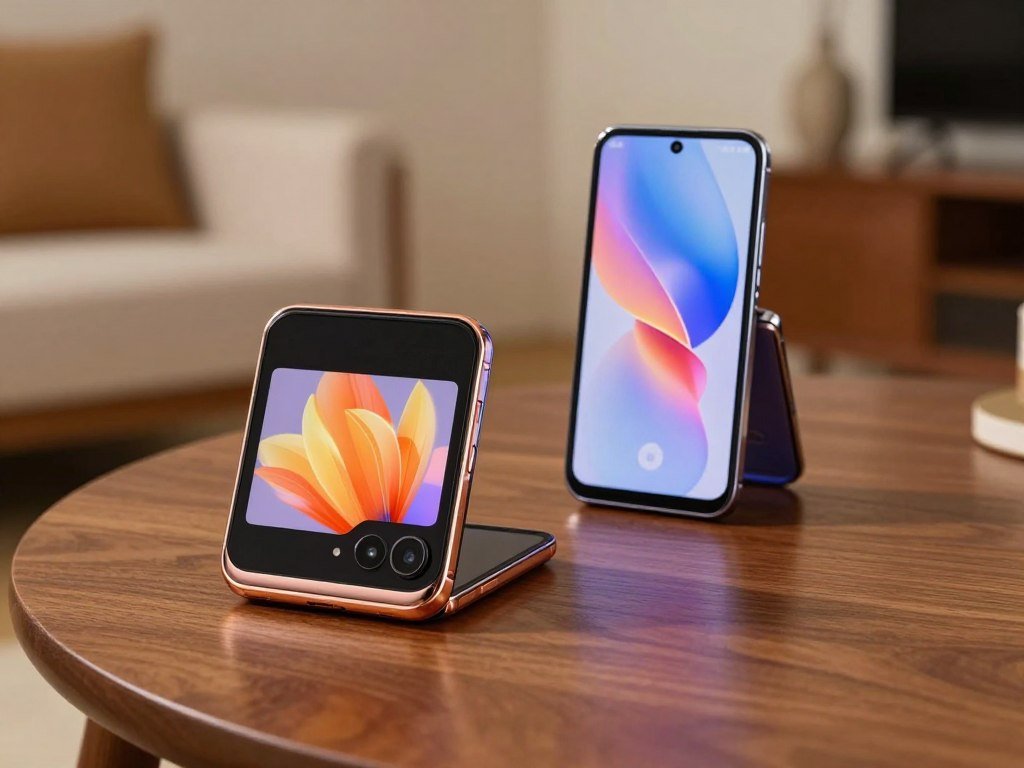
For the TCL Flip 4, consider what you expect a phone to do before buying. It may suit a buyer who wants a connected flip phone rather than a large app screen. These three points can help set expectations:
- It suits calls, texts, and basic connected features in a compact flip-phone design.
- It does not replace a touchscreen smartphone for broad app use or large-screen browsing.
- Raise your budget if you need a full touchscreen phone for daily apps and media.
Someone searching for the best budget smartphone under $100 should know that this named $109.99 option exceeds that limit and is not a touchscreen model. A strict cap may mean choosing from other local offers or waiting for a sale. The Moto G Play is a touchscreen choice, but its listed price sits above $150.
Do not buy a flip phone expecting the same app experience as a modern touchscreen model.
Which Budget Phones Have a microSD Card Slot?
The Moto G (2025) and Moto G Power 5G (2024) both support microSD cards up to 1TB. The best fit depends on whether you want expandable everyday storage or more built-in memory.
A microSD card adds file storage, not RAM. It can hold offline video, music, and photos, but it will not help a phone keep more apps active at once.
Moto G (2025) for expandable everyday storage
The Moto G (2025) has 128GB of storage and a microSD card slot that supports cards up to 1TB. It also has 4GB of RAM, a 5,000mAh battery, and 30W wired charging.
This mix suits someone who wants room for personal files without paying for a phone with more built-in storage. A compatible card can keep large offline media collections separate from the phone’s internal storage. It will not change how much memory the phone has for running apps.
Moto G Power 5G (2024) for more built-in memory
The Moto G Power 5G (2024) has 8GB of RAM and 128GB of built-in storage. It also supports microSD cards up to 1TB, so you can add space while keeping the original storage.
Its larger RAM amount gives more room for multitasking than a 4GB model. Choose it if you want both expandable file storage and more memory for apps, though those are separate features. Card support depends on using a compatible card within the stated capacity. Check that the listing is for the exact model year before buying a card for a used Moto phone.
Which Budget Phone Has the Strongest Battery Life?
The Galaxy A17 5G has the longest documented PCMag test result among the named phones here, at 15 hours and 45 minutes. Its result is a measured runtime, not a promise that every person will get the same day of use.
Battery capacity alone does not predict runtime. Screen settings, apps, signal strength, and test conditions can change how long a phone lasts between charges.
| Phone | Battery capacity | Reported runtime or charging feature |
|---|---|---|
| Galaxy A17 5G | 5,000mAh | 15 hours 45 minutes in PCMag testing |
| Galaxy A25 5G | 5,000mAh | 13 hours 10 minutes in PCMag testing |
| Moto G Power 5G (2024) | 5,000mAh | 30W wired and 15W wireless charging |
| Moto G (2026) | 5,200mAh | No runtime comparison listed |
PCMag tested the Galaxy A17 5G by streaming 1080p video at full brightness. It lasted 15 hours and 45 minutes in that test. Your own battery life may differ if you use more demanding apps or keep the screen bright.
The Moto G Power 5G (2024) stands out for supporting both wired and wireless charging. Wireless charging can be handy at a desk, but speed depends on the phone, charger, adapter, and alignment. For more charging options, see these wireless chargers for iPhone and Android. Use a measured runtime as a better guide than comparing mAh figures alone.
Which Budget Phone Has the Best Display?
The Galaxy A17 5G offers the sharpest specified resolution in this comparison, while the Moto G (2025) has the highest stated refresh rate. The best display depends on whether you value fine detail, smooth motion, or brightness most.
Refresh rate is not the same as resolution. Resolution describes image detail; refresh rate describes how often the screen updates each second.
| Model | Screen size and resolution | Panel | Refresh rate or brightness |
|---|---|---|---|
| Galaxy A17 5G | 6.7-inch, 2,340-by-1,080 | Not specified | 90Hz |
| Moto G (2026) | 6.7-inch, 720-by-1,604 | IPS LCD | 1,000-nit peak brightness |
| Moto G (2025) | 6.7-inch, 720-by-1,604 | IPS LCD | 120Hz |
| Moto G Power 5G (2024) | 6.7-inch, 2,400-by-1,080 | Not specified | Not specified |
The A17’s stated resolution is higher than the Moto G models with 720-by-1,604 screens. That can make small text and fine details look clearer. A higher refresh rate can make scrolling and movement feel smoother, but it does not add pixels.
The Moto G (2026) lists peak brightness, which can help when you view the phone in bright conditions. Peak brightness is a useful screen feature, though it does not describe every viewing condition. Choose resolution for fine detail and refresh rate for smoother motion, then check brightness for outdoor use.
Can Budget Phones Handle Apps and Games?
These phones can handle common tasks, but a low-cost processor and limited RAM leave less room for demanding games and heavy multitasking. The right expectations depend on the apps you use each day.
Four gigabytes of RAM suits basic browsing and messaging, but leaves less multitasking headroom than 6GB or 8GB. A stronger processor and more RAM can help with heavier apps, but they do not guarantee a specific game will run smoothly.
Check these three things before choosing a phone for apps or games:
- Processor generation and class, including whether the chip targets basic or heavier use.
- Available RAM for multitasking between apps.
- Whether you play casual games or demanding 3D titles.
The Moto G (2026) uses a MediaTek Dimensity 6300 processor. The Galaxy A25 5G uses an Exynos 1280 processor and has 6GB of RAM. Those names help identify the hardware, but they do not tell you every detail about real app speed.
The Moto G Power 5G (2024) uses a MediaTek Dimensity 7020 processor and has 8GB of RAM. That added RAM gives more room for switching between apps than a 4GB phone. Demanding games may still vary in frame rate and load time, so avoid assuming a title will run well without a direct test. Match the hardware to the apps you actually use instead of choosing by a processor name alone.
Which Budget Phone Takes the Most Versatile Photos?
The Galaxy A17 5G offers the most versatile specified camera setup here, led by a stabilized 50MP main camera and an ultrawide lens. Its range of cameras gives you more ways to frame a scene than a single rear camera.
Optical image stabilization helps reduce blur from hand movement, but it cannot guarantee sharp moving subjects. A moving child or pet can still look blurred if the shutter is too slow.
The A17 has a 50MP main camera with optical image stabilization, a 5MP ultrawide camera, and a 2MP macro camera. The main camera is suited to regular photos, while the ultrawide lens fits broader scenes. A macro camera offers a close-up option, though a low resolution can limit fine detail.
For selfies, the A17 has a 13MP front camera. The Moto G (2026) instead offers a 32MP front camera, making it an alternative worth considering if you take many self-portraits or video calls. A megapixel count alone does not show how the camera handles light, color, or motion.
Secondary cameras on inexpensive phones may not match the main camera in quality. Try to judge each lens on the type of photo you actually take. For low-light photos or moving subjects, prioritize real sample images over megapixel counts.
How Much Water Protection Should a Budget Phone Have?
The Galaxy A17 5G can handle splashes, but its IP54 rating does not make it safe to submerge. The rating has limits that matter when a phone gets wet.
IP54 protects against water splashes, not full submersion. The Moto G (2026) has an IP52 rating, while the Moto G Power 2026 has an IP68/69 rating.
Different IP ratings describe different levels of protection under specified test conditions. A higher rating can support more substantial water exposure, but it does not make a phone indestructible. Water resistance can also change as a device ages or gets damaged.
Keep the rating in mind when you use a phone outdoors, near a sink, or in wet weather. Splash protection may help with an accidental spray, but it is not permission to drop the device into water. Keep any budget phone away from baths and pools unless its exact rating explicitly covers that exposure.
Which Budget Phone Gets the Longest Software Support?
For the longest stated support among the main low-cost picks, choose the Galaxy A17 5G, with updates promised through 2031. Its six-year promise includes both operating system and security updates.
Update support can make a low-cost phone a better long-term buy. Security updates help protect a phone after you have paid for it, while OS updates bring newer Android versions.
Long support for buyers keeping a phone
Samsung promises six years of OS and security updates for the Galaxy A17 5G, through 2031. That is a strong advantage if you want to keep a budget phone rather than replace it after a short time.
A longer promise gives you a clearer view of how long the maker plans to support the model. It can also help protect the phone’s usefulness as apps and security needs change. Check the support terms for the exact phone you are buying, since similar model names can have different promises.
Shorter support and the replacement tradeoff
The Moto G (2026) runs Android 16 and is promised two years of OS upgrades. The Moto G Play receives two years of Android updates. These shorter periods may suit buyers who replace phones more often, but they offer less time for long ownership.
Google Pixel 8 and newer models receive seven years of updates, while Pixel 6 and Pixel 7 receive five years. That longer support can appeal to buyers who prioritize software life, though these models are not in the same price tier as the sub-$200 picks. Check both OS and security-update end dates before paying for a phone you intend to keep.
Is an Unlocked Phone Cheaper Than a Carrier Deal?
An unlocked phone is not automatically cheaper than a carrier deal; compare the full amount paid over the commitment. The key is the total deal cost, not the monthly figure shown in an ad.
Calculate a carrier offer by adding every required charge, then subtracting credits that actually apply. The Galaxy A17 5G at $174.99 is a strong option under $300, but the exact model must work with your carrier.
Use these four steps to compare a carrier promotion with an unlocked purchase:
- Add all handset payments over the committed months.
- Add any required plan premium for those months.
- Add activation fees and taxes.
- Subtract credits that apply to your account.
An advertised $36 monthly payment over 36 months can exceed $1,000 in total. A monthly price may look small while the full commitment is much larger. Carrier financing can also keep a phone tied to the network until you finish paying it off.
Before choosing an unlocked phone, confirm that the exact model is factory unlocked and supports the network bands your carrier uses. A phone can be unlocked yet still lack full support for a carrier’s service. Confirm the device’s unlock status and carrier compatibility before relying on a low monthly payment.
What Should You Check Before Buying a Refurbished Phone?
A refurbished phone is worth considering only when its support, account status, battery, and return protections check out. The exact model variant matters because update support and carrier use can differ.
Pass on a refurbished Android phone with fewer than two years of security support remaining. Three to four years is an acceptable remaining period for a buyer who wants more time with the device.
| Check | Pass condition | Why it matters |
|---|---|---|
| Remaining security support | Three to four years is acceptable; fewer than two is a reason to pass | Updates help protect continued use |
| Activation Lock | Cleared before payment | A locked phone may block setup |
| Battery health | Documented, preferably 85% or higher | Below 80% suggests replacement within a year |
| SIM or eSIM | Compatible with your intended carrier | Needed for service on your network |
| Warranty or return window | Written coverage, not a one-way sale | Gives you a remedy if the phone has a fault |
Ask for the exact model, region, and carrier variant before you pay. A refurbished Android phone can have different remaining support depending on those details. Confirm that Activation Lock is cleared and that battery health is documented rather than relying on a vague “good condition” label.
For battery health, 85% or higher is the stated preferred standard. Below 80% suggests the battery may need replacement within a year. A seller should provide a written warranty or return window, so you have a way to address a problem after delivery.
For a used iPhone, do not accept the phone while it remains linked to the previous owner’s account. The prior owner must remove that link before you take ownership. Ask for the exact model and carrier variant before sending payment.
How Long Should a Budget Phone Last, and When Is Its Battery Unsafe?
Replace a phone when it stops meeting your needs or loses security support, not just because it has reached a particular birthday. A normal drop in battery capacity does not by itself mean you must discard the device.
A swollen battery is a stop-use warning. It can push the phone’s screen or back panel away from the frame.
Battery aging and normal capacity loss
Most modern smartphone batteries are rated for 500 to 800 charge cycles before capacity falls below 80% of its original level. A charge cycle counts total use equal to 100% of capacity, even when you use that power across several charges.
For example, using half the battery on one day and half the next adds up to one full cycle. A gradual drop in battery life is a normal part of aging. Keep a phone while it receives security updates and still handles the things you need each day.
Heat can speed battery wear. Exposure to temperatures above 95°F (35°C) can permanently reduce lithium-ion battery capacity, so avoid leaving a phone in hot places for long periods.
Signs of a damaged or swollen battery
A swollen battery may separate the screen or back panel from the frame. Do not press the panel back into place or keep using the phone as if nothing changed.
Take these three steps if you see swelling:
- Stop using the phone.
- Do not puncture or press the battery.
- Arrange qualified service or safe disposal.
Replace a phone when its support ends or when needed repairs no longer make sense for its value. A battery problem can be repaired, but swelling calls for immediate care rather than a home fix. A swollen battery is an immediate stop-use warning, not a repair to attempt at home.
Does a $400 Phone Make Sense Under a $500 Budget?
At $400, the Moto G Power 2026 is a credible choice under a $500 cap if battery, screen size, and water protection matter most. Its large feature set suits buyers who want more than a basic phone without crossing that limit.
The tradeoff is shorter software support: two OS upgrades and three years of security updates. That may matter more if you plan to keep your phone for many years.
The Moto G Power 2026 costs $400 and has a 6.8-inch 120Hz LCD, a MediaTek Dimensity 6300 processor, 8GB of RAM, and 128GB of storage. It also has a 5,200mAh battery and IP68/69 protection. That mix favors a large screen, useful memory, and stronger water protection over a longer update promise.
Its two OS upgrades and three years of security updates are the main compromise. If you want a phone that stays current for longer, compare that support period with how often you usually replace devices. A cheaper starting price may not feel like good value if support ends before you are ready to upgrade.
The Pixel 10a is listed at $599 and receives seven years of updates, so it sits outside a strict $500 budget. A buyer searching for the best budget phones under $500 should not treat that model as a sub-$500 choice. A 20,000-rupee budget also needs India-specific models and prices, not U.S. dollar comparisons.
Do not stretch your budget for longer support unless the phone’s actual checkout price and your planned ownership time justify it.
For more options near this spending limit, compare this guide to phones under $500. If the longer support window matters more than staying below $500, compare the Pixel 10a only after confirming its actual checkout price.
Conclusion
For most shoppers, the Galaxy A17 5G is the sensible starting point, while a larger budget can make the Moto G Power 2026 worth considering. Your best value comes from matching the phone to the features you use and the time you expect to keep it.
Before you buy, check the exact model and carrier variant, calculate the total checkout price, and review the remaining update support. Those checks can prevent a low advertised price from turning into a poor long-term choice. Before you buy, verify the exact model, carrier compatibility, and total price at checkout.
FAQ
What is the best budget phone right now?
The Galaxy A17 5G is the best general low-cost phone for most people. Samsung promises six years of OS and security updates through 2031, which gives you a clear reason to consider it for longer ownership. It also suits common daily tasks without requiring a high price. Your best choice may differ if you need a larger screen or a specific carrier feature.
What is a cheap but good quality phone?
The Moto G (2026) is a sensible everyday option, with Android 16, a 5,200mAh battery, and 30W charging. Its 720-by-1,604 display is a compromise if you want sharper detail. The phone makes more sense when battery capacity and current Android software matter more than screen resolution. Compare its support period with how long you plan to keep it.
What is the cheapest but still good phone?
The TCL Flip 4 5G costs $109.99, but it is a flip phone rather than a touchscreen smartphone. It suits basic connected use, not a full app experience on a large display. For a touchscreen option, the Moto G Play costs $169. That difference matters if you rely on apps, browsing, or video throughout the day.
What is the cheapest most reliable phone?
The Galaxy A17 5G is a strong low-cost touchscreen choice for buyers who want longer support. Samsung promises OS and security updates through 2031, which can help you keep using the phone with greater confidence. Reliability also depends on how you treat the device and whether its exact model works with your carrier. Check those details before paying.
How often should you replace your phone?
Replace your phone when security support ends or it no longer meets your daily needs, rather than following a fixed calendar. A phone can remain useful for years if it still works well and receives security updates. Battery capacity usually declines with age, but that alone does not mean you need a new device. Treat swelling as a separate safety issue that calls for immediate action.