Blade Runner 2099 has arrived on Amazon Prime Video, and its showrunner Silka Luisa says television was the only format that could do the story justice. All eight episodes of the limited series premiered on 25 November 2026, bringing the Blade Runner franchise to the small screen for the first time and flipping its central idea upside down.
Luisa’s pitch for the series is a deliberate inversion of the first Blade Runner film. In 2099 Los Angeles, after an uprising, replicants are the city’s power brokers and humans have become second-class citizens. At the centre of the story is a partnership rather than a lone hero: Olwen, a replicant Blade Runner played by Michelle Yeoh, who is nearing the end of her life, and Cora, a human played by Hunter Schafer who is pretending to be a replicant.
Adapting Blade Runner for television meant rethinking almost everything about how the franchise tells a story. The films are meditative, solitary and cinematic, built for a dark room and a big screen. Luisa and her team had to find a pace, a structure and a visual language that worked in people’s living rooms, across eight hours instead of two, without losing the mood that made the original films landmarks of science fiction. In interviews around the premiere, Luisa explained how television gave her the gift the films never had: time.
Key takeaways
- Blade Runner 2099 premiered on Amazon Prime Video on 25 November 2026, with all eight episodes released at once.
- Showrunner Silka Luisa pitched the series as an inversion of the first film: replicants now rule Los Angeles and humans are second-class citizens.
- Michelle Yeoh plays Olwen, a dying replicant Blade Runner, and Hunter Schafer plays Cora, a human undercover as a replicant.
- Luisa says television’s gift of time allowed a central human-replicant relationship and a rich ensemble, instead of a single lone hero.
- The series is designed to stand alone, with no prior knowledge of Blade Runner or Blade Runner 2049 required.
What happened
Blade Runner 2099 is an American science fiction miniseries created by Silka Luisa for Amazon Prime Video, serving as a sequel to the films Blade Runner from 1982 and Blade Runner 2049 from 2017. The franchise is based on Philip K. Dick’s 1968 novel Do Androids Dream of Electric Sheep? The series premiered on 25 November 2026, with all eight episodes released simultaneously on Prime Video.
The story is set in Los Angeles in 2099, fifty years after the events of Blade Runner 2049. Following an uprising, replicants have become the power brokers in the city while humans have been pushed into second-class status. Olwen, a replicant Blade Runner nearing the end of her life, unites with her partner Cora, a human pretending to be a replicant, to hunt down a gang of rogue replicants. The hunt is the engine of the plot, but Luisa has said the relationship between the two women is the heart of the show.
The road to the screen was long. In November 2021, Ridley Scott, who directed the original Blade Runner, announced that a pilot for a television spin-off had been written, along with a series bible and initial plans for ten episodes. In February 2022 the title Blade Runner 2099 was revealed, and Luisa joined as showrunner, writer and executive producer. Amazon ordered the series as a miniseries that September.
The cast around Yeoh and Schafer includes Dimitri Abold, Lewis Gribben, Tom Burke, Amy Lennox and Matthew Needham. Jonathan van Tulleken directed the series, and Ridley Scott’s Scott Free is among the executive producers, although Denis Villeneuve, who directed Blade Runner 2049, is not creatively involved in the show.
Why it matters
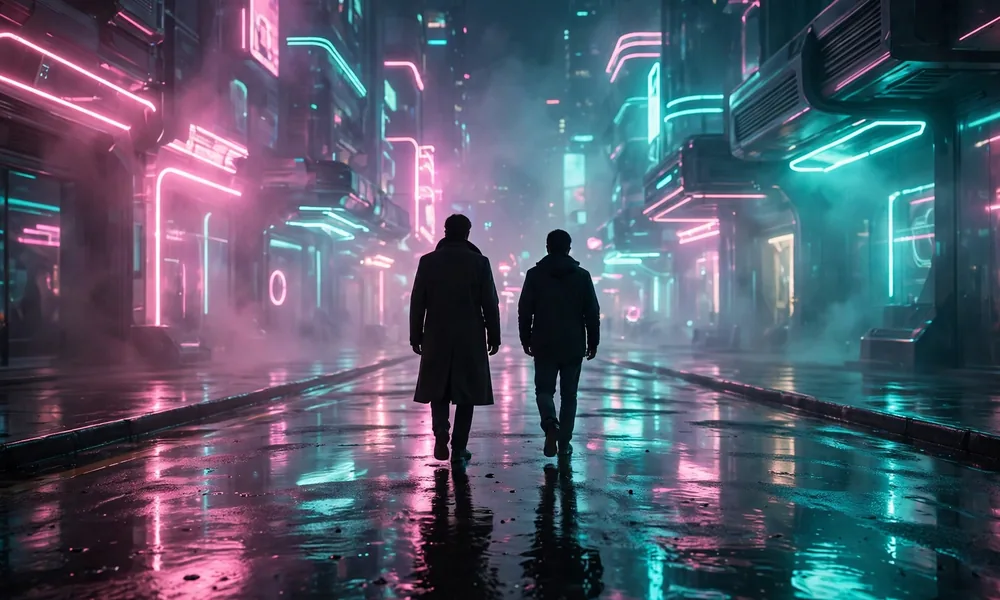
The most important decision Luisa made was to put a relationship at the centre of the story. “You are given the gift of time,” she said, explaining the advantage of television over film, “and so unlike the films, we were able to have at the heart of the show a relationship instead of a single character who is really on their own journey.” The result is a richer ensemble of humans living in a new reality and replicants who, for the first time, have agency and are building their own society.
The inversion of the power dynamic is the second big idea. In the original film, replicants were hunted and subjugated. In 2099, they have taken the world over from humans. Luisa has described the pitch as exactly that reversal, and it changes the moral questions the franchise asks. The show can ask who the oppressor is when the oppressed take power, and whether a system built on control changes just because the people at the top change.
The undercover element adds a third layer. Cora is a human pretending to be a replicant, which makes the story, in Luisa’s words, an undercover story at its core. “I knew because we were doing a TV show, we would have more time,” she said, and that time lets the show explore what it costs to live a lie every day, and what happens when the person you trust most is the person you are lying to.
For Amazon, the series matters as a flagship for Prime Video, and for viewers the question is simpler: does eight hours of Blade Runner feel like a gift, or does the world lose its mystery when you spend that long inside it? The best streaming devices and the best smart TVs in living rooms will carry the show’s neon cityscape into homes that the films could only reach through a cinema screen.
The background
Blade Runner began as Philip K. Dick’s 1968 novel Do Androids Dream of Electric Sheep?, and Ridley Scott’s 1982 film turned it into one of the most influential science fiction movies ever made. Denis Villeneuve’s Blade Runner 2049, released in 2017, extended the story by thirty years and was praised for its scale and visual ambition, even though it underperformed at the box office.
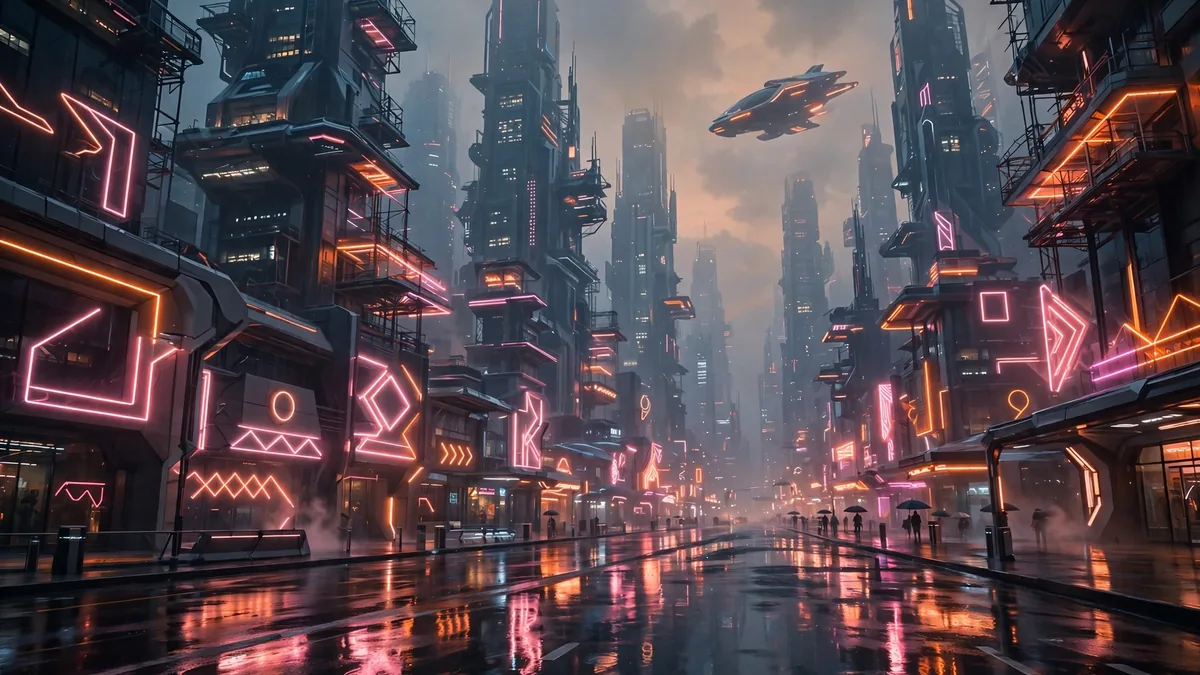
The visual language was a separate challenge. Van Tulleken has described how the team built places that were real, using original old lights and the original glass and lenses from the films. Luisa wrote the concept of “sunshine noir” into the scripts: a brighter, sunlit Los Angeles that is no less dangerous than the rain-soaked city of the films.
What is known at a glance
| Detail | What is known |
|---|---|
| Premiere | 25 November 2026, Amazon Prime Video, all eight episodes at once |
| Format | Limited series, eight episodes |
| Showrunner | Silka Luisa, creator, writer and executive producer |
| Stars | Michelle Yeoh as Olwen, Hunter Schafer as Cora |
| Setting | Los Angeles in 2099, after a replicant uprising |
| Central idea | Replicants rule the city; humans are second-class citizens |
| Visual concept | “Sunshine noir”, a brighter Los Angeles built with real sets and original film lenses |
| Early reception | 70% on Rotten Tomatoes from 46 reviews, average 6.7 out of 10 |
What’s next
The immediate question is how audiences respond now that all eight episodes are available to stream. A limited series released at once lives or dies on its first weekend: viewers binge, critics publish, and social conversation decides whether the show becomes a talking point or a curiosity. The 70% Rotten Tomatoes score suggests a series that critics respect more than they love, but streaming success is measured in viewing hours and completion rates, not review scores, and Amazon has not released those figures yet.
The show’s stand-alone design means there is no obvious sequel hook, and Luisa and Amazon have described 2099 as a limited series rather than the start of an ongoing show. That does not rule out more Blade Runner television if the series performs well. The franchise has always been more valuable as a world than as a single story, and a successful run would invite Amazon to explore other corners of 2099 Los Angeles, other characters and other time periods. For now, though, the series is presented as a complete story, and viewers can watch it as one.
Checklist: watching Blade Runner 2099 honestly
- Judge it as television, not as a film: eight hours of story need different pacing from two.
- Watch the relationship, not just the world: the show lives or dies on Olwen and Cora.
- Notice the light: sunshine noir is a deliberate break from the rain-soaked original.
- Do not require homework: the series is designed to stand alone without the films.
- Give the inversion time: the flipped power dynamic only pays off across episodes.
- Separate the franchise from the show: loving Blade Runner does not guarantee loving 2099.
Frequently asked questions
Who is the showrunner of Blade Runner 2099?
Silka Luisa is the creator and showrunner of Blade Runner 2099, as well as a writer and executive producer. She joined the project in 2022, after Ridley Scott announced in November 2021 that a pilot and series bible had been written. Luisa previously worked on Shining Girls, and her writers’ room for 2099 included writers from shows such as Watchmen and Star Wars: The Acolyte.
When did Blade Runner 2099 premiere and where can I watch it?
Blade Runner 2099 premiered on Amazon Prime Video on 25 November 2026, with all eight episodes released simultaneously. The series is the first live-action Blade Runner television show, following the films Blade Runner from 1982 and Blade Runner 2049 from 2017.
What is Blade Runner 2099 about?
The series is set in Los Angeles in 2099, after an uprising in which replicants became the city’s power brokers and humans became second-class citizens. Olwen, a replicant Blade Runner played by Michelle Yeoh, is nearing the end of her life. She partners with Cora, a human played by Hunter Schafer who is pretending to be a replicant, to hunt a gang of rogue replicants.
How does the series adapt Blade Runner for television?
Luisa says television gave the show the gift of time, allowing a central relationship and a rich ensemble instead of the single lone hero of the films. The team also rethought the pace, calibrating the meditative tempo of the films for television viewing in the writing, shooting and editing.
Do I need to have seen the Blade Runner films first?
No. Luisa has said the series was deliberately designed to stand alone and is not directly tied to Blade Runner 2049, so viewers can watch it without prior knowledge of the films. Fans of the original movies will recognise the world, the themes and some connections, but the story does not depend on them. That stand-alone design is one of the show’s key creative decisions.
What has the early reception been?
Early reception has been mixed but engaged. On Rotten Tomatoes the series holds a 70% approval rating based on 46 reviews, with an average rating of 6.7 out of 10. Streaming viewing figures, which matter more to Amazon than review scores, have not been released yet. Fans planning a rewatch can compare the best TVs tested in 2026 to get the most from the show’s neon cityscape.
The bottom line
Blade Runner 2099 is a genuine adaptation, not a longer version of a film. Silka Luisa took the franchise’s most familiar idea, the hunted replicant, and turned it inside out, then used television’s extra hours to build a relationship and a society around that reversal. The result is a series that looks like Blade Runner, sounds like Blade Runner and still manages to ask a question the films never asked: what happens when the oppressed take power?
Whether that question sustains eight hours of television is for viewers to decide, and the early reviews suggest a series that is admired more than loved. For a franchise that began with a question about what makes someone human, that is a fitting place to start again.