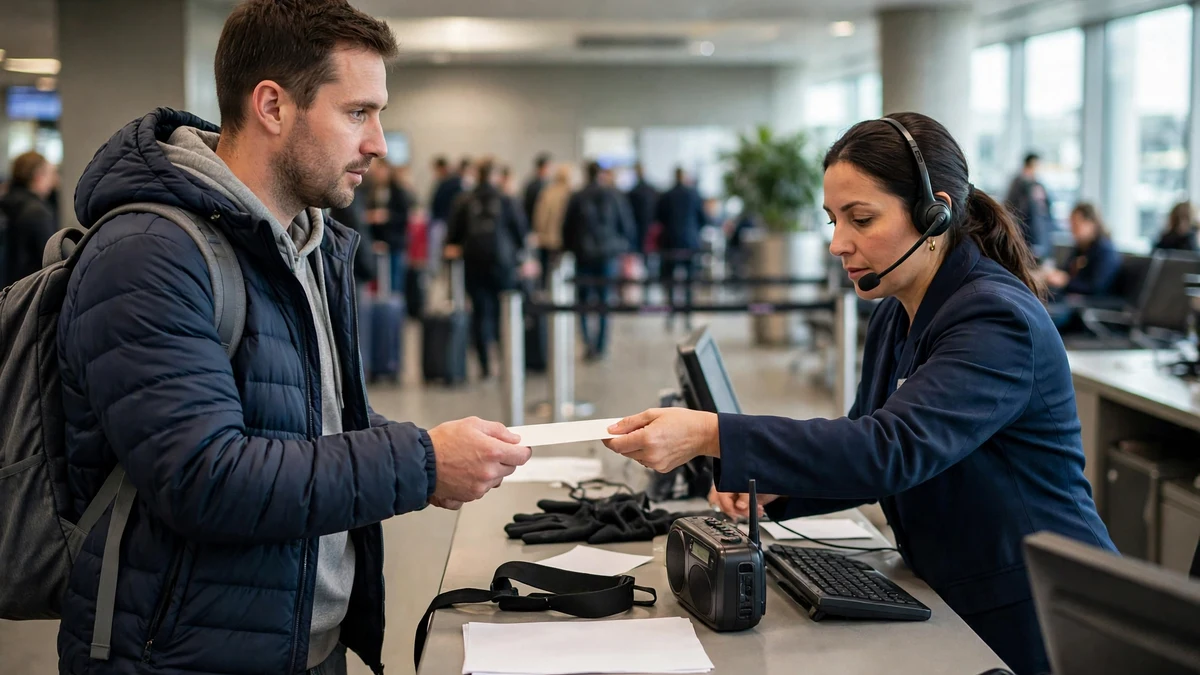
AI agents are coming for the middleman, but not in the way most middlemen fear. The threat is not that software will suddenly run a travel agency or a brokerage better than the people who run it today. It is narrower and sharper: AI agents will do the middleman’s chores almost for free, while leaving the hardest part of the job — carrying risk — exactly where it is.
The clearest statement of the idea came from Ariane Gorin, who runs Expedia, one of the largest middlemen in travel. She said agentic AI’s real strength is in discovery — finding, comparing, and sorting options. Travellers, she added, still book with a trusted brand where they know they will be taken care of if something goes wrong. In that comment sit two different jobs: the chore of discovery, and the mitigation of risk.
That division carries profound consequences. Distributors, brokers, and service firms that mostly perform chores face a squeeze, because an agent can check every option every time without getting bored, tired, or loyal to a familiar supplier. Those that carry risk may become more valuable, because the purchases that agents make will still need ways to transfer risk from the buyer to someone who can absorb it. Understanding which side of that line a business sits on is now the first step in surviving agentic commerce.
Key takeaways
- AI agents excel at the chores of commerce — searching, comparing, ordering, and processing — and will push the price of those tasks toward zero.
- Risk is a different job: refunds, credit, inventory, guarantees, and accountability still need a human or a business to own them.
- Expedia chief Ariane Gorin says agentic AI’s real strength is discovery, while travellers still book with brands they trust to fix things when they go wrong.
- Business buyers are already shifting: 45% of 645 B2B buyers surveyed had used generative AI during a recent purchase, and 67% said they would rather buy without a sales rep.
- Consumers draw the same line: 74% would let an AI agent handle routine tasks, but only 9% would let one buy on its own.
Table: The chores-or-risk split at a glance — what AI agents take over, and what still needs a middleman.
| Job | Who does it now | What AI agents change |
|---|---|---|
| Searching and comparing options | Brokers, travel agents, sales reps | Agents check every option every time, without fatigue or habit |
| Ordering and form-filling | Intermediaries and back-office teams | Automated for close to free, at any hour |
| Guarantees and refunds | The middleman or seller | Agents cannot refund you or fix a failed delivery |
| Accountability when things fail | A named person or business | Card networks still hold the cardholder responsible for agent purchases |
Chores Get Cheap: What AI Agents Do Best
Chores are what agents do exceptionally well. They do not get bored, and they can check every option every time. That sounds like a small advantage until you think about what it does to customer loyalty. If it is now easy to compare options across multiple outlets, why default to the one you are used to? Your agent will not care about familiarity. It will not keep going back to the same supplier out of habit, and it will not skip the fifth option because the search took too long. For intermediaries whose value was mostly about knowing where to look, that is a direct hit.
It is simple to picture this in a plane ticket, but it applies far more broadly. Northern Trust, the Chicago-based bank that does complicated work for clients like asset managers, has seen the shift first hand. Stephen Loughnane, a leader of AI transformation in its chief operating officer organisation, said what was complex two or three years ago is becoming significantly easier to automate. Its document digitisation capability processed more than half a million documents over a five-month period, letting operations teams focus on exceptions and higher-value work. The question of who enforces the budget when AI agents spend is now inseparable from who carries the risk when they spend it wrong.
Risk Needs an Owner: Why Agents Cannot Carry It

Risk is different from chores. An agent cannot readily refund you, extend you credit, or keep spare parts in a warehouse down the road. When software spends a company’s money, someone still has to answer for the result. That is not a technical limitation that the next model release will quietly fix. It is a structural fact about how commerce works: risk transfer requires a balance sheet, a warehouse, a legal entity, and a reputation that can be damaged. An agent has none of those things.
So far, the terms being written for agentic commerce leave that job to people and businesses. OpenAI has stated that it is not the merchant of record, so refunds and chargebacks stay with the seller. Card networks hold cardholders responsible for what an agent does when paying on their behalf, just as if they had made the purchase themselves. American Express, by contrast, has moved to back card members’ purchases made by registered agents. The pattern is consistent: the agent acts, but a person or a business answers for it.
Buyers already seem to draw the line between chores and risk. In a survey of consumers in 16 countries, 74% would let an AI agent handle routine tasks such as negotiating a deal. Only 32% would let one decide what to buy, provided they made the payment themselves. And just 9% would let an agent buy on its own. Business buyers want a human backstop too: 69% in the Gartner survey prefer to check AI-generated insights with a sales rep. The contrast with agentic AI versus traditional automation is instructive: traditional automation made a fixed process faster, while agentic AI makes open-ended decisions on a buyer’s behalf, which is why accountability matters more now.
The Distributor Test: Grainger and the Value of Holding Stock
Distribution illustrates how the split plays out. A distributor that simply relays manufacturers’ catalogues performs chores an agent can take over. One that holds stock nearby, extends credit, and takes back the wrong part carries risk an agent will not. Holding stock alone is a big job: distributors in the United States carry about $1 trillion of inventory, roughly five weeks of sales.
Grainger, the Illinois-based industrial-supplies distributor, runs both models side by side. Its Endless Assortment businesses sell millions of items mainly online, some shipped straight from suppliers. Its High-Touch business serves larger customers through local branches and inventory Grainger manages on customers’ premises. The online side grows faster, yet the high-touch side earned an operating margin of about 17%, versus about 12% online.
What This Means for Buyers: Check Who Carries the Risk
Customers need to make this assessment too. Before they cut out a middleman, they should check which risks it carries. The cheapest option is not the best option if nobody stands behind it when something fails, and an agent that finds the lowest price in seconds has no way of knowing whether the seller behind that price will answer the phone. The smart buyer in the age of agents is not the one who delegates everything. It is the one who delegates the chores and keeps the risk with someone accountable.
For buyers, the practical test is simple. Before letting an agent book, order, or commit on your behalf, ask three questions. Who refunds me if this goes wrong? Who extends credit if the payment fails? Who fixes it if the delivery never arrives? If the answer to all three is nobody, the price you saved on the chore was not a saving at all. The broader pattern — usage soaring while spending stalls — is visible across the AI economy, and AI usage soaring while spending stalls shows why buyers are cautious about paying for AI that has not yet proved it can be trusted with real money.
Checklist: The Chores-or-Risk Test for Your Business
- List everything you charge for, then mark each item as a chore or a risk transfer — be honest about which is which.
- Assume the chore half of your revenue falls sharply as agents do that work for close to free.
- Write down your guarantees, refund terms, credit, and inventory in terms an AI agent can read and verify.
- Check whether a customer’s agent can find and trust your risk cover before it places an order.
- Decide what extra risk you could take on — faster guarantees, broader returns, stocked inventory — and price it openly.
- Ask your customers what they would still pay for if discovery cost nothing, then build your offer around that answer.
Frequently Asked Questions
Will AI agents replace middlemen entirely?
No. Agents are set to replace the chore half of what middlemen do — searching, comparing, ordering, and processing. The risk half — guarantees, credit, inventory, and accountability — still needs a person or a business to own it, and buyers are already showing they will pay for that.
Why can an AI agent not take on risk?
Risk transfer requires a balance sheet, a warehouse, a legal entity, and a reputation. An agent has none of those. It cannot refund a purchase, extend credit, or hold spare parts, and the terms being written for agentic commerce leave those responsibilities with sellers, cardholders, and intermediaries.
What did the Expedia chief say about AI agents?
Ariane Gorin said agentic AI’s real strength is in discovery, while travellers still book with a trusted brand where they know they will be taken care of if something goes wrong. That comment frames the whole chores-versus-risk split.
Which middlemen are most exposed?
Those that mostly relay catalogues, compare options, or process orders — pure chore businesses. Distributors that hold stock, extend credit, and take back the wrong part are far better protected, as Grainger’s higher-margin high-touch business shows.
How do buyers feel about letting agents spend?
Cautious. In a survey across 16 countries, 74% would let an agent handle routine tasks, 32% would let one decide what to buy if they paid themselves, and only 9% would let an agent buy on its own.
What should a middleman do first?
Audit every revenue line as either a chore or a risk transfer, then make the risk transfer easy for a customer’s agent to find, verify, and trust. Taking on more risk, not less, is the counterintuitive move that the new market rewards.
Bottom Line
AI agents will take the middleman’s chores, not its risks, and that sentence is both a warning and an opportunity. The warning is for intermediaries whose value was mostly about finding things and processing orders. That work is being automated for close to free. The opportunity is for those who understand what they really sell: the promise that when something goes wrong, someone will fix it.
The businesses that thrive will be the ones that lean into risk — holding stock, extending credit, guaranteeing outcomes, and making those guarantees legible to the agents that now do the shopping. Agents may do the chores, but they cannot clean up the messes. The middleman who can will still be standing, and will probably be charging more for it, long after the search itself has become free — because the search is now free, and the promise behind it is the product.