A computer that uses the rules of the very small can offer a different way to approach a few unusually difficult problems. This developing technology draws attention from scientists, companies, and governments, but it is not a faster replacement for every computer. Its promise lies in a smaller group of tasks where quantum physics may help. For people following technology research today, the challenge is telling tested results from hopeful claims. The ideas can sound strange at first, but the basic pieces are easier to grasp when explained one at a time. You will learn what makes this kind of computing different, how a machine produces results, and why current hardware still has limits. You will also see where researchers hope it may help, and what security concerns deserve attention. The useful question is not whether this technology replaces your laptop, but which problems it might eventually help solve.
Key Takeaways
- Quantum computers use qubits instead of ordinary bits.
- Quantum circuits use controlled operations and measurement to produce results.
- Different hardware designs trade speed, control, and stability.
- Research targets selected problems, not everyday computer tasks.
- Today’s machines remain limited by errors and hardware demands.
- Roadmap dates are goals, not promises of delivery.
What Is Quantum Computing and How Does It Work? A Beginner-Friendly Explanation
Quantum computing uses quantum-mechanical states to process information in ways that ordinary bit-based computers cannot. A classical bit represents either 0 or 1, while a qubit can be prepared in a superposition of 0 and 1. Qubits let algorithms work with patterns of states that have no direct classical match.
A quantum gate is a controlled operation that changes a qubit’s state as part of a quantum circuit. The circuit applies gates and then uses measurement to read out a result. Quantum mechanics describes the rules that govern tiny particles and other small physical systems.
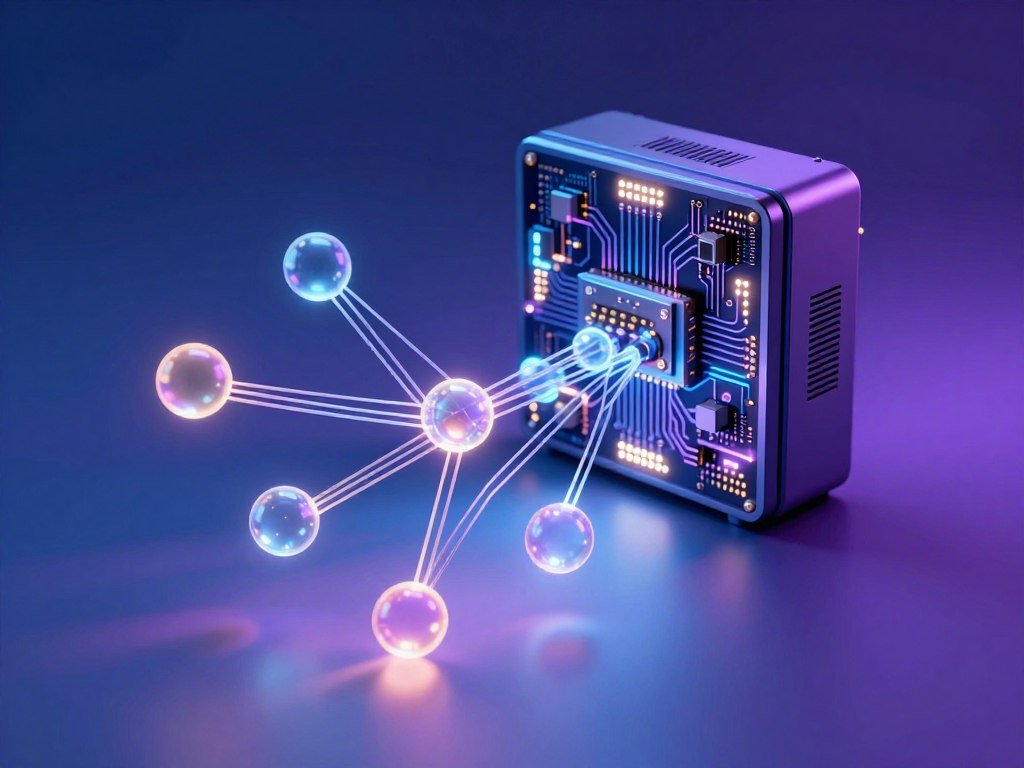
One bit holds one of two values. Two qubits have four basis states: 00, 01, 10, and 11. Three qubits have eight. Each added qubit doubles the number of basis states in the mathematical description, so the state space grows exponentially.
A quantum computer cannot read every possible answer at once. Measurement returns a limited classical result, not a complete list of the states.
The distinction matters because superposition does not give a machine a simple way to inspect every answer. An algorithm must shape the state so useful outcomes have a better chance of appearing during measurement. The output is still classical information that a person or another computer can use.
Quantum computing was theorized in the early 1980s. Richard Feynman’s 1981 talk is often credited with helping launch the field. Peter Shor published a factoring algorithm in 1994, showing that quantum methods could threaten some widely used cryptography in theory.
The early history links physics to computing in a practical way. A larger state space is useful only when an algorithm can turn it into a result that measurement can reveal.
How Does a Quantum Computation Produce an Answer?
A quantum computation is a carefully programmed sequence of operations, not a machine that simply tries every answer and prints the winner. The sequence forms a quantum circuit, with gates acting on qubits before measurement. One measurement produces a classical string of 0s and 1s.
Prepare qubits, then apply gates
A computer first initializes its qubits in known starting states. A programmer then arranges quantum gates into a circuit for a chosen calculation. Hadamard and CNOT are two common gate names.
A Hadamard gate can place a qubit into a superposition of basis states. A CNOT gate links the behavior of two qubits, and can help create entanglement. Entangled qubits share a joint state, so measuring one can relate to the other.
Each gate has a specific job in the circuit. The order matters: changing the sequence can change the final state and the odds of different results. That makes circuit design part of the algorithm, not just a way to enter instructions.
Use interference before measurement
Quantum algorithms also control the phase of states. Phase is a feature of a quantum state that affects how parts of it combine. An algorithm can arrange interference so some outcomes become more likely and others less likely.
That process is not brute-force access to every answer. A measurement reveals only a limited result, and a single run may not show the most useful outcome. Repeating the same circuit can help estimate the chance of each result.
Many gate-based calculations follow four stages:
- Prepare qubits in a chosen starting state.
- Apply gates that carry out the circuit’s operations.
- Use interference to shift the odds of possible outcomes.
- Measure the qubits and repeat the circuit as needed.
The result is a set of classical measurements, not a view of every possible state. Repeated measurements help estimate which outcomes the circuit makes most likely.
What Are Qubits Made Of?
A qubit is not a tiny abstract symbol inside a computer; it is a carefully controlled physical system. Researchers build qubits from several kinds of matter or light, each with its own strengths. No single design leads on speed, stability, control, and communication at once.

These approaches use the laws of physics to store and control quantum information. The University of Maryland’s guide to qubit platforms explains how different systems hold and measure that information.
Superconducting circuits and trapped ions
Superconducting qubits use tiny electrical circuits cooled until they show quantum behavior. Electromagnetic signals control their states. IBM processors need extreme cooling, operating about a hundredth of a degree above absolute zero.
Trapped-ion systems hold charged atoms in place with electric fields. Lasers or other fields control the ions. These qubits can keep quantum states longer than superconducting qubits, but their operations tend to run more slowly.
Neutral atoms, silicon and photons
Neutral-atom systems use lasers to hold uncharged atoms in place. Researchers can arrange many atoms in patterns and control them with light. Silicon spin qubits store information in the spin of an electron within semiconductor material.
Photonic systems use particles of light to carry quantum information. Photons can travel through optical fiber, which makes them useful for communication between locations. Their role differs from a processor that keeps qubits in one place.
Why hardware designs make different tradeoffs
Hardware designers weigh operation speed against coherence, the time a qubit keeps its useful quantum state. They also consider how many qubits they can control and how easily systems can communicate. The approaches have different strengths, rather than one universal winner.
| Qubit type | Physical basis | Useful characteristic | Tradeoff or role |
|---|---|---|---|
| Superconducting | Electrical circuits | Fast gate operations | Needs extreme cooling |
| Trapped ion | Charged atoms | Long-lived states | Slower operations |
| Neutral atom | Laser-held atoms | Flexible atom arrays | Control remains demanding |
| Silicon spin | Electron spin in silicon | Fits semiconductor methods | Precise control is difficult |
| Photonic | Particles of light | Can carry information over fiber | Often serves communication |
The best hardware choice depends on the task and on how reliably its qubits can be controlled.
What Can Quantum Computers Be Used For?
A useful early example is asking how a molecule’s behavior changes when one part of it changes. Quantum methods may help with selected problems involving molecules, choices, or data. A possible application is not proof of a useful advantage over classical computers.
Simulating molecules and materials
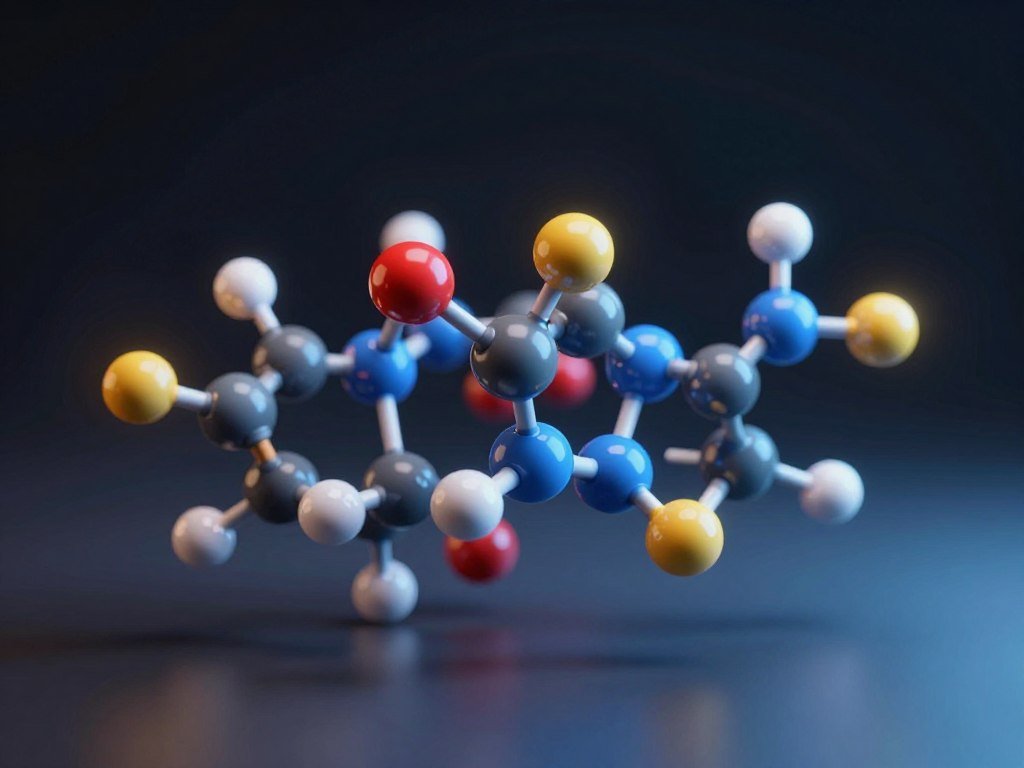
Molecules follow quantum rules, so describing their interactions can become hard for classical computers. A quantum system may represent those interactions in a more direct way. Researchers hope that could help study materials or predict how a drug candidate binds to a target.
EarlyBIRDD began in March 2026 as a four-year collaboration among Kvantify, Atom Computing, and Aarhus University. The project aims to predict drug-candidate binding affinity. It has DKK 30 million toward a total budget of DKK 37.7 million.
That project is research, not a proven commercial benefit. Its stated aim gives a concrete test: whether quantum methods can improve predictions about molecular binding.
Optimizing choices and analyzing data
Portfolio selection, routing, and scheduling are candidate problems for quantum methods. A portfolio model might weigh risk and return across many assets. A routing model might compare ways to serve locations or move goods.
These tasks can also challenge classical methods, but a quantum system is not automatically faster. The best approach depends on the size and shape of the problem, the algorithm, and the hardware. A fair test compares results with a strong classical method.
Quantum circuits can also sample from complex patterns or process selected features in data. Those roles may fit a larger workflow without replacing its other parts. The question is whether the quantum step improves the result enough to matter.
Combining quantum computing with AI
Current commercial quantum AI work commonly assigns selected optimization, sampling, or feature-processing tasks to quantum processors. Classical computers usually handle model training and inference, which means using a trained model to produce an answer.
This hybrid setup is different from handing an entire AI system to a quantum machine. General-purpose assistants and specialized tools serve different needs; a guide to ChatGPT apps for different tasks offers a familiar example of that distinction.
Treat a proposed application as a research question until its performance is tested against a strong classical method.
What Can Quantum Computers Do Today?
Quantum computers already exist, but a processor’s qubit count alone does not tell you what useful work it can do. Counts are only one measure; error rates, connectivity, circuit depth, and task fit also matter. A large processor is not automatically a useful processor.
Hardware milestones and what qubit counts mean
Current systems use different designs and serve different goals. The table gives examples of size and role, but the qubit total cannot show every limit.
| Processor | Qubit count | Hardware type | Significance or limitation |
|---|---|---|---|
| IBM Heron r1 | 133 | Superconducting | Programmable processor |
| Google Willow | 105 | Superconducting | Error-correction research system |
| IBM Condor | 1,121 | Superconducting | Scaling milestone, not production system |
| D-Wave Advantage2 | More than 4,400 | Quantum annealer | Optimization and sampling |
| Rigetti Ankaa-3 | 84 | Superconducting | Median iSWAP fidelity of 99.0% |
IBM’s Heron r2 and r3 each have 156 programmable qubits, while Nighthawk has 120. D-Wave Advantage2 uses Zephyr topology with 20-way connectivity, rather than universal gate-model computing.
Other designs include Intel Tunnel Falls, a 12-qubit silicon spin chip. Rigetti’s Cepheus-1-36Q launched in mid-2025 with four linked nine-qubit chiplets and 99.5% median two-qubit gate fidelity. Ankaa-3 has 99.5% median fSim fidelity.
Early demonstrations and hybrid experiments
In December 2024, Google reported that error suppression on Willow improved as qubit counts increased, in a below-threshold error-correction demonstration. In October 2025, Google said Willow ran Quantum Echoes 13,000 times faster than the best classical algorithm on one of the world’s fastest supercomputers.
Quantum Echoes used an out-of-time-order correlator, a way to track how information spreads through a system. Google described the result as verifiable quantum advantage on a reproducible algorithm with scientific applications. Google’s reported Quantum Echoes result is a corporate performance claim, not proof of broad practical advantage.
A July 2026 preprint tested qReduMIS on portfolios of up to 225 assets across the DAX, FTSE 100, S&P 100, and Nikkei 225. The test used Quantinuum’s 98-qubit Helios, with circuits up to 78 qubits and 1,016 two-qubit gates.
The reported success probability was 0.40 on the S&P 100 and 0.95 on the Nikkei 225. Standalone QAOA failed on the two largest indices. These preprint results need careful review and do not establish a broad advantage.
For any claimed milestone, check the task, the classical comparison, and whether another team can reproduce the result.
Why Are Quantum Computers So Difficult to Build?
A qubit can lose useful quantum information when noise or an imperfect operation disrupts its state. Small disturbances can cause decoherence, which makes the system behave less like a useful quantum state. Errors can enter during storage, gate operations, or measurement.
Qubits are sensitive to noise
Qubits interact with their surroundings, even when engineers try to shield them. Heat, vibration, stray signals, and control faults can change a state. Imperfect operations may also push it away from its intended value.
Common errors and sources include:
- Bit flips, which change 0 to 1 or 1 to 0.
- Phase flips, which alter a state’s relative phase.
- Imperfect gates, which apply the wrong operation.
- Readout errors, which report the wrong result.
Unlike ordinary data, quantum information cannot simply be copied and checked without affecting it. Error correction must detect problems through carefully chosen measurements while preserving the information needed for the calculation.
Error correction adds hardware overhead
A physical qubit is the hardware unit that stores quantum information. A logical qubit is an error-protected unit built from multiple physical qubits. That added structure takes extra qubits, gates, and measurement steps.
Some designs build error detection into how they represent information. D-Wave says its dual-rail qubits are designed to detect about 90% of errors during computation. It has also reported 99.9% two-qubit fidelity for these qubits with error detection.
D-Wave’s reported dual-rail results describe specific hardware tests, not a system where errors disappear. The NIST paper on fault-tolerant error-correcting codes shows how researchers test ways to protect logical information.
Reliable scaling depends on reducing errors while keeping the extra qubits and operations for correction manageable.
How Do Quantum Computers Threaten Encryption?
The clearest theoretical quantum security risk is breaking some public-key cryptography, not instantly guessing every password. Shor’s algorithm threatens elliptic-curve signatures and RSA, but estimates for such attacks remain far beyond demonstrated machines. No fixed password-cracking time follows from key-size estimates.
Shor’s algorithm and public-key cryptography
Shor’s algorithm could use a large, fault-tolerant quantum computer to factor numbers or solve related math problems. Those tasks protect RSA and elliptic-curve cryptography, which help secure digital signatures and other online systems.
Unreviewed 2026 arXiv research estimated that elliptic-curve cryptography might take 9,988 qubits for about 1,000 days of computation, or about 26,000 qubits for one day. The same work estimated 100,000 qubits for 10 days against RSA-2048.
A Google Quantum AI paper posted March 30, 2026 estimated that 500,000 physical qubits running for a few minutes could endanger cryptocurrency security. These are research estimates, not demonstrated attacks. The 2026 cryptography resource estimates also do not set a password-cracking clock.
Password safety depends on password length, the method used to store passwords, and the computing resources available to an attacker. A stolen password database with weak storage can be a problem even without quantum hardware.
Grover’s algorithm and Bitcoin mining
Grover’s algorithm offers a quadratic speedup for unstructured search. It needs roughly the square root of the search-space size in searches, rather than a linear number. For symmetric encryption, that would reduce AES-256’s effective security to about AES-128 levels, and AES-128’s to about 64 bits.
Bitcoin uses elliptic-curve signatures to prove ownership, while mining searches for a valid block hash. Shor’s algorithm threatens signatures in theory. Grover’s search speedup does not by itself prove a practical edge in Bitcoin mining.
A 2026 estimate put even an unusually favorable mining case at about 108 physical qubits and 104 megawatts. At Bitcoin’s January 2025 mainnet mining difficulty, the estimate rose to about 1023 physical qubits and 1025 watts. Such power demands make mining claims highly speculative.
A 2023 study found that one quantum miner competing with classical miners maximized its success chance by running Grover iterations for 16 minutes before measurement. That does not remove the scale and energy barriers. A VPN privacy and security guide can also help explain why encryption alone does not prevent every online threat.
Do not treat theoretical quantum speedups as proof that current quantum computers can break online security. The hardest estimates still require machines far beyond demonstrated systems.
Use unique, randomly generated passwords and multifactor authentication, and follow trusted guidance on post-quantum security rather than assuming an attack is imminent.
What Do Quantum Computing Roadmaps Aim to Achieve?
Quantum computing is possible and already exists, while broadly useful fault-tolerant machines remain a development goal. Roadmaps set targets, not guaranteed delivery dates. The main goal is larger systems with useful logical qubits and fewer errors.
Company plans include these targets:
- 2026: D-Wave targets 17 physical qubits with logical error rates twice as low as physical error rates.
- 2027: D-Wave targets 49 physical qubits and an expected 20-fold error reduction.
- 2028: D-Wave targets 181 physical qubits and an expected 2,000-fold reduction.
- 2028: QuEra plans Libra with more than 10,000 physical qubits, 256 logical qubits, and 99.9999% logical fidelity.
- 2028/29: QuEra plans a system with more than 20,000 physical qubits, at least 1,000 logical qubits, and 99.9999999% logical fidelity.
- 2029: IBM plans Starling for 100 million quantum gates on 200 logical qubits.
- 2030 and 2032: D-Wave targets 10 logical qubits, then 100 logical qubits capable of more than one million operations.
The United States reauthorized $1.8 billion for the National Quantum Initiative for 2025-2029. The Department of Energy runs five quantum research centers with $625 million in dedicated funding. Federal quantum research funding supports continued work across the field.
Read a roadmap as a set of engineering targets, not a promise that a machine will arrive or meet every target on schedule.
Conclusion
Quantum computing is a different tool for a narrow set of hard problems, not a faster version of every computer. It uses qubits and carefully designed operations, while classical computers still handle many everyday tasks. The two kinds of machines are more likely to complement each other than replace one another.
A useful next step is to learn the basics of quantum circuits with an introductory simulator or educational resource. Try a small circuit, change one operation, and compare its measurement results. Start by experimenting with a simple quantum circuit and judging it by the problem it is designed to solve.
FAQ
Will AI replace quantum computing?
No, AI and quantum computing address different kinds of tasks. Current quantum AI work often uses quantum processors for selected optimization, sampling, or feature-processing steps. Classical computers commonly handle model training and inference. A general AI assistant and a specialized quantum processor serve different roles, so one does not simply replace the other.
How far away are we from a quantum computer?
Quantum computers already exist, but broad fault-tolerant capability remains a goal. IBM plans to deliver Quantum Starling in 2029, with a target of 200 logical qubits and 100 million quantum gates. That date describes a company plan, not a guarantee. Today’s systems can run experiments, but they do not yet offer broad, reliable quantum computing.
Do any quantum computers exist yet?
Yes, quantum computers exist today. Google’s Willow has 105 qubits, and IBM’s Condor has 1,121. Those counts describe different hardware systems and do not show how much useful work each can do. Error rates, connectivity, circuit depth, and the task being tested also shape a processor’s practical ability.
Which country is no. 1 in quantum computing?
The United States is a major contender by federal program scale, with $1.8 billion reauthorized for quantum work from 2025 through 2029. The Department of Energy also runs five quantum research centers with $625 million in dedicated funding. A single ranking depends on the measure, such as public investment, research output, patents, or working hardware.
How long would it take a quantum computer to crack a password?
No fixed cracking time follows from password length alone. Password storage methods and an attacker’s computing resources also matter. Unreviewed 2026 estimates of 9,988 or more qubits concern attacks on elliptic-curve cryptography, not a general password-cracking clock. A long, random password stored safely is a different challenge from breaking a public-key system.
Could quantum computers mine bitcoin?
Grover’s algorithm offers a theoretical quadratic speedup for search, but that does not establish a practical Bitcoin mining advantage. A 2026 estimate put even an unusually favorable mining case at about 100 million physical qubits and 10,000 megawatts. Those hardware and power needs make claims of near-term quantum mining highly speculative.
Which password is hardest to crack?
A unique, randomly generated password of at least 16 characters is a strong choice for most accounts. Use a password manager to create and store it, then enable multifactor authentication where available. Reusing a password makes one stolen login more dangerous because attackers may try it on other services.
Are quantum computers hackable?
Yes, quantum computing services and their connected control or software systems can face ordinary cybersecurity attacks. Quantum hardware does not make a system immune to hacking. Attackers may target accounts, networks, poorly secured interfaces, or data handled by classical computers. Good access controls and security practices still matter when a service uses a quantum processor.



