
An AI tool can create real business value and still expose an organization to privacy, fairness, security, or accountability problems. AI governance sets rules, ownership, and controls for AI your organization builds, buys, or uses. It helps you manage risk without blocking useful enterprise AI adoption.
A practical program makes responsible AI part of daily work. It gives your team clear business policies and helps build stakeholder trust. An AI inventory is a current record of an organization’s AI systems, use cases, owners, data, and controls. This guide focuses on people, data, safeguards, and regular review.
A governance framework should fit the work, not sit on a shelf. It should help teams make sound choices before launch and respond when a system changes. That means setting clear expectations for tools used by staff, as well as systems that shape customer or business decisions.
A useful governance program makes safe, responsible use easier to follow than an informal workaround.
Key Takeaways
- Cover AI you build, buy, embed, or use at work.
- Record systems, use cases, owners, data, and controls.
- Match review to each use case’s possible impact.
- Give people clear authority to approve, pause, or retire systems.
- Review system behavior and update controls as use changes.
- Make approved tools practical enough for staff to choose them.
What Does an AI Governance Framework Cover?
An AI governance framework connects each use case to an owner, approved data, defined controls, and a way to review system behavior. It should cover the full lifecycle, from planning and design through retirement. That reach helps your team manage risk before a system affects real work.
The NIST AI Risk Management Framework 1.0, released January 26, 2023, is voluntary. It groups risk management into Govern, Map, Measure, and Manage. The NIST AI RMF Core describes these functions as a flexible way to manage risk throughout an AI system’s lifecycle.
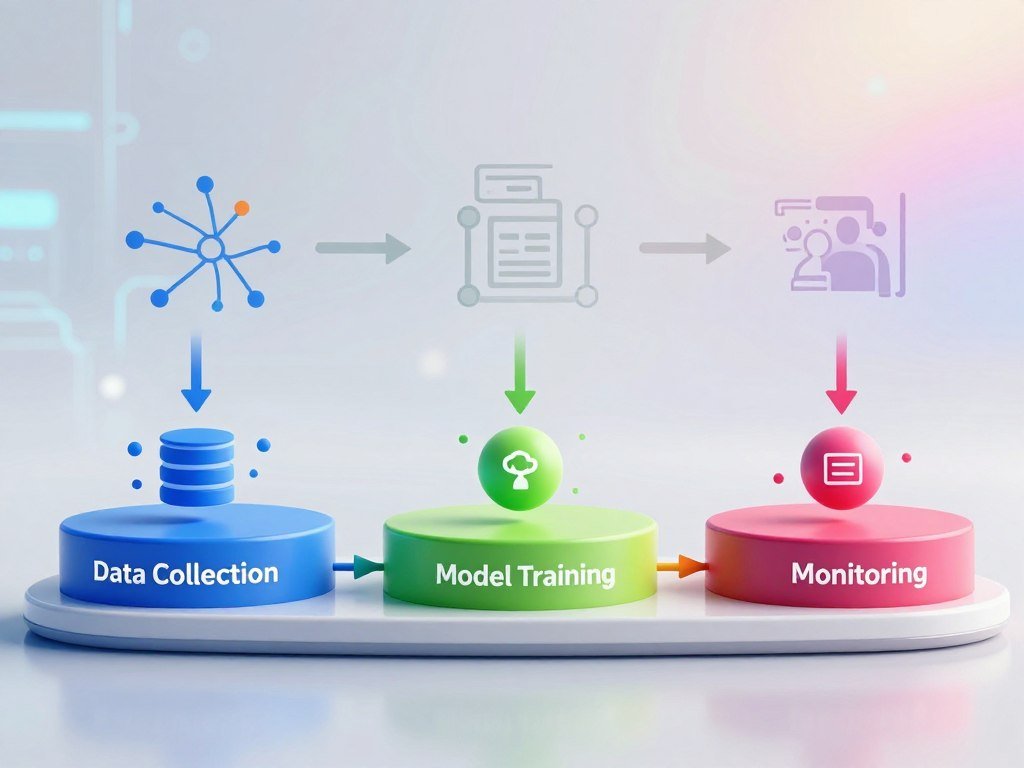
Start risk management during planning and design, then keep it active throughout the system lifecycle.
In practice, the framework links a business need to the system that may meet it. Your team identifies the use case, selects data, develops or acquires a system, and sets deployment rules. It also plans monitoring, incident response, and retirement before the system becomes hard to change.
Data Governance and Model Governance
Data governance manages data quality, access, and lineage, or where data came from and how it changed. It helps teams know whether information is fit for a task and who may use it. These checks matter when training data, customer records, or outside sources shape an AI result.
Model governance focuses on model documentation, validation, and monitoring. It asks how a model was tested, what its limits are, and whether it still performs as expected. The two disciplines support AI governance, but neither covers all decisions about purpose, ownership, or acceptable use.
Your framework should set business policies for each stage, then name who follows them. It can also connect data and model controls to the teams that own the related work. A defined business AI workflow can help teams test a recurring task before they expand its use.
Define the scope to include purchased AI and employee use, not only models built by technical teams.
Why Is AI Governance a Business Requirement Now?
Organizations are moving AI from experiments into products and workflows, including systems they buy rather than build. Fast adoption makes clear ownership and vendor review an operating need. Teams need to know which data a tool uses, who accepts its risks, and how people can trust its results.
In 2025, enterprise generative AI spending was estimated at $37 billion, up from $11.5 billion in 2024. AI applications accounted for $19 billion. That growth brings more tools into daily work, often before every department has set a shared process for review.

In 2025, 76% of enterprise AI solutions were purchased rather than built internally. Forty-seven percent of AI deals reached production, compared with 25% of traditional software deals. That makes provider review and clear contract terms part of practical risk management.
Buying is also less centralized than many leaders expect. Product-led growth accounted for 27% of enterprise AI application spending in 2025, compared with 7% for traditional software. Individual teams can start using tools before a formal project reaches procurement or technical review.
Model choices shift, too. Anthropic held 40% of the enterprise large-language-model API market in 2025, compared with OpenAI’s 27%. Your team needs a way to assess each tool’s fit, data handling, and limits rather than relying on brand familiarity.
Those conditions do not make governance a brake on adoption. A clear intake path lets staff test low-risk ideas, while higher-impact uses receive more review. In 2025, 87% of organizations surveyed by EvalCommunity planned to implement AI governance by 2026.
Governance can also protect stakeholder trust by clarifying who answers when an AI-supported outcome harms a customer or worker. It gives leaders a view of where AI supports business goals and where costs or risks need attention. The process should make experimentation controlled, not invisible.
Treating governance as an operating capability gives teams clearer boundaries for scaling useful AI.
Which Principles Make AI Trustworthy?
Trustworthy AI depends on more than a strong model score; organizations also need systems that are safe, understandable, secure, and fair. Make each principle an observable practice, not a slogan. NIST AI RMF 1.0 names seven characteristics that can guide your policies and reviews.
The seven are validity and reliability; safety; security and resilience; accountability and transparency; explainability and interpretability; privacy enhancement; and fairness with harmful bias managed. The NIST AI RMF 1.0 publication sets out these characteristics as a way to think about trustworthy AI.

Reliability, Safety, and Security
Validity asks whether a system fits its stated purpose. Reliability asks whether it performs consistently under the conditions your team expects. A system that works only on clean test data may fail when real users submit incomplete or unusual information.
Safety means limiting harm to people and operations. Security and resilience mean protecting a system and helping it withstand faults, misuse, or disruption. Your team can test realistic failures, such as missing data or an unexpected request, before relying on a system.
Privacy enhancement means using data in ways that respect privacy needs and limits. That includes deciding what information a task truly needs and how long it should remain available. A system that performs well but exposes private data is not trustworthy.
Accountability, Transparency, and Fairness
Accountability starts with named owners who can explain a system’s purpose and respond to problems. Transparency means keeping useful records about how a system works, what it can do, and where its limits lie. Those records should help a reviewer make a decision, not bury it in technical terms.
Explainability and interpretability concern how people understand a model’s behavior and results. A team may need to explain why a result appeared, or why a person received a different outcome. The right level of detail depends on the system’s role and impact.
Fairness means checking outcomes across groups affected by a system and managing harmful bias. For example, a team can compare error rates across groups before using a model to sort job applications. A review should also consider who is missing from the test data.
Turn each principle into a testable expectation, such as a review, threshold, owner, or required record.
What Risks Should an AI Program Control?
A model can be accurate in a test and still create harm if its data, access, or real-world use is poorly controlled. Review how a system can fail in its actual workflow. Five common risks can affect people, service quality, and daily operations.
Risks can combine. An unapproved tool might receive personal data, then return a recommendation that no one checks. A single failure can expose private information and shape an unfair or wrong decision.

- Biased or unrepresentative data can lead to outcomes that treat affected groups differently.
- Inaccurate or unsupported outputs can cause staff to act on false claims or advice.
- Sensitive data exposure can harm customers, workers, or business relationships.
- Unauthorized or shadow AI use can bypass approved tools and business policies.
- Unclear ownership can leave no one ready to respond when an AI-assisted decision causes harm.
Each risk can show up in a different place. Poor data may distort a model, while weak review may let an unsupported answer reach a customer. Shadow tools can also keep an organization from knowing where its data went.
Consider how a property team might use a valuation estimate. If staff treat an uncertain result as fact, a buyer or seller could make a poor choice. A real estate AI workflow should keep a person responsible for client decisions.
Assess risk by considering who could be harmed, how severe the outcome could be, and how difficult it would be to detect.
Which AI Governance Frameworks Should You Use?
Most organizations need a framework that organizes their controls and a separate check for laws that apply to their systems. No one framework replaces every other need. Choose governance frameworks that fit your risk management work, then address legal requirements on their own terms.
NIST AI RMF is a voluntary risk-management framework. ISO/IEC 42001:2023 is a certifiable standard for establishing an AI management system. NIST’s AI RMF resources include a Playbook and a Generative AI Profile to help teams put its approach into practice.
| Framework | Type | Primary use | Practical role |
|---|---|---|---|
| NIST AI RMF | Voluntary risk management | Lifecycle risk functions | Organize risk work |
| ISO/IEC 42001 | Certifiable standard | AI management system | Set and assess a management system |
| EU AI Act | Binding regulation | Risk-based legal duties | Meet rules that apply |
| OECD AI Principles | Voluntary principles | Responsible AI | Guide policy and practice |
NIST AI RMF and ISO/IEC 42001
NIST AI RMF 1.0 was released January 26, 2023. Its four functions, Govern, Map, Measure, and Manage, help teams organize work across the system lifecycle. The framework does not issue a certification, and organizations can adapt it to their needs.
ISO/IEC 42001:2023 sets requirements for an AI management system and allows certification. That can suit organizations seeking a formal management system and external assessment. NIST announced in 2026 that AI RMF 1.0 was being revised as part of the White House AI Action Plan.
EU AI Act and OECD AI Principles
The EU AI Act is binding law for covered systems and organizations. The OECD AI Principles are voluntary guidance for responsible AI. They can shape policy, but they do not replace applicable legal duties.
A practical combination may use NIST to organize risk work, ISO/IEC 42001 to structure a management system, and OECD principles to guide goals. Legal teams still need to assess the Act and other rules that apply. A voluntary framework can structure work while your organization meets its legal obligations separately.
Select standards based on your exposure, risk profile, and ability to maintain the required evidence.
What Does the EU AI Act Require, and When?
A U.S. headquarters does not by itself put a company outside the EU AI Act’s reach. The Act can apply when a company makes AI available to EU customers or when system outputs are used in the EU. The law sets duties by system type and role.
High-risk contexts include biometrics, critical infrastructure, education, employment, and access to essential services. Credit scoring and insurance can fall within these settings. Providers and deployers have different duties, so identify which role your organization holds for each system.
Rules Already in Effect
Since February 2025, bans on prohibited AI practices and the AI literacy obligation have applied. General-purpose AI model obligations have applied since August 2025. Providers of models placed on the market from August 2, 2025 must comply from that date.
Duties Applying in 2026
From August 2, 2026, transparency duties include telling people when they interact with AI and requiring deployers to disclose deepfakes. Providers of generative AI systems placed on the market before that date have until December 2, 2026 to add machine-readable marking of AI-generated content.
| Date | Obligation | Covered party | Practical action |
|---|---|---|---|
| February 2025 | Bans and AI literacy | Covered organizations | Check prohibited practices and literacy needs |
| August 2025 | General-purpose model obligations | Model providers | Review provider duties and documentation |
| August 2, 2026 | Transparency duties | Providers and deployers | Plan interaction and deepfake disclosure |
| December 2, 2026 | Machine-readable marking | Some generative AI providers | Mark AI-generated content |
Later Transition Deadlines
Providers of general-purpose AI models placed on the market before August 2, 2025 have until August 2, 2027 to meet model obligations. Stand-alone high-risk systems listed in Annex III face obligations from December 2, 2027. Systems serving as safety components under EU product law face obligations from August 2, 2028.
Providers of covered high-risk systems must complete a conformity assessment before placing systems on the EU market and prepare technical documentation. Deployers must follow provider instructions, assign human oversight, keep automatically generated logs for six months, and notify affected individuals.
Have qualified legal counsel confirm which rules apply to each system and the entity that provides or deploys it.
How Do You Inventory and Classify AI Use Cases?
Start by finding where AI is actually used, not only where a formal development project exists. Your AI inventory should cover built, purchased, embedded, and employee-used tools. It gives your team a current view of use cases and where review may be needed.
Ask business units, procurement, IT, and frontline managers about tools in daily work. A common intake form makes it easier to compare systems and spot gaps. Include familiar software with AI features, not just products labeled as AI.
Build a Current AI Inventory
Keep the record short enough to update and detailed enough to support a decision. Useful fields include:
- System and business owner
- Purpose and affected users
- Data and access
- Approval status and review date
A small organization can start in a shared, access-controlled record. Larger teams may connect intake forms to their existing risk tools. The key is to keep the entry current as use changes.
Assess Use and Potential Impact
Assess intended use, autonomy, scale, and consequences. A tool that drafts an internal note has a different exposure from one that ranks applicants or changes customer records. Consider how many people may be affected and whether someone can catch an error before harm occurs.
Mark changes that should trigger reassessment. A new data source, broader user group, or higher level of decision authority can change a system’s risk. AI-assisted services and products also need clear review when generated content reaches clients or the public.
Require teams to update the inventory when a system gains new data, users, or decision-making authority.
Who Owns AI Decisions and Human Oversight?
Every AI use case needs a person with authority to answer for its purpose, risk acceptance, and response when something goes wrong. Named owners make accountability real. Your organization should separate day-to-day operation, risk challenge, and independent assurance.
Executive leadership sets direction and provides resources. The board oversees management, but should not take on system-level operating duties. Each layer needs clear decision rights and evidence of its work.
Assign Named Owners and Decision Rights
A business owner should explain why a use case exists and what outcome it supports. A technical owner should understand how the system works and what changes affect it. Together, they should know who can accept risk and when a concern needs escalation.
Coordinate the Three Lines of Defense
The first line runs systems and controls. The second line sets requirements and challenges the first line’s choices. The third line tests the program independently. This arrangement helps leaders see whether written policies match daily practice.
| Line | Accountable group | Core work | Evidence produced |
|---|---|---|---|
| First line | Business and technical owners | Operate and monitor systems | Use records and issue logs |
| Second line | Risk, legal, and compliance teams | Set requirements and challenge controls | Reviews and challenge notes |
| Third line | Internal audit | Test program effectiveness independently | Audit findings and follow-up |
Your team can make these lines work in a small organization without building three large departments. People may hold multiple roles, but independent review still needs enough distance to question operating decisions. Write down where roles overlap and who resolves conflicts.
Record who can approve, pause, override, or retire each high-impact system.
How Should You Govern Data, Models, and Generative AI?
Governance has to follow the data and model as they change, not stop at initial approval. Keep the records and review process tied to each system’s lifecycle. That helps your team see what changed and whether an old approval still fits.
Data governance should cover quality, provenance, access, privacy, and lineage. Provenance records where data came from, while lineage tracks how it moved or changed. Clear records help teams judge whether data suits a task and whether its use remains allowed.
Control Data and Model Changes
For models, keep documentation, validate before deployment, track version changes, monitor behavior, and set retirement steps. A new version may change results even when the task stays the same. Your team should know which version is active and what review supports it.
Data or model changes can affect a system’s performance and risk. Set a review path for changes to training data, prompts, retrieval sources, or model versions. Keep a record of the decision, especially when a change affects consequential work.
Add Generative AI Lifecycle Safeguards
NIST released its Generative Artificial Intelligence Profile, NIST AI 600-1, on July 26, 2024, as a companion to AI RMF 1.0. It offers cross-sector actions across the lifecycle. Its four primary considerations are governance, content provenance, pre-deployment testing, and incident disclosure.
Generative AI adds prompts, retrieved material, outputs, and content provenance to the governance surface. A chat assistant that only drafts internal material may need different review from a system that generates public or high-impact decisions. The task and audience shape the review your team needs.
For a practical example, building an AI app calls for testing data, integrations, and model outputs before release. That testing should leave records the owner can revisit after changes.
Preserve the evidence needed to reconstruct which data, model version, and controls shaped a consequential output.
What Controls Help Keep AI Systems Secure and Reliable?
A written policy cannot protect a system unless its permissions, data pathways, and failure responses enforce the intended boundaries. Choose controls to match the system’s access and potential impact. A drafting tool and a system that updates business records do not need identical safeguards.
Use least-privilege access, which gives a person or system only the permissions needed for its task. Protect sensitive data as it moves between users, tools, and storage. Limit what a system can reach, especially when it connects to business records or customer information.
Test for misuse and failure cases, not only ordinary requests. Check output quality with realistic examples, including unclear prompts and missing information. A test can reveal when a system invents an answer or fails to signal uncertainty.
Set a clear route to stop or roll back a system when its behavior changes or harm appears. The route should name who can act and what users should do while the system is unavailable. An AI assistant with connected tools also needs permission limits and testing for tool failures.
Test the shutdown or fallback path before relying on it during a live incident.
How Can You Reduce Shadow AI and Build Workforce Literacy?
Employees are more likely to follow AI rules when they know which tools are approved and what information must stay out of them. Pair clear use rules with useful approved options. A ban that offers no workable path can push AI use out of sight.
In 2026, 50% of surveyed U.S. financial institutions had formally approved AI tools, up from 27% in 2025. Ninety percent reported an approved AI policy, and 57% listed weak AI governance and control as a concern.
Set Clear Use Rules and Approved Alternatives
Make the policy plain enough for staff to use during a busy workday. Name approved tools, describe what data each can handle, and offer an alternative when a tool is not allowed. Tell employees how to check generated outputs before they use them.
In the 12 months before a 2026 survey, 27% of financial institutions discovered employees using AI tools in unapproved ways. The survey included 306 cybersecurity, risk management, and compliance professionals at U.S. banks, credit unions, and other financial institutions. Responses were self-reported and not independently verified.
Train People to Recognize and Report Risk
Training should show staff how to handle sensitive data, spot unsupported answers, and report suspected exposure. Short examples can help employees distinguish a permitted task from one that needs review. Repeat the message when approved tools or policies change.
Make reporting an accidental disclosure feel routine and prompt, not like an admission that guarantees blame.
What Should You Check Before Buying an AI Tool?
A vendor’s product description cannot answer the organization’s data, access, and accountability questions. Review those details before sensitive data or consequential work depends on the tool. Procurement should check AI features in familiar software as carefully as standalone products.
In 2026, 53% of surveyed U.S. financial institutions evaluated vendors’ AI use during vendor selection. That check can help your team understand what the supplier does with data and how changes may affect your controls.
Ask what data the vendor receives and retains, and whether it uses customer data for training. Review access controls, incident notification terms, and what evidence the vendor can provide. Clarify how the vendor handles model changes and changes to subprocessors.
Plan for the end of the relationship, too. Check whether your organization can export needed records, delete its data, and confirm deletion. Contract terms should name the steps and timing for these actions.
Useful review questions include:
- Which data does the tool collect, store, or send to other services?
- Can customer data be used to train or improve a model?
- How will the vendor notify you of an incident or material change?
- What audit evidence can the vendor share?
- How can you end the service and delete your data?
Record who accepted any unresolved supplier risk and when that decision must be revisited.
What Evidence Shows That AI Governance Works?
A policy is not evidence of control unless the organization can show how it is followed and what happens when it fails. Use measures that cover risk, accountability, system behavior, and business value. No single KPI can prove a program works.
Pair operating measures with incidents, completed reviews, and remediation status. That mix can show whether controls run as planned and whether teams fix problems. Leaders can also compare results with the business need that led them to use AI.
| Measure | Reported result | Governance implication |
|---|---|---|
| Decision-making and execution speed | 81% said AI improved both | Check whether speed preserves review quality |
| Autonomous action and unclear accountability | 40% allowed action without approval to a moderate degree; 23% said accountability was unclear | Name an owner for systems that act |
| Total versus per-unit AI costs | 71% tracked total inference and API spending; 44% tracked per-unit cost | Track total spend and cost per use |
| Reported revenue gains | 28%, up from 20% in January | Connect business claims to measured results |
| AI-generated-content fraud | 16% of surveyed financial institutions reported an incident in 2026 | Review incident response and reporting |
Deloitte’s enterprise AI findings also showed that 25% of surveyed leaders said AI was deeply transforming their business. That gap between improved task results and deeper change can help leaders set realistic goals. Measure what matters to your use case, not only what is easiest to count.
Assign an owner and a review cadence to every governance metric that can trigger action.
AI Governance: Principles, Risks, and Best Practices for a Practical Rollout
A workable program starts with visibility and ownership, not a complex technology purchase. Set a small operating structure first, then expand it as your AI use grows. A governance framework can begin with a documented intake and review process.
A small team can manage its first records by hand. Add automation when scale makes manual tracking unreliable. The first goal is not to build a large department; it is to make decisions visible and repeatable.
Establish the Minimum Operating Structure
Start with five steps that give leaders and teams a shared way to work:
- Name an executive sponsor and operational owner.
- Inventory current AI use.
- Approve an acceptable-use policy and risk criteria.
- Apply review and monitoring to higher-impact systems.
- Inspect incidents and update controls.
The sponsor can set priorities and clear obstacles. The operational owner can keep intake, review, and records moving. Agree on who can approve routine uses and who must review a higher-impact case.
Expand Controls as AI Use Grows
Use the risk criteria to guide effort. A low-impact drafting tool may need a simple record and output check. A system that affects access to jobs, credit, or essential services calls for more formal review and ongoing oversight.
Give teams a route to raise a new use case before they commit to it. That route should be simple enough to use, with clear questions and a timely answer. A slow or confusing process can push work into informal channels.
Review incidents for patterns, not only isolated errors. A repeated output problem may point to weak data, unclear instructions, or a gap in staff review. Update controls when evidence shows that the old process no longer fits.
Keep the program small enough to run and clear enough for teams to follow.
Set a dated review point for the program and name the person responsible for bringing unresolved risks back to leadership.
How Should You Govern AI Agents?
An AI agent changes the risk profile when it can take an action rather than merely offer a recommendation. Limit its authority to the actions a named owner is ready to monitor. Agentic systems may use tools, retain memory, and act across workflows.
An agent that only drafts for human review has a different exposure from one that can change records, issue payments, or contact customers. Decide what it can access and do before connecting it to live work. A clear boundary can prevent a task from expanding unnoticed.
Use controls that fit the actions the agent can take:
- Restrict tool permissions to what the assigned task needs.
- Bound the agent’s allowed actions and work steps.
- Require approval for consequential actions.
- Log tool calls and action history.
- Define a circuit breaker and escalation route.
Test how the agent handles an unclear request, an unavailable tool, and a failed action. Check that approval requests reach the right person and that logs show what happened. Teams building assistants should distinguish a tool that drafts from one that acts, as explained in this comparison of AI assistants.
Keep autonomy limited to the permissions and actions that a named owner is prepared to monitor.
Do not give an agent more authority than its owner can see, pause, and review.
Conclusion
Responsible AI use depends on clear rules, accountable people, and controls that keep working after deployment. Governance should fit each use case’s impact and stay active as systems change. A simple process that teams follow can do more than a policy nobody checks.
Start with one real use case rather than waiting for a perfect program. Make its purpose and risks visible, then set a review that can catch changes. That first record gives your team a place to build.
Choose one team, create its first AI inventory entry, and assign an owner to review the associated risks.
FAQ
Is the NIST AI Risk Management Framework mandatory?
No, NIST AI RMF 1.0 is voluntary, but separate laws and contracts may still create obligations. Organizations can use it to structure risk work without treating it as a legal requirement. Your team should identify which laws, customer terms, and industry rules apply to each use case, then keep those duties distinct from voluntary framework practices.
What is the difference between AI governance and AI security?
AI governance sets permitted uses, accountability, and oversight, while AI security enforces protections such as access limits and data safeguards. Governance decides who may approve a system and how teams should respond to risk. Security helps make those choices real through technical and operational protections, such as restricting access to customer records.
How often should an organization review its AI inventory?
Review an AI inventory on a regular schedule, such as quarterly as an internal rule of thumb, and sooner after a material change or incident. A new data source, user group, or system purpose can change risk between scheduled reviews. Assign an owner to confirm the record remains accurate and to note any changes that need fresh review.
Do small businesses need an AI governance framework?
Yes, small businesses should scale the process to the number and impact of their AI use cases. Start with a named owner, an inventory, and clear acceptable-use rules. A small team can keep the process simple, using a shared record and a short review step. Add more formal controls when a system affects customers, workers, or sensitive data.
Does the EU AI Act apply to a U.S. company?
Yes, the Act can apply when a U.S. company makes AI available to EU customers or when its system’s output is used in the EU. A U.S. address alone does not settle the question. The system’s role and the company’s place in providing or deploying it matter, so get qualified legal advice about the specific use.
What should employees do before entering information into an AI tool?
Employees should check that the tool is approved and that the data is permitted for that tool. Keep sensitive or proprietary information out unless the organization has authorized its use. Staff should also follow any task-specific rules, such as removing personal details or using an approved secure workspace, before submitting information.
What is the first step in governing an AI agent?
Identify the tools and actions an agent can access, then restrict permissions and require human approval for consequential actions. List the records it can change, the people it can contact, and any payment or workflow tools it can use. Test the approval and stop paths before the agent handles live work, and assign a person to review its activity.