
A familiar app can feel simple to use while many parts work behind the scenes to keep it reliable. Software architecture shapes those hidden parts, whether a team plans them or they emerge through code. A quality attribute describes how well a system works, such as its performance, security, or maintainability.
That structure affects the people building the app and the users who rely on it. A small project may begin with a few files, then grow as business needs and user goals change. Without clear choices, teams can find it hard to add features or fix problems safely.
You can learn to spot the main parts, compare common patterns, and follow how teams make design choices. Examples can help you see what each choice supports and what it makes harder. No design works perfectly for every system. The useful question is not whether a system has an architecture, but whether its important choices are understood.
Key Takeaways
- Every system has a structure, planned or not.
- Architecture describes important parts and their relationships.
- Patterns offer reusable ways to organize a system.
- Design choices bring trade-offs between quality goals.
- Clear notes help teams understand decisions later.
What Is Software Architecture?
Software architecture describes the important parts of a system, what each part does, and how those parts relate. It covers key structures, responsibilities, and communication, not every algorithm or line of code. The scope can range from an organization’s technology to one small component.
Enterprise architecture looks across an organization’s IT systems, processes, information flows, and people. System architecture focuses on a particular product, such as a store’s shopping platform. Component architecture looks closer, perhaps at the part that checks out an order. Name the boundary and level before discussing a design.
An architecture description is not a complete inventory of every line of code. Its job is to make important structures and relationships clear.
A pattern is a reusable way to organize parts for a recurring design problem. It offers a starting structure, while an architecture describes how a specific system is arranged. The IEEE/ISO/IEC 42010-2022 standard sets requirements for architecture descriptions, including frameworks, languages, viewpoints, and model kinds.
The standard received board approval on September 21, 2022, and was published on November 7, 2022. It does not prescribe one design process or tool. A useful architecture description makes clear which system boundary and level it is discussing.

Why Does Software Architecture Matter?
Architecture matters because choices about structure can make a system easier or harder to change as its needs grow. Those choices shape quality, delivery work, and the effort needed to respond to new business goals. They also affect how teams test and connect system parts.
Quality attributes shape design trade-offs
Performance, availability, security, and maintainability can pull design in different directions. A system that stores extra copies of data may answer requests faster, yet those copies need protection and updates. Stronger access checks can improve security, while adding steps to a user’s request.
Improving one quality can limit another, so teams must rank their goals. The Software Engineering Institute’s quality attributes report explains how architecture choices can support clear comparisons. Its Architecture Tradeoff Analysis Method, or ATAM, helps teams examine competing qualities.
Teams can assess these qualities before implementation, integration, or deployment. That timing can expose design risks before they become costly code changes. Architecture notes can also connect system elements and relationships to the qualities they should support.

Architecture keeps change manageable
Clear boundaries help developers change one part without disrupting unrelated work. A team adding a new payment option can focus on the payment interface if other parts rely on that interface, not its internal code.
Recorded decisions explain why the boundary exists and which alternatives the team considered. Without those notes, developers may spend time rediscovering intent or undoing a choice that still serves a purpose. Conformance checks can test whether code follows the planned structure.
Assessment and checks cannot make every choice right. A sound structure cannot fix shifting business goals or assumptions that nobody tested with users. Revisit important decisions when business goals or system constraints change, rather than treating the original design as permanent.
What Are Common Software Architecture Patterns?
A single application, a set of services, and a stream of events are three different ways to organize the same broad goal: making system parts work together. Architectural patterns in software engineering are reusable responses to recurring needs for structure and communication. Each pattern carries a cost as well as a benefit.
A software architecture example might be a shopping app with a browser, an order service, and a database. The best fit depends on the app’s needs and team skills, not a pattern’s name. Compare how a pattern organizes work and how its parts communicate.
Monoliths and layered systems keep deployment simple
A monolith packages an application as one deployable unit. Its parts can still have clear modules, but a release updates the whole unit. A modular monolith keeps one deployment while separating functional areas, such as orders and inventory.
Layered systems group work by horizontal responsibility. A presentation layer handles the user-facing view, business logic applies rules, and a data layer stores or retrieves information. Calls move across layers, so teams need discipline to keep boundaries useful.
Client-server and MVC organize requests and presentation
In client-server design, a client requests a service from a server, often through network request-and-reply communication. A shopping app’s web page can request product details from a server, then show its response.
MVC separates a model for data and core functions, a view for presentation, and a controller for input and mediation. These parts can communicate through events or callbacks. The model need not know how the view displays each item.
Microservices and event-driven systems distribute work
Microservices split an application into services that teams can develop and deploy independently. Services may use REST, SOAP, or GraphQL over a network. Independent deployment can support separate scaling, but remote calls add failure points and network complexity.
Teams need skill to separate services well. They also need tools and habits for tracing a request that crosses several services. Event-driven systems send messages from producers through routers to consumers, which can respond without a direct request.
| Pattern | Organization | Communication | Practical trade-off |
|---|---|---|---|
| Monolith | One deployable application | Internal calls | Simpler deployment, but changes redeploy the whole unit |
| Layered | Horizontal responsibilities | Calls across layers | Clear concerns, but boundaries need discipline |
| Client-server | Requester and service provider | Network request-and-reply | Clear roles, but network dependence |
| Microservices | Independently deployable services | Remote protocols | Independent scaling, but distributed complexity |
| Event-driven | Producers and consumers | Routed events | Loose coupling, but harder tracing |
Events can connect parts loosely, though a team may find it harder to see which message caused a failure. Each pattern changes how developers test and operate an application.
Newer patterns place boundaries around data and infrastructure
Hexagonal Architecture, also called Ports and Adapters, keeps core business logic apart from external technologies. Edge Architecture places components nearer to data sources when low delay or weak network connections matter.
Data Mesh gives domain teams responsibility for discoverable data products. Retrieval-augmented generation, or RAG, retrieves source information to give a language model context for an answer. It does not retrain the model. Learn more about using AI models and RAG.
AI system architecture may include validation, training, testing, evaluation, deployment, monitoring, and logging. Generative AI systems may also use prompts, function calling, agents, guardrails, and model evaluation. The microservices pattern is one option among many, not a default for every application. Choose the least complex pattern that meets the system’s real constraints, rather than choosing one for its popularity.

How Do Teams Design and Document an Architecture?
A team should begin by ranking what the system must do and how well it must do it. Functional requirements describe actions, such as placing an order. Quality attributes describe expected performance, security, or ease of change. Business drivers include why the work matters.
Compare options against the system’s real constraints before settling on a design. Those constraints may include technology choices, legacy integration, regulation, or hardware limits. Architecture synthesis means evaluating possible structures early, before detailed implementation narrows the choices.
Start with requirements and trade-offs
Design rationale records why a team made a decision, which alternatives it weighed, and what trade-offs came with the choice. A short note can save time when a future change brings the decision back into focus.
- Clarify functional needs.
- Prioritize quality attributes.
- Map components and interfaces.
- Compare options against constraints.
- Record the decision and rationale.
Record the structure in diagrams and decision notes
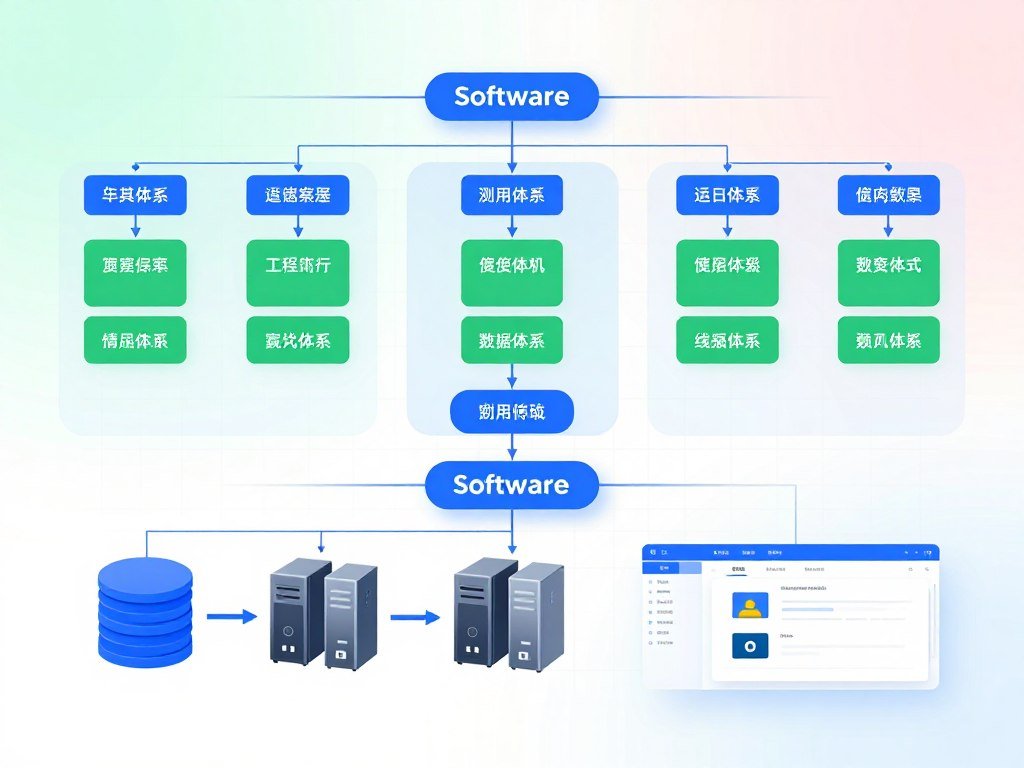
Software architecture diagrams and models make system boundaries and interactions easier to discuss. UML offers 14 diagram types. C4 uses four views: Context, Container, Component, and Code. PlantUML supports both approaches.
A diagram shows structure or behavior, while a decision note explains why the team chose that structure. SOLID names five object-oriented design principles; it is not a complete architecture method. A study of 17 software professionals found that visual aids can help explain architecture, when detail fits the audience.
| Artifact | What it shows | Useful question it helps answer |
|---|---|---|
| Context diagram | System and external actors | What is inside the boundary? |
| Component diagram | Major parts and connections | Which parts depend on each other? |
| Sequence diagram | Message order | How does a request flow? |
| Decision record | Choice and alternatives | Why was this option selected? |
The study of architecture explanations also points to a practical challenge: documentation can fall out of step with code. Keep diagrams and decision notes aligned with the system as it changes.
What Does a Software Architect Do?
A software architect helps a team connect business needs to system structure and technical decisions. The architect works with developers and business stakeholders to clarify needs, set boundaries, compare trade-offs, and explain choices. The role calls for clear communication as well as technical judgment.
Software architect and solution architect are titles that can overlap, but they do not always describe the same job. For 2026, the BLS May 2025 wage range for Computer Occupations, All Other, which includes solutions architect, was $79,000 to $158,000. Its median annual base wage was $117,000.
The BLS range for Computer Network Architects was $105,000 to $168,000, with a $134,000 median annual base wage. Indeed reported a 2026 average US base salary of $165,000 for its closest title, Solution architect. These figures use different job categories and should not be treated as a direct ranking.
An architect may help developers handle legacy systems, new technologies, or changing goals. The job can include reviewing design decisions and helping teams work through risks. Read about AI’s effect on software work for more context on human judgment. Compare salary figures only after checking the role, experience level, location, and whether the figure is base pay.
How Can Beginners Learn Software Architecture?
A beginner can build useful architecture skills by pairing an accessible introduction with practice explaining real design choices. Start with Head First Software Architecture, a visual, beginner-friendly introduction. Then choose books that match the systems or problems you want to understand.
Reading alone will not build design judgment. Sketch a real system and explain why one choice fits better than its alternatives.
Which books suit a beginner or a working architect?
- Fundamentals of Software Architecture covers styles, trade-off analysis, fitness functions, and decision notes. Its 2026 edition adds those topics.
- Software Architecture: The Hard Parts examines monolith decomposition and difficult trade-offs.
- Designing Data-Intensive Applications suits readers studying data and distributed systems. Its second edition arrived in ebook and print in March 2026, runs almost 700 pages, and adds AI data systems and distributed-system patterns.
- Domain-Driven Design Quickly introduces domain-driven design through a worked example and an introduction to Hexagonal Architecture.
What does a structured course add?
A software architecture course can teach core ideas, documentation, design, and analysis. The SEI Software Architecture Professional Certificate uses a platform-agnostic curriculum. It includes Software Architecture: Principles and Practices, Documenting Software Architectures, Software Architecture Design and Analysis, and an examination.
Complete the curriculum sequence within two years of finishing the first course. The certificate does not expire. Its course work gives you a set path through key practices without tying lessons to one vendor or platform.
As you study, pay attention to how teams explain choices to people with different roles. The same diagram may need more context for a product manager than for a developer. After each chapter or course, sketch one system you know and write down a decision, an alternative, and the trade-off.
The SEI certificate sequence deadline gives learners a clear time limit for completing the curriculum.
Conclusion
Good architectural thinking starts by making important choices visible and testable. Architecture serves a system’s purpose; it is not a contest to pick the trendiest pattern. A useful design supports business goals while leaving room for changes that teams can reasonably expect.
Start with a small application you already know. Draw its main components and the connections between them, then note which parts rely on each other. That sketch can reveal where a change might spread and where clearer boundaries could help. Pick one application you understand, sketch its main parts, and ask which connection would be hardest to change.
FAQ
What does an architect do in software?
A software architect connects business needs and quality goals to system structure, compares design options, and helps teams explain their choices. The role often includes setting boundaries between components and reviewing how changes may affect other parts. Architects work with both technical teams and business stakeholders, so they need to explain the same decision in clear terms for different audiences.
What are the best software architecture books?
Head First Software Architecture is a strong starting point for beginners, while Fundamentals of Software Architecture explains styles and trade-offs. Software Architecture: The Hard Parts focuses on decomposition and difficult choices. Designing Data-Intensive Applications suits readers studying data systems, and Domain-Driven Design Quickly offers an introduction to domain-driven design and Hexagonal Architecture.
What are the 7 principles of architecture?
There is no single agreed list of seven software architecture principles. SOLID is a known set of five object-oriented design principles, not a complete architecture rulebook. Broader ideas include modularity, separation of concerns, clear boundaries, and low coupling. Teams apply these ideas based on the system’s purpose, needs, and limits rather than following one universal numbered list.
Will AI replace Solution architect?
No one can give a definite prediction about whether AI will replace solution architects. AI can help with tasks such as drafting documents, reviewing code, or comparing options. People still need to clarify goals, judge trade-offs, test results, and take responsibility for the effects of a system in production. The role may change as teams adopt new tools.
Who gets paid more, architect or engineer?
Job titles and occupational categories do not provide a reliable direct comparison between architects and engineers. A fair comparison needs similar responsibilities, experience, location, and base-pay measures. A network architect, a software engineer, and a solution architect may work in different fields, even when their titles sound related. Compare actual duties and pay data from matching locations.
Do solution architects get paid well?
Indeed reported a 2026 average US base salary of $165,000 for its closest reported title, Solution architect. That figure is an average, not a guaranteed salary for an individual. Pay can differ by role, experience, and location, and the title may cover different duties across employers. Compare the job description and base-pay measure before drawing conclusions.
How hard is it to become a solutions architect?
Becoming a solutions architect takes technical experience and strong communication skills. You need to understand systems, explain trade-offs, and connect technical choices to business needs. A structured course can help build these skills. The SEI certificate sequence must be completed within two years of finishing its first course, which gives learners a clear deadline for that option.
What is the average salary for a solution architect in the US?
Indeed reported an average US base salary of $165,000 in 2026 for its closest reported title, Solution architect. This is not a guaranteed salary, and it differs from BLS occupational categories. The BLS figures cover Computer Occupations, All Other, which includes solutions architect, and Computer Network Architects. Those categories should not be treated as interchangeable job titles.