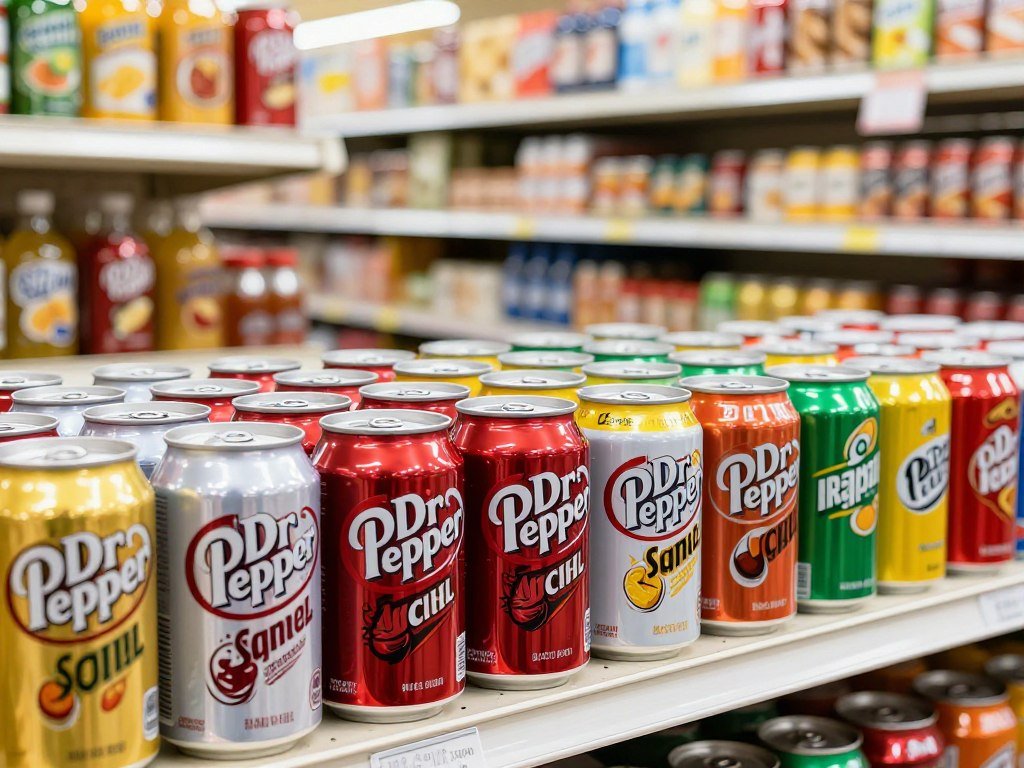
Dr Pepper is part of Keurig Dr Pepper Inc., the publicly traded beverage company behind the brand in the United States. A public company is one whose shares are available for public trading.
The brand’s owner and the company that bottles or distributes a drink can be different. This matters most when a package comes from another country, where regional companies may handle local sales. Ownership names the company behind the brand, not necessarily the operator that made or shipped a particular bottle.
This explainer focuses on U.S. ownership and the corporate history behind the drink. It also separates the parent company from local bottling arrangements, so a name on a package is easier to read. For U.S. shoppers, the key distinction is that brand ownership and local bottling are not always the same thing.
Key Takeaways
- Keurig Dr Pepper Inc. is the parent company behind Dr Pepper in the United States.
- KDP shares trade publicly under the ticker KDP.
- Coca-Cola and PepsiCo do not own the U.S. brand.
- Regional bottlers and distributors may differ from the brand owner.
- KDP combines North American refreshment drinks with a global coffee business.
- The announced company separation was still planned for early 2027 in October 2026.
Who Owns Dr Pepper, and Who Holds KDP Shares?
The name behind Dr Pepper in the United States is Keurig Dr Pepper Inc., while the parent company’s shares are publicly held. Publicly held means investors can own shares in the company through the stock market. Neither Coca-Cola nor PepsiCo owns Dr Pepper.
A public-company owner is not one single person or a rival soda maker. Investors who buy KDP shares own parts of Keurig Dr Pepper Inc.; that does not make each investor a direct owner of a can, formula, or trademark. The company’s 2025 proxy statement called KDP widely held after its shift from a closely held company formed in 2019.
KDP’s shareholders own shares in the parent company, while KDP owns the U.S. Dr Pepper brand.
This distinction also answers whether Coke or Pepsi owns the brand: they do not. A bottling company can make or distribute drinks under an agreement, but that work alone does not transfer brand ownership. The same rule applies when a package names a local operator instead of KDP.
The former Dr Pepper Snapple business is part of the company’s corporate history, not a separate stock symbol for shoppers to find today. Readers looking for an investment in the parent should search the company’s listing, rather than the soda label or its older corporate names. Readers checking the listed company can use its Nasdaq ticker, KDP, rather than searching for a Dr Pepper stock symbol.
What Is Keurig Dr Pepper?
Keurig Dr Pepper is a beverage company with both refreshment drinks and coffee in its business. Its businesses span North American refreshment beverages and global coffee, rather than one soda line alone. KDP’s portfolio includes more than 150 owned, licensed, and partner brands.
The company also had more than 50,000 employees in 2026. Its portfolio includes products KDP owns, brands it licenses, and partner brands. Being included in a portfolio does not mean KDP owns every brand in the same way.
| Entity | What it is | Example or detail |
|---|---|---|
| Keurig Dr Pepper Inc. | Publicly traded parent company | Nasdaq ticker KDP |
| Dr Pepper | Soft drink brand | Part of KDP’s beverage portfolio |
| Keurig | Single-serve brewing system | Part of KDP’s global coffee business |
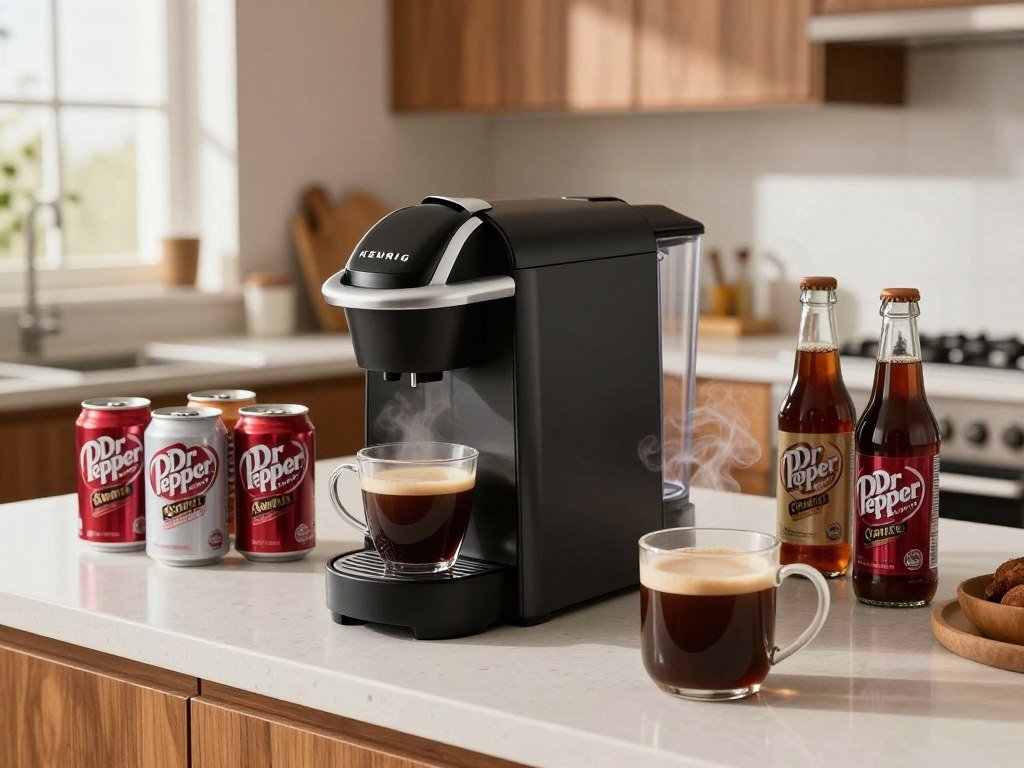
These names can sound alike because they appear within one company. Still, the Keurig Dr Pepper company, the Dr Pepper soda brand, and the Keurig brewing system describe three different things. KDP’s official 2025 annual report describes its North American beverage and coffee businesses.
For coffee shoppers, it helps to separate the brewer from the company that makes it. A comparison of Keurig coffee makers looks at brewing machines, not ownership of the soda brand. The distinction to remember is that KDP is the company, Dr Pepper is a brand, and Keurig is a brewing system.
Which Brands Share KDP’s Portfolio?
Dr Pepper shares KDP’s refreshment beverage portfolio with familiar names such as Canada Dry and Snapple. The range covers soft drinks, juices, water, and other drinks. The examples show different products and markets, not identical ownership terms.
A brand in KDP’s portfolio may be owned, licensed, or part of a partnership. Its place beside Dr Pepper does not by itself explain the legal arrangement. These North American refreshment brands give a quick sense of the range:
North American refreshment beverages
- Dr Pepper
- Canada Dry
- Mott’s
- A&W
- 7UP
- Snapple
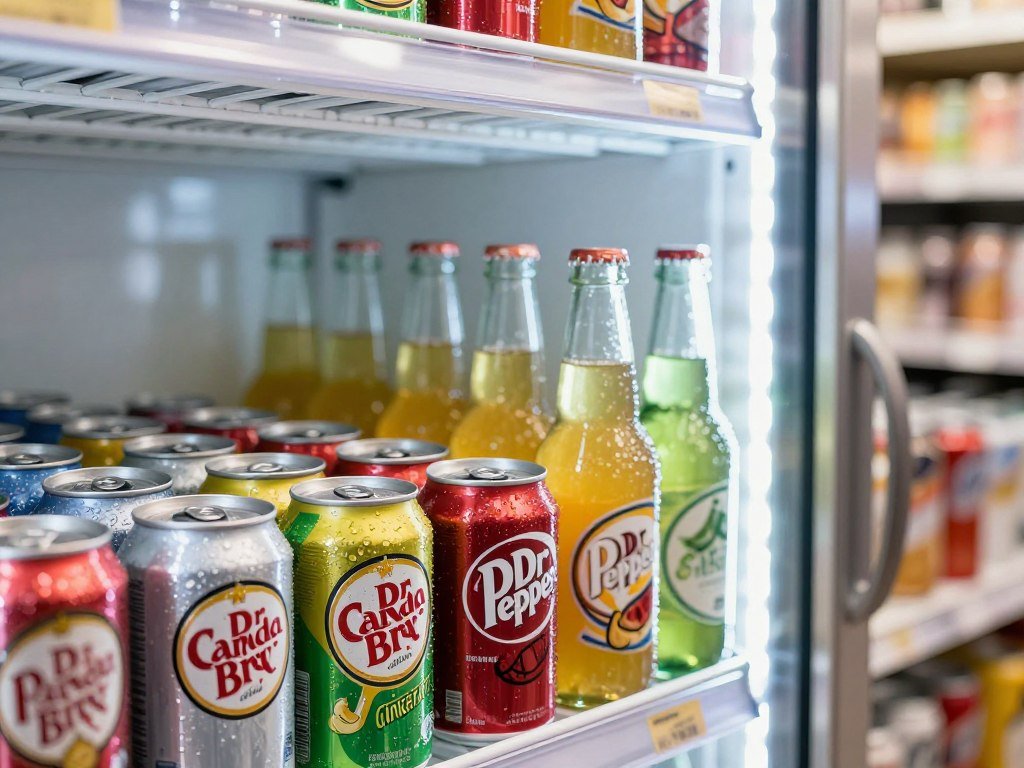
The broader group also includes Peñafiel, GHOST, Clamato, and Core Hydration. Their flavors and products differ, and the portfolio spans more than one kind of consumer drink. A package may name a license holder or bottling company, depending on the product and market.
Global coffee brands and systems
KDP’s global coffee business includes the Keurig single-serve brewing system and brands such as Peet’s, L’OR, and Jacobs. The system and coffee brands belong to the coffee side of the firm’s business, rather than its refreshment drinks.
Readers comparing a brewer with a coffee pod can use a guide to K-Cup coffee makers, which covers machines and brewing choices. That is a different question from who owns a soda brand. A brand’s place in the same portfolio does not mean it serves the same market or has the same licensing arrangement as Dr Pepper.
How Did Dr Pepper’s Corporate Ownership Evolve?
Dr Pepper’s route to its current parent passed through several corporate changes, not a direct sale from its original drugstore. The company behind it changed as businesses merged, were bought, or split apart. Those events changed the corporate entity, not the brand’s origin story.
The main steps before the Keurig combination were:
- 1923: The Dr Pepper Company was incorporated.
- 1986: Dr Pepper merged with Seven-Up.
- 1995: Cadbury Schweppes acquired Dr Pepper/Seven-Up.
- 2008: North American beverages separated from Cadbury Schweppes to form Dr Pepper Snapple Group.
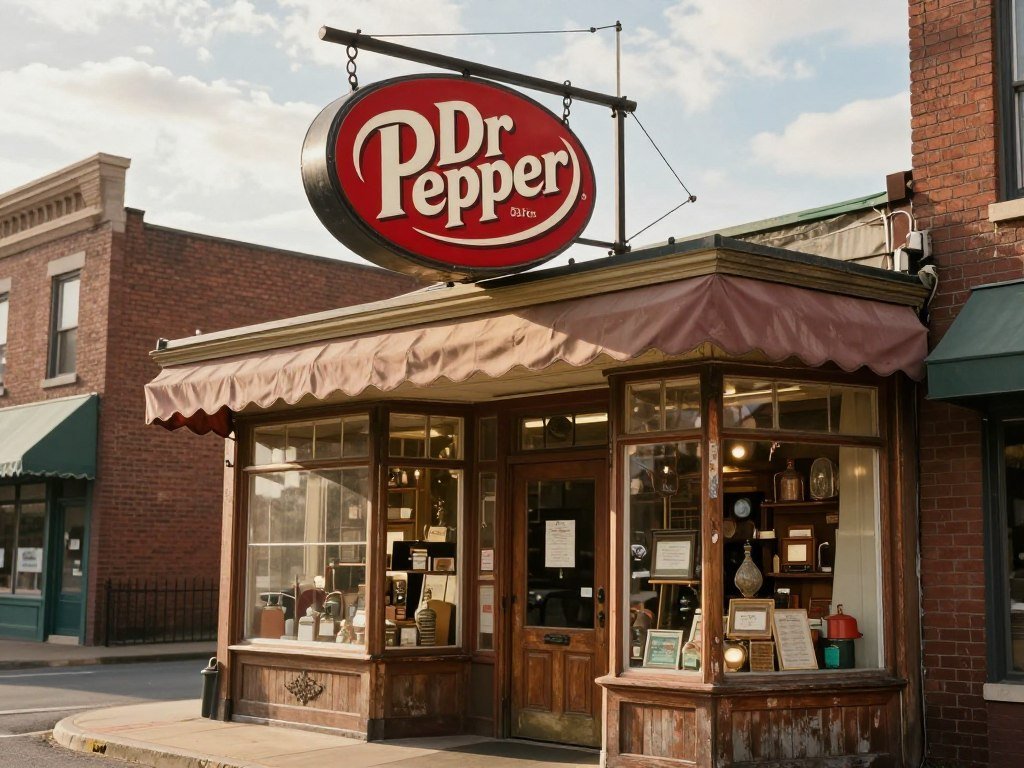
The Dr Pepper Company name marks a formal corporate step in the brand’s history. Later deals placed the business within larger beverage firms, then separated it from a wider international company. The 2008 spin-off created Dr Pepper Snapple Group, which became the company that joined with Keurig.
That sequence helps explain why old product material may show names that differ from today’s parent. The soda continued as a brand through shifts in the company structure around it. The 2008 spin-off created the company that later joined with Keurig.
Why Doesn’t Coke or Pepsi Own Dr Pepper?
Dr Pepper belongs to KDP, while Coke and Pepsi are separate companies that have competed in the same soft-drink market. Competition is not ownership, even when brands share shelves, ads, or distribution channels. Dr Pepper’s non-cola status did not make it a Coca-Cola or Pepsi product.
The U.S. Food and Drug Administration determined in 1966 that Dr Pepper was not a cola. That category decision mattered for how the drink was described, but it did not change which company owned it.
| Company | Ownership relationship to Dr Pepper | Relevant detail |
|---|---|---|
| Keurig Dr Pepper | Parent company | Owns the U.S. brand |
| Coca-Cola | Not the U.S. brand owner | Separate competitor with a historical trademark dispute |
| PepsiCo | Not the U.S. brand owner | Not the parent company |
Three historical details help separate category, advertising, and ownership:
- In 1966, the FDA determined Dr Pepper was not a cola.
- After a 1972 trademark dispute, Coca-Cola renamed its Peppo drink Mr Pibb.
- In 1995, the Federal Trade Commission blocked a proposed Coca-Cola and Dr Pepper merger.
These events show rivalry and a failed deal, not a transfer to Coke or Pepsi. A competing soda’s name or ad campaign can echo another brand without changing who owns it. A non-cola classification or a bottling relationship does not transfer ownership of the brand.
Who Bottles and Distributes Dr Pepper by Region?
In the United States, Keurig Dr Pepper produces and distributes Dr Pepper, while other markets use regional operators. Local handling changes by territory, so a bottling company’s name on a drink may not identify the brand owner. A distributor’s role is not the same as ownership.
The regional arrangements include the following operators and markets:
| Territory | Producer or distributor | Coverage |
|---|---|---|
| United States | Keurig Dr Pepper | Production and distribution |
| Canada | Keurig Dr Pepper Canada | Canada |
| Mexico | Grupo Peñafiel | Mexico |
| United Kingdom, Ireland, and Japan | The Coca-Cola Company | Those three markets |
| Europe | Krombacher Brauerei, Sinebrychoff, and Suntory | Germany, Finland, and listed Suntory markets |
The European row groups separate operators and markets, not one company-wide European arrangement. Krombacher handles Germany, and Sinebrychoff handles Finland. Suntory handles Benelux, France, Italy, Poland, Portugal, Spain, and Switzerland.
Canada has its own KDP operation, while Grupo Peñafiel handles Mexico. Coca-Cola handles the United Kingdom, Ireland, and Japan, although it does not own the U.S. brand. These roles reflect regional production or distribution agreements, rather than a change to the parent company.
A label can reveal who made or distributed a particular package, especially outside the United States. The territory matters because one operator’s role does not automatically apply to another country. Check the country on the label before treating a distributor’s name as evidence of who owns the brand.
Where Did Dr Pepper Begin?
Dr Pepper began as a Waco, Texas, soda-fountain drink in 1885. Pharmacist Charles Alderton developed it while working at Morrison’s Old Corner Drug Store. The shop’s soda fountain let him test new drink blends.
Alderton experimented with flavors, and the store’s owner, Wade Morrison, approved the new drink. Local customers began asking for it by name, and its popularity grew beyond one fountain. Its national introduction came later, at the 1904 Louisiana Purchase Exposition.
The early path from the old corner drug store to national sales can be traced in four steps:
- Alderton experimented with soda-fountain drinks while working at the drug store.
- Morrison approved the new drink for sale.
- Local customers created demand at the Waco soda fountain.
- The drink reached a national audience at the 1904 exposition.
Customers reportedly ordered the new drink as a “Waco,” tying its early reputation to the Texas city. The name Dr Pepper later became the familiar label, while the product moved from a local fountain to a national market.
The Dr Pepper Museum describes it as the oldest of the major brand soft drinks in America. That claim is carefully limited: it does not mean the oldest drink of every kind. The Waco origin explains the brand’s beginning, while the 1904 exposition marks its national introduction.
What Changed in the 2018 Keurig Deal?
The 2018 deal combined Keurig with Dr Pepper Snapple Group to form Keurig Dr Pepper. The combination joined a coffee system and business with a North American beverage company. The transaction was valued at $18.7 billion.
At closing, the companies set these shareholder terms:
| Deal detail | Term at closing | Who it applied to |
|---|---|---|
| Keurig shareholder stake | 87% | Keurig shareholders |
| Dr Pepper Snapple shareholder stake | 13% | Dr Pepper Snapple shareholders |
| Special cash dividend | $103.75 per share | Dr Pepper Snapple shareholders |
The 87% and 13% stakes describe the deal at closing, not today’s shareholder percentages. The Dr Pepper Snapple shareholders also received a special cash dividend of $103.75 for each share they held. These were terms for the people who owned shares in the two businesses at the time.
The combination brought coffee and North American soft drinks under one parent company. It did not make Keurig the Dr Pepper brand or turn the brand into a coffee product. The investment terms describe how the two groups joined, not a continuing measure of who owns the company now.
For clarity, Dr Pepper Snapple Group refers to the former beverage business in that transaction. KDP is the name of the combined parent company. Treat the original 87% and 13% split as a record of the transaction, not a current ownership snapshot.
What Does KDP’s Planned Separation Mean?
KDP’s planned separation is a future corporate change, not a completed event as of October 2026. The announced plan would split the company’s coffee and beverage businesses into two separate companies. In August 2026, KDP said it was preparing for a separation in early 2027.
The plan followed a major addition to KDP’s coffee business.
The completed coffee acquisition
Keurig Dr Pepper completed its acquisition of JDE Peet’s on April 1, 2026. Coffee is a distinct business area for KDP, with its own products, systems, and markets around the world. The deal expanded the coffee side before the planned company split.
The separation planned for early 2027
KDP was preparing to form two “pure-play” companies, meaning firms focused on one main business area. One would focus on North American refreshment beverages; the other would focus on global coffee. The company was preparing for this change, rather than reporting a completed separation.
The planned split concerns corporate structure. It does not by itself establish a change in Dr Pepper’s brand history or the history of its products. The company’s planned 2027 separation was still a future event in October 2026.
That timing matters when reading company or investment information. A plan can change before a transaction closes, and a future structure should not be treated as today’s legal structure. For ownership questions, use the announced timetable and wait for a completed transaction before treating the new structure as current.
Who Leads KDP, and How Can Investors Check?
The name “former Dr Pepper CEO” can refer to different executives depending on whether the question means Dr Pepper Snapple Group or the combined company. Leadership changed when the 2018 deal joined the businesses. Tim Cofer was Keurig Dr Pepper’s CEO in 2026.
Larry Young was president and CEO of Dr Pepper Snapple Group at the time of the deal. Bob Gamgort became CEO of the combined company in 2018. KDP’s 2026 proxy statement identifies Cofer as CEO and lists year-specific executive compensation.
The proxy is also the right place to check questions about Keurig Dr Pepper CEO salary. A salary is only one part of executive compensation, which can include other pay and benefits. The reported amounts can change from year to year, so investors should compare the same reporting period.
Use this short checklist when checking company or compensation details:
- Confirm the company name and Nasdaq ticker, KDP.
- Check the latest proxy statement.
- Separate base salary from total compensation.
- Note the reporting year for each figure.
Those steps help keep former executives’ roles separate from the current CEO’s information. A figure for one year should not be read as a permanent salary or a promise of future pay. Compare compensation only within the same reporting year and separate base salary from total compensation.
What Does Ownership Mean for Dr Pepper Products?
For shoppers, knowing the owner identifies the company behind the brand, not every detail of a product’s formula or local availability. Ownership answers one question, while a product label or local store listing answers others. A change in corporate ownership alone does not prove a recipe changed or guarantee that every variety is sold in every market.
Dr Pepper’s product line has added new varieties over time. Dr Pepper Strawberries and Cream was introduced in 2023. Dr Pepper Blackberry arrived in 2025 as a permanent variety.
Brand ownership does not guarantee a flavor’s availability in every town or every country.
Those releases show product-line development, but they do not establish that every retailer stocks every variety. A consumer may see a flavor in one market and not another. Local listings and package details provide the useful clues for a specific drink.
Corporate changes can affect how a company is organized, but that fact alone does not say what is in a can. Product names, labels, and market details remain the best way to identify the variety in front of you. Check the package and local retailer listings for the specific variety and market you have in mind.
Conclusion
Dr Pepper’s U.S. parent is Keurig Dr Pepper Inc., a public company whose brand ownership is distinct from regional distribution. KDP shares trade on Nasdaq, while local operators may handle production or delivery in other markets. The name on a can can reflect that local role.
For investors or readers checking company records, use the ticker KDP to find the listed parent. For a particular drink, read the country and distributor details on its package. Use KDP when checking the company’s investor information, and check the country label when you want to know who distributes a particular can.
FAQ
What was removed from Dr Pepper in the 1950s?
The period after “Dr” was dropped from the brand name by 1950. It was punctuation, not a flavor ingredient. The change made the printed name simpler, but it did not describe a new recipe. Modern packages use “Dr Pepper” without the period, even though older text and informal writing may still include it.
What is the oldest soda?
Dr Pepper is described as the oldest of the major brand soft drinks in America. That description does not establish it as the oldest drink of every kind. The brand began in Waco in 1885, then gained national exposure at the 1904 Louisiana Purchase Exposition. Other drinks and beverage types have different histories and may predate it.
What are the flavors of Dr Pepper?
Dr Pepper is a proprietary blend of 23 flavors. The exact flavor components are not publicly listed as a full ingredient-by-ingredient formula. Its familiar taste comes from the combined blend, rather than one single fruit flavor. New varieties add different named flavors, such as Blackberry, while the classic drink remains its own product.
Why is Dr Pepper called Dr Pepper?
Wade Morrison is credited with naming Dr Pepper, but the exact reason for the name is not established. Stories about the name have circulated over time, yet no single explanation is confirmed here. The brand’s name and its Waco origin are separate from its later corporate ownership, which now sits with Keurig Dr Pepper Inc.
Does Dr Pepper contain prune juice?
No, Dr Pepper does not contain prune juice. The claim is a rumor, not a description of the drink’s ingredients. Dr Pepper is known for its proprietary combination of 23 flavors, but the full blend is not disclosed as a public recipe. A package’s ingredient panel gives the listed ingredients for that product and market.



