A war film can be an intimate survival story, a battlefield mission, or a drama about returning home. These best military movies span many eras and styles, helping you choose a film for the kind of story you want. The Tomatometer measures the share of critics’ reviews marked positive. The Popcornmeter is the audience score. Both percentages track review responses, not a guarantee of quality, and they can change over time.
The first 15 entries follow Rotten Tomatoes’ all-time war-movie ordering, which puts Certified Fresh films first. The remaining 15 are editorial picks, chosen to widen the range of conflicts, styles, and eras. This feature covers theatrical films released from 1857 to 2019 in the ranking’s source material, with stories about World War II, Vietnam, the Civil War, Iraq, and Afghanistan. Band of Brothers is a miniseries, so it does not belong in this feature-film list.
Use the editorial rank as a way to find a starting point, not a final judgment. Some films focus on soldiers in combat; others look at civilians, captivity, memory, or life after service. The scores can help set expectations, but they cannot tell you whether a film’s subject or tone will suit you. Choose by the kind of story you want, then use the two scores as context rather than a verdict.
Key Takeaways
- The first 15 titles follow Rotten Tomatoes’ all-time war-movie order.
- The last 15 are editorial picks across more conflicts and styles.
- The Tomatometer tracks positive critics’ reviews; the Popcornmeter reflects audience ratings.
- Neither score promises that a film will suit every viewer.
- Band of Brothers is a miniseries, not a feature film.
Which Best Military Movies Belong in a Top 10 War Movies List?
Grave of the Fireflies leads the guide, while Casablanca is an accessible classic for viewers drawn to romance and wartime intrigue. Grave of the Fireflies is the strongest starting point within this ranking, though its story is an anti-war drama, not a battle spectacle.
The scores offer context for these top entries. The Rotten Tomatoes war-movie ranking places Grave of the Fireflies (1988) at No. 1, with a 100% Tomatometer and 95% Popcornmeter. A Man Escaped (1956) ranks No. 2, at 100% and 93%. Casablanca (1942) sits at No. 3, with 99% and 95%.
| Rank | Film and year | Tomatometer | Popcornmeter |
|---|---|---|---|
| 1 | Grave of the Fireflies (1988) | 100% | 95% |
| 2 | A Man Escaped (1956) | 100% | 93% |
| 3 | Casablanca (1942) | 99% | 95% |
Casablanca offers a familiar Hollywood style for viewers who want romance alongside wartime stakes. The animated Grave of the Fireflies takes a more painful route, centering the human cost of war rather than battlefield action. Its audience score is high, but that does not make its subject easy to watch.
A high audience score is a useful signal, not a promise that a difficult film will feel easy to watch.
The Top 10 war movies in order are Grave of the Fireflies, A Man Escaped, Casablanca, The Battle of Algiers, Schindler’s List, Dr. Strangelove, All Quiet on the Western Front (1930), Das Boot, Henry V, and Waltz With Bashir. The list ranges from satire to animation, historical drama, and close-quarters combat. Choose by the tone you want, not by percentage alone.

What Makes The Battle of Algiers a Landmark?
Colonel Mathieu arrives in 1950s Algeria to intensify France’s effort to suppress the independence movement. The Battle of Algiers stands out for its documentary-like style, which puts viewers close to the conflict between French colonial forces and Algerian independence fighters.
Gillo Pontecorvo directed the 1966 film, with Jean Martin as Mathieu. The French colonel is sent to Algeria to lead the campaign against the independence movement. Rather than framing the story as a distant account of military policy, the film places viewers amid a struggle shaped by opposing goals and unequal power.
Its stark, documentary-like presentation creates a feeling of immediacy. Crowds, street scenes, and military actions can feel observed rather than staged, drawing attention to how conflict unfolds in public spaces. The urgent style helps explain why the film remains a landmark among war movies.
The film’s political framing asks viewers to consider whose account they are watching. Mathieu’s role gives the French campaign a clear face, while the Algerian struggle supplies another point of view. That tension makes the film more than a battle story; it is also a study of power and resistance.
Realism in presentation does not make a dramatic film neutral history. Pontecorvo shaped scenes, performances, and emphasis to create a particular account of conflict. Notice the difference between a realistic style and an impartial record. A film can feel immediate while still guiding the viewer toward certain questions.
The film’s approach may feel stark beside more polished studio dramas. Its force comes partly from how closely it places viewers near people living through a political struggle. Watch for how the film’s point of view shapes which costs of the conflict remain visible.
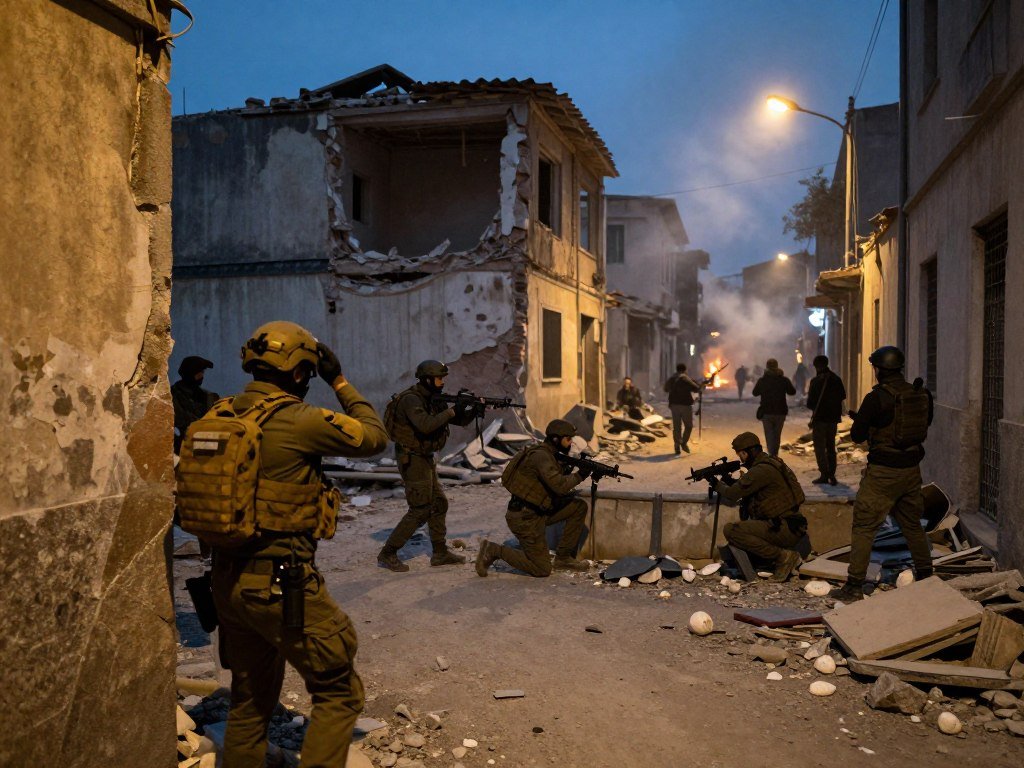
How Does Schindler’s List Center Human Choice?
Oskar Schindler arrives in Kraków in 1939 hoping to make his fortune as war begins. Schindler’s List centers on the choices he makes in occupied Kraków, not on combat spectacle. Steven Spielberg directs Liam Neeson, Ben Kingsley, and Ralph Fiennes in the historical drama.
Schindler first sees wartime Kraków as a place to build a business. His dealings bring him into contact with people who face growing danger under Nazi rule. The film follows how his aims shift as he confronts the human impact of the system around him.
That change gives the story its moral focus. Schindler’s opportunism stands beside efforts to protect people, and the contrast drives the drama. Small choices carry weight because they affect lives under an oppressive regime.
The film’s emotional force comes from this clash between self-interest and responsibility. It does not frame war as a contest of armies alone. Instead, it asks what one person can choose when the surrounding system strips people of safety and freedom.
Ralph Fiennes plays Amon Goeth, a role that earned him a Best Supporting Actor nomination. The Rotten Tomatoes Ralph Fiennes film guide notes his part in Schindler’s List, which won seven Academy Awards. The film’s history is tied to real atrocities, making its subject matter especially hard to watch.
A high audience score does not make this a light choice. Its Holocaust subject matter makes it a demanding watch, even for viewers who value serious historical drama. Set aside time for a serious drama rather than choosing it for a light or action-first viewing.
How Do War Films Turn Ideology Into a Personal Cost?
A nuclear crisis played for laughs and a young soldier’s first experience of World War I make very different arguments about war’s costs. Dr. Strangelove turns Cold War escalation into absurd comedy, while All Quiet on the Western Front shows patriotic ideals colliding with the reality of enlistment.
Stanley Kubrick directed Dr. Strangelove (1964), which ranks No. 6 with a 97% Tomatometer and 94% Popcornmeter. Its comic tone grows from leaders and military systems acting with extreme confidence as events move toward disaster. The jokes make the threat seem more disturbing, not less.
Lewis Milestone directed All Quiet on the Western Front (1930), ranked No. 7 with 98% and 89%. German schoolboys are persuaded to enlist in World War I. Their early faith in patriotic speeches meets the hardship and loss of frontline service.
6. Dr. Strangelove Or: How I Learned to Stop Worrying and Love the Bomb
Kubrick uses comedy to show how official systems can produce a crisis that no one can easily stop. The film’s absurd moments make the danger sharper because the characters treat extreme choices as routine. Its satire is aimed at the logic of escalation, not at soldiers’ suffering.
7. All Quiet on the Western Front (1930)
Milestone’s film follows young men from school into war, exposing the gap between recruitment rhetoric and battlefield life. It gives viewers a close sense of how quickly big promises can lose meaning at the front.
- Watch absurdity escalate into danger.
- Compare recruitment rhetoric with battlefield reality.
- Notice how humor sharpens the anti-war argument.
The films use opposing tones, but both challenge the ideas that make war seem clean or noble. The humor in Dr. Strangelove is a tonal choice, not a sign that its threat is harmless.
What Do a Submarine and a Shakespearean King Reveal About War?
A German submarine crew and a Shakespearean king place the pressures of war at opposite ends of the chain of command. Das Boot traps viewers with a crew under pressure, while Henry V looks at command through a ruler’s claim to France.
Das Boot (1981), directed by Wolfgang Petersen, follows a German submarine patrol in the Atlantic during World War II. Crew members face long stretches of tension in close quarters as equipment fails and danger builds. The confined setting keeps the film’s attention on men who cannot simply leave the mission.
Henry V (1989) takes a different path. Kenneth Branagh directs and stars in this energetic Shakespeare adaptation, following the English king’s claim to France. The film uses theatrical speeches and battle scenes to explore how rulers present war and lead an army.
8. Das Boot
Das Boot makes the submarine itself part of the pressure. Tight spaces, technical problems, and long periods of waiting shape the crew’s experience. Claustrophobic tension replaces the broad view of a land battle, making small failures feel dangerous.
9. Henry V
Branagh’s film gives viewers a public face of command, with a king speaking to an army and claiming the right to invade. Its theatrical style differs sharply from Petersen’s tight, enclosed setting.
Both films raise questions about leadership and the lives of ordinary soldiers. In one, the crew depends on decisions made within a cramped vessel. In the other, a king’s words help shape the actions of an army. The chain of command looks very different in each story.
Pick Das Boot for enclosed survival tension and Henry V for theatrical speeches and questions of leadership. The choice comes down to whether you prefer a close view of a crew or a stage-like account of kingship and invasion.
How Do War Stories Shift Between Memory, Homecoming, and Resistance?
Three highly rated films look beyond a single battle to memory, homecoming, and resistance. Waltz With Bashir, The Best Years of Our Lives, and Army of Shadows focus on what war leaves behind, though each takes a different path.
Ari Folman’s Waltz With Bashir (2008) is an animated account of memories connected to the 1982 Lebanon War. William Wyler directed The Best Years of Our Lives (1946), which follows three World War II veterans adjusting to civilian life. Jean-Pierre Melville’s Army of Shadows (1969) portrays the French Resistance during World War II.
| Film and year | Tomatometer | Popcornmeter | Central lens |
|---|---|---|---|
| Waltz With Bashir (2008) | 97% | 90% | Animated memory of the 1982 Lebanon War |
| The Best Years of Our Lives (1946) | 97% | 93% | Veterans returning to civilian life |
| Army of Shadows (1969) | 97% | 93% | French Resistance |
These films ask viewers to attend to what remains after an event. Memory shapes Folman’s animation, while Wyler studies the hard work of readjustment. Melville focuses on an underground struggle, where resistance demands patience and secrecy.
The styles vary, but none needs continuous combat to make war felt. Their stories rest on what people remember, how they rebuild daily life, or what they risk for a cause. Afterward becomes the key subject, not a pause between battles.
The Best Years of Our Lives is the clearest choice here for a story centered on veterans after the fighting. Its focus on returning home sets it apart from the other films, which look at memory or resistance. The three titles offer distinct ways to view history beyond the battlefield.
Why Does Class Matter in Grand Illusion?
French officers and enlisted men in captivity discover that class can divide them as sharply as the opposing army. Grand Illusion makes class and captivity central to its view of war, showing how social rank can shape ties among prisoners.
Jean Renoir directed the 1937 film, with Jean Gabin, Pierre Fresnay, and Erich von Stroheim in key roles. The French captives come from different backgrounds, and their shared situation does not erase those differences. Their relationships shift as they face the rules and limits of captivity.
The film complicates the line between enemies and social classes. People from opposing nations may share habits or status, while men on the same side may not share the same life. Rank affects how characters see one another, even when the opposing army controls their fate.
Notice these details as the story unfolds:
- Rank and the ways officers hold authority.
- Shared captivity among men with different backgrounds.
- Moments when class matters more than nationality.
Those details make the film’s view of conflict more social than tactical. Its attention rests on how people relate across lines of rank, rather than on a string of battle scenes. The story can feel quiet beside action-first war movies.
Its measured pace makes it a reflective classic, not an action-first choice. Give its measured pace room to work instead of expecting frequent battle sequences. The rewards lie in the characters’ changing ties and the way class shapes their sense of duty.
How Do War Films Keep the Viewer Close to One Person?
A bomb-disposal assignment in Baghdad and a desperate effort at Auschwitz each narrow a vast conflict to an urgent human task. The Hurt Locker and Son of Saul keep viewers close to one person, but their settings and historical circumstances are distinct.
Kathryn Bigelow directed The Hurt Locker (2008), which follows a bomb-disposal unit in Baghdad. Its tension grows around dangerous assignments and the choices made under pressure. The film earned a 96% Tomatometer and an 84% Popcornmeter.
László Nemes directed Son of Saul (2015), which follows a Jewish worker at Auschwitz seeking a rabbi for a child. It also earned a 96% Tomatometer, with a 79% Popcornmeter. The film confines attention to one person’s desperate task in a Holocaust setting.
14. The Hurt Locker
The Hurt Locker turns a team’s work into a close view of combat in Iraq. Its focus stays on the bomb-disposal unit and the intense demands of its mission. The setting is a modern conflict, and the film’s tone is tense rather than easygoing.
15. Son of Saul
Son of Saul limits what viewers see as its main character pursues his goal. That narrow frame makes the film feel confined, matching the extremity of its historical setting. The subject calls for more than a casual action-film mood.
The films share a tight focus, not the same history or kind of war. The Hurt Locker depicts a bomb-disposal unit in Baghdad, while Son of Saul takes place at Auschwitz during the Holocaust. Each is emotionally demanding, and neither works as a casual action pick.
Choose The Hurt Locker for contemporary combat tension and Son of Saul for an unflinching, tightly confined Holocaust drama. Their narrow points of view let one person’s immediate task carry the weight of a much larger conflict.
Which Hollywood War Movies Turn Missions Into Personal Journeys?
Captain Miller’s search for a paratrooper and Captain Willard’s trip upriver give these films different kinds of mission. Saving Private Ryan is the clearest Hollywood entry point for an accessible WWII platoon mission, while Apocalypse Now suits viewers open to a surreal Vietnam story.
Steven Spielberg directed Saving Private Ryan (1998), which follows Captain Miller and his men behind enemy lines. They search for Private James Ryan after his brothers die in combat. The film makes that rescue mission a test of duty and character.
Francis Ford Coppola directed Apocalypse Now (1979). Captain Willard travels through Vietnam to find Colonel Kurtz, and the trip becomes a hallucinatory psychological ordeal. It moves away from a straightforward rescue plot toward a strange and unsettled view of war.
16. Saving Private Ryan
The film’s accessible structure makes the platoon’s mission easy to follow, even as the choices become harder. Its focus stays on the men sent to find one soldier and the cost of carrying out that order.
17. Apocalypse Now
Willard’s journey grows more disorienting as he travels upriver. Viewers who want a clear military goal may prefer Spielberg’s film; Coppola’s story is better suited to someone ready for a more unsettled tone.
These three cues can help you choose:
- A rescue mission points to Saving Private Ryan.
- A platoon under pressure shapes Spielberg’s film.
- A psychological journey defines Apocalypse Now.
Saving Private Ryan is the more direct pick for viewers seeking a WWII mission story. Apocalypse Now takes a less grounded approach to its Vietnam setting, with the mission turning inward as Willard approaches Kurtz.
Choose by tone as much as by setting, since one is a rescue drama and the other a descent into obsession. A mission can hold a film together, but it does not guarantee the same kind of viewing experience.
How Do Training and Evacuation Shape a Soldier’s Story?
One story begins with recruits being shaped into soldiers, while the other finds troops trapped on a beach in France. Full Metal Jacket studies a soldier’s formation, while Dunkirk compresses an evacuation into a tense survival account.
Stanley Kubrick directed Full Metal Jacket (1987), which moves from boot camp to the Vietnam War. Christopher Nolan directed Dunkirk (2017), set in May 1940 as Allied troops are trapped in France. Their stories take different routes through military pressure.
Full Metal Jacket uses a two-part structure to connect boot-camp conditioning with later combat. Its first part follows recruits under strict training, while the second moves to Vietnam. The split asks how a soldier’s formation affects what follows.
18. Full Metal Jacket
The film’s two-part design makes training more than an opening chapter. It shows how military conditioning and combat belong to one larger story, even when the setting and pace shift.
19. Dunkirk
Dunkirk focuses on Allied forces trapped in France and the effort to get them away. Nolan builds suspense from the danger around the evacuation, not from a long account of one soldier’s training.
The films differ in scale and structure. Full Metal Jacket studies the making of a soldier before showing combat, while Dunkirk keeps attention on troops trying to survive an urgent military crisis. One looks at formation; the other narrows its focus to escape.
Dunkirk compresses an evacuation into a tense survival story. Pick Full Metal Jacket for a study of training and conditioning, and Dunkirk for a tightly focused evacuation story. The contrast makes them useful choices for different moods.
Which War Action Movies Make a Mission Feel Immediate?
A message delivery, an urban mission, and the return from Vietnam show three different ways a war story can hold attention. Black Hawk Down is the strongest pick here for sustained unit-level combat, while The Deer Hunter offers a slower character drama.
Sam Mendes directed 1917 (2019), following two British soldiers carrying a message across no-man’s-land. Ridley Scott directed Black Hawk Down (2001), about a Mogadishu mission that becomes a 15-hour urban battle. Michael Cimino’s The Deer Hunter (1978) follows three Pennsylvania steelworkers whose Vietnam service changes their lives.
| Film and year | Tomatometer | Popcornmeter | Viewing focus |
|---|---|---|---|
| 1917 (2019) | 88% | 88% | Two-soldier delivery mission |
| Black Hawk Down (2001) | 77% | 88% | Urban unit combat in Mogadishu |
| The Deer Hunter (1978) | 86% | 91% | Vietnam service and life afterward |
The best war action movies here depend on how much combat you want to see. Black Hawk Down stays with a unit through an urban fight, while 1917 keeps its attention on two British soldiers and their dangerous delivery mission. Both films put viewers close to a task with high stakes.
The Deer Hunter takes more time with the effects of service. Its story follows the steelworkers through Vietnam and into changed lives afterward. That wider reach makes it less focused on immediate mission action, but stronger for viewers who want a character drama.
Urgency works differently in each film. 1917 follows a message across no-man’s-land, Black Hawk Down centers on combat in Mogadishu, and The Deer Hunter considers what follows service. Each gives the viewer a distinct sense of time and pressure.
Pick the film by how much time you want to spend with the mission itself versus its consequences. If you want unit-level combat, choose Black Hawk Down; if you want a slower account of service and its effects, choose The Deer Hunter.
Which Modern Military Movies Put a Soldier Under Pressure?
A rooftop decision in Iraq and a long intelligence hunt for Osama bin Laden put different kinds of pressure on their central characters. Zero Dark Thirty suits viewers who want a procedural manhunt, while American Sniper offers a soldier-centered view of service in Iraq.
Clint Eastwood directed American Sniper (2014), with Bradley Cooper in the lead role as Chris Kyle. The film centers on Kyle and his decisions in Iraq. It has a 71% Tomatometer and an 84% Popcornmeter.
Kathryn Bigelow directed Zero Dark Thirty (2012), starring Jessica Chastain. The film dramatizes the hunt for Osama bin Laden and the eventual Abbottabad raid. Its 91% Tomatometer and 80% Popcornmeter reflect different responses from critics and audiences.
23. American Sniper
American Sniper keeps its attention on a soldier’s experience and decisions under threat. It can suit viewers who want a frontline viewpoint, though its portrayal should not be treated as a neutral record of war.
24. Zero Dark Thirty
Zero Dark Thirty follows a decade-long manhunt and ends with the Abbottabad raid. Its procedural approach spends time on intelligence work as well as military action, giving the operation a longer arc than a single combat mission.
Consider these prompts while choosing:
- Moral decisions made under threat.
- Intelligence work between military operations.
- The personal costs of prolonged service.
American Sniper is the soldier-centered choice, while Zero Dark Thirty tracks an intelligence operation. The films place different kinds of pressure on their central characters, and each shapes its story around that focus.
Keep the human cost and the disputed moral choices in view rather than treating either film as a neutral record. Their different points of view affect how viewers read the decisions at their center.
Which War Movies Based on True Stories Show Different Kinds of Courage?
Desmond Doss’s refusal to carry a weapon makes Hacksaw Ridge the clearest real-person story in this group. Hacksaw Ridge is the direct choice for a film about one documented person’s actions, while the other films adapt or dramatize events in different ways.
Mel Gibson directed Hacksaw Ridge (2016), which has an 84% Tomatometer and 92% Popcornmeter. Doss refused to carry a weapon and rescued 75 wounded men on Okinawa. Clint Eastwood directed Letters From Iwo Jima (2006), which presents Japanese soldiers’ side of the World War II battle.
| Film and year | Tomatometer | Popcornmeter | Real-world basis |
|---|---|---|---|
| Hacksaw Ridge (2016) | 84% | 92% | Desmond Doss’s refusal to carry a weapon and rescue work on Okinawa |
| All Quiet on the Western Front (2022) | 90% | 90% | Fictionalized World War I story adapted from a novel |
| Letters From Iwo Jima (2006) | 91% | 86% | Japanese soldiers’ experience defending Iwo Jima |
Hacksaw Ridge is based on a real person, while All Quiet on the Western Front (2022) adapts a novel. Letters From Iwo Jima presents the Japanese soldiers’ side of a real World War II battle. Those different bases shape what viewers can take as history.
Films can draw on a person’s life, a novel, or events shaped for drama. A true setting does not mean every scene happened just as shown. Context matters when a film uses real battles or people to tell a story.
For viewers seeking a real person’s story, Hacksaw Ridge is the clearest pick. The other films offer ways to consider a battle or war through an adapted story, rather than tracing one person’s documented life.
Check whether a film follows a documented person, adapts a novel, or dramatizes events before treating its scenes as literal history.
How Does The Bridge on the River Kwai Test Duty and Pride?
A British prisoner of war agrees to build a bridge for his Japanese captors, then becomes absorbed in doing it well. The Bridge on the River Kwai turns a work project into a test of duty and pride, with Alec Guinness playing Colonel Nicholson.
David Lean directed the 1957 film, which won seven Academy Awards, including Best Picture. British POWs are forced to build a bridge for their captors, but Nicholson’s focus shifts as he takes pride in the work. His professional skill makes the task more complicated than simple obedience.
Nicholson’s choices blur the line between duty and helping the enemy. Building the bridge can seem like an effort to keep order among prisoners, yet the captors benefit from the work. The film’s central conflict grows from that uneasy overlap.
The bridge becomes a symbol of pride and misplaced purpose as the story reaches its climax. Nicholson’s drive to complete the job well changes how viewers read his actions. What looks like a practical task also becomes a measure of judgment under captivity.
Keep these questions in mind as you watch:
- When does duty become pride?
- Who benefits from the work?
- What does captivity do to judgment?
The film’s lasting pull comes from the conflict between a soldier’s professional standards and the purpose those standards serve. Nicholson does not simply follow orders; he becomes invested in the bridge itself.
Notice how Nicholson’s professional pride changes the meaning of an apparently practical task. That shift makes the bridge more than a backdrop for a POW story; it becomes the measure of his judgment.
What Do the Civil War and Iraq War Films Say About Service?
Glory’s soldiers face the Confederacy and discrimination within their own army, while Warfare places viewers with a platoon in combat. Glory centers on service and racism, while Warfare narrows its focus to the immediate experience of an Iraq War platoon.
Edward Zwick directed Glory (1989), which follows the 54th Massachusetts Infantry during the Civil War. Black soldiers confront the Confederacy and racism within the Union Army. The film ties military service to the fight for respect inside and outside the regiment.
Ray Mendoza and Alex Garland wrote and directed Warfare (2025), which follows an American platoon in an Iraq War story. Mendoza, an Iraq War veteran, co-wrote and co-directed the film. Its close focus on a group gives the story an immediate view of combat pressure.
29. Glory
Glory looks at both the danger of battle and the racism Black soldiers face while serving in the Union Army. Its history-minded drama makes the 54th Massachusetts Infantry the center of the story, not just one unit in a larger war.
30. Warfare
Warfare keeps viewers close to a platoon as combat unfolds. Its focus differs from Glory’s historical scope, placing attention on soldiers’ direct experience rather than a regiment’s struggle against racism.
The films approach service from different angles. Glory connects military duty to discrimination within the army, while Warfare focuses on the pressure of combat in a contemporary conflict. One gives history a broad frame; the other stays near a group of soldiers.
Choose Glory for a history-minded drama about service and racism, or Warfare for a close-range contemporary combat story.
The two films leave viewers with different questions about what service demands. Glory draws attention to the barriers soldiers faced within their own army. Warfare keeps its attention on an American platoon under fire.
Conclusion
The right pick depends on whether you want battlefield urgency, historical reflection, or a story about life after combat. Saving Private Ryan is a familiar starting point for a WWII mission story, while Grave of the Fireflies leads the ranking for an anti-war drama.
Choose by tone and subject, then check a streaming service’s current catalog because availability changes. If you remember a scene but not its title, a screenshot movie search can offer leads to check against details you recall. Choose one title by its tone, then check where it is currently available before settling in.
FAQ
What are the top 10 military movies?
The first ten ranked titles are Grave of the Fireflies, A Man Escaped, Casablanca, The Battle of Algiers, Schindler’s List, Dr. Strangelove, All Quiet on the Western Front (1930), Das Boot, Henry V, and Waltz With Bashir. The group includes animation, satire, historical drama, and combat stories. Start with the title whose subject and tone sound right for your evening.
What are the top 10 best Special Forces movies of all time?
Black Hawk Down is a strong pick for a raid-focused story, while Zero Dark Thirty covers a manhunt and raid. This ranked list is not limited to Special Forces films, so it includes dramas about veterans, resistance, captivity, and civilians too. The two recommendations offer different views of military operations, from unit-level combat to a long intelligence effort.
What is the most realistic military movie?
Black Hawk Down is a strong grounded combat choice because it follows a unit-level Mogadishu mission. Realism is not an objective single-film award, though, and films still shape events through their point of view, editing, and drama. Choose it for its sustained focus on soldiers in an urban battle, not as a perfect record of every combat experience.
Which Soldier movie is the best?
Saving Private Ryan is an accessible choice for a WWII platoon mission. Captain Miller’s search for Private James Ryan gives the story a clear goal and keeps the group’s choices at its center. The best fit still depends on your preferred tone. Choose a different film if you want satire, a less direct story, or a closer look at life after combat.
What are some good military movies to stream?
Saving Private Ryan, Apocalypse Now, 1917, and Hacksaw Ridge offer four distinct military stories. They range from a platoon mission and a surreal Vietnam tale to a delivery mission and a real person’s story on Okinawa. Streaming catalogs change by region and over time, so check the services you use before settling on one.
What is considered the best war film ever made?
Grave of the Fireflies is No. 1 in this guide’s ranking. Saving Private Ryan is another widely recognized starting point, especially for viewers who want an accessible WWII mission story. No single title has universal agreement as the best war film; subject, style, and viewing mood all affect what feels most powerful to you.
What are the top 20 war movies of all time?
The first 20 ranked entries run from Grave of the Fireflies through 1917, with The Hurt Locker, Son of Saul, Saving Private Ryan, Apocalypse Now, Full Metal Jacket, and Dunkirk among them. The order works as an editorial guide, not an objective verdict. Use it to find films by era and tone, then choose the kind of story you want.
What war movie won an Oscar?
The Bridge on the River Kwai won seven Academy Awards, including Best Picture. David Lean’s film follows British prisoners forced to build a bridge for their Japanese captors. Alec Guinness plays Colonel Nicholson, whose pride in the work complicates his duty as a prisoner. It is a strong choice for a war drama about captivity and judgment.