
At a baccarat table, your choice is which hand to back, not which cards it should draw. The deal follows fixed rules in the common casino version, so you do not choose how either hand plays. That makes the game easier to follow once you know what to watch. Whether you are new to casino tables or have seen baccarat in a movie, you can learn the basic flow without memorizing every detail at once.
This guide explains how to score a hand, follow each round, and compare the main bets. You will also see what optional wagers change and how free play can help you practice. A betting system cannot promise a win, but knowing the rules can help you make sense of each result. You can follow each round by tracking the two totals and letting the fixed rules govern the draw.
Key Takeaways
- You choose a wager, not the cards.
- Hand totals use only the last digit.
- Punto banco follows fixed draw rules.
- Banker has the lowest house edge among standard bets.
- Free play lets you rehearse without staking money.
How Are Baccarat Cards Scored?
A 7 and an 8 score 5 because baccarat keeps only the units digit of 15. Cards 2 through 9 count at face value, while 10s and face cards count as zero. Aces count as one, and suits never change a card’s point value.
To score a hand, add the card values, then remove the tens digit if the sum reaches 10. The final total can range from 0 through 9. The number tells you the hand’s score, not the raw sum of its cards.
When the cards add to 10 or more, keep only the units digit as the hand total.
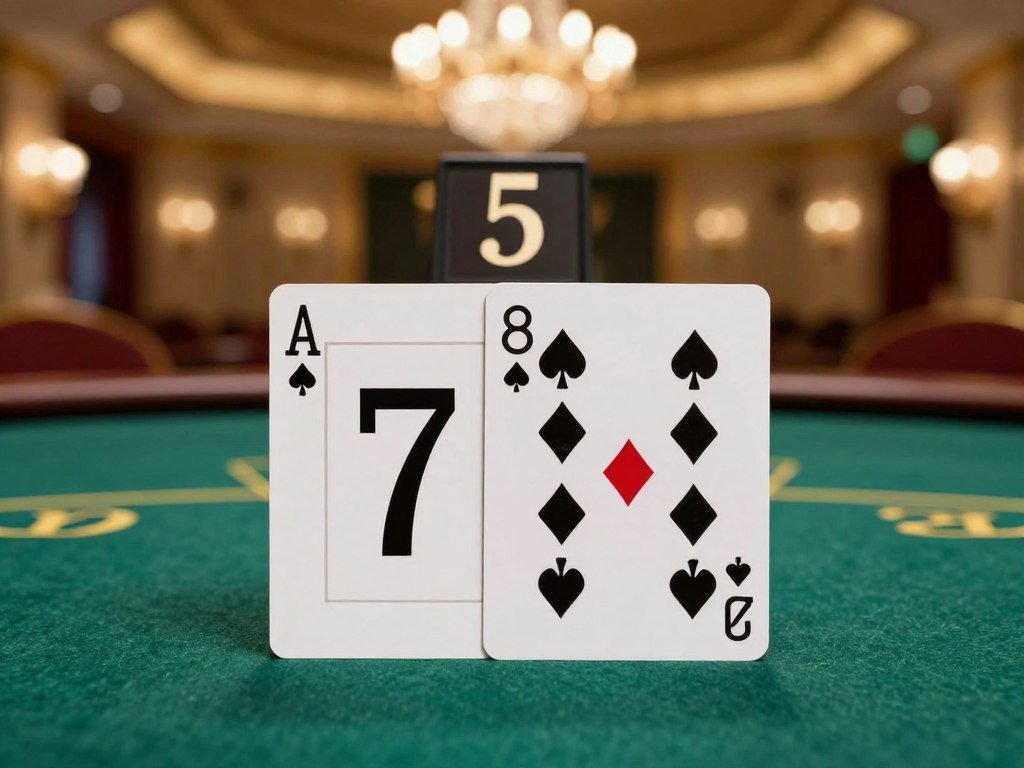
For example, 6 plus 7 makes 13, so the hand scores 3. An ace and a 6 make 7, since both cards count at their stated values. These examples use the same method whether you are checking the Player hand or the Banker hand.
Two cards worth 10 points together score 0, not 10. A 9 and a 9 make 18, which scores 8. The cards still matter as individual values when a later rule checks a third card.
For quick scoring, ignore the tens digit whenever the cards add to 10 or more.
How Does a Baccarat Card Game Round Work?
In punto banco, you place your bet before the dealer alternates two cards to each hand. Punto banco is the common fixed-rule form of the game, where the dealer applies the draw rules. The terms Player and Banker name the hands, not you and the casino.
Baccarat card game rules in punto banco require the dealer to follow fixed draw rules, rather than letting bettors choose cards. The cards come from a shoe, a holder used for dealing, which commonly contains several decks. Unlike poker, you do not decide whether to stay, raise, or fold based on private cards.

Follow these five steps to read a round from the first wager to the result:
- Place a bet on Player, Banker, or Tie.
- Deal two cards to each hand, alternating between Player and Banker.
- Calculate both totals using the baccarat scoring method.
- Apply any required third-card rules.
- Compare final totals and settle the wagers.
The dealer starts the deal only after bets are placed. The first card goes to Player, the second to Banker, and the dealer repeats that order for each hand’s second card. A deck contains 52 cards, and casino shoes often hold more than one deck.
The [best card games] include games where players make choices during each hand, such as Texas Hold’em. Baccarat works differently because bettors back an outcome while the dealer controls the sequence. You can still follow the action by watching which hand receives each card and noting its changing total.
The hand closer to nine wins, while equal final totals produce a tie.
When Does Each Hand Draw a Third Card?
A Player total of 5 draws, while a Player total of 6 stands. The Player hand follows its own simple rule before the Banker’s action is decided. A natural is a first-two-card total of 8 or 9 that ends the round without further draws.
A natural stops the round before either hand takes another card. The dealer applies the rules without asking bettors to choose. If neither hand has a natural, check the Player total first, then use the Banker chart.
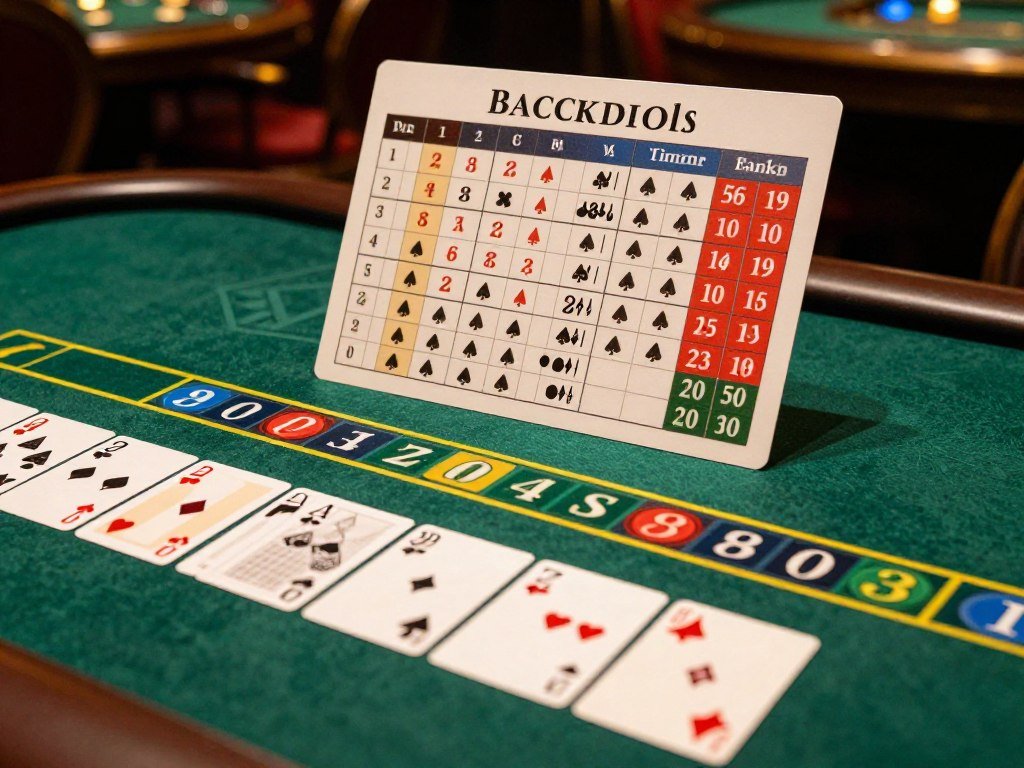
The Player hand draws on 0 through 5
Player draws one card when its first two cards total 0 through 5. It stands on 6 or 7. A total of 8 or 9 is a natural, so the round ends before any further draw.
The Banker’s rule depends on whether Player stood or drew. If Player stood, Banker draws on 0 through 5 and stands on 6 or 7. If Player drew, Banker checks its own two-card total against the value of Player’s third card.
Baccarat Rules Chart for Beginners: Banker draws
Banker always draws on a two-card total of 0, 1, or 2. For totals from 3 through 7, use the chart below when Player drew. “All values except 8” means Banker draws unless Player’s third card was an 8.
| Banker two-card total | Player third card values that make Banker draw | Player third card values that make Banker stand | Banker action if Player stood |
|---|---|---|---|
| 3 | All values except 8 | 8 | Draw |
| 4 | 2-7 | 0-1, 8-9 | Draw |
| 5 | 4-7 | 0-3, 8-9 | Draw |
| 6 | 6-7 | 0-5, 8-9 | Stand |
| 7 | None | All values | Stand |
For Banker totals of 0 through 2, the Banker draws whether or not Player took a third card. A Player total of 6 or 7 means Player stood, so use the last column instead of the third-card columns. Keep that difference in mind when the dealer reveals the cards.
Check whether Player drew before applying the Banker chart, since that changes which Banker rule applies.
Which Baccarat Bets Have the Lowest House Edge?
Among the three standard wagers, Banker has the lowest house edge. The Banker bet’s edge is 1.06%, compared with 1.24% for Player. The Tie bet has the highest house edge, at 14.36%.
The house edge estimates the casino’s long-term share of wagers under standard rules. It does not predict the result of one round. The table compares the usual payout, win probability, and house edge for each bet.
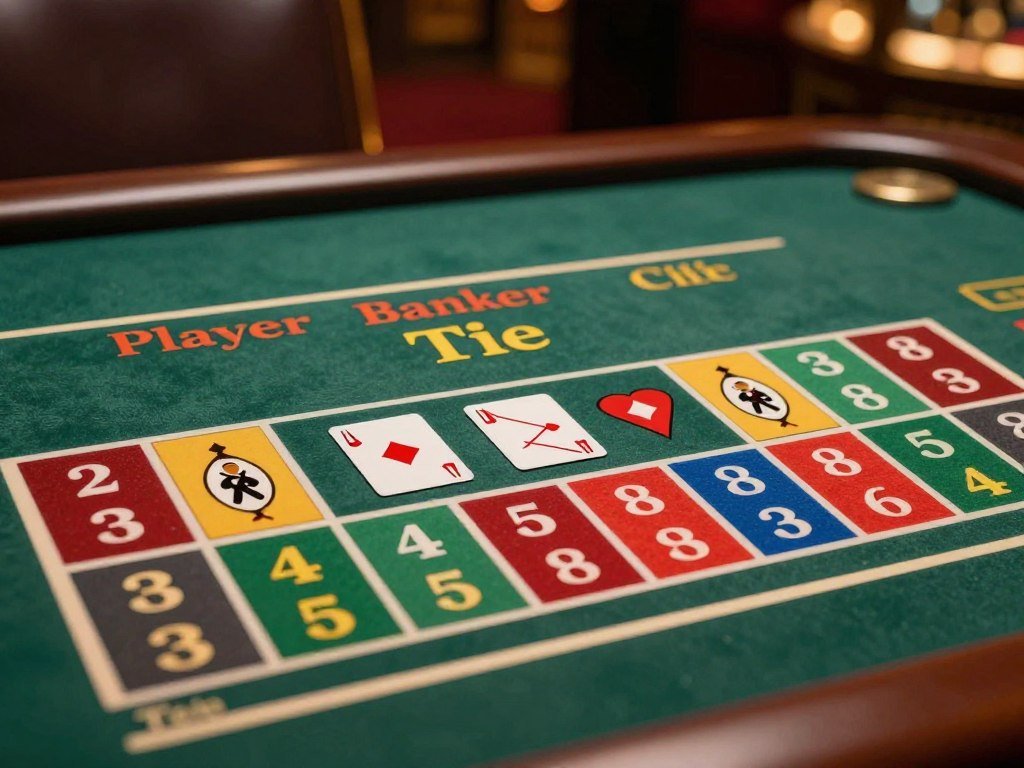
Player and Banker bets
Player and Banker bets both pay 1:1 under standard rules. A winning Banker bet carries a 5% commission, so the casino takes that amount from the win. The Banker hand wins 45.86% of rounds under standard rules, while Player wins 44.62%.
| Bet | Standard payout | Win probability | House edge |
|---|---|---|---|
| Player | 1:1 | 44.62% | 1.24% |
| Banker | 1:1, less 5% commission | 45.86% | 1.06% |
| Tie | Commonly 8:1 | 9.52% | 14.36% |
A tie generally pushes Player and Banker bets, which means the casino returns those wagers instead of paying them as wins. The exact handling can appear on the table’s rules. For the standard options, Banker offers the lowest house edge, though its commission trims each winning payout.
Tie bet odds
The Tie bet commonly pays 8:1, but casinos may set a different payout. It wins less often than either hand bet, with a 9.52% win probability under standard rules. That larger advertised payout may catch your eye, but the high house edge makes it the costliest standard choice over time.
These wagers differ from games where each player chooses actions during several betting rounds. A [poker betting guide] can help explain that contrast, but baccarat keeps the hand’s draw decisions fixed. Compare the house edge, not just the advertised payout, when choosing among these bets.
What Side Bets and Rule Variations Change Payouts?
Side bets add separate outcomes to the ordinary Player, Banker, and Tie choices. A pair bet wins when the first two cards in either hand form a pair. Optional-bet availability and payouts depend on the table.
The Venetian lists several examples, including a 9:1 Tie payout. Its pair bet pays 12:1 when either hand’s first two cards make a pair. Those wagers settle by their own conditions, apart from the main hand result.
Pair and outcome side bets
These examples show how an optional wager can focus on a card pattern or a specific hand outcome:
- The Venetian lists a 12:1 pair payout and a 9:1 Tie payout.
- Tiger pays 12:1 on a two-card Banker 6 and 20:1 on a three-card Banker 6; Small Tiger pays 22:1 and Big Tiger 50:1 on those respective outcomes.
- Tiger Pair pays 4:1 for a single pair, 20:1 for a double pair, and 100:1 for a twin pair.
- Lucky 7 pays 6:1 on a winning two-card Player 7 and 15:1 on a winning three-card Player 7.
A separate Lucky Monkey wager uses the ranks of third cards. The Lucky Monkey Side Bet Rules say it wins when a Player or Banker third card is a Jack, Queen, or King. If neither hand draws a third card, the wager loses.
No-commission baccarat
No-commission baccarat removes the usual Banker commission, but it does not promise a full even-money payout in every case. In the stated variation at The Venetian, a winning Banker hand totaling 6 pays half the original bet. Other Banker wins follow the table’s posted terms.
A side bet may settle even when the main Player or Banker wager loses. That separate result can make a table feel busy, so read each condition before placing a chip. Before placing an optional wager, confirm its exact winning condition and payout on that table.
Can a Baccarat Strategy or Card Count Beat the Odds?
In punto banco, no betting progression changes the cards or the fixed drawing rules. A system can change which wagers you make, but it cannot control the hands. Card counting tracks exposed cards, though its effect remains small.
An eight-deck Level 1 count lowers the combined house edge to 1.01%, from 1.06% when always betting Banker. The count uses a running total: add 1 for each exposed card valued 1 through 4, subtract 1 for each valued 5 through 8, and give 0 to cards valued 0 or 9.
What a betting strategy can and cannot change
With this count, bet Player when the running count reaches -4 or lower. Bet Banker at every higher count. The strategy’s small edge reduction applies under the stated eight-deck condition; it does not remove the house advantage.
A betting progression, such as raising your wager after a loss, only changes the size and timing of your bets. It does not make a winning hand more likely. A losing streak can still drain a set budget faster when each wager grows.
The Level 1 baccarat count
The count groups cards by value rather than suit. Low cards from 1 through 4 add to the count, middle cards from 5 through 8 lower it, and zero-value cards or nines leave it unchanged. You need to track exposed cards across the shoe.
Is baccarat a skill or luck game? Punto banco uses fixed play and chance outcomes, so you cannot steer the deal. Tracking exposed cards adds limited analytical skill, but the slight change in expected results is not a reliable path to profit.
Treat any counting result as a narrow mathematical adjustment, not a dependable way to profit.
Where Can You Play Baccarat Online for Real Money in the US?
Real-money online baccarat is available in five listed states: Connecticut, Michigan, New Jersey, Pennsylvania and West Virginia. State rules shape where you can open an online account and play. Listed casinos in Delaware and Rhode Island do not offer baccarat.
Baccarat card game online availability is tied to your state. Live and electronic formats can show the same basic hand outcomes with different interfaces. A live game streams a dealer and table, while an electronic version displays the cards on screen.
At a physical casino, table rules and available variations can differ from one table to another. Check the posted rules before you sit down, especially if the table offers a special payout or side bet. In New York, a nearby casino may have baccarat tables, but the online state list above does not include New York.
Before sharing personal details or payment information, check the full web address and the casino’s contact details. A guide to recognizing a fake website explains why HTTPS alone does not prove a site is trustworthy. Browser warnings and reputation checkers can offer a second opinion, not a guarantee.
Check the rules and eligibility displayed for your state before opening a real-money game.
How Can You Practice Baccarat Before Betting?
A free-play mode is useful for rehearsing the sequence without staking real money. It lets you add totals and follow the draw while you learn the game. Menus and rules can vary by platform, so practice screens may not look alike.
Confirm that practice mode uses no real-money wager before you start. Then use this checklist to focus on the parts that carry over to a live table:
- Confirm the practice mode uses no real-money wager.
- Identify the Player, Banker, and Tie choices.
- Follow the two-card totals before any draw.
- Confirm whether the shoe uses six or eight decks.
Use free play to rehearse the round
A standard deck has 52 cards in four suits, while baccarat shoes commonly use six or eight decks, depending on the game. Practice by watching each hand’s total change, then checking whether the dealer follows the correct draw rule. You can repeat the sequence until scoring feels familiar.
Use free play to learn the table display, too. Some screens show the last results, bet controls, or a separate side-bet panel. Treat those features as layout choices, not as clues about which hand will win.
Check the table setup before a live game
A full-size table can have 12 numbered seats. That number describes the layout, not a number of hands you must play. You can watch from a seat and learn how the dealer handles cards before placing any wager.
A numbered seat marks a place at the table, not a requirement to bet on every round.
At a live table, the shoe, layout, and posted rules help you see how that casino runs the game. The dealer can explain a local term or point out a payout rule. At a live table, ask the dealer to clarify a rule or payout before placing a wager.
Conclusion
Baccarat is easiest to follow when you separate your wager from the hand’s automatic decisions. You choose Player, Banker, or Tie, while punto banco sets any draws by rule. That clear split helps you watch the cards without mistaking a betting choice for control over the deal.
Start with the scoring and round sequence in free play. You can then decide whether real-money play fits your comfort and budget. Try one no-money practice round and check each total before following the draw rules.
FAQ
How is baccarat played?
You bet on Player, Banker, or Tie before two cards are dealt to each hand. The dealer follows fixed rules to decide whether either hand gets a third card. You do not choose the cards or control the draw. At the end, the hand closer to nine wins, unless both totals match and the round ends in a tie.
What is the payout chart for baccarat?
Player commonly pays 1:1, while Banker pays 1:1 less the standard 5% commission on winning bets. Tie commonly pays 8:1, though a casino may set a different payout. A tie generally returns Player and Banker wagers instead of counting them as wins. Read the table’s posted rules, since a different variation can change these terms.
Can you count cards in baccarat?
Yes, a Level 1 count can track exposed cards in an eight-deck shoe, but it only makes a small change to expected results. Add 1 for values 1 through 4, subtract 1 for values 5 through 8, and assign 0 to values 0 or 9. The stated method lowers the combined house edge slightly, but does not remove it.
Is baccarat a skill or luck game?
Baccarat in punto banco depends mainly on chance because the dealer follows fixed draw rules. Your skill lies in learning the scoring and tracking exposed cards, not choosing how a hand plays. A card count can make a limited mathematical difference under specific conditions. It cannot guarantee a win or turn every session into a profit.
What’s the trick to baccarat?
There is no trick that changes the deal or makes a winning hand certain. Learn how to score totals and follow the fixed draw rules, then choose a wager you understand. A betting progression may change your stake after wins or losses, but it does not give you an edge. Set a limit before play and stick to it.
What is the smartest bet at a casino?
Among standard baccarat wagers, Banker has the lowest stated house edge at 1.06%. Winning Banker bets usually pay 1:1 less a 5% commission, so the payout is not quite even money. The edge describes long-term expected results, not what will happen in your next hand. A Tie bet pays more when it wins, but carries a much higher house edge.
What is the $20 method at the casino?
The $20 method means placing a fixed $20 wager on each round, which can help limit the size of each bet. It does not change baccarat’s odds, affect the cards, or guarantee a win. Decide how many $20 wagers fit your budget before play. Stop when you reach that limit, whether the results have been wins or losses.