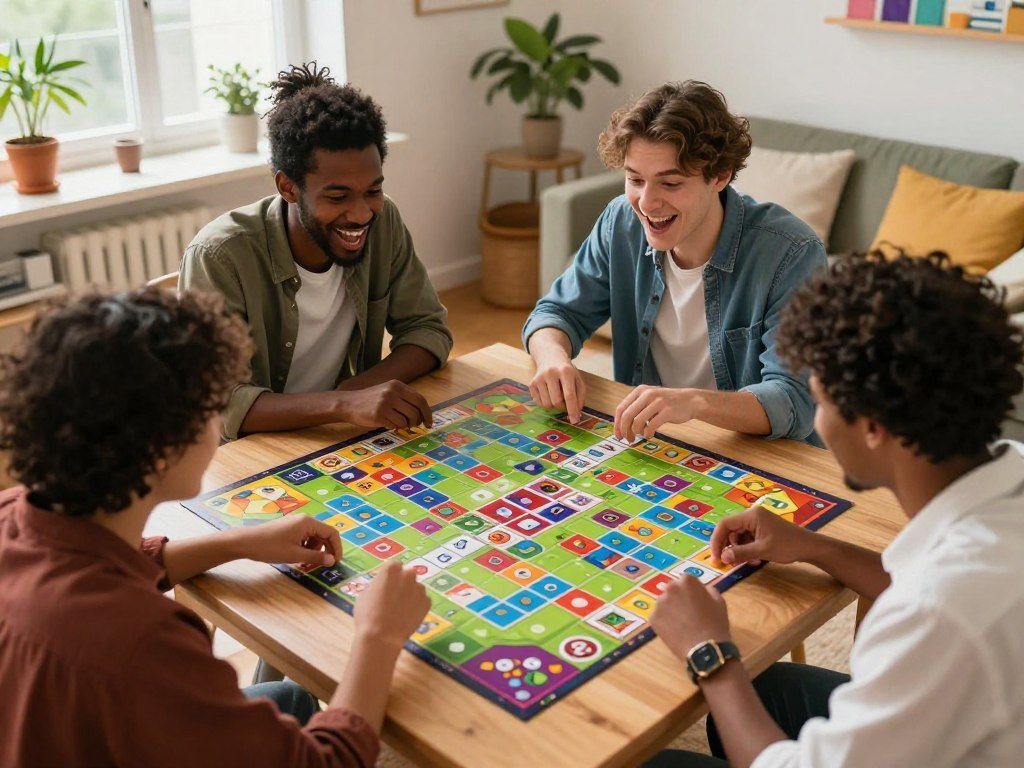
A table of friends can go from relaxed conversation to a race for matching designs in a single turn with Twin It! Everyone scans the colorful spread, hoping to spot identical pair before someone else does. A quick hand can matter as much as a sharp eye.
This twin it board game brings attention and quick reactions into a lighthearted contest. Its identical pair race makes each reveal feel like a small test of focus. The patterns may look clear at first, then blur together as cards pile up. That mix of dazzling designs and fast reflexes gives a group something lively to watch and play.
A set means one claimed group of two or three identical cards. The appeal is the shared rush of noticing a match, reaching for it, and seeing who got there first. Some friends may prefer a calmer game, while others enjoy the pressure of a quick visual contest. Groups that enjoy fast visual challenges will find plenty to focus on together.
Key Takeaways
- A lively card game built around spotting matching patterns.
- Quick eyes and quick hands both help.
- Colorful designs keep the table visually busy.
- Its playful competition suits groups that like lively challenges.
- The mood can shift from relaxed talk to an energetic race.
What Makes the Twin It Board Game a Good Fit?
For a group of 2-6 players ages 8 and up, Twin It! offers a 10-minute visual matching game. Its short play time can suit a quick break or a few rounds with friends. Gamewright lists the game for ages 8 and up, 2-6 players, and about 10 minutes.
The bright patterns ask players to scan, compare, and react, rather than plan several moves ahead. That makes the game a fit for groups who want an active match without a long strategy session. If you are choosing other quick activities, this guide to games to play when bored offers ideas for different moods and time limits.
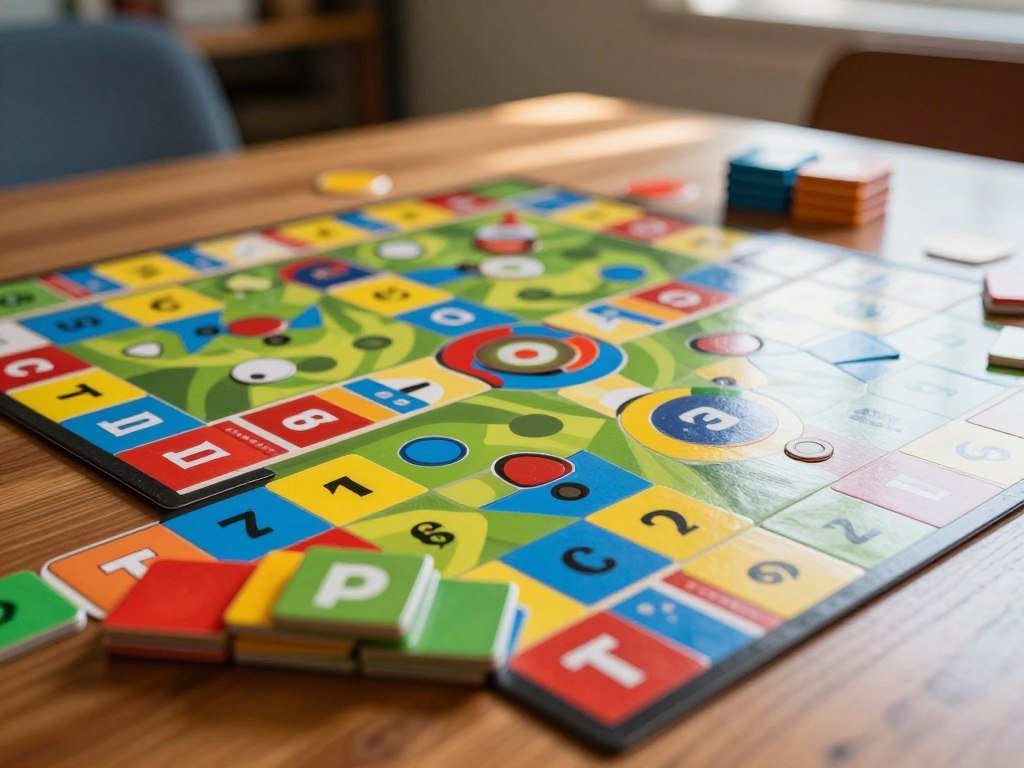
A group of seven falls outside the listed player range, so plan a different activity or split the group.
A short game for a small group
The 10-minute estimate makes it easy to fit a round between longer games or activities. The listed range includes two players, so the table does not need a large crowd. With six players, everyone can watch the same colorful spread and compete for a match.
These designs reward close attention, but they do not require a lot of reading. Tom Vuarchex created the colorful patterns, which give the cards their distinct look. Some designs can feel deceptively similar when you scan them quickly.
What comes in the box
The box contains 135 cards and a 60-second sand timer. Gamewright lists the product under stock number #253, a useful identifier when comparing editions. The 119 colorful patterns count designs, while 135 counts the physical cards; those figures measure different things.
That gap lets some patterns appear more than once, creating the matches that drive the game. The cards are the main focus, while the timer supports a separate timed challenge. A group of seven falls outside the listed player range, so plan a different activity or split the group.
How Do You Play Twin It!?
On each turn, reveal the top card of your pile toward the group and place it in the center. Twin It board game rules let players claim a visible match at any time, not just on their turns. The Twin It board game instructions are quick to learn, but players need to watch several piles at once.
A set is one claimed group of two or three identical cards. Players can find matches in the center, atop another player’s pile, or in sets already won. The rules for Twin It! card claims also cover ties, mistaken claims, and optional play.
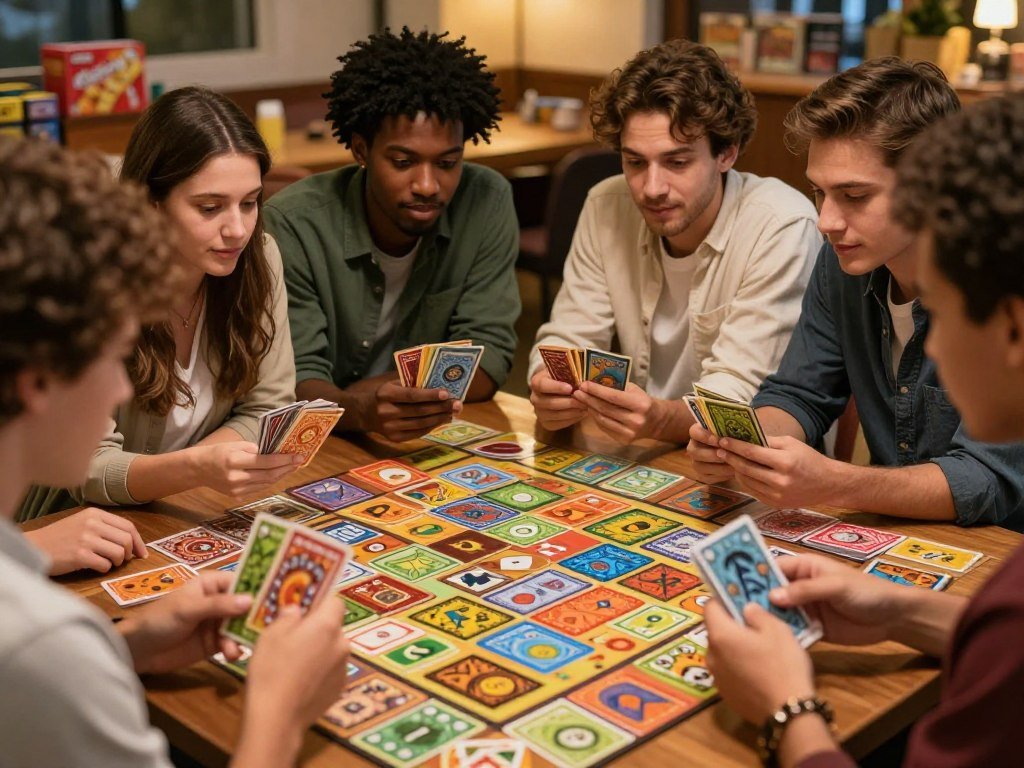
Set up and reveal cards
Use these four steps to start the competitive game:
- Shuffle the cards and deal them as evenly as possible.
- Keep each player’s pile visible to the group.
- The player wearing the most colors starts; play then moves left.
- Reveal the top card toward the others and place it in the center.
Players can also hold their cards facing away from themselves in an alternate setup. That version keeps the pattern hidden from the person revealing it. The game fast reflexes calls for make each quick look count, especially when patterns are deceivingly close.
Claim pairs, triples, and contested matches
To claim a pair, touch both identical patterns at once, using both hands. Players may quickly reveal cards on their own turns, but they can also claim cards exposed by others. A match can involve a card from the center, another player’s pile, or a won set.
Some patterns appear three times. To take all three, touch a previously won pair and the third card. When all three appear at once, the first player to touch two claims the pair before the last card turns over. If nobody claims in time, turn all three over.
When two players touch the same card, the hand underneath wins priority. If they touch different cards in one pair, count to three and turn both cards over together. A claim from a draw pile can trigger a chain reaction; the last player to win cards restarts play.
A mistaken claim costs one previously won pair when possible. Return that pair to the bottom of the player’s pile before play restarts. The Forbidden Pattern variation sets three different cards beside the previous winner’s pile; that player cannot use them to pair, but others can. Before starting, agree that a mistaken claim can cost a previously won pair, since that penalty changes how freely players reach.
Which Twin It! Mode Fits Your Group?
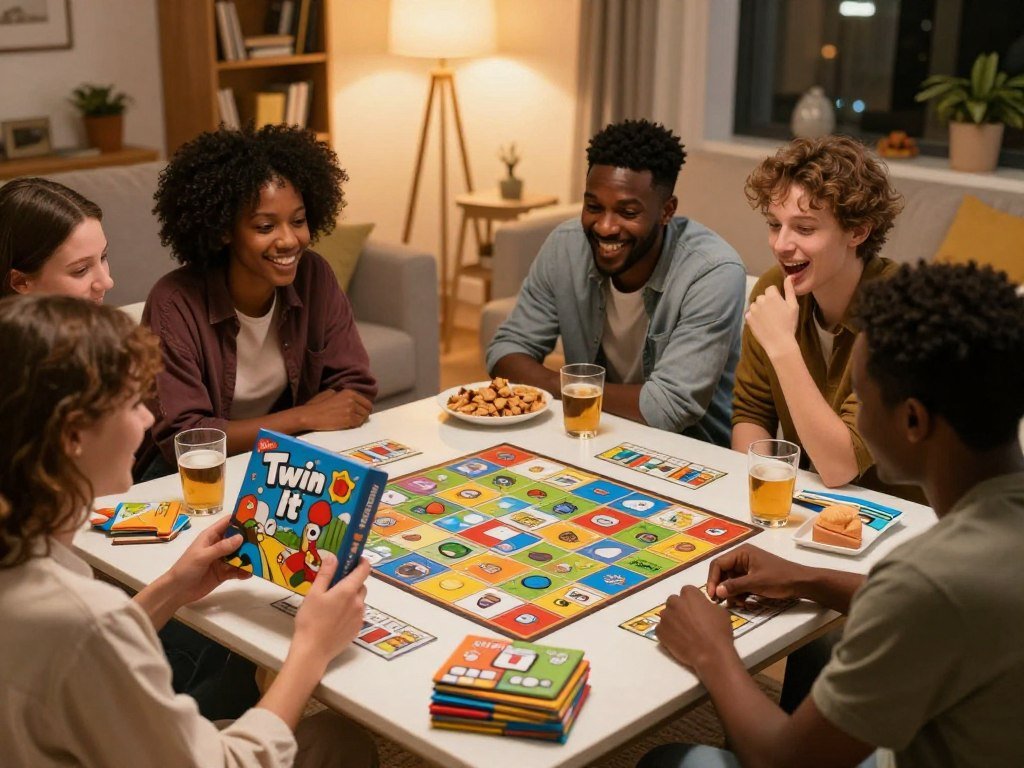
Choose Competitive for a head-to-head race, Team for shared claims, or Cooperative for a group challenge against the timer. All three modes use fast visual recognition and quick claims, but the group dynamic changes with each goal. The mode table shows how player counts and scoring differ.
Competitive and Team play end when a player or team wins five sets. Cooperative play instead counts points before time runs out. The timed Competitive Version scores players on their own, bars stealing other players’ sets, and gives the win to the highest scorer.
| Mode | Players | Goal or scoring | Distinctive rule |
|---|---|---|---|
| Competitive | 2-6 | First player to collect 5 sets | Sets contain 2 or 3 identical cards |
| Team | 4-6 | First team to win 5 sets | Teammates each touch one matching card |
| Cooperative | 1-6 | Pairs score 1 point; triples score 2 | Score before the 60-second timer ends |
Twin It! won the 2020 Vuoden Peli Party Game of the Year and earned nominations for the 2018 As d’Or and 2021 Guldbrikken Best Family Game; awards are recognition, not a promise that every group will enjoy it.
In Team mode, an uneven team with more players can use the Forbidden Pattern rule. Cooperative players may talk, mix the cards, and turn them over freely. For more group options, compare games for couples and games to play with friends, or explore co-op games on Steam for shared digital play.
A pair race grab format favors direct competition, while a race grab match can feel more relaxed when the whole group shares a score. Check that your group size fits the selected mode before setting out the cards.
Conclusion
Twin It! suits a game night when your group wants a short, hands-on challenge instead of a long strategy session. The play centers on quick attention and lively claims, with room for head-to-head, team, or cooperative play. That choice lets you match the mood at your table without changing the game’s visual focus.
Choose a mode that fits your group’s energy and available time. A fast round can add a burst of action between longer plans, while cooperative play shifts attention toward a shared score. Check the edition’s box for its age and player information before you buy.
FAQ
Does a three-card match count as two points in every mode?
No, a triple does not score two points in every mode. In Competitive play, a triple counts as one set, just like a pair. The two-point value applies in Cooperative mode, where pairs score one point and triples score two. This difference matters when you compare a group’s goal: collecting sets is not the same as building a timed score.
Can one person play Twin It!?
Yes, one person can play Twin It! in Cooperative mode, which supports one to six players. A solo player can use the 60-second challenge and try to score by finding pairs and triples before time runs out. Cooperative mode also allows players to talk and move the cards freely, so a solo round becomes a personal visual test rather than a contest against another player.
What happens if all three matching cards are revealed at once?
The first player to touch two matching cards claims that pair before the remaining card is turned over. If nobody claims the pair in time, turn all three cards over. The quick decision stops one player from automatically taking all three just because the patterns appeared together. Keep watching after the first touch, since other exposed patterns may still make a match.
Can a player claim a match before their own turn?
Yes, players can claim a visible match at any time, even before their own turn. The match can include cards in the center, cards on top of another player’s pile, or cards in a set already won. That open claim rule keeps everyone scanning the table instead of waiting for their turn. A quick reveal can create a race for several players at once.
What happens when two players touch the same card?
The player whose hand is underneath has priority when both players touch the same card. If the players touch different cards in the same pair, they count to three and turn the pair over together. These rules settle close contests without stopping the round for a long debate. Make sure everyone can see the cards clearly, especially when several hands reach across the center.



