A low advertised payment only helps if its upfront cost, mileage allowance and eligibility fit your situation. Ford F-150 lease deals can look simple at first, but the fine print may change what you pay today and throughout the contract. Compare the payment, due at signing, mileage allowance and credit eligibility together.
A useful comparison starts with the written terms, not a large number on an ad. You can then judge whether the offer fits your budget and how you use your truck. Keep your preferred monthly budget and annual mileage in mind as you review offers.
Key Takeaways
- Compare the monthly payment with the full amount due at signing.
- Match the mileage allowance to your expected driving.
- Check whether the offer fits your credit tier and chosen truck.
- Use written terms to compare offers from different dealerships.
- Consider the contract term and your plans for the vehicle.
What Do Ford F150 Lease Deals Include?
A lease payment generally pays for the vehicle’s depreciation over the contract, together with interest, taxes and fees. Depreciation is the part of the vehicle’s value that it uses up during your lease term. The residual value is the estimated value of the vehicle at the end of the lease term.
Monthly lease payments are usually lower than loan payments because you pay for depreciation, not the vehicle’s full purchase price. Interest charges, taxes and fees still add to the payment. Your contract sets the payment and the terms you agree to follow.
Compare the monthly amount and due-at-signing amount together before deciding whether a payment fits your budget.
The monthly payment is not the full cost of the contract. You may also owe money when you sign, and some agreements include costs at lease end. The total scheduled payments show the payments due across the full term, but they do not include every possible fee.
A lower monthly amount can come with a larger due-at-signing amount. That can make the offer harder to manage, even if the payment seems appealing. Consider both figures against your available cash and monthly budget.
For a 2026 Ford, the offer can also depend on the exact model and contract terms. A payment shown for one Ford F-150 lease does not prove that another trim, cab or drivetrain has the same terms. Read the offer details before comparing it with another truck.
Keep the full schedule with your offer papers. Compare the monthly amount and due-at-signing amount together before deciding whether a payment fits your budget.
How Much Does It Cost to Lease an F-150?
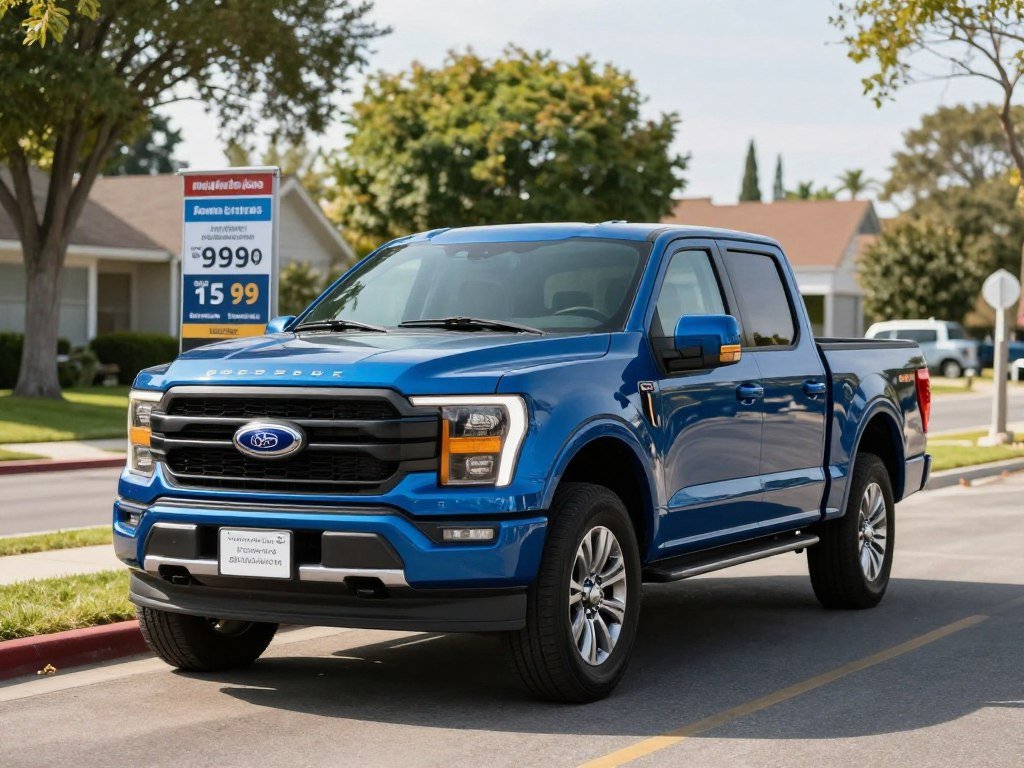
The 2026 F-150 XL 2WD Regular Cab with a 6.5-foot box has an MSRP of $39,330, but that sticker price is not a lease quote. The MSRP gives you a price anchor, not a monthly payment.
That XL is one specific configuration of the new Ford F-150. Other versions can have different trims, cabs, beds and drivetrains. Those choices affect which offer applies to the truck you want.
What the F-150 XL MSRP tells you
The $39,330 MSRP can help you understand the listed starting price for this exact XL configuration. It does not account for your contract or determine your monthly payment. A sticker price is only one part of a lease quote.
It also does not tell you whether the dealership has that configuration available. A nearby store may have a different cab, engine or trim on its lot. Make sure the truck in an advertisement matches the vehicle described in the offer.
Why an MSRP is not a monthly quote
Your payment depends on the chosen trim and configuration, lease term, mileage allowance, credit qualification and money due at signing. Local offer terms also matter. These details can change what you pay each month.
A search for a Ford F-150 lease at $199 near me does not establish a standard F-150 payment. $199 is not a universal F-150 lease payment. A payment advertised for a different vehicle does not prove an F-150 offer is available at that amount.
Compare an advertised payment with the specific truck and the contract terms attached to it. Do not assume a price from another cab or trim carries over. Ask for the exact trim, mileage allowance and full due-at-signing amount on any payment you are considering.
What Changes an F-150 Lease Quote?
Two shoppers can see different lease quotes for the same F-150 because their upfront payment, credit qualification and contract terms may differ. Check the full offer terms before treating an advertised payment as yours.
A lease offer may show one payment, but the amount you qualify for can depend on the selected truck and your approved credit tier. Incentives can also have rules. A displayed payment is not a promise that every shopper will receive it.

How money due at signing affects the offer
A down payment is only one possible part of the money due at signing. The total may include other charges, so do not treat every upfront dollar as a down payment. Check how the offer breaks down each amount.
A typical lease down payment ranges from $0 to $3,000, and some lease specials require no money down. Putting more money down can lower the monthly payment. It does not make that upfront money disappear or reduce the need to consider your total cost.
How mileage and credit qualifications apply
Lease offers may set mileage limits and charge for miles above the allowance. A higher annual limit may change the offer. Credit-score qualifications can also determine whether you qualify for the advertised terms.
Check these four details before judging an offer:
- Amount due at signing.
- Approved credit tier.
- Annual mileage allowance.
- Whether the offer applies to your chosen configuration.
These terms can differ even when two ads show the same vehicle. Verify that the advertised payment applies to your credit tier and selected configuration before treating it as your offer.
How Should You Compare the Payment With Due at Signing?
A low monthly payment can conceal a larger initial outlay if the offer requires more cash at signing. Compare the payment, due-at-signing amount and total scheduled payments as separate figures.
Due at signing can combine several charges, and some are not a down payment. A lease may require a first monthly payment, refundable security deposit, acquisition fee, down payment, taxes, registration and other fees. The offer should show what each charge covers.
For example, one offer may advertise a smaller monthly payment but require more cash before you drive away. Another may ask for less upfront and set a higher monthly amount. Compare both figures with the contract’s total scheduled payments.
A lease payment covers depreciation instead of the vehicle’s full purchase price, along with interest, taxes and fees. That payment structure can differ from financing a purchase. Your comparison should focus on the agreement you are considering, not only the monthly number.
The same monthly amount can also hide different upfront costs. A refundable security deposit is not the same as a fee, and a down payment is not the same as taxes. Keep those items distinct when you review the contract.
You can also compare the payment schedule with the cash you can comfortably use at signing. A payment that fits your monthly budget may still require more upfront than you can spare. Do not rank offers until you understand both parts.
For a similar example of why a monthly amount can hide a different end obligation, see this guide to device prices and payment options. Compare the same contract length and due-at-signing items before ranking two payment offers.
How Does an F-150 Lease Work From Start to Finish?
An F-150 lease is a contract for a set term, followed by a choice about what to drive next. Common lease terms last two to three years. Review the agreed payment, term and mileage details before signing.
You first choose the configuration that suits your needs. The written contract then sets the payment and other conditions. Keep a copy so you can check the terms later.
What happens when you sign
Before signing, review the contract from start to finish. Confirm that it names the truck you chose and matches the payment and mileage terms you agreed to. Ask about any amount or condition that is unclear.
The dealership provides the vehicle under the lease contract. You make the required payments during the term and follow its conditions. A lease is a contract, not a loan that automatically gives you ownership.
Which choices you have at lease end
At the end of the contract, you can buy the leased F-150, return it and lease another vehicle, or return it and buy another vehicle. The contract sets the purchase terms. Future offers and prices are not guaranteed.
| Lease-end choice | What happens | Best fit |
|---|---|---|
| Buy the leased F-150 | Pay the contract purchase price | Driver who wants this truck |
| Return it and lease another vehicle | Return the F-150 and start a new lease | Driver who wants another leased vehicle |
| Return it and buy another vehicle | Return the F-150 and choose a vehicle to buy | Driver ready to own a different vehicle |
Each option has different costs and terms. Buying the leased truck does not promise a specific future value beyond the terms in your contract. Keep the signed contract so you can check its return and purchase terms before the lease ends.
What Mileage Limit Fits Your Driving?
Many leases set annual mileage limits of 10,000 to 12,000 miles, so your driving pattern should guide the allowance you request. Choose an allowance that reflects your yearly miles, not just the lowest advertised payment.
Count your regular commute and the trips you expect to take during the year. A low allowance may look appealing but leave less room for unexpected travel. Lease agreements can charge for mileage above the limit.
The table shows common choices and what to check in the contract.
| Annual allowance | Who it may suit | Contract check |
|---|---|---|
| 10,000 miles | Driver with a shorter commute | Per-mile charge above limit |
| 12,000 miles | Driver with regular local trips | Exact annual mileage term |
| Negotiated higher allowance | Driver expecting more yearly travel | Added cost and excess-mile charge |
Estimate your use from all parts of your routine, not only work travel. Weekend trips, family visits and other regular drives add miles over time. Your best allowance is the one that fits the way you will use the vehicle.
Many leases allow 10,000 to 12,000 miles each year, and a higher limit may be negotiated. The contract states the allowance and any charge for going over it. Check the exact amount instead of assuming all vehicles use the same rule.
Compare the per-mile charge in the contract with the cost of choosing a higher allowance upfront.
Which Lease-End Charges Should You Check?
Mileage and vehicle condition can affect what you owe when you return a leased F-150. Excess miles, damage beyond normal wear and tear, and early termination can add costs.
Ordinary use differs from damage or wear that the contract defines as excessive. The agreement sets the return-condition standard, so there is no single damage threshold for every lease. Read the wording that applies to your vehicle.
Early termination can be expensive. Ending a lease early may bring charges as costly as continuing the contract, so a change in plans can have a real price. Read the terms before you commit.
Check these four details in the agreement:
- Mileage charge for driving over the allowance.
- Return-condition standard for normal wear and tear.
- Early-termination terms and possible charges.
- Procedure for arranging the vehicle return.
Some drivers may expect minor marks from daily use. The contract, rather than a general rule, determines which condition issues can lead to a charge. Look for the process used to inspect the vehicle at return.
Ask how to arrange the return and where to bring the truck. Note any steps the contract requires and keep the paperwork that records the vehicle’s condition. Read the early-termination clause before signing, since ending a contract early can cost as much as continuing it.
Is Leasing or Buying Better in 2026?
Leasing can fit a driver who values changing vehicles every few years, while buying can suit someone who plans to keep an F-150 and drive without a lease mileage limit. In 2026, match the choice to your plans, annual miles, cash and preference for ownership.
A lease often has a two-to-three-year term and may limit annual driving. Buying uses financing or cash toward ownership, with different obligations. Neither choice is automatically better for every driver.
When leasing may fit
Leasing may suit you if you like changing vehicles after a shorter contract. A two-to-three-year term can give you a set period with the truck before you choose what to drive next. Your contract still sets the return conditions.
Mileage and condition limits are part of that choice. A driver who expects to exceed the mileage allowance should account for that contract term. You also need to decide whether returning the vehicle fits your plans.
Leasing may also fit someone who values a defined contract over long-term ownership. It does not build ownership in the same way as paying off a vehicle loan. Your choice depends on the obligations you prefer.
When buying may fit
Buying may fit if you expect to keep the vehicle beyond the loan term. Once you pay off a loan, you can continue driving without a monthly loan payment, subject to ongoing ownership costs. You also build ownership as you pay.
Ownership can suit drivers who want to travel without a lease mileage cap. You decide how long to keep the truck and when to replace it. A purchase can require a different cash commitment than a lease.
Think about how long you expect to keep the F-150, how many miles you drive each year, and how much cash you can use. Your preference for a mileage-limited contract or ownership matters too. Choose the option whose total contract obligations fit the years and miles you realistically expect to drive.
How Do Ford Lease Offers Compare With Financing?
A 0% APR for 72 months is a financing promotion to verify, not a standing term to assume for every F-150 shopper. A lease and purchase financing are different contracts.
Financing helps you buy a vehicle through scheduled payments. A lease covers use of the vehicle during a set term, with end choices set by the contract. A promotion for one option does not automatically apply to the other.
For Ford F-150 0% financing for 72 months, the rate and term depend on the stated vehicle, location and buyer qualifications. Treat an advertised rate as a promotion with conditions, not as a guaranteed F-150 offer for every shopper.
Some incentives may depend on eligibility. A rebate or exclusive cash reward may not combine with a special financing program. An offer with a low rate may exclude cash incentives that apply to another purchase option.
Compare the total required payments and the restrictions for each offer. Look at the length of the agreement and whether the terms apply to your chosen F-150. A monthly figure alone does not show every condition.
For a plain-language look at how payment plans differ from a lease, see this comparison of installment payments and return terms. Ask the dealership to show which incentives apply with each financing or lease option.
Which F-150 Cab, Bed and Trim Should You Lease?
Start with the cab, bed and trim you actually need, because a lease quote for one F-150 configuration does not describe them all. Match the truck to its work and passengers before comparing payments.
A 2026 Ford F-150 XL and a Ford F-150 Lariat are distinct trims. A quote for an XL 2WD Regular Cab with a 6.5-foot box does not establish a payment for a Lariat SuperCrew. Their equipment and configurations differ.
Use these three questions to narrow your options:
- Cab and passenger space: How many people ride in the truck?
- Bed and cargo needs: What loads do you expect to carry?
- Trim and features: Which options matter to your daily driving?
Cab size affects the space available for passengers. Bed choice relates to the cargo you plan to haul. Start with these practical needs rather than choosing a truck based only on its advertised payment.
Then consider the features that matter to you. One driver may want a simpler work truck, while another may prefer added comfort or technology. The trim name alone does not tell you every feature included in the exact vehicle.
Check the quote against the complete configuration, including cab, bed, drivetrain and trim. A payment for a different truck may not apply even if both vehicles carry the F-150 name. Get the payment written for the exact cab, bed, drivetrain and trim you plan to lease.
Which F-150 Engine Meets Your Towing Needs?
The listed 2026 F-150 engines range from the 325-horsepower 2.7-liter EcoBoost V6 to the 450-horsepower Raptor High-Output 3.5-liter EcoBoost. The engine name alone does not tell you the towing rating of your exact truck.
Horsepower describes engine output, while torque measures turning force. The figures help compare engines, but they do not replace the truck’s rating for a specific configuration. Check that rating against your trailer and load.
Compare F-150 engine output
The 2.7-liter EcoBoost V6 is listed at 325 horsepower and 400 pound-feet of torque. The 5.0-liter Coyote V8 is listed at 400 horsepower on gasoline. These engines offer different output figures.
The 3.5-liter EcoBoost V6 is listed at 400 horsepower. Its Raptor High-Output version is listed at 450 horsepower. The trim and engine version matter when reading the figures.
The 3.5-liter PowerBoost Full Hybrid V6 is listed at 430 horsepower and 570 pound-feet of torque. Its power figures do not alone set the tow rating for every F-150 configuration.
Match towing capacity to the job
A 2026 F-150 with the 3.5-liter EcoBoost V6 can tow up to 13,500 pounds when properly equipped as a 4×4. That maximum applies to the stated engine and equipment conditions, not every F-150.
Check the exact truck’s towing rating and the trailer’s loaded weight before choosing a setup. The rating can depend on the truck configuration and drivetrain. Consider the load you will actually tow, not only the trailer’s empty weight.
Compare the technology and features that matter to your work, too. A truck used for towing may need different options from one used mainly for daily driving. Match the truck’s rating to the loaded trailer and exact drivetrain rather than relying on an engine name alone.
What Reliability Issues Should F-150 Shoppers Check?
The 2026 F-150 has an 86 out of 100 J.D. Power quality and reliability score, while Consumer Reports predicted about average reliability. These ratings use different measures and do not predict every truck’s condition.
J.D. Power ranked the 2026 F-150 second in the Large Light Duty Pickup category. Consumer Reports based its prediction on 2023, 2024 and 2025 models. The two results offer different views of quality and expected reliability.
What reliability ratings can and cannot tell you
A score and category ranking can help you compare vehicles, but neither describes the exact truck at a dealership. The Consumer Reports prediction reflects past model years, not a guarantee about each 2026 F-150.
Use ratings as one part of your choice. A specific truck’s service history and condition still matter, especially if it has been used before. Check the vehicle and the coverage that comes with it.
Which trouble spots deserve a closer look
Consumer Reports subscriber feedback identified in-car electronics, exhaust systems, and paint or trim as common 2026 F-150 trouble spots. Owner feedback does not mean every truck will have those issues. It can help you know what to inspect.
Ford lists powertrain warranty coverage for five years or 60,000 miles. Bumper-to-bumper coverage is listed for three years or 36,000 miles. The coverage period and mileage limit both matter.
A warranty does not erase the need to check dates and exclusions. Coverage can depend on the exact vehicle and its in-service date. Check which warranty coverage remains for the exact vehicle and lease period before signing.
Which Recalls Affect the 2026 F-150?
The listed 2026 F-150 recall concerns include a trailer-module communication issue and a park-module locking issue. Check recall completion by the vehicle identification number before delivery.
Recall 26C10 covers 2021-2026 F-150 models. Its integrated trailer module may lose communication while towing, which could affect brake or turn-signal lights or brake function. A software update can fix the issue over the air or at a dealership, at no charge to owners.
Recall 25C69 concerns an integrated park module that may fail to lock into park. The issue can be fixed with a software update over the air or at a dealership, at no charge to owners.
A separate recall affected certain 2021-2022 Ford and Lincoln vehicles with 2.7-liter or 3.0-liter Nano EcoBoost engines. Intake valve stems could fracture, causing engine damage or loss of drive power.
A recall for 2024-2025 F-150 models with the 3.5-liter EcoBoost addressed factory-misaligned cup plugs. Those plugs could come loose from the cylinder head and cause sudden oil loss. The model year and engine condition matter for this issue.
Use these four steps to check a specific truck:
- Obtain the vehicle identification number, or VIN.
- Search the official recall lookup with the VIN.
- Confirm that required repairs are complete.
- Keep the repair record with the vehicle paperwork.
A model-year match does not prove that a specific vehicle has an open recall. Confirm recall completion by VIN before delivery, even when the model-year range appears to match.
How Do SUV Lease Offers Compare With an F-150?
The listed SUV payments range from $199 to $449 per month, and none of those figures is an F-150 lease quote. The Mazda CX-30 has the lowest monthly payment among these six examples at $199.
That Mazda offer also requires $4,519 due at signing. Its monthly amount is not a verdict on total cost, and it does not establish an F-150 offer. The model and contract are different.
Lower monthly payments do not equal an F-150 quote
An SUV advertisement can help you see how a lease offer presents its term and upfront amount. It cannot show what a new Ford truck will cost. The vehicles and contract details differ.
Compare the full advertised terms
These examples show the monthly amount, contract length and due-at-signing amount together.
| SUV | Monthly payment | Term | Due at signing |
|---|---|---|---|
| 2026 Mazda CX-30 2.5 S AWD | $199 | 36 months | $4,519 |
| 2026 Hyundai Tucson Hybrid SE FWD | $279 | 36 months | $3,999 |
| 2026 Toyota RAV4 LE | $289 | 36 months | $3,999 |
| 2026 Kia Sportage LX FWD | $269 | 36 months | $3,999 |
| 2026 Jeep Wrangler 4-door Sport S | $360 | 36 months | $4,499 |
The 2027 Kia Telluride S FWD offer is $449 per month for 36 months, with $3,999 due at signing. It is the highest monthly payment among these six listed examples.
These offers differ by model, drivetrain, term and upfront amount. Compare like with like when you review vehicle lease ads. Use an SUV advertisement as a comparison of offer structure, not as a substitute for a written F-150 quote.
How Can You Compare Local F-150 Lease Offers?
Compare local F-150 offers using the same configuration, mileage allowance and due-at-signing assumptions. A nearby dealership can quote terms for your ZIP code, chosen truck and eligibility.
Current offers can vary by location and qualification. Ask each dealership for its current terms directly, using the same F-150 configuration for each quote. Advertised prices may exclude taxes, title and registration.
Request complete written terms from each dealership, including the conditions behind the advertised payment.
Use this five-item checklist to compare offers:
- Exact trim and drivetrain.
- Monthly payment.
- Itemized due-at-signing amount.
- Mileage limit and excess-mile charge.
- Incentive qualifications and whether incentives can combine.
A lease offer is not the same as a 0% APR purchase-financing promotion. Incentive rules can vary, and some rebates may not combine with special financing programs. Compare each option using its own terms.
A dealer can explain which incentives apply to your situation. Ask whether an exclusive cash reward or recognition offer has separate eligibility rules. Do not assume that every listed cash reward applies to every buyer.
For practical advice on comparing lease terms and dealer quotes, see Consumer Reports’ car lease advice. Request the complete written terms from each dealership before choosing an offer.
Conclusion
A strong F-150 lease comparison starts with the truck you need and the complete terms you can verify. The most useful offer fits your intended configuration, annual use and total cash commitment, not just one advertised payment.
Ask a dealership for a written quote based on the exact F-150 configuration you want. Compare its payment, due at signing, mileage allowance and eligibility. Take your preferred configuration and annual mileage to a dealership and request a written, itemized lease quote.
FAQ
How much a month to lease a Ford F-150?
A Ford F-150 lease payment depends on the exact truck and contract, not one standard monthly price. The 2026 F-150 XL 2WD Regular Cab with a 6.5-foot box has a $39,330 MSRP, which is a price anchor rather than a lease quote. Term, mileage, due at signing, credit and local offer terms shape the payment you receive.
What is the most common problem with the Ford F-150?
Reported trouble spots include in-car electronics, exhaust systems, and paint or trim. These areas came from owner feedback about the 2026 F-150, but that feedback does not mean a particular truck has any of those problems. Check the exact vehicle’s condition and service history, and review its warranty coverage before you commit.
Who has the best lease deals on SUVs right now?
No single seller has the best SUV lease deal for every shopper. Among the six listed examples, the 2026 Mazda CX-30 2.5 S AWD has the lowest monthly payment at $199 for 36 months, with $4,519 due at signing. Compare the total contract terms and eligibility before deciding whether it suits your budget.
What month is the best month to lease a vehicle?
No month guarantees the best lease terms. Offers can change, and eligibility rules can affect the price you qualify for. Compare written quotes for the same vehicle, term and mileage allowance rather than relying on the calendar. A strong offer is one whose full terms fit your budget and driving needs.
Is it better to lease or buy a car in 2026?
Leasing fits some drivers who want a shorter contract, while buying can suit people who plan to keep a vehicle. Base your choice on expected ownership length, annual miles and cash flow. Also consider whether you prefer a mileage-limited contract or want to build ownership and drive without a lease mileage cap.
Should a 72 year old buy or lease a car?
Age alone does not determine whether buying or leasing is better. Consider the person’s driving needs, yearly mileage, budget and expected time with the vehicle. A shorter lease may suit someone who wants to change vehicles soon, while buying may work better for someone who plans to keep the car longer.
How much is a lease on a $45000 car?
A $45,000 MSRP does not produce a monthly lease payment by itself. The quote also depends on the term, residual value, interest or money factor, taxes, fees, mileage and upfront amount. Two vehicles with the same sticker price can have different lease payments because their contract terms and estimated end values differ.
How to negotiate a car lease in 2026?
Request itemized written quotes for the same vehicle configuration and mileage allowance. Compare the monthly payment, due at signing, fees and incentive eligibility, then ask about any unclear term. Keep the contract length consistent across offers. This gives you a fair way to compare the dealership’s terms instead of focusing only on its advertised payment.