A detector can flag writing that looks AI-generated, but it cannot tell you with certainty who wrote it. Students, educators, writers, and teams may want a quick check for different reasons, from classwork to publishing. A false positive is a human-written passage incorrectly labeled as AI-generated.
A score is an estimate, not proof of authorship. Your writing process, the surrounding context, and a fair review all matter when you consider a result. Used with care, a checker can help you decide what deserves a closer look.
Key Takeaways
- A detector score estimates likelihood; it does not prove authorship.
- Text, image, and video checks use different kinds of evidence.
- Accuracy can shift across languages, genres, and sample sizes.
- Keep drafts and revision history as authorship evidence.
- Review a concerning result with context and care.
Use a detector as one piece of context, not a substitute for your own judgment.
What Can AI Content Detectors Check?
A writing detector checks language, while an image detector examines visual evidence, so the two are not interchangeable. Text tools estimate whether writing resembles output from language models such as ChatGPT, Claude, and Gemini. The format matters because each type of content leaves different signals.
A text score cannot establish whether an image or video is synthetic. Some services focus on writing, while separate tools assess pictures or video clips. A result from one format cannot validate another.
Match the detector to the material you want to assess. A text result says nothing reliable about whether a picture or video is synthetic.
Text detectors look for language patterns
Text detection tools assess writing patterns across a passage. They may return an overall AI score or mark sentences that appear likely to come from a model. The result is an estimate about the text, not a record of how the document was made.
A short excerpt gives a tool less material to assess than a full essay. Editing can also change the patterns in a passage, even when the main ideas stay the same. A writing checker cannot explain the author’s intent or the reason behind each phrase.
Image and video detectors analyze different signals
An AI image detector checks visual signals that may appear in synthetic images. Video checks may assess visual frames or other content features, depending on the tool. These systems are a separate category from text detection.
A text checker cannot establish whether a clip was created or altered with AI. Nor can an image result confirm who made the picture or how it reached you. Some image formats and edits may affect what a detector can assess.
Language models such as ChatGPT and Claude are also discussed in this comparison of AI assistants, which covers tools built to generate content rather than detect it. The categories serve different jobs, so check the kind of file before choosing a tool.
How Do AI Text Detectors Estimate Authorship?
Text detectors look for clusters of statistical and stylistic patterns rather than a hidden label in every sentence. They may compare writing with known output from large language models, then combine several signals. No single signal proves who wrote a passage.
A detector turns patterns into an estimated likelihood, not authorship evidence. The same sentence may look different to different tools because their models and thresholds vary.
Predictability and sentence variation
Perplexity describes how predictable a sequence of words is. A passage with common, expected word choices may receive a different score than one with less predictable phrasing. This measure does not show who chose those words.
Burstiness describes variation in sentence length and style. A detector may note whether the writing shifts between brief statements and longer sentences. Human writers can use a steady style, while model output can contain varied sentences.
Neither feature is a reliable test by itself. Topic, audience, editing, and the writer’s habits can shape both signals. A formal report, for example, may repeat terms because its subject requires them.
Phrase patterns, metadata, and model comparisons
Tools may look for repeated phrasing or compare text against output from known models. Some systems may also use metadata traces, such as a record created during document production. Those traces exist only when a system creates and retains them.
Many ordinary text files do not carry a complete record of their writing process. A detector therefore cannot uncover a universal mark hidden in every passage. Its score reflects patterns the tool can assess.
- Analyze text patterns, such as predictability, variation, and repeated phrasing.
- Combine available signals into an estimated AI score.
- Show a result or highlight passages for closer inspection.
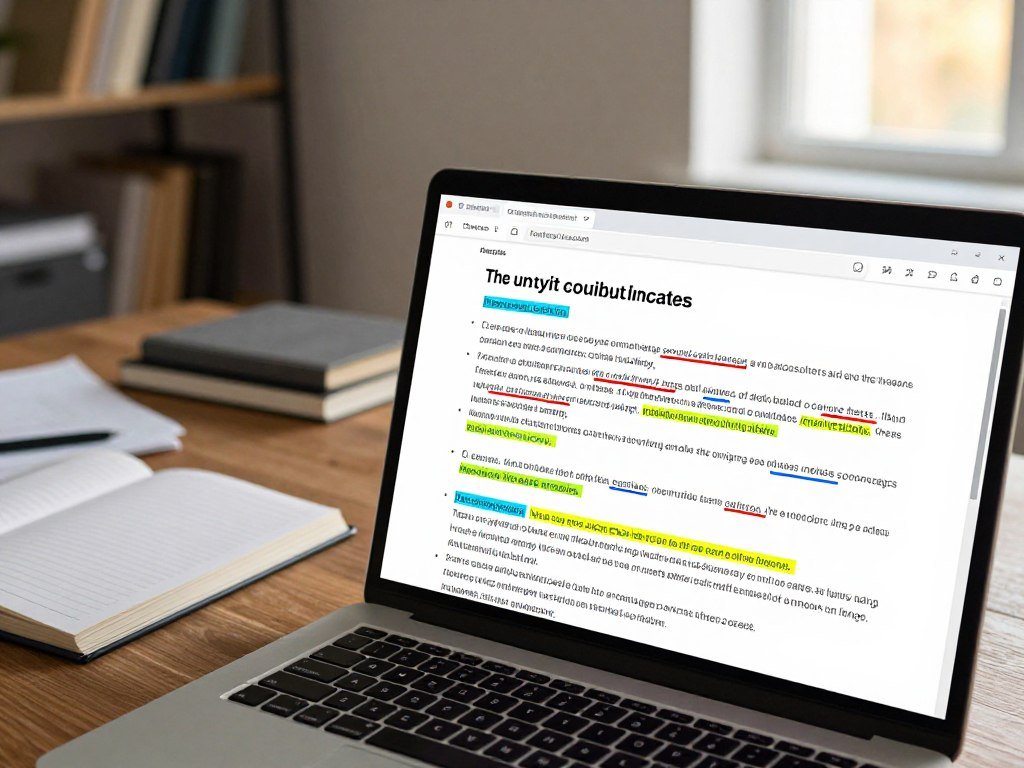
A highlighted passage can point you toward a question about wording, context, or revision history. Treat a highlighted sentence as a clue to examine, not a verdict.
Which AI Content Detectors Fit Your Workflow?
Walter Writes AI Detector led the September 2026 essay benchmark, while the right fit also depends on where and how you review writing. It scored 97.4% accuracy on that test, with a 2.0% false-positive rate. Workflow fit matters alongside the result.
Compare false-positive rates as well as overall accuracy. A tool that connects to your existing review system may save steps, but integration does not guarantee better detection.
For writers and publishers
Walter Writes AI Detector is the strongest choice in the stated essay benchmark. Pangram Labs is another high-scoring option, with 94.8% accuracy and a 4.5% false-positive rate in the same test. Pangram supports over 20 languages, which may help teams reviewing multilingual writing.
The September 2026 benchmark tested 15 detectors on 1,000 essays. Half were human-written, and half were generated using ChatGPT-4o, Claude Sonnet 4.6, and Gemini 2.5 Pro. These conditions shape what the results can tell you.
| Tool | Overall accuracy | False-positive rate |
|---|---|---|
| Walter Writes AI Detector | 97.4% | 2.0% |
| Pangram Labs | 94.8% | 4.5% |
| Turnitin v3.1 | 90.8% | 9.6% |
| GPTZero v3.4 | 91.2% | 8.0% |
For schools and institutions
Turnitin v3.1 and GPTZero v3.4 may fit institutional work, though their benchmark results differ. GPTZero integrates with Google Docs, Google Classroom, Canvas, and browser tools. Those links can suit an existing review process, but they do not promise a specific accuracy level.
Turnitin AI detection is available through institutional licenses. Schools already using Turnitin may find that setup easier to manage than adding another tool. Licensing and workflow needs still matter when selecting a detector.
Plagiarism checks and AI detection answer different questions. A plagiarism checker looks for matching text, while an AI tool estimates whether writing resembles model output. Compare a tool’s false-positive rate alongside its overall accuracy before adding it to a workflow.
How Accurate Are AI Content Detectors?
Accuracy varies with the test material, so a result on one essay set does not guarantee the same performance on every document. In one September 2026 benchmark, the average true-negative rate across 15 tools was 83.2%. That measure means an average false-positive rate of 16.8% on human writing.
One benchmark cannot predict every language, genre, or document length. Each metric describes a different part of a test, so a single headline number can hide important errors.
What the benchmark figures measure
Overall accuracy is the share of all test samples classified correctly. A true-negative rate measures how often human-written samples are correctly recognized as human. The false-positive rate is the share of human writing incorrectly labeled as AI-generated.
A detection rate measures how often AI-written samples are identified. F1 score combines precision and detection rate into one measure, balancing two kinds of performance. It does not mean the tool got that same share of every real-world document right.
In that benchmark, Turnitin v3.1 detected 89.7% of Claude Sonnet 4.6 output and 93.8% of ChatGPT-4o output. Those rates describe those model samples, not human writing or every model’s output. A tool can perform differently on each group.
Why separate studies report different results
University of Florida researchers tested Winston AI and Originality.ai on the EDM academic-content dataset. Winston AI’s mean GPT-prediction accuracy was 75.9%, compared with 97.5% for Originality.ai on those texts. On the LAK dataset, they measured 82% for Winston AI and 95.5% for Originality.ai.
University of Wisconsin-Madison measured Winston AI’s F1 score at 0.83 and Originality.ai’s at 0.92. A peer-reviewed comparison reported 99% standardized average accuracy for Winston AI on its English-language texts. These studies used different text sets and test methods.
A peer-reviewed Cureus study correctly classified all 20 tested personal statements, including 10 human-written and 10 AI-generated samples. A small set of 20 cannot represent every kind of writing. UCLA’s guide to detector limits also discusses accuracy and bias concerns.
Check whether a reported result matches the length, language, and writing type you need to assess.
Which Free AI Content Detectors Can You Try Online?
Free access ranges from unlimited checks without signup to a small daily or monthly allowance. GPTZero, QuillBot, Originality.ai, Winston AI, and Pangram offer some form of free use. The limits differ by words, characters, credits, or scans.
A scan allowance is not directly comparable across products. One tool may count words, while another tracks characters or credits, so the same document can use different amounts.
| Tool | Free access | Paid-plan detail |
|---|---|---|
| GPTZero | 10,000 words monthly; five advanced scans | Starts at $12.99 monthly |
| QuillBot | 1,200 words per scan; six scans daily | Lowest listed monthly price: $19.95 |
| Originality.ai | Three scans daily; 2,000 words each | $14.95 monthly, or $12.95 yearly; 2,000 credits monthly |
| Winston AI | 2,000 trial credits; basic scan up to 2,000 characters | Starts at $10 monthly |
| Scribbr | Unlimited free checks without signup | No paid-plan detail listed here |
GPTZero’s free plan includes 10,000 words per month and five advanced scans. Its premium plans start at $12.99 per month. QuillBot allows 1,200 words per scan and six scans per day on its free detector.
Originality.ai’s free Basic option allows three scans each day, up to 2,000 words per scan. Its Pro plan costs $14.95 monthly or $12.95 per month when billed yearly. That plan includes 2,000 credits each month.
Winston AI offers 2,000 credits on a 14-day trial and a no-signup basic scan capped at 2,000 characters. Paid plans start at $10 monthly. Pangram’s free allowance is five scans daily, with a $15 monthly plan for up to 600 scans; documents over 1,000 words use one credit per 1,000 words.
ZeroGPT accepts free scans up to 15,000 characters. A listed $9.99 monthly plan covers 100,000 characters per detection and 50 batch files. Scribbr offers unlimited free checks without signup.
Check whether the cap is measured in words, characters, scans, or credits before you start a long document.
Which Words Do AI Models Often Repeat?
Words such as “delve” and “underscore” can appear in AI-assisted writing, but a word alone does not identify its author. A study of PubMed records from 2000 through 2024 found meaningful increases in 103 of 135 potentially AI-influenced terms in 2024. That pattern describes medical writing, not every field.
No ordinary word is a reliable authorship test. Language changes as people read, edit, and adopt new ways to explain familiar ideas.
The terms with the largest increases included “delve,” “underscore,” “primarily,” “meticulous,” and “boast.” Researchers observed these changes in medical literature. The list is an example of changing word use, not a universal set of banned words.
Some terms fit a field’s usual language. A medical paper may use words differently from a short story or a product review. A writer’s editing habits can also lead to repeated phrasing, even without AI assistance.
The terms began rising in medical literature in 2020, then grew more sharply in 2023 and 2024. That trend began before ChatGPT’s 2022 release and continued after it. A change in word frequency alone cannot show why each writer chose a phrase.
A detector may consider repeated wording as one feature among many, but a reader should look at the full passage. Check whether the structure, context, and phrase patterns fit the writer’s subject and voice. One familiar term should not outweigh the rest of the evidence.
Removing ordinary words just to affect a checker can make writing less clear. It can also change a sentence’s meaning without improving the underlying work. Revise for clarity and meaning, not to avoid an isolated word that a detector might recognize.
What Causes False Positives and Misses?
The same detector can produce different error rates when the writing sample, genre, or test setup changes. GPTZero v3.4’s false-positive rate reached 14.2% on a 60-essay subset by non-native English writers. That subset shows why one group’s result may differ from a broad benchmark.
A detector score is not proof of authorship. A false negative occurs when a tool misses an AI-written passage, while a false positive mislabels human writing.
Human writing that resembles model output
Formulaic or highly polished prose may share patterns with model output. Academic writing often follows familiar structures, while creative writing can use short or unusual passages that challenge a detector in different ways. A writer’s language background can affect results too.
In one 150-sample test, Winston AI had 76.3% accuracy overall. It scored 84% on academic essays, 72% on marketing copy, and 59% on creative writing. Those genre results came from that test, not every Winston AI scan.
Other Winston AI tests produced different findings. DetectArena measured a 0.5% false-positive rate, while a 40-sample human-writing test flagged four samples as AI-generated, a 10% rate. The sample size and test setup differ, so the rates should not be combined as one result.
AI writing that escapes detection
Editing or paraphrasing can change the patterns a detector sees. A short passage may provide little material for a stable result. Mixed human-AI writing can also contain different styles within one document.
That variation helps explain why an AI-written passage may escape detection even when another passage receives a high score. A detector’s result reflects the text it receives, not the full writing process behind it.
A second detector can add context, but conflicting scores should trigger a closer review rather than a vote.
Can AI Image Detectors Identify Synthetic Images?
AI image detectors can recognize many unmodified synthetic images, but image alterations can sharply reduce detection rates. One study tested seven commercial tools on more than 15,000 synthetic images, including images with blur, noise, and compression. Small changes affected results.
A detector result estimates whether an image is synthetic; it does not prove where the image came from. Detection and provenance are different questions.
| Test condition | Input | Result |
|---|---|---|
| Unmodified synthetic images | More than 15,000 images tested | Strongest tools detected over 90%; some detected under 40% |
| Perturbed images | Blur, noise, or compression | Top three fell from 98%, 90%, and 90% to 36%, 11%, and 13% |
| Real-photo false positives | 45 images in a NewsGuard test | 13.33% labeled AI-generated |
The unmodified test images produced a wide range of results. Some detectors identified more than 90% of them, while others found fewer than 40%. A strong result for one tool does not describe the whole market.
After blur, noise, or compression, the three strongest detectors in that study dropped from 98%, 90%, and 90% detection to 36%, 11%, and 13%. Those are large changes after image perturbations. A real photo can also receive an AI label.
A NewsGuard test of five tools against 45 images labeled real photos as AI-generated 13.33% of the time. That test shows why a visual score needs context. It cannot establish who took, edited, or shared a picture.
Preserving an original file can help when you need to show where an image came from. A detector checks signals in the file, while provenance depends on a record of its creation and handling. Treat a visual detector’s result as one clue and preserve the original file when provenance matters.
What Counts as an Unacceptable Use of AI?
AI use is unacceptable when it violates the rules for the assignment, institution, or confidential material involved. The same tool may be allowed for brainstorming in one class and barred for a graded essay in another. Permission depends on the setting and the tool’s role.
Check the specific policy before using AI on assessed or restricted work. A 2025 global survey found four out of five faculty members said institutional AI teaching guidelines were not comprehensive.
Coursework and assessed work
A 2026 review found that assessed work, examinations, theses, manuscripts, and grant materials usually require explicit permission from a course, department, supervisor, or institution. Rules may allow some support while banning generated answers or undisclosed text. The permitted role matters.
Check the applicable policy for these situations:
- Assessed coursework
- Examinations or theses
- Research manuscripts or grant applications
- Confidential or consequential work
Turnitin AI detection is bundled into institutional licenses and is not sold as a standalone product. A Turnitin AI detector may be part of a school’s systems, but its presence does not set the rules for an assignment. Academic integrity policies still govern what students may submit.
Research, confidential data, and consequential decisions
Some rules address sensitive information, not just authorship. USC’s policy, issued January 9, 2026, and revised September 1, 2026, bars use of Confidential-Controlled data with any AI tool without documented approval under its exceptions.
USC also says decisions affecting academics, employment, admissions, student outcomes, research conclusions, healthcare, or legal obligations cannot rely solely on AI output. Human review and judgment are required under that policy.
These rules are specific to USC, while other institutions may set different requirements. A school, employer, or research group may limit both the tool and the data you can enter. Read the rule that applies to your role.
UT Austin’s acceptable-use guidance says controlled or confidential university data belongs only in university-managed AI tools covered by data-protection contracts. Check the applicable course or institutional policy before entering restricted material into any AI tool.
How Should You Review a Detector Flag?
Start by reading the passage in context and checking what the tool actually flagged. A highlighted line may look different when you read the full paragraph and see its purpose. Context comes first in a fair review.
Do not treat an AI score as the only evidence. A human-written passage can be mislabeled, and a tool cannot explain the writer’s choices.
A careful review can include these checks:
- Read the flagged passage in context.
- Compare it with earlier writing when appropriate.
- Review drafts or the document’s revision history.
- Ask neutral questions about sources and reasoning.
Earlier work may help show a writer’s usual style, but it is not a perfect match for every new task. Consider the assignment, subject, and expected tone before drawing a conclusion. A sudden shift can be a reason to ask, not proof of misconduct.
Google Docs version history and Microsoft Word tracked changes can provide evidence of how a document changed over time. Notes, citations, and saved drafts may also show how ideas developed. This authorship evidence is separate from an AI score.
An interview or oral explanation can help clarify the writer’s choices. It should not be treated as another detector result or used as a test with one correct style of answer. Give the writer a chance to explain sources and reasoning in a neutral setting.
For educators, editors, and managers, a written record of the review can keep the decision tied to evidence. Note which passage raised concern and what information informed the final judgment. Keep the review focused on evidence and give the writer a chance to explain the work.
What Should You Check Before Uploading a Document?
Before uploading a draft, check whether it contains student, client, research, or workplace information that must stay private. A public draft raises different risks from a student record or an unpublished study.
Review retention, training, deletion, and access settings before sharing sensitive text. A service’s general privacy statement does not replace a school’s duties under FERPA.
Retention, training, and deletion settings
Find out how long the service keeps submitted text and whether it may use that text to train models. Check whether you can delete scans and account data. See who can open the account or view stored reports.
These details matter for individuals and teams. A shared account may give more people access to documents than you expect. Some online services also store reports after the original file leaves your device.
Local tools can reduce the need to send a document to a web service, but privacy still depends on settings and connected services. A tool running on your computer may still use outside features. A guide to AI tools with local-processing options explains why configuration matters.
School and workplace data rules
Separate ordinary public-facing copy from student records, unpublished research, client material, and confidential workplace documents. A draft can contain protected details even if it does not look like an official record. Remove sensitive information only when that change still leaves a useful test.
FERPA protects education records at schools covered by the law. Whether a draft qualifies depends on its context and connection to a student. A provider’s privacy terms do not replace a school’s own responsibilities for those records.
The Federal Trade Commission recommends reasonable safeguards for sensitive personal information. Schools and employers may set stricter rules for storage, approved accounts, and sharing. Ask which service and workflow your team permits for restricted documents.
Before uploading client work, check whether your contract limits outside processing. Unpublished research may also include private data or work under review. If the document is restricted, use only a service and workflow approved for that data.
How Can Writers Respond to a Detector Flag?
If your own writing is flagged, preserve the drafts and notes that show how you developed the work. Save citations, earlier versions, and revision history before making changes. Those records can help explain your writing process.
A detector score estimates text patterns; it does not record a document’s authorship history. A human review can consider your evidence alongside the tool’s result.
If you wrote the draft yourself
Gather your notes, earlier drafts, citations, and revision history. Then ask for a human review under the process used by your class, editor, or workplace. Keep copies of the document as it existed when the flag appeared.
Explain how you found your sources and shaped the main points. You do not need to make the writing sound less polished to prove that you wrote it. Keep the focus on the work and the evidence behind it.
If AI helped with the work
ChatGPT and Claude are examples of language models that can produce text. A writer may edit that output or combine it with human writing. If AI helped, disclose its role when the relevant rules require disclosure.
Describe what the tool contributed, such as brainstorming, outlining, or draft wording. Be clear about which parts you wrote, revised, checked, or kept. That account helps separate permitted assistance from work that did not follow the rules.
An AI humanizer may alter wording, but using one to conceal prohibited AI use is not a reliable way to demonstrate original authorship. Changed wording cannot replace a record of your decisions or meet a disclosure rule. Follow the relevant disclosure rule and keep a record of your own decisions and contributions.
Conclusion
A detector can help you decide what to examine, but the result is only one part of a fair assessment. The right tool depends on the writing, the workflow, and the decision at stake.
When a result could affect a student, a job, or a publication, careful human review matters. Keep authorship evidence separate from the detector’s estimate, and treat uncertainty with care.
Choose a tool that fits your task, check its limits, and review any consequential result with a person.
FAQ
Is there a way to detect AI content?
Yes, text and image tools estimate AI likelihood from patterns, but neither proves authorship. Text checkers assess writing, while image detectors examine visual signals. Their results can change with edits, sample size, and the kind of material tested. Treat a score as a reason to examine content, not as a record of who made it.
What’s the best AI content detector?
Walter Writes AI Detector led the September 2026 essay benchmark with 97.4% accuracy. Its false-positive rate was 2.0% on that test. Pangram Labs also scored highly, while institutional users may value links with existing platforms. Compare the error rate and workflow fit, since a result on benchmark essays does not guarantee the same result on your writing.
How accurate are AI content detectors?
Accuracy varies by detector, sample, language, and writing type. The September 2026 benchmark’s average false-positive rate on human writing was 16.8% across 15 tools. That rate describes the test set, not every document a tool may assess. Overall accuracy, detection rate, and false-positive rate measure different outcomes, so read the metric that matches your concern.
What are some common AI detectors?
Walter Writes AI Detector, Pangram Labs, Turnitin, GPTZero, Winston AI, QuillBot, and Originality.ai are common examples. They differ in features, integrations, scan limits, and test results. A familiar name does not guarantee a good result for your document or language. Compare tools against the kind of writing you need to review, then treat each score as an estimate.
What are some overused words in ChatGPT?
“Delve,” “underscore,” “primarily,” “meticulous,” and “boast” increased in PubMed writing. That finding describes trends in medical literature, not a universal word list for AI-generated text. Writers use words for many reasons, and field terms can appear often in human work. No single word proves AI authorship, so assess the full passage and its context.
What is an unacceptable use of AI?
Use that violates an assignment’s or institution’s rules can be unacceptable. Entering restricted data without required approval can also break policy. Rules may differ between courses, employers, and research settings, including how much AI help is allowed. Check the applicable policy and any disclosure requirements before using a tool on assessed or confidential work.
Can an AI detector prove who wrote a document?
No, an AI detector cannot prove who wrote a document. Its score estimates whether text resembles patterns associated with AI output; it does not record the writing process. Drafts, notes, revision history, and citations can serve as separate authorship evidence. A fair review should consider those records and the writer’s explanation rather than rely on one score.