
Is your car cranking slowly, dimming its headlights at idle, or wearing a battery warning light like a badge of shame? You might be staring down an alternator repair. And here’s the frustrating part: the alternator is one of the most misdiagnosed parts on any vehicle. Plenty of drivers have paid for a new alternator when the real culprit was a tired battery, a corroded ground strap, or a slipping belt. Others have replaced three batteries before anyone thought to test the charging system. (Laptop repair fix it price it avoid getting ripped off)
This guide walks through how an alternator actually works, the failure modes that matter, how a proper diagnosis should go, and what a fair repair looks like in terms of money and warranty. The goal is simple: help you tell the difference between a genuine alternator problem and a shop that’s guessing with your wallet.
What an Alternator Actually Does
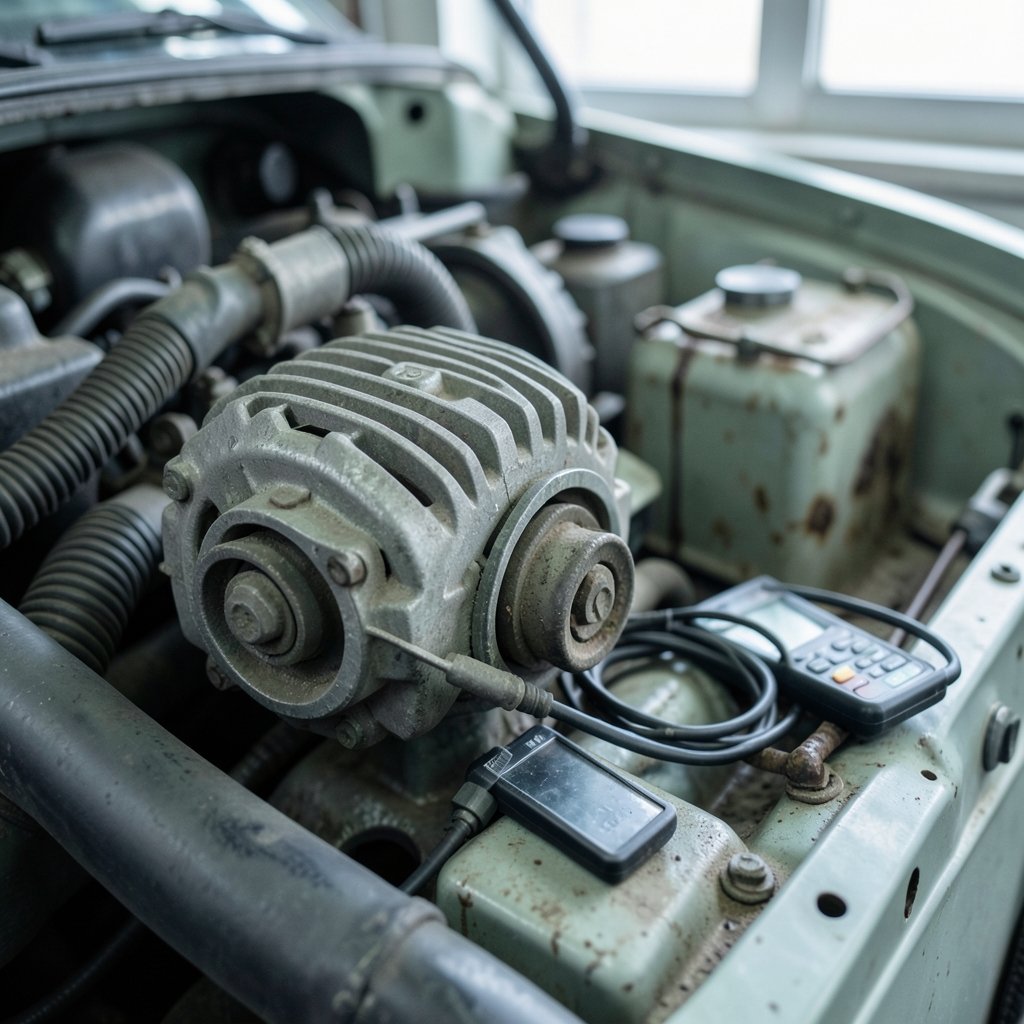
An alternator is a belt-driven generator. The engine spins its pulley, the rotor turns inside a stator, and the resulting alternating current gets converted to direct current by a rectifier built from diodes. That DC output charges the battery and runs every electrical load while the engine is running: lights, ignition, fuel pump, infotainment, heated seats, and the growing pile of computers in modern cars.
Two components do most of the quiet work. The voltage regulator holds output in a safe band so electronics aren’t cooked, and the brushes and slip rings carry current to the spinning rotor. When people say “the alternator is going out,” they usually mean one of those two things is worn, or a diode has failed, or a bearing is growling.
A useful mental model: the battery starts the car, and the alternator keeps it alive afterward. If the alternator quits, the car runs on battery power alone until the voltage sags below what the computers need. That’s why a dying alternator often ends with a car that stalls or shuts down mid-drive rather than simply refusing to start.
The Failure Modes That Actually Show Up

In practice, alternator failures cluster into a handful of patterns. Knowing them helps you sanity-check whatever diagnosis you’re handed.
Worn brushes and slip rings
Brushes are consumable carbon blocks that slowly wear down against the spinning slip rings. Eventually contact gets intermittent, output gets erratic, and the battery light flickers. This is one of the most common age-related failures and, notably, one of the most repairable.
Failed rectifier diodes
A diode failure often shows up as a faint whine through the radio that rises and falls with engine speed, or as a battery that slowly drains overnight. A diode test with an oscilloscope or a dedicated charging-system tester reveals the ripple pattern. Shops that skip this step and just read voltage are only doing half the job.
Worn bearings
A bearing on its way out makes a grinding or whining noise from the accessory belt area, often loudest at cold start. This one is easy to misattribute to a tensioner pulley or a water pump, so a mechanic should isolate the noise before condemning the alternator.
A failed voltage regulator
Overcharging is the dangerous version. If the regulator sticks, charging voltage can climb well past the normal band and start cooking the battery, boiling electrolyte, and stressing every module on the vehicle. Undercharging is the gentler failure: everything works, just barely, until it doesn’t.
Belt and tensioner problems
A glazed, loose, or contaminated belt slips under load and mimics a failing alternator perfectly. This is the cheapest possible “alternator repair” and the one most often missed. Any honest diagnosis checks belt condition and tension first.
How a Proper Diagnosis Should Go
A competent charging-system check follows a sequence, and you should expect a shop to walk it rather than jump straight to the alternator. The order matters because each step rules out a cheaper cause.
- Battery state of charge and condition. A weak battery can drag charging voltage down and fool a quick test. Terminals get checked for corrosion and tightness.
- Belt inspection. Condition, tension, and pulley alignment.
- Charging voltage at the battery with the engine running and accessories off. For a conventional 12-volt system, a healthy figure is commonly cited as roughly 13.5 to 14.5 volts. Treat that as a rule of thumb, not gospel, because exact specs vary by vehicle and by temperature-compensated charging strategies on newer cars.
- Load test. Turn on headlights, blower, and rear defroster, then recheck voltage. A healthy alternator holds its output; a tired one sags.
- Diode and ripple testing with an oscilloscope or dedicated tester.
- Voltage drop checks on the ground and positive cables. A corroded ground can waste volts that the alternator is actually producing.
That last point deserves emphasis. Voltage drop testing is where a lot of misdiagnosis gets caught. A car can have a perfectly good alternator and still show low charging voltage at the battery because resistance in a cable is eating the difference. Replacing the alternator in that scenario fixes nothing.
If you’re the type who likes to verify a diagnosis before authorizing work, the same instinct applies elsewhere in repair. It’s the mindset behind choosing a repair shop without getting burned: ask what was tested, ask for the numbers, and be suspicious of a verdict delivered without evidence. (Totp clock drift fix your 2fa codes fail repair it)
Rebuild, Remanufactured, or New?
Once the alternator is confirmed bad, you generally have three paths. Each has trade-offs worth understanding before you approve anything.
| Option | Typical cost range (parts) | What you get | Best for |
|---|---|---|---|
| Rebuild the existing unit | Lowest | New bearings, brushes, regulator, and diodes installed in your original housing | Older or rare vehicles; keeping a matching original part |
| Remanufactured unit | Middle | A factory-style rebuild of a core, often with a warranty | Most everyday repairs; the common aftermarket choice |
| New unit | Highest | Brand-new assembly, sometimes OEM | Newer vehicles, heavy electrical loads, long-term ownership |
A few practical notes. Rebuilding locally depends entirely on whether a competent rebuilder is nearby; a sloppy rebuild with cheap diodes is worse than a good remanufactured unit. Remanufactured alternators are extremely common in the aftermarket and are perfectly reasonable for most cars, but quality varies by rebuilder, so the warranty matters more than the label. New OEM units make the most sense when the vehicle is newer, has high electrical demand, or when you plan to keep it for years.
One more consideration: core charges. Many replacements require you to hand back the old alternator or pay a surcharge. Ask about it upfront so the final bill doesn’t surprise you.
What Drives the Cost of Alternator Repair
Total cost is parts plus labor, and labor is mostly about access. On some engines the alternator sits right on top with a clear shot at the belt. On others it’s buried behind an engine mount, an intake tube, or a tangle of hoses, and the book time reflects that. Front-wheel-drive V6 layouts and transverse engines tend to be the awkward ones.
A realistic way to think about it: the alternator itself is often the smaller line item, and the labor is what moves the total. That’s also why bundling related work makes sense. If the belt is original and the tensioner is tired, replacing them during the same job costs far less than paying the labor twice. Skipping that step is one of the most common mistakes people make: they pay for an alternator, then pay again three months later when the old belt finally lets go.
Diagnostic fees are another line item. Some shops waive the fee if you approve the repair, some don’t. Ask before the car goes on the lift. A fair diagnostic charge for a charging-system test is reasonable; paying for “diagnosis” that turns out to be a two-minute voltage reading is not.
Mistakes That Turn a Simple Fix Into an Expensive One
Here’s where firsthand repair experience pays off, even if you never touch a wrench. These are the patterns that separate a clean repair from a money pit. (Garage door repair near me find trustworthy pro fast)
Replacing the alternator without testing the battery. A battery with a shorted cell can pull an alternator to its limit and make a healthy unit look dead. Test both, together, under load.
Ignoring the belt and tensioner. Cheap insurance, and the labor is already paid for.
Skipping the voltage drop test. Corroded cables cause low charging voltage with a good alternator. If nobody checked resistance in the charging circuit, the diagnosis is incomplete.
Disconnecting the battery while the engine runs. This old trick to “test the alternator” can send voltage spikes through the electronics and damage modules. It’s a commonly warned-against practice, and it’s worth refusing if a shop suggests it.
Buying the cheapest unit with no warranty paperwork. Warranty terms vary by product and by jurisdiction, so don’t assume a number. Get the terms in writing. The same discipline applies to any repair decision, whether it’s a charging system or something as different as paintless dent removal: understand the scope, get the terms, and don’t accept vague promises.
Clearing the warning light instead of fixing the cause. Modern vehicles set charging-system codes, and OBD-II regulations have required standardized diagnostics on light-duty vehicles since the 1996 model year. A cleared code with no repair just delays the breakdown.
Warning Signs You Should Not Ignore
Some symptoms are a clear signal to stop driving and get the charging system checked. A battery light that comes on and stays on is the obvious one. Others are subtler: headlights that brighten when you rev the engine, a radio that whines with engine speed, a burning or acrid smell from the belt area, or a battery that keeps dying despite being new.
The one that catches people out is intermittent flicker. A failing alternator can work fine for a week and then leave you stranded. If the light has flickered even once, get it tested. A charging-system check is cheap compared to a tow and a jump-start in a parking garage at night.
Newer vehicles add a wrinkle: many use smart charging or variable voltage control, where the regulator deliberately varies output to save fuel and protect the battery. Voltage that reads 12.8 volts at idle isn’t automatically a fault on those systems. This is exactly why a proper tester that reads the control module’s data beats a handheld multimeter in the driveway. If you’re comparing repair options across categories, from cars to electronics, the principle holds: a specific diagnosis beats a general guess. The same logic shows up when people weigh whether repairing a dead motherboard is worth doing rather than simply replacing it.
Conclusion
Alternator repair is rarely complicated, but it is easy to get wrong in expensive ways. The part itself is a belt-driven generator with a handful of wear items, and most failures trace back to brushes, diodes, bearings, or the regulator. The real skill is in the diagnosis: confirming the battery is healthy, checking the belt, measuring charging voltage under load, testing the diodes, and verifying there’s no voltage drop hiding in the cables.
Get that sequence right and the repair decision becomes straightforward. Rebuild if you have a good local rebuilder and a rare or older unit. Choose remanufactured for most everyday cars, with the warranty in writing. Go new when the vehicle is newer or the electrical load is heavy. Replace the belt and tensioner while you’re in there, and never let anyone talk you into disconnecting the battery with the engine running.
And if a shop hands you an alternator verdict without numbers to back it up, ask for them. A few polite questions about what was tested and what the readings were will tell you more about the shop than any sign on the door.
FAQ
How long does an alternator usually last?
There’s no fixed lifespan, and anyone quoting a specific mileage is guessing. Wear depends on electrical load, heat, belt condition, and design. Many alternators last well over 100,000 miles, while others fail earlier because of a failed regulator or a bearing. Regular charging-system checks during routine service catch problems before they strand you.
Can I drive with a bad alternator?
Briefly, and only to get somewhere safe. The car runs on battery power once the alternator stops charging, and the range depends on the battery’s charge and the electrical load. Lights, wipers, and defrosters drain it faster. Driving with a failing alternator risks a sudden stall and leaves you with a dead battery and a tow bill.
How do I know if it’s the alternator or the battery?
You can’t reliably tell by symptoms alone, which is why testing both matters. A weak battery can drag charging voltage down and mimic an alternator fault, and a failing alternator can destroy a good battery. A proper test checks battery condition and state of charge first, then measures charging output under load.
Is it worth rebuilding an alternator instead of replacing it?
Often yes, if you have access to a competent rebuilder. A rebuild replaces the wear items (bearings, brushes, regulator, diodes) in your original housing and typically costs less than a replacement. The catch is quality: a cheap rebuild with poor diodes fails early. For common vehicles, a well-warrantied remanufactured unit is usually the safer bet.
What voltage should a good alternator put out?
For a conventional 12-volt system, roughly 13.5 to 14.5 volts at the battery with the engine running and loads off is the commonly cited healthy range. Treat it as a rule of thumb, not a specification. Exact figures vary by vehicle, and many newer cars use variable charging strategies that deliberately run lower at times.
Why did my new alternator fail so quickly?
The usual suspects are a bad battery stressing the new unit, a slipping or misaligned belt, a corroded cable causing excessive resistance, or a low-quality replacement part. Occasionally the original diagnosis was wrong and the real fault was never in the alternator. If a replacement fails early, insist on a full charging-circuit check, including voltage drop testing, before installing another one.



