

Can a refrigerator honestly be called American made when its compressor was built overseas and its parent company is headquartered in Asia? That question explains why the label is one of the most confusing in the appliance aisle. Shoppers who want a fridge built on U.S. soil find that “American made” can mean a dozen different things, depending on who makes the claim and how carefully they choose their words.
This guide cuts through the marketing language. It explains where major refrigerators are actually assembled, how the federal government defines a “Made in USA” claim, which brands own which factories, and what practical steps help a buyer confirm a fridge’s real origin before spending four figures on it.
Why the “Made in America” Label Is Trickier Than It Looks
Most people assume an American-sounding brand means an American factory. That assumption breaks down fast in the appliance world. The U.S. refrigerator market is dominated by a mix of foreign-owned and domestically headquartered companies, and ownership changes have shuffled the deck more than once.
Whirlpool remains headquartered in the United States and is among the largest players. GE Appliances, despite its deeply American name, has been owned by China’s Haier since a deal closed in June 2016. LG and Samsung, both South Korean companies, hold large shares of the U.S. market. So when a shopper asks whether a refrigerator is American made, the honest answer often depends on assembly location rather than brand ownership.
That distinction matters because “assembled in the USA” and “Made in USA” are not the same claim. One describes where parts came together. The other carries a legal standard that few refrigerators can actually meet.
The Legal Definition Behind “Made in USA”
The Federal Trade Commission enforces a specific rule. Under the Made in USA Labeling Rule, which took effect on August 13, 2021, an unqualified “Made in USA” claim requires that “all or virtually all” of a product’s significant inputs and processing be domestic.
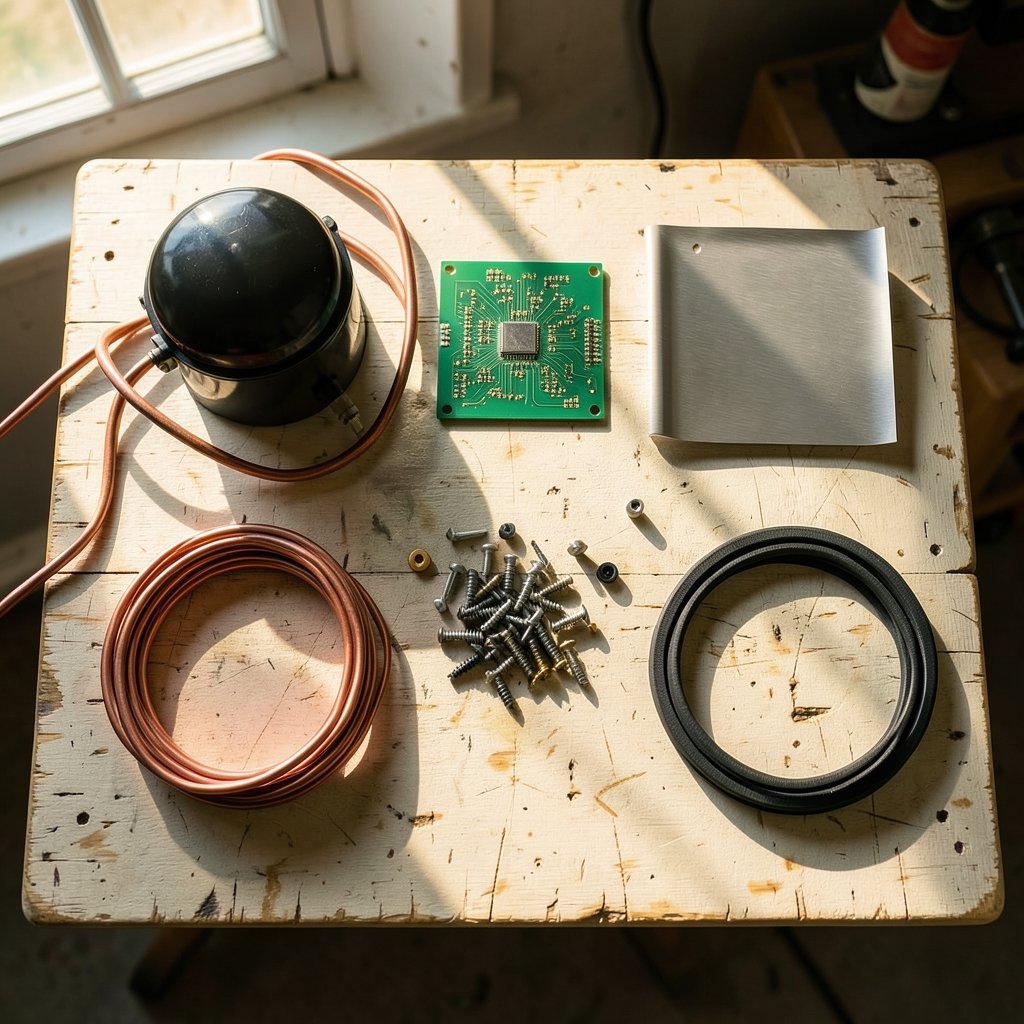
For a refrigerator, that is a steep bar. Compressors, electronic control boards, specialty steel, and refrigerant components frequently come from global supply chains. A fridge with an imported compressor generally cannot carry the unqualified claim, no matter where the cabinet was bent and painted.
This is where buyers get burned. A product page might say “Built in America” in large letters while the fine print says something softer, like “Assembled in the USA with global components.” That softer phrasing is governed by separate FTC guidance, and it is a weaker claim than “Made in USA.” It is not illegal. It is just not the same promise.
Country-of-origin marking is a third layer. Under U.S. Customs rules in 19 CFR Part 134, imported goods must be marked with their country of origin. That marking tells you where the finished product came from for customs purposes. It does not tell you where every part was made, and it does not authorize a “Made in USA” claim on its own.
Where American Refrigerators Are Actually Assembled
Several large assembly operations do exist on U.S. soil, and they employ thousands of workers. The catch is that these plants sit inside global supply chains, sourcing parts from many countries.
| Plant | Location | What It Produces | Notes |
|---|---|---|---|
| Whirlpool | Amana, Iowa | Refrigerators | Long-running U.S. refrigeration operation |
| GE Appliances | Louisville, Kentucky (Appliance Park) | Refrigerators and other appliances | Owned by Haier since 2016 |
| Electrolux/Frigidaire | Anderson, South Carolina | Refrigeration and cooking products | Restructuring in the 2010s and 2020s affected some U.S. production; verify current status |
A word of caution on that last row: plant status changes. Companies announce restructurings, shift product lines, and sometimes sell facilities. Before treating any specific factory as a guarantee, check the manufacturer’s current statements rather than relying on older articles. The same caution applies to any list of American refrigerator factories, including this one.
What these plants demonstrate is that American assembly is real and substantial. What they do not demonstrate is that every component inside the box originated in the United States. For a closer look at how physical currency itself is manufactured domestically, the story of how U.S. currency actually gets made offers a useful parallel: even products with strong domestic production roots depend on specialized processes and materials that are not always local.
Ownership vs. Assembly: Two Different Questions
Shoppers often conflate two separate questions. The first is who owns the brand. The second is where the product is built. Answering one tells you nothing reliable about the other.
A refrigerator assembled in Kentucky can be owned by a Chinese parent company. A refrigerator branded with a foreign nameplate can roll off a line in South Carolina. Neither situation is inherently good or bad for the buyer, but it does affect how a “made in America” claim should be read.
For buyers who care about supporting U.S. manufacturing jobs, assembly location is usually the more meaningful measure. For buyers who care about corporate ownership, the brand’s parent company matters more. Being clear about which question you are actually asking prevents a lot of disappointment at the showroom.
This same ownership-versus-origin tension shows up in other consumer categories too. The distinction between old money and new money, and inherited versus self-made wealth, is a reminder that pedigree and present-day reality are rarely the same thing. A brand’s history and its current factory floor can tell two very different stories.
How Tariffs and Trade Policy Shape What You Buy
Refrigerator sourcing does not happen in a vacuum. Trade policy has reshaped it repeatedly.
Section 232 steel and aluminum tariffs, imposed in March 2018, raised input costs for U.S. appliance makers. Section 301 tariffs on Chinese goods, also beginning in 2018, affected imported components. These policies pushed manufacturers to rethink where they buy steel, electronics, and subassemblies.
The practical effect for shoppers is that the “made in” story on a refrigerator can shift with policy changes. A model that was mostly domestically sourced a few years ago may now rely on a different mix of countries. None of this is visible on the showroom floor, which is exactly why reading the label carefully matters.
Energy standards add another layer. Federal appliance efficiency rules apply to every refrigerator sold in the United States, regardless of where it was built. That means a foreign-assembled fridge and a domestically assembled one compete under the same efficiency rules, which shapes design decisions across the entire market.
Practical Tips for Verifying a Refrigerator’s Origin
Marketing copy is written to sell, not to inform. A few habits will get you closer to the truth.
- Look for the unqualified claim first. If a manufacturer can legally say “Made in USA,” it will usually say so prominently. Softer phrasing like “assembled in America” or “American-owned” signals a weaker claim.
- Read the fine print on the product page. Look for phrases like “with global components” or “imported parts.” These are disclosures, not accidents.
- Check the country-of-origin marking on the unit itself. The physical label on the appliance is required by customs rules and is harder to spin than a marketing banner.
- Search the parent company as well as the brand. Ownership determines who profits and often where investment flows.
- Confirm plant status directly. If a specific factory matters to you, check the manufacturer’s current announcements rather than a years-old article.
- Ask the retailer’s appliance specialist directly. A good salesperson can often tell you the assembly country from the spec sheet, and a vague answer is itself informative.
The most common mistake buyers make is assuming a familiar American brand name equals American assembly. The second most common mistake is assuming a foreign-owned brand means a foreign factory. Both shortcuts fail regularly.
Common Myths About American-Made Appliances
A few persistent myths deserve direct correction.
Myth one: “If the brand is American, the fridge is American.” Ownership and assembly are separate facts, as the Haier acquisition of GE Appliances shows.
Myth two: “Assembled in USA means Made in USA.” These are different claims with different legal standards. The first describes where parts came together. The second requires that virtually all significant inputs and processing be domestic.
Myth three: “A high price means domestic production.” Price reflects features, brand positioning, and materials. It says nothing reliable about origin.
Myth four: “The label is just marketing.” It is not. The FTC has brought enforcement actions over Made in USA claims, and state laws add further requirements. Marketers who overreach face real compliance risk, which is why careful brands hedge their language.
Understanding how value is constructed and communicated is useful context here. The way money is made across paper, metal, and digital ledgers shows how layered and sometimes counterintuitive production systems can be, and appliance manufacturing follows a similar pattern of hidden complexity behind a simple finished product.
What Actually Works When You Shop
The most reliable approach combines several checks rather than trusting any single source. Start with the manufacturer’s own claim language, then verify against the physical country-of-origin marking, then confirm ownership and plant location through current company information.
Buyers who prioritize domestic assembly should focus on models built at plants like the ones in Iowa, Kentucky, and South Carolina, while accepting that components will still come from around the world. Buyers who prioritize American ownership should look at parent company headquarters rather than assembly location. Buyers who want the strictest possible standard should look for the unqualified “Made in USA” claim and expect the field to be narrow.
There is no single “most American” refrigerator. There are only different definitions of American, each with trade-offs worth understanding before you swipe a card.
Conclusion
American made refrigerators exist, but the phrase covers more ground than most shoppers expect. Domestic assembly is real and employs thousands of workers at plants across the Midwest and South. A strict “Made in USA” claim, however, is rare in this category because refrigerators depend on global supply chains for compressors, electronics, and steel.
The smart move is to decide which definition matters to you before you shop. If it is U.S. assembly jobs, look at where the unit is built. If it is American ownership, look at the parent company. If it is the legal gold standard, look for the unqualified claim and be prepared for a short list. Read the fine print, check the physical label, and treat any vague “American” language as a prompt to dig deeper. A few minutes of verification beats years of assuming.
FAQ
What does “Made in USA” legally require for a refrigerator?
An unqualified “Made in USA” claim requires that “all or virtually all” of a product’s significant inputs and processing be domestic, under the FTC’s Made in USA Labeling Rule, which took effect on August 13, 2021. Because most refrigerators contain imported compressors, electronics, or steel, few models can legally use the unqualified claim.
Is GE Appliances an American company?
GE Appliances is headquartered in the United States but has been owned by China’s Haier since a deal closed in June 2016. Its appliances, including refrigerators, are assembled at facilities such as Appliance Park in Louisville, Kentucky, but brand ownership and assembly location are separate facts.
What is the difference between “Assembled in USA” and “Made in USA”?
“Assembled in USA” describes where a product’s parts were put together, and it is a weaker claim governed by separate FTC guidance. “Made in USA” is a stronger claim requiring that virtually all significant inputs and processing be domestic. A refrigerator can be assembled in America without qualifying for the Made in USA label.
Which refrigerators are assembled in the United States?
Several major assembly operations exist on U.S. soil, including Whirlpool’s refrigeration plant in Amana, Iowa, and GE Appliances’ Appliance Park in Louisville, Kentucky. Electrolux/Frigidaire has operated a plant in Anderson, South Carolina, though restructuring in recent years has affected some U.S. production, so current status should be verified with the manufacturer.
How can I verify where a refrigerator was actually built?
Check three things: the manufacturer’s exact claim language on the product page, the physical country-of-origin marking required on the appliance under customs rules, and the parent company’s current plant information. Vague phrases like “American-owned” or “built with global components” signal a weaker claim than an unqualified “Made in USA.”
Do tariffs affect whether a refrigerator counts as American made?
Tariffs affect sourcing and cost, not the legal definition of “Made in USA.” Section 232 steel and aluminum tariffs from March 2018 and Section 301 tariffs on Chinese goods from 2018 pushed manufacturers to change where they buy components, which can shift a model’s country mix over time. The FTC standard for the label itself has not changed.



