
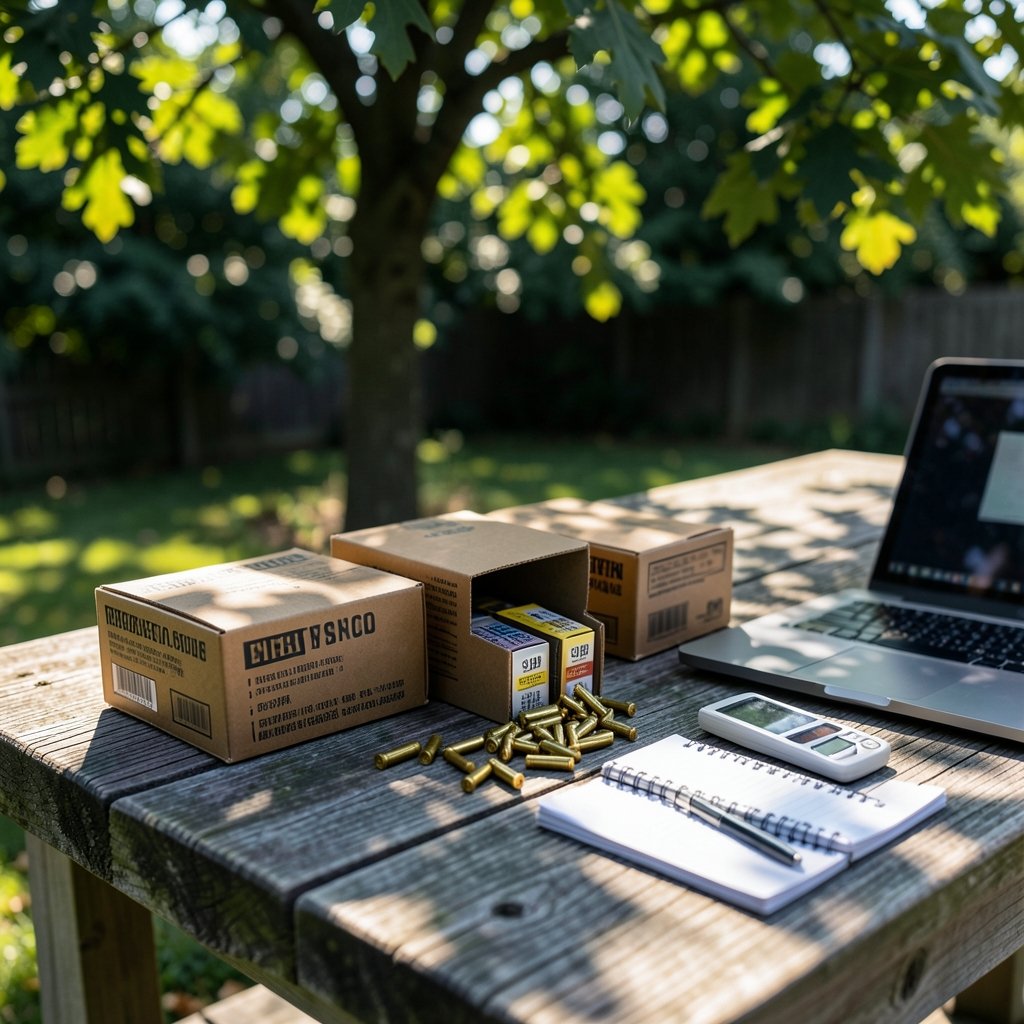
What if you could check the price of a box of 9mm at dozens of online retailers in a single search, the way you compare flights or hotel rooms? That is the basic promise behind AmmoSeek, a niche price-comparison tool built for people who buy ammunition in bulk. Instead of opening fifteen browser tabs and jotting prices on a notepad, a shooter types in a caliber, sets a few filters, and watches a sorted list of listings appear. It sounds simple. The interesting part is what sits underneath that list, and why the tool has become a quiet fixture in the shooting community during every shortage cycle.
This article breaks down what AmmoSeek does, how its search and filtering work, where its limits are, and how to get real value out of it without falling into the traps that catch first-time users.
What AmmoSeek Is and What It Is Not
AmmoSeek is a price aggregation website for ammunition. It does not manufacture, stock, or ship ammo. It crawls and indexes product listings from online retailers, then presents those listings in a searchable, sortable format. When you find a deal and click through, you complete the purchase on the retailer’s own site, under that retailer’s terms, shipping rules, and return policy.
That distinction matters more than it first appears. Because AmmoSeek is a directory rather than a store, it carries no inventory risk and no obligation to honor a price. If a retailer’s feed shows a stale price, the listing can be wrong. If a retailer sells out between the crawl and your click, the item can vanish. The tool is a discovery layer, not a guarantee.
The core value proposition is price per round. Buying ammunition by the box is how most casual shooters shop, but serious buyers think in cost per cartridge, because that is the only way to compare a 50-round box against a 500-round bulk case or a 1,000-round loose pack. AmmoSeek’s listings are structured to make that comparison fast.
How the Search and Filtering System Works

The interface is deliberately plain. You pick a caliber, and the site returns listings sorted by price. From there, filters narrow the field. The most useful ones in practice:
- Caliber, the primary filter and the one that determines everything else
- Brand, for shooters loyal to a specific manufacturer
- Bullet weight in grains, which affects recoil, trajectory, and terminal behavior
- Bullet type, such as full metal jacket, hollow point, or soft point
- Condition, distinguishing new production from remanufactured or surplus
- Case quantity, which lets you compare like with like
Understanding bullet weight requires a bit of vocabulary. The grain is a unit of mass equal to 1/7000 of a pound, and it is the standard way bullet and powder weights are expressed in the United States. A 115-grain 9mm round and a 147-grain 9mm round are the same caliber but behave very differently: the heavier bullet is subsonic in many loadings and produces softer felt recoil, while the lighter one runs faster and flatter. Filtering by grain weight is how experienced buyers avoid comparing apples to oranges.
The same logic applies to caliber designation itself. Cartridge names are not systematic. A “.38 Special” fires a bullet of roughly .357 inch diameter, and a “.44 Magnum” fires one of roughly .429 inch. These naming conventions are historical artifacts, not measurements, and they trip up newcomers constantly. AmmoSeek’s caliber-based navigation sidesteps some of that confusion by letting you search the exact cartridge name printed on the box.
Why Price Per Round Is the Only Metric That Matters
Here is the mistake almost everyone makes at least once: comparing the sticker price on a box without checking what is inside it. A $19.99 box sounds cheaper than a $24.99 box until you notice the first contains 20 rounds and the second contains 50. That is a difference of roughly $1.00 per round versus $0.50 per round, and the “cheaper” box is twice as expensive.
AmmoSeek’s sorting is built around this problem, and it is the single biggest reason the site is worth using. Once you internalize cost per round, your shopping behavior changes permanently. You stop thinking in boxes and start thinking in cents.
Shipping Changes the Math
The second trap is shipping. A listing with the lowest per-round price can lose badly once freight and any hazardous-materials handling fee are added. Ammunition ships as a regulated commodity, and many carriers impose surcharges or restrict where it can be delivered. A retailer with a flat $15 shipping fee on a single 50-round box can turn a great unit price into a mediocre total.
The practical fix is to buy in quantity. Shipping cost is largely fixed per order, so spreading it across 500 or 1,000 rounds drops the per-round freight contribution to near nothing. Bulk buying is therefore a real cost strategy and a hobbyist habit. The savings come from the freight and from the retailer’s volume discount.
Tax and Transfer Rules
Sales tax varies by destination, and some states treat ammunition differently from other goods. A handful of jurisdictions require buyers to hold specific permits or complete eligibility checks before ammunition can be shipped to them. These rules change, and they are enforced by the retailer, not by the aggregator. Always confirm the seller’s shipping restrictions for your address before you commit to a large order. (Ammunition)
What AmmoSeek Does Well, and Where It Falls Short
| Strength | Limitation |
|---|---|
| Fast comparison across many retailers | Listings can be stale or out of stock |
| Clear cost-per-round sorting | Total landed cost requires manual math |
| Useful caliber and grain filters | Coverage depends on which retailers are indexed |
| Free to use, no account required | No purchase protection or dispute support |
| Good for spotting price trends | Not a substitute for reading retailer terms |
The coverage question is the one that matters most. An aggregator is only as good as its index. If a major retailer is not included, or if a retailer’s product feed is incomplete, the “best price” you see may not be the best price available. Experienced users treat AmmoSeek as a starting point and cross-check two or three known retailers before buying, especially on large orders where a few cents per round adds up to real money.
There is also the out-of-stock problem. During demand spikes, listings can persist after inventory is gone. You click through, find an empty product page, and return to the search. This is a structural feature of any crawler-based price tool, not a flaw unique to AmmoSeek, but it is worth expecting.
Using AmmoSeek During a Shortage
Ammunition markets are cyclical. Demand surges, shelves empty, prices climb, then supply catches up and prices fall back. Anyone who has shopped through one of these cycles knows the emotional pull of buying at the first available price. AmmoSeek is genuinely useful here, because it turns a panicked purchase into a data-driven one.
A few habits that work in practice:
- Track a baseline. Record the per-round price for your most-used caliber when supply is normal. That number is your reference point.
- Set a buy threshold. Decide in advance what you will pay, and stick to it. Shortage pricing punishes impulse buying.
- Watch availability as well as price. A cheap listing that is always out of stock is not a deal.
- Buy incrementally. Rather than one huge order at a peak, spread purchases across the cycle.
- Verify before you commit. Confirm the retailer’s shipping cost, restrictions, and processing time.
The discipline is the point. A price aggregator gives you information; it does not give you judgment. The shooters who navigate shortages well are the ones who set rules before the panic starts.
Common Mistakes First-Time Users Make
Beyond the box-versus-round confusion, several other errors show up again and again.
Ignoring bullet type. Full metal jacket rounds are cheap practice ammunition. Hollow points and defensive loads cost substantially more because of more complex manufacturing and terminal-performance design. Filtering by price alone can surface a great deal on a training round when you were shopping for a carry load, or vice versa.
Overlooking remanufactured ammunition. Remanufactured rounds use recovered brass cases and are often cheaper. Quality varies widely by producer. Some shooters use them happily for practice; others avoid them in certain firearms. The listing usually discloses this, but it is easy to miss when you are sorting by price.
Assuming the lowest price is the best value. A retailer with a slightly higher per-round price but free shipping over a threshold, fast processing, and a solid return policy can be the better buy. Price is one variable, not the whole equation.
Forgetting about storage. Buying 2,000 rounds because the price was excellent is only a win if you can store it properly. Ammunition wants a cool, dry place, and moisture is the enemy. Bulk purchases that end up in a damp garage are a false economy.
Not checking local options. Sometimes a local shop’s shelf price beats every online listing once shipping and transfer costs are counted. The aggregator does not see your local store.
How to Read an AmmoSeek Listing Critically
When a listing catches your eye, run a short checklist before clicking buy. Confirm the case quantity so you know the true unit price. Confirm the bullet weight and type so you know what you are actually getting. Confirm the retailer’s shipping cost and any hazmat fee. Confirm whether the item is in stock rather than backordered. Confirm whether the retailer ships to your location under current rules. Then compare the landed total against your baseline.
That five-step check takes about a minute and routinely saves more than the search itself. The tool surfaces options; the checklist converts an option into a decision.
The Bigger Picture for Ammunition Buyers
Price comparison tools have quietly reshaped how niche hobby markets work. Before aggregators, pricing information was local and anecdotal. A buyer knew what three shops charged and guessed at the rest. Today, a searchable index makes the whole online market legible in seconds, which pressures retailers toward competitive pricing and gives buyers a shared reference point for what “normal” looks like.
That transparency has limits. It does not cover local retail, it depends on crawl coverage, and it cannot fix a market where supply is genuinely constrained. But it does remove the information asymmetry that once let a single well-stocked store set the tone for an entire region. For a commodity where the only real differentiator is price and availability, that is a meaningful shift.
Conclusion
AmmoSeek is best understood as a research tool, not a storefront. It compresses hours of tab-hopping into a single sorted list, and its focus on cost per round forces a discipline that most ammunition buyers badly need. Used well, it turns a frustrating, opaque shopping experience into a straightforward comparison exercise. Used carelessly, it produces the same mistakes it was designed to prevent: stale prices, forgotten shipping costs, and boxes compared against cases.
The takeaway is simple. Search broadly, filter carefully, convert everything to cost per round, add the freight, and check the retailer before you commit. Do that, and the tool does exactly what it promises: it shows you the market as it actually is, so you can decide what a fair price looks like for you.
Frequently Asked Questions
What is AmmoSeek?
AmmoSeek is a price-comparison website that indexes ammunition listings from online retailers and presents them in a searchable, sortable format. It does not sell ammunition itself. Buyers use it to compare cost per round across many sellers, then complete the purchase on the retailer’s own site. (SAAMI: Sporting Arms and Ammunition Manufacturers’ Institute)
Is AmmoSeek free to use?
Yes. The site functions as a free directory and does not require an account to search. Its revenue model is not tied to your purchase, which is worth remembering: the listings are informational, and the retailer handles the transaction, shipping, and any disputes.
Does AmmoSeek sell ammunition directly?
No. Every purchase happens on the retailer’s website. That means the seller’s terms, shipping restrictions, return policy, and eligibility requirements all apply. AmmoSeek cannot intervene in an order, so verify the seller before committing to a large purchase.
Why does the price per round differ from the box price?
Because boxes come in different quantities. A 20-round box and a 50-round box are not directly comparable. Dividing the total price by the number of rounds gives you a common unit, which is the only fair way to compare listings across brands, package sizes, and retailers.
What is a grain in ammunition?
A grain is a unit of mass equal to 1/7000 of a pound, used to express bullet and powder weights. Bullet weight affects recoil, velocity, and terminal behavior. Two rounds of the same caliber with different grain weights can perform very differently, so filter by weight when it matters.
Can AmmoSeek help during an ammunition shortage?
It can, if you use it with discipline. Track a baseline price when supply is normal, set a buy threshold in advance, and watch availability as closely as price. The tool gives you information quickly, but it cannot stop you from overpaying in a panic, so decide your rules before demand spikes.



