
What happens when the satellite that brings cell service to a dead zone also threatens to drown out the network you already rely on? That question is central to a fight at the Federal Communications Commission, where AT&T and Verizon have objected to a SpaceX proposal tied to Supplemental Coverage from Space (SCS) and a 482 MHz spectrum request. T-Mobile, SpaceX’s partner in the direct-to-cell venture, is on the other side. The outcome will shape how quickly your phone connects to a satellite in 2026 and beyond. (Starlink south africa users cut off licensing 30 percent rule 2026) (Verizon)
The Basics: What SCS Actually Is
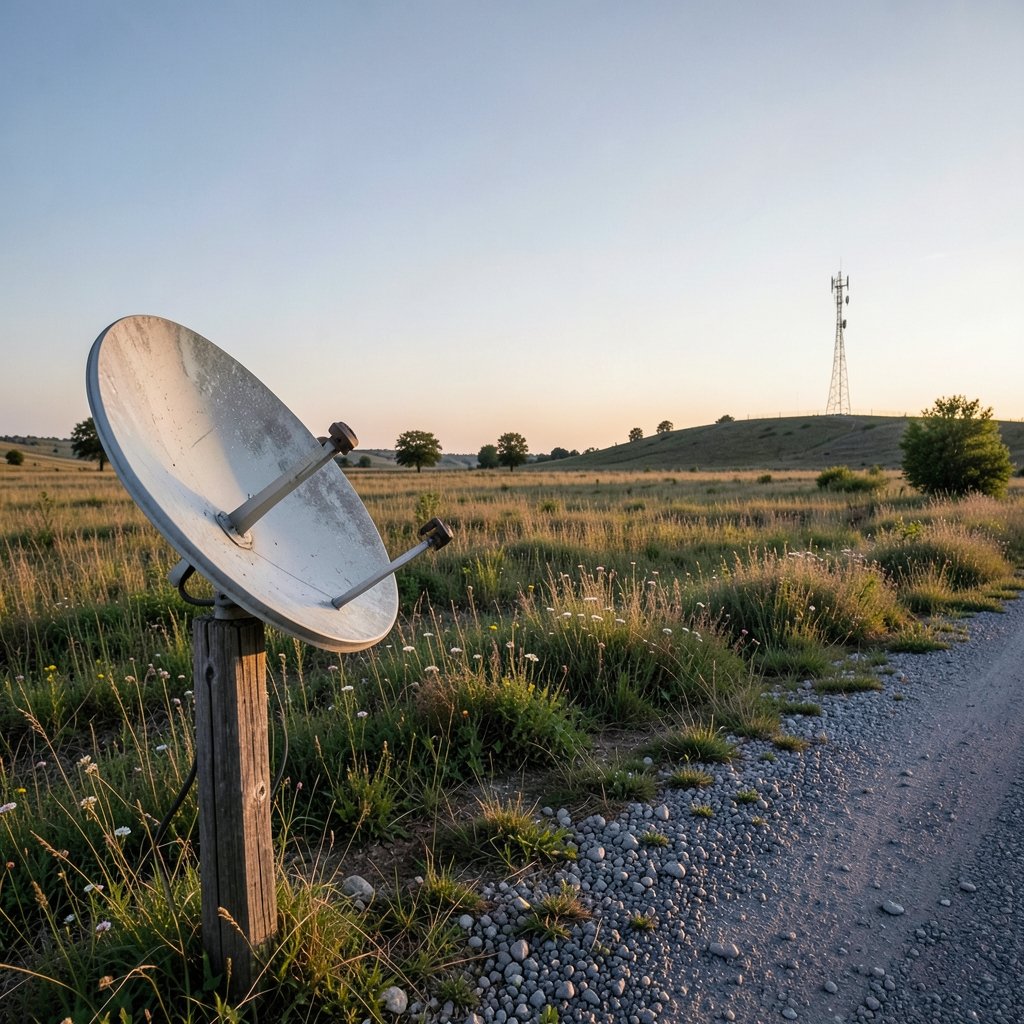
Supplemental Coverage from Space is a regulatory framework the FCC adopted in March 2024. It lets satellite operators team up with terrestrial mobile carriers to use licensed spectrum for coverage in places where cell towers do not reach. Think rural highways, mountain valleys, and stretches of ocean. The satellite essentially acts as a cell tower in the sky, borrowing spectrum that a carrier already licenses on the ground.
The appeal is obvious. Instead of building towers in every remote corner, carriers can lean on low-Earth-orbit satellites to fill gaps. For regulators, it promises better emergency coverage and narrower digital divides. For satellite companies, it opens a huge new market.
But SCS raises a thorny technical problem. The same frequencies cannot be used carelessly in two places at once. A satellite beam that is too strong, too broad, or pointed the wrong way can interfere with terrestrial networks operating nearby. That interference risk is the core of the current dispute.
The 482 MHz Question
The 482 MHz figure at the center of this fight refers to a specific spectrum request connected to SpaceX’s SCS ambitions with T-Mobile. The exact technical meaning, whether it describes a bandwidth block, a band designation, or a proposed operating parameter, remains a point of contention in the proceeding itself. What matters for readers is simpler: SpaceX wants access to a meaningful slice of airwaves, and rival carriers argue that granting it could degrade their own service.
Spectrum is finite and expensive. Every megahertz granted to one operator is a megahertz that must be carefully coordinated with everyone else. When a satellite operator asks for hundreds of megahertz, terrestrial carriers pay attention, because their customers share the same airwaves.
Why AT&T and Verizon Are Objecting
AT&T and Verizon have historically opposed certain SpaceX and T-Mobile SCS requests at the FCC, mainly over interference concerns with terrestrial networks in adjacent or shared bands. Their argument follows a consistent logic:
- Satellite signals from space are powerful and wide-reaching.
- Terrestrial networks use the same or neighboring frequencies.
- Without strict limits, satellite transmissions could raise noise levels on the ground.
- Consumers on existing networks could see slower speeds or dropped calls.
The carriers are not arguing against satellite coverage in principle. They are arguing about the terms. In filings, opponents of broad SCS grants typically push for tighter power limits, stricter out-of-band emission rules, geographic restrictions near terrestrial towers, and coordinated sharing arrangements.
There is also a competitive dimension. T-Mobile’s partnership with SpaceX gives it a head start in direct-to-cell service. Rivals have an incentive to slow or shape that advantage through the regulatory process. That does not make their technical concerns wrong, but it does explain the intensity of the fight.
T-Mobile and SpaceX: The Partnership Behind the Push
T-Mobile and SpaceX announced their direct-to-cell partnership in August 2022. The goal was straightforward: eliminate dead zones by letting ordinary phones connect to Starlink satellites without special hardware. Commercial beta service was targeted for late 2024 into 2025, with expansion afterward. (Starlink group 15 15 27 satellites vandenberg 2026) (Starlink)
The technical promise is genuinely impressive. Standard phones, no new chip, no new antenna, just a satellite link when the tower disappears. Early service focuses on text messaging and limited data, with voice and broader data planned as the constellation matures.
For T-Mobile, the partnership is a marketing differentiator. For SpaceX, it is a new revenue stream and a step toward a broader satellite-to-phone business. For regulators, it is a test case: can satellite and terrestrial networks share spectrum without harming either?
The stakes extend well beyond one carrier. Satellite dependence has already become a geopolitical issue, as the debate over Starlink in Ukraine shows how much leverage a single vendor can hold. The same single-vendor risk applies to consumer networks that lean heavily on one satellite partner.
How the FCC Fits In
The FCC is the referee. Under the SCS framework, the agency reviews applications, sets interference limits, and decides whether a proposed service can launch. The commission’s Space Bureau handles many of these proceedings, and public comment runs through the Electronic Comment Filing System (ECFS), where anyone can read the filings and add their own.
The process is deliberately slow. Regulators must weigh innovation against protection of existing networks. They also face pressure from lawmakers who want faster satellite coverage and from carriers who want strict safeguards. Every order sets a precedent for the next applicant.
A useful parallel is the broader debate over how government balances new technology against incumbent industries. The same tension played out in the fight over app store fees, where Apple’s 27 percent commission became a regulatory and legal battleground. Spectrum policy follows a similar pattern: new entrants want room, incumbents want protection, and regulators try to split the difference.
What Interference Actually Looks Like
Interference is not an abstract worry. In practical terms, it can show up as:
- Raised noise floors near cell edges, reducing signal quality.
- Blocked uplinks where satellite signals overwhelm tower reception.
- Adjacent-band bleed that affects services in neighboring frequencies.
- Coverage holes created when satellite beams overlap dense urban networks.
Engineers on both sides spend months modeling these scenarios. The disagreement is rarely about whether interference can happen. It is about how much is acceptable and what margins are needed to prevent it.
Practical Lessons From Spectrum Fights
Watching these proceedings offers a few takeaways for anyone following telecom policy:
- Read the filings, not the headlines. Press releases simplify. The ECFS docket shows the real technical arguments.
- Watch the power limits. The most consequential details are often decibel-level restrictions buried in exhibits.
- Follow the money. Carrier positions often align with competitive interests, even when the technical case is sound.
- Expect timelines to slip. Spectrum proceedings routinely take longer than announced launch dates suggest.
- Check both sides. Satellite advocates and terrestrial carriers each present partial pictures.
The Competitive Situation
The market context matters. T-Mobile’s early lead in direct-to-cell puts pressure on AT&T and Verizon to respond, either through their own satellite partnerships or through regulatory pushback. Both rivals have explored satellite deals of their own, which makes their objections to SpaceX’s request look less like opposition to satellite coverage and more like a fight over terms.
| Player | Position | Core Concern |
|---|---|---|
| SpaceX / Starlink | Wants broad SCS approval | Speed to market, spectrum access |
| T-Mobile | Partner and beneficiary | Differentiation, coverage leadership |
| AT&T | Opponent of broad grants | Interference, network protection |
| Verizon | Opponent of broad grants | Interference, competitive parity |
| FCC | Referee | Balance innovation and protection |
The table simplifies a complex docket, but it captures the essential dynamic: two incumbents trying to slow a partner they cannot easily match.
What This Means for Consumers
For ordinary phone users, the fight has real consequences. A permissive FCC ruling could mean faster rollout of satellite messaging and eventually voice coverage in remote areas. A restrictive ruling could delay service or limit it to specific conditions.
There is also a price dimension. Satellite coverage is not free to provide. Carriers will likely bundle it into premium plans or charge add-ons. The regulatory terms influence how much of that cost gets passed to customers.
And there is the reliability question. If satellite and terrestrial networks interfere with each other, everyone loses. Careful rules protect the baseline service that most people depend on every day.
Where the Debate Is Heading in 2026
Heading into 2026, three forces will shape the outcome:
- Technical evidence. Interference studies and real-world test data will either support or undercut the carriers’ objections.
- Political pressure. Lawmakers want satellite coverage for rural and emergency use, which favors faster approval.
- Market competition. Rival satellite partnerships could change who supports which rules.
The FCC’s decisions in related proceedings will also matter. Spectrum policy is interconnected, and rulings in one band can ripple into others. The agency has shown willingness to approve SCS applications with conditions, which suggests a middle path is likely.
Common Mistakes People Make Following This Story
Observers often make a few predictable errors:
- Assuming opposition means rejection. Carriers frequently oppose specific terms, not the entire service.
- Treating the 482 MHz figure as settled. The exact technical meaning is still contested in the proceeding.
- Ignoring adjacent proceedings. SCS rules interact with broader spectrum policy.
- Overstating timelines. Announced launch dates rarely match regulatory reality.
- Missing the competitive angle. Technical arguments and business interests are tangled together.
A Balanced View
It is tempting to cast this as innovation versus incumbents. The reality is messier. SpaceX and T-Mobile are pushing a genuinely useful service. AT&T and Verizon are protecting networks that millions of people rely on today. Both sides have legitimate points.
The FCC’s job is to find the version of SCS that delivers satellite coverage without degrading the networks underneath. That is hard, technical, and slow. It is also exactly the kind of work that determines whether the satellite phone in your pocket actually works when you need it.
Conclusion
The fight over SpaceX’s 482 MHz SCS request is a preview of the next decade of mobile connectivity. Satellites are no longer a niche add-on. They are becoming part of the core network, and the rules governing them will decide how fast that happens and who pays for it.
AT&T and Verizon are right to demand strong interference protections. SpaceX and T-Mobile are right to push for a framework that makes satellite coverage practical. The FCC’s challenge is to honor both. For consumers, the best outcome is boring: reliable cell service on the ground and a satellite backup when the tower disappears. Getting there requires exactly the kind of careful, contested rulemaking now underway.
Frequently Asked Questions
What does SCS stand for in this FCC fight?
SCS stands for Supplemental Coverage from Space. It is the FCC framework, adopted in March 2024, that lets satellite operators partner with terrestrial carriers to use licensed spectrum for coverage in dead zones.
What is the 482 MHz request about?
It refers to a specific spectrum request connected to SpaceX’s SCS proposal with T-Mobile. The exact technical meaning, whether bandwidth, band designation, or operating parameter, is itself contested in the proceeding.
Why are AT&T and Verizon opposed?
They cite interference concerns. Satellite signals could raise noise levels on terrestrial networks sharing or neighboring the same frequencies, potentially degrading service for existing customers.
Is T-Mobile part of the dispute?
Yes. T-Mobile is SpaceX’s partner in the direct-to-cell venture announced in August 2022. It supports broad SCS approval, putting it on the opposite side from AT&T and Verizon.
Will this delay satellite phone service?
It could. Restrictive FCC conditions or prolonged proceedings may slow rollout. A middle-path ruling with technical safeguards is the most likely outcome.
How can I follow the case?
Public filings are available through the FCC’s Electronic Comment Filing System (ECFS). Reading the docket directly gives a clearer picture than press coverage alone.