
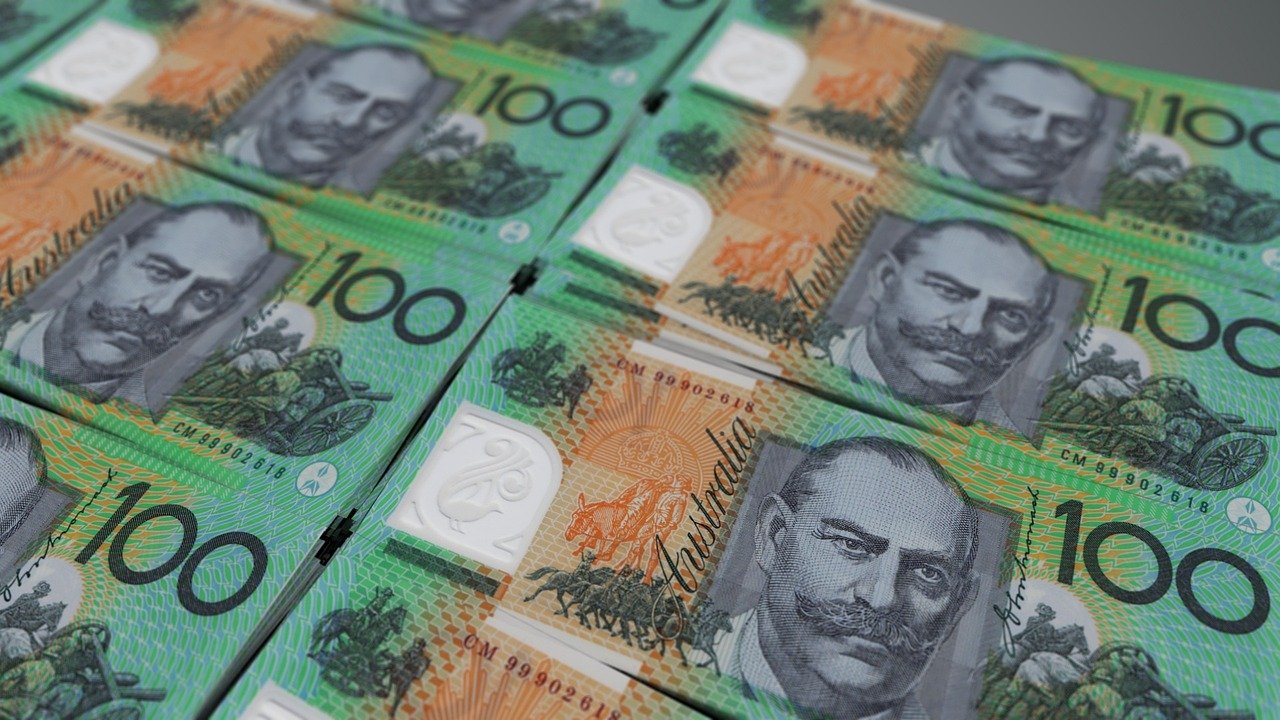
What makes a banknote survive a spin through a washing machine, a dunk in a swimming pool, and a week in a hot car? In Australia, the answer is plastic. Australian money is one of the most distinctive currencies on the planet, not because of its exchange rate, but because of what it is made of, how it is regulated, and the way it quietly shapes everyday life. From the polymer notes in your wallet to the cash rate that decides your mortgage repayment, the story of the Australian dollar is far more interesting than most people expect.
From Pounds to Dollars: A Quick History
Australia did not always use dollars. Before 14 February 1966, the country ran on pounds, shillings and pence, inherited from British tradition. Decimalisation changed everything overnight. The new dollar was set at two dollars to one pound, and the country swapped its entire currency system in a single day.
For a while, the new dollar was pegged to the British pound, then to the US dollar. That arrangement ended in December 1983, when the Australian dollar was floated and its value was left to the market. Today it is one of the most actively traded currencies in the world, a favourite among global traders because of Australia’s stable institutions and its deep links to commodity markets.
Why Australian Banknotes Are Made of Plastic

The most striking thing about Australian money is that it is not paper at all. Australia issued the world’s first full series of polymer banknotes, developed in partnership with CSIRO and the University of Melbourne. The first polymer note, the $10, appeared in 1988 to mark the bicentenary, and the full series was completed by 1996. The Reserve Bank of Australia explains the development of the country’s polymer banknotes in detail, including the security features built into each note.
Polymer notes last far longer than paper ones. They resist water, dirt and tearing, and they are much harder to counterfeit because of the transparent window embedded in each note. For anyone who has accidentally left a note in a pocket and found it intact after a wash cycle, the practical benefit is obvious.
The Notes in Circulation
The Reserve Bank of Australia issues five note denominations:
| Note | Colour | Notable feature |
|---|---|---|
| $5 | Pink | First of the next-generation series, issued in 2016 |
| $10 | Blue | First polymer note ever issued, in 1988 |
| $20 | Red | Features the iconic wattle design |
| $50 | Yellow | The most commonly used note in circulation |
| $100 | Green | Last of the next-generation series, issued in 2020 |
Each note carries a portrait, a transparent window, and tactile features designed to help people who are blind or have low vision tell denominations apart. If you handle cash regularly, learning these features is one of the simplest ways to avoid trouble, especially since scams involving fake notes and gift cards are common. Understanding how a gift card scam works and why victims rarely get their money back is a useful reminder that cash still carries risks of its own.
Coins, Cents and the Rounding Rule
Coins are produced by the Royal Australian Mint in Canberra, which opened in 1965. The mint strikes circulating coins in 5c, 10c, 20c, 50c, $1 and $2 denominations. The 1-cent and 2-cent coins were withdrawn in 1992, which is why cash transactions are now rounded to the nearest five cents. The Royal Australian Mint publishes the specifications for Australian coins, including their metals, weights and sizes.
Two coins replaced notes entirely. The $1 coin arrived in 1984 and the $2 coin in 1988, and the corresponding notes were withdrawn. The $2 coin is particularly recognisable for its smaller size and its portrait of an Aboriginal elder, a design that has become a familiar sight in every Australian wallet.
A Practical Tip on Rounding
Rounding only applies to cash transactions. If a purchase totals $12.98, you pay $13.00 in cash, but card payments still settle to the exact cent. Many visitors get confused by this, and some assume they are being overcharged. They are not. The rule exists because the smallest coin is five cents, and it applies to the total bill, not to individual items.
Legal Tender: What the Rules Actually Say
Legal tender is one of the most misunderstood ideas in Australian money. Under the Currency Act 1965, banknotes are legal tender for any amount. Coins, however, come with limits. The Currency Act 1965 sets out the legal tender limits for coins, and they are stricter than most people realise.
| Coin denomination | Legal tender limit |
|---|---|
| 5c, 10c, 20c, 50c | Up to $5 in total |
| $1 and $2 | Up to $10 in total |
| 1c and 2c (withdrawn) | Up to 20c |
This does not mean a shop can refuse your $20 of loose change out of spite. In practice, businesses can set their own payment policies, and legal tender rules mainly matter in disputes over debts. Still, knowing the limits is useful if you have ever tried to pay for a coffee with a jar of five-cent pieces.
The Cash Rate: The Number Behind Your Mortgage
The Reserve Bank of Australia does more than print money. It sets the cash rate target, the interest rate banks pay to borrow from each other overnight. That single number ripples through the entire economy, influencing mortgage rates, savings accounts, business loans and the value of the dollar itself.
The RBA has operated an inflation-targeting framework since the early 1990s, aiming for inflation of 2 to 3 percent on average over the cycle. The Reserve Bank of Australia’s monetary policy pages explain how the cash rate is set, when the board meets, and how decisions are communicated. The board meets several times a year, and each decision is watched closely by homeowners, investors and economists alike.
For ordinary Australians, the cash rate is not abstract. A change of a quarter of a percentage point can shift a monthly repayment by tens or hundreds of dollars, depending on the size of the loan. That is why the phrase “the RBA meets today” can dominate the news cycle.
The Australian Dollar on the World Stage
Since floating in 1983, the Australian dollar has become one of the most traded currencies globally. The Bank for International Settlements tracks global foreign exchange turnover in its Triennial Central Bank Survey, and the Australian dollar consistently ranks among the top handful of currencies by trading volume.
The dollar’s value is closely tied to commodity prices, particularly iron ore, coal and agricultural exports. When demand for Australian resources is strong, the currency tends to rise. When global risk appetite falls, it often weakens. This makes the Australian dollar a useful barometer of global economic sentiment, even for people who never trade currencies themselves.
Security Features and Counterfeit Risk
Polymer notes are difficult to fake, but counterfeiting has not disappeared. The Reserve Bank of Australia publishes counterfeit detection data, and the numbers show that polymer technology has kept counterfeit rates low compared with many other currencies.
The key security features to check are straightforward:
- Look for the transparent window, which should be clear and hard to fake.
- Feel the note. Polymer has a distinct texture, and the raised print on some features can be felt with a fingertip.
- Tilt the note and watch for colour-shifting elements.
- Check the microprint, which is too small to reproduce cleanly on a home printer.
- Compare the note to one you know is genuine if anything feels off.
Retail staff and small businesses are often the first line of defence. Training staff to check notes quickly at the point of sale is far cheaper than absorbing a loss later.
Digital Money and What Comes Next
Australian money is changing. Card and phone payments now dominate everyday transactions, and cash use has fallen sharply. That shift raises questions about privacy, access and resilience, and it is why central banks around the world are exploring digital currencies. The debate over a CBDC, or central bank digital currency, is really a debate about what money is for and who should control it, and it is worth understanding before it arrives in your banking app.
At the same time, artificial intelligence is reshaping how people earn and manage money. From automated bookkeeping to AI-assisted investing, the tools are becoming more accessible. Anyone curious about how to make money with AI should treat the hype with caution and focus on practical, low-risk applications first. The same goes for businesses considering automation: the goal is to use AI business automation without wasting money on tools that never get used. (Identity threat detection really costs where money goes)
Common Mistakes People Make With Australian Money
Even a familiar currency trips people up. A few patterns show up again and again.
The first is assuming that a higher-value note is always easy to spot. The $50 and $100 notes are similar in size, and in poor light, a quick glance can lead to a costly error at the till.
The second is ignoring rounding rules and assuming a card payment should match the cash price. They do not always, and arguing about it wastes everyone’s time.
The third is holding large amounts of cash at home. Cash cannot be replaced if it is lost, stolen or destroyed, and insurance rarely covers it. Banknotes are durable, but they are not indestructible.
The fourth is treating the exchange rate as a fixed number. Visitors often budget using an outdated rate and are surprised at the till. Checking the rate on the day, and understanding that it moves constantly, avoids that shock.
What Actually Works in Practice
For everyday use, the practical advice is simple. Keep a small amount of cash for places that still prefer it, such as markets and some cafes. Learn the security features of the notes you handle most often. Use a card or phone for larger purchases, since those payments settle to the exact cent and leave a record. And if you run a business, train staff on counterfeit checks and rounding rules before a busy weekend, not after.
For anyone managing money more broadly, the same principle applies: understand the system before trying to beat it. Whether the topic is the cash rate, the exchange rate or the rise of digital payments, the people who do best are the ones who know how the machinery works.
Conclusion
Australian money is a small subject with a big footprint. A currency that swapped pounds for dollars in a single day, invented the polymer banknote, and now sits at the centre of global currency markets is worth understanding beyond the numbers on the notes. The next time you hand over a $50 note or check your mortgage rate, you will know a little more about the system behind it, and that knowledge is worth more than spare change.
Frequently Asked Questions
What is Australian money called?
The official currency is the Australian dollar, usually written as AUD or with the dollar symbol. It is divided into 100 cents. The Reserve Bank of Australia issues the banknotes, while the Royal Australian Mint produces the coins.
Are Australian banknotes made of plastic?
Yes. Australia issued the world’s first full series of polymer banknotes, with the first polymer note appearing in 1988. Polymer notes last longer than paper, resist water and tearing, and include security features such as transparent windows that are hard to counterfeit.
Is Australian money legal tender for any amount?
Banknotes are legal tender for any amount. Coins have limits: 5c, 10c, 20c and 50c coins are legal tender up to $5 in total, and $1 and $2 coins up to $10 in total. These limits are set by the Currency Act 1965.
Why do Australian cash prices get rounded?
The 1-cent and 2-cent coins were withdrawn in 1992, so the smallest coin is now five cents. Cash transactions are rounded to the nearest five cents, but card payments still settle to the exact cent.
What is the cash rate and why does it matter?
The cash rate is the interest rate the Reserve Bank of Australia targets for overnight lending between banks. It influences mortgage rates, savings rates and the value of the dollar, which is why each RBA decision gets so much attention.
Is the Australian dollar a strong currency?
The Australian dollar is a floating currency and one of the most traded in the world. Its value moves with commodity prices, global risk sentiment and interest rate expectations, so it is better described as dynamic than simply strong or weak.



