
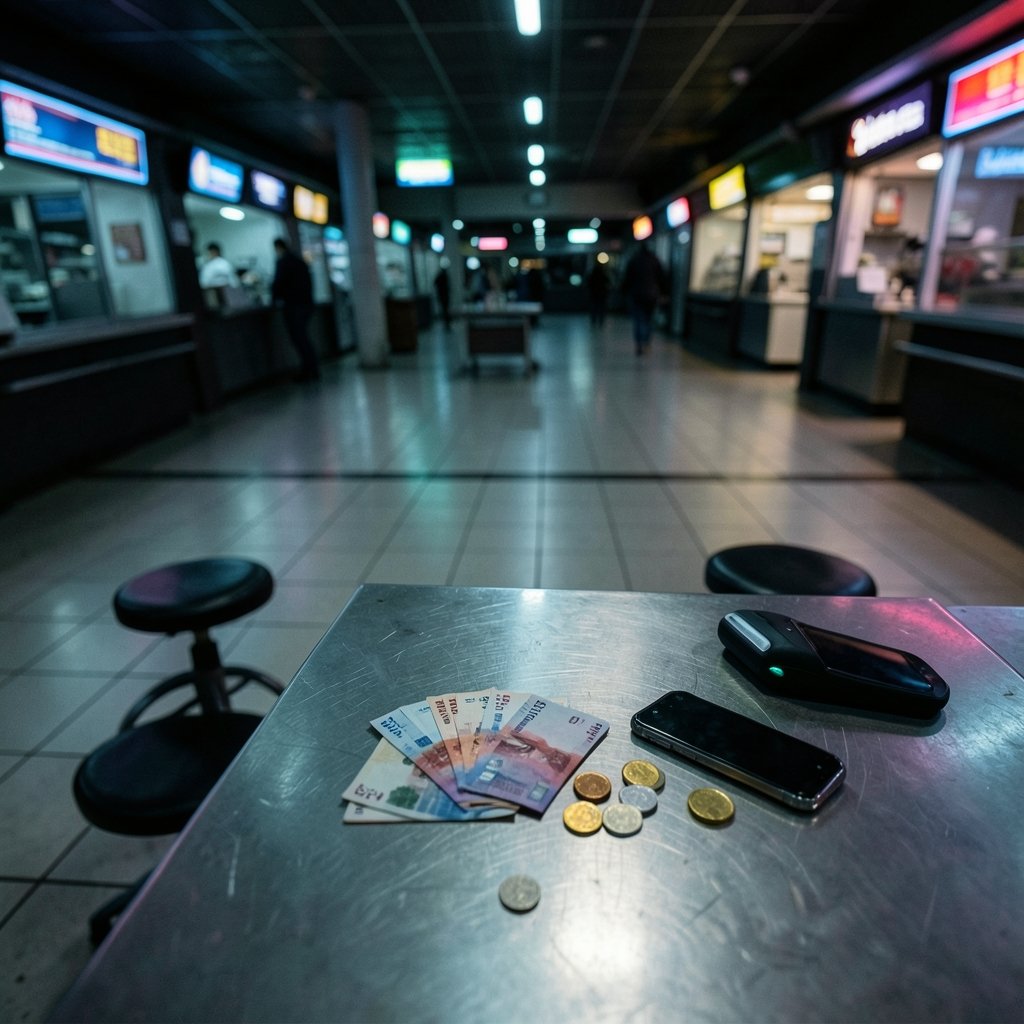
What does money actually look like in Australia today, and why does it feel like it’s changing faster than the coins in your pocket? A tourist lands in Sydney with a fistful of unfamiliar plastic notes. A Melbourne cafe owner wonders whether to keep the cash drawer. A student in Brisbane taps a phone to pay for groceries and never touches a banknote. All three are living through the same quiet transformation of Australian money, and none of it happened by accident.
The Australian dollar is a small, floating currency with an outsized story. It replaced a pound system overnight, pioneered plastic banknotes that the rest of the world later copied, and is now drifting toward a payments future where cash plays a shrinking role. Here’s how the money works, what it’s made of, and what’s coming next.
What Is the Australian Dollar?
The Australian dollar (AUD) is Australia’s official currency, divided into 100 cents. It’s been that way since 14 February 1966, when the country decimalised its currency and swapped the Australian pound for the dollar at a rate of two dollars to one pound. That single day, known as Decimal Currency Day, replaced a system inherited from British colonial practice with something simpler to calculate.
The currency is issued in two halves. The Reserve Bank of Australia (RBA) produces banknotes under the Reserve Bank Act 1959, while coins come from the Royal Australian Mint, which opened in Canberra in 1965 to handle the enormous job of minting the first decimal coins. The split matters: notes and coins have different rules, different lifespans, and different legal limits on how much of them you can force someone to accept.
The dollar has floated freely since December 1983, when the Hawke government removed most capital controls and let the market set the exchange rate. Before that, the currency was pegged, and its value was a government decision rather than a market one. Since the float, the Aussie has earned a reputation as a commodity-linked currency, rising and falling with iron ore prices, global risk appetite, and interest rate expectations.
Notes Made of Plastic, Not Paper

Australia’s most famous contribution to global money is the polymer banknote. The country was the first to issue a full series of plastic notes, starting with the A$10 note in 1988, the year of the bicentenary. The technology was developed with CSIRO and the University of Melbourne, and the RBA’s own account of the history of Australian banknotes explains how the shift to polymer solved problems paper money couldn’t.
Polymer notes last far longer than paper ones, survive a spin through the washing machine, and carry security features that are much harder to fake. They also feel different: slightly slippery, springy, with a clear window that’s a quick visual check for authenticity. If you’re handed a note and it feels like ordinary paper, that’s a warning sign.
The RBA has been rolling out a next generation series with upgraded security features. The new A$5 arrived in 2016, the A$10 in 2017, the A$50 in 2018, and the A$20 in 2019. The A$100 note’s next-generation replacement has been the slowest to arrive, so older A$100 notes remain in circulation. All older notes stay legal tender, which is why you’ll still find the occasional well-worn note in a country pub till.
The Coins in Your Pocket
Australian coins have a few quirks worth knowing. The 1-cent and 2-cent coins were withdrawn from circulation in 1992. They remain legal tender in a technical sense, but you won’t get them in change because they’re no longer issued. Prices are rounded to the nearest five cents for cash transactions, though electronic payments can still be charged to the cent.
The 50-cent coin is the odd one out: a twelve-sided dodecagon rather than a round disc. It’s also large and heavy, which is why many Australians leave them in a jar at home. The Royal Australian Mint’s coin designs and specifications page sets out the sizes, metals, and designs if you want the full reference.
There’s a legal limit on coin payments too. Under the Currency Act 1965, coins are legal tender only up to certain amounts: 5c and 10c coins up to $5, 20c coins up to $10, and $1 and $2 coins up to $20. Banknotes have no such cap. So a shop can technically refuse a wheelbarrow of coins, but it can’t refuse a genuine $100 note on legal tender grounds alone.
Cash Is Shrinking, Fast
Here’s the number that tells the story. Cash was used in roughly 13% of transactions in 2022, down from about 27% in 2019 and 62% in 2007. The RBA’s research on cash use and attitudes in Australia traces a long, steady decline that accelerated sharply during the pandemic years, when tap-and-go became the default for almost everything.
What does that mean in practice? A few things:
- Cash still matters for some groups. Older Australians, people in regional areas, and those on tight budgets often rely on cash to manage spending. A fully cashless society would leave them behind.
- Card surcharges add up. Many small businesses pass on the cost of card payments, so paying by card isn’t always free.
- Cash is still accepted almost everywhere. The decline is in usage, not acceptance. Most shops will take a note, even if they’d prefer a tap.
If you’re building a personal finance setup around Australian money, the practical advice is to keep a small cash buffer at home for emergencies and outages, and to treat card and phone payments as the default. That’s also where security matters. Choosing the best internet security australia offers can protect the accounts your digital money flows through, and understanding how identity threat detection really costs where money goes helps you see why fraud prevention is worth the spend.
How Payments Actually Move
Behind the tap of a card or phone sits a payments system most people never think about. The New Payments Platform (NPP) launched in February 2018 and made near-instant account-to-account transfers possible. It powers PayID, which lets you send money using a phone number or email instead of a BSB and account number, and Osko, the instant transfer brand most banks use.
In 2022, BPAY, eftpos, and NPP Australia merged into a single body called Australian Payments Plus (AP+). The New Payments Platform overview from Australian Payments Plus explains how the rails fit together. For everyday users, the practical effect is that a transfer between banks now lands in seconds rather than days, and “pending” is mostly a thing of the past.
That speed cuts both ways. Scams that rely on a quick, irreversible transfer have become more common, which is why consumer advocates push for confirmation-of-payee checks and better dispute handling. If a payment goes to the wrong account, the ePayments Code administered by ASIC sets out the rules banks should follow on mistaken payments and unauthorised transactions. It’s a voluntary code, but most banks have signed on, and knowing it exists gives you leverage when something goes wrong.
One scam worth flagging: the gift card trick, where a caller convinces you to buy cards and read out the codes. Once those codes are shared, the money is usually gone. Understanding how the gift card scam works and why victims rarely get their money back is a cheap five-minute lesson that can save a lot of heartache.
The Future: Digital Money and CBDCs
Australia’s money is going digital in more ways than one. The RBA has been researching a central bank digital currency (CBDC), a digital form of central bank money that would sit alongside cash rather than replace it. The idea is being explored by central banks worldwide, and the debate over privacy, programmability, and financial stability is far from settled. If you want the background, this explainer on CBDC digital currency and central bank money going digital covers the basics without the hype.
Closer to home, the practical shift is already here. PayID, instant transfers, and phone wallets have made digital money the default for most Australians under 40. The question isn’t whether money will be digital, but how much cash survives alongside it, and who gets left behind if it doesn’t.
Practical Tips for Handling Australian Money
Whether you’re visiting, moving, or just trying to get your finances in order, a few habits make Australian money easier to manage.
- Carry a little cash. Twenty or thirty dollars covers the odd cash-only venue, a market stall, or a power outage. Don’t carry large amounts.
- Check notes by feel and window. Polymer notes have a clear window and a distinctive texture. If something feels off, don’t accept it.
- Know the coin limits. A shop can refuse a bag of 5c coins over $5. Keep small change for small purchases.
- Watch card surcharges. If a business charges 1.5% to tap, paying cash for a coffee might genuinely be cheaper.
- Use PayID for transfers. It reduces the risk of sending money to the wrong account because you can confirm the name before sending.
- Keep your devices secure. Most money now moves through a phone or computer. A free antivirus software australia option is a reasonable starting point, and a paid antivirus australia suite adds protection if you bank heavily online.
One common mistake: assuming cash is dead and leaving home without any. The data shows cash use falling, not cash acceptance disappearing. Another: assuming every card surcharge is fair. Surcharges are supposed to reflect the actual cost of the payment method, not become a hidden profit centre.
A Quick Comparison: Notes vs Coins
| Feature | Banknotes | Coins |
|---|---|---|
| Issuer | Reserve Bank of Australia | Royal Australian Mint |
| Material | Polymer | Metal alloys |
| Legal tender limit | No limit | Capped by denomination |
| Typical lifespan | Several years | Decades |
| Security check | Clear window, texture | Weight, edge, design |
The table hides a simple truth: both forms of money are durable, but only one is disappearing from daily life. Coins sit in jars; notes sit in wallets that get opened less often.
Conclusion
Australia’s money is a story of deliberate reinvention. A decimal currency replaced the pound in a single day in 1966. Polymer notes made paper money obsolete decades before other countries caught on. Instant payments turned bank transfers from a multi-day chore into a two-second tap. Now cash is fading, digital money is rising, and the rules are being rewritten in real time.
The smart approach is neither nostalgia nor blind adoption. Keep some cash, understand the limits and protections that apply to your money, and treat your digital accounts with the same care you’d give a wallet. The Aussie dollar will keep floating, the notes will keep getting smarter, and the coins will keep jingling in pockets for a while yet. Knowing how the system works is the best way to stay ahead of it.
Frequently Asked Questions
What is the currency of Australia?
The currency is the Australian dollar (AUD), divided into 100 cents. It replaced the Australian pound on 14 February 1966 at a rate of two dollars to one pound.
Are Australian banknotes made of plastic?
Yes. Australia was the first country to issue a full series of polymer banknotes, starting with the A$10 note in 1988. Polymer notes last longer than paper and carry security features like a clear window.
Is cash still legal tender in Australia?
Yes. Banknotes are legal tender without limit, and coins are legal tender up to set amounts under the Currency Act 1965. For example, 5c and 10c coins count only up to $5, and $1 and $2 coins up to $20.
Why did Australia stop making 1c and 2c coins?
The 1-cent and 2-cent coins were withdrawn from circulation in 1992 because inflation had made them impractical. They remain legal tender technically, but they are no longer issued, and cash prices are rounded to the nearest five cents.
What is PayID and how does it work?
PayID is a service built on the New Payments Platform that lets you receive money using a phone number or email instead of a BSB and account number. Transfers usually arrive within seconds, and you can confirm the recipient’s name before sending.
Is Australia moving to a cashless society?
Cash use has fallen sharply, from about 62% of transactions in 2007 to roughly 13% in 2022. Cash is still accepted almost everywhere, but digital payments are now the default for most people, and the RBA is researching a central bank digital currency alongside existing money.



