

Can a small dent really disappear without a single drop of paint? That is the question most drivers ask when a shopping cart, a stray basketball, or a hailstorm leaves a mark on a car door. The answer is usually yes, but not always, and knowing the difference saves money and disappointment.
An auto dent removal service uses a set of techniques grouped under the name paintless dent repair (PDR). Instead of sanding, filling, and repainting a panel, a technician pushes or pulls the metal back into its original shape. The paint stays untouched. The repair often takes an afternoon instead of a week. But the method has firm limits, and understanding them is the difference between a smart repair decision and a costly mistake. (How to fix antimalware service executable high cpu usage)
What an Auto Dent Removal Service Actually Does
Paintless dent repair works from the inside out, or occasionally from the outside in. The technician gains access behind the panel, then uses metal rods with shaped tips to apply controlled pressure in small increments around the dent. Slowly, the metal relaxes back toward its factory contour. For dents where the back of the panel is blocked, a technician may glue a tab to the surface and pull outward instead.
The craft depends on three things:
- Paint condition. If the paint is cracked, chipped, or flaking, PDR cannot restore it. The repair only works on intact factory paint that can flex with the metal.
- Metal memory. Steel and aluminum panels can return to shape if the metal is not stretched too far. Sharp creases and deep folds stretch metal permanently, and no amount of massaging brings it back perfectly.
- Access. A technician needs a path behind the panel. Double-skinned areas, roof rails, and sections packed with wiring or structural reinforcement limit what is possible.
A good technician starts with a careful inspection under bright light, often with a reflection board or stripe lamp that reveals the true shape of the dent. That inspection, not the repair itself, decides whether the job is a PDR candidate.
Which Dents Qualify for Paintless Repair
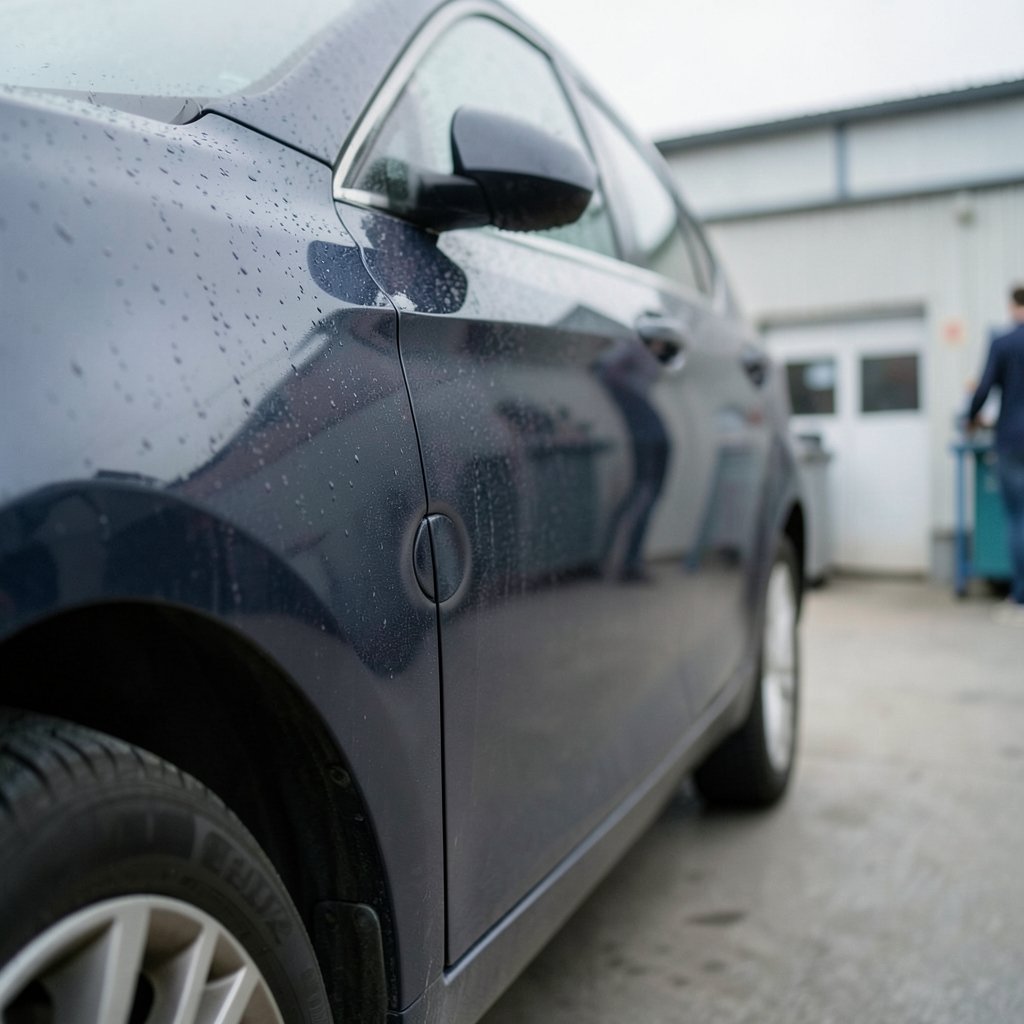
Not every dent is a PDR dent. The table below shows the general rules of thumb technicians use.
| Dent type | Usually repairable with PDR? | Why |
|---|---|---|
| Round, shallow parking lot dents | Yes | Metal is not stretched; paint is intact |
| Hail dents on hood, roof, doors | Yes, often in bulk | Small, rounded impacts with intact paint |
| Dents on the middle of a flat panel | Yes | Easy access from behind |
| Sharp creases | Rarely | Metal stretched beyond recovery |
| Dents on panel edges | No | Edges are rigid and double-layered |
| Dents with cracked or chipped paint | No | Paint cannot be stretched back |
| Dents over structural sections | No | No access; structural integrity matters |
| Dents on heavily curved or body-line areas | Sometimes | Depends on the technician’s skill and access |
That last row matters more than people expect. A dent sitting directly on a character line is far harder than a dent in the middle of a door, because the metal is already under tension along the crease. Experienced technicians can sometimes work these, but a shop that promises every dent is fixable is a shop worth questioning.
How a Typical Repair Appointment Unfolds
Most mobile or fixed-site PDR jobs follow a predictable rhythm. Knowing the steps helps a driver set realistic expectations.
- Assessment. The technician examines the dent under reflection lighting, checks paint thickness, and confirms access behind the panel.
- Quote. The price depends on dent size, depth, location, and count. Hail damage is usually quoted per panel or as a total package.
- Access preparation. Trim pieces, taillights, or interior panels may be loosened to reach behind the metal. This is normal and reversible.
- Massaging. The technician works the dent in small passes, checking the reflection constantly.
- Finishing. High spots are leveled, and the panel is cleaned and inspected under the same lighting.
- Final check. The customer inspects the panel from multiple angles in daylight, rather than only under shop lights.
The whole process for a single dent often takes under an hour. A full hail-damaged vehicle can take a day or more because each panel carries dozens of impacts. (Turn off widgets windows 11 taskbar policy full removal)
What PDR Costs Compared With Conventional Bodywork
PDR is generally cheaper and faster than conventional repair for dents that qualify, but the gap varies widely. A conventional repair involves labor for body filler, sanding, priming, painting, and blending the new paint into adjacent panels, plus drying time. PDR skips nearly all of that.
The practical comparison looks like this:
| Factor | Paintless dent repair | Conventional body shop repair |
|---|---|---|
| Paintwork | None | Sanding, primer, paint, clear coat |
| Typical turnaround | Hours to a day | Several days |
| Risk of paint mismatch | None | Present, especially on older cars |
| Resale value impact | Minimal | Repainted panels can raise questions |
| Suitable for | Intact paint, accessible dents | Damaged paint, creases, collision damage |
One point people overlook: a repainted panel can actually lower a car’s value at trade-in, because buyers and inspectors wonder what happened underneath. Keeping the factory paint intact is a genuine advantage of PDR that goes beyond the invoice price. (Function as service best practices that actually hold up)
When You Should Skip Paintless Repair
PDR is not a universal fix, and a reputable technician will say so. Walk away, or expect a conventional repair referral, in these situations:
- The paint is broken. Once the paint cracks, moisture can reach bare metal and rust begins. PDR leaves that damage in place.
- The dent sits on a crease or edge. These areas rarely return to a clean contour.
- The metal is stretched. A deep dent that feels like a bowl has stretched beyond what massaging can recover.
- There is structural damage. Dents near door hinges, pillars, or frame sections may signal collision damage that needs a proper inspection.
- The panel is aluminum and heavily worked. Aluminum work-hardens and can crack if pushed too far, so technicians are more conservative with it.
A shop that turns down a job is usually protecting its reputation. The ones that promise miracles on every dent tend to deliver disappointment.
How to Choose a Dent Removal Technician
Certification and experience matter more in PDR than in almost any other repair trade, because the work is judged by eye and feel rather than by a paint code. Trade bodies exist to train and certify technicians, and membership is a reasonable signal that someone has invested in proper instruction. The National Alliance of Paintless Dent Repair Technicians is the main US trade organization for the craft, and its materials explain the technique and the training path technicians follow. (National Highway Traffic Safety Administration)
When vetting a shop, ask these questions:
- How long have you been doing PDR, and do you have before-and-after photos of similar dents?
- Do you use reflection lighting during the repair, or just eyeball it?
- What happens if the repair does not meet my expectations?
- Do you carry liability insurance for damage to trim, glass, or paint?
- Will you tell me honestly if my dent is not a PDR candidate?
That last question separates professionals from salespeople. A technician who inspects first and quotes second is worth more than one who quotes a flat price over the phone without seeing the car.
Insurance, Hail Damage, and Paperwork
Hail is the single biggest driver of PDR work. A severe storm can pepper a single vehicle with hundreds of small dents, and insurers often prefer PDR because it costs less than repainting every panel. If a claim is involved, the process usually runs through the insurer’s adjuster, who documents the damage and approves a repair method.
Drivers should photograph the damage before any repair begins, keep the estimate and invoice, and confirm with their insurer whether PDR is covered under their policy. Comprehensive coverage typically handles hail, but deductibles and state rules vary. It also helps to ask the shop whether they work directly with insurers or expect the customer to pay upfront and claim reimbursement.
Consumer Rights and Repair Standards
Repair work is a service, and services come with legal protections. In the UK, the Consumer Rights Act 2015 requires services, including vehicle repair, to be performed with reasonable care and skill, and it gives customers remedies if the work falls short. Similar state-level consumer protection rules apply in the US, and many states regulate how insurers and repair shops interact.
For drivers who want a benchmark for quality, the UK’s Thatcham Research publishes guidance and standards relevant to vehicle body repair, and the British Standards Institution maintains BS 10125, the standard for automotive repair services. Checking whether a shop works to a recognized standard is a sensible step, especially for higher-value vehicles.
The Environmental Case for Paintless Repair
PDR avoids paint, primer, filler, and the energy used in a spray booth. That means fewer volatile organic compounds released and less waste sent for disposal. The saving is real at the level of a single repair, though no widely accepted figure quantifies it across the industry. For drivers weighing options, the environmental angle is a tiebreaker rather than the main reason to choose PDR.
Common Mistakes Drivers Make
A few habits cause most of the trouble in this corner of car care:
- Waiting too long. A dent left through a winter can develop rust at a paint crack, turning a cheap PDR job into a panel replacement.
- Trying the hot water or hairdryer trick. It works on plastic bumpers in rare cases and almost never on steel panels. It can also warp trim or damage paint.
- Choosing on price alone. The cheapest quote often comes from someone with minimal training and no reflection lighting.
- Skipping the final inspection. Always look at the panel in daylight from several angles before paying.
- Assuming insurance will not cover it. Hail claims are common, and many policies handle them without drama.
Conclusion
An auto dent removal service is one of the few genuinely smart repairs in car ownership: fast, paint-preserving, and often cheaper than the alternative. But it is a craft with real boundaries. Intact paint, accessible panels, and metal that has not been stretched too far are the conditions that make it work. When those conditions are missing, a good technician says so, and that honesty is the best sign you have found the right shop. Inspect first, ask questions, and let the dent, not the price tag, decide the method.
Frequently Asked Questions
How long does paintless dent repair take?
A single dent usually takes under an hour. A hail-damaged vehicle with dozens of impacts per panel can take a full day or more, since each dent is worked individually. Mobile technicians often complete small jobs in a driveway or parking lot.
Does paintless dent repair really work, or is it a gimmick?
It is a genuine, long-established technique used by insurers and dealerships. It works because metal has some memory and can be massaged back toward its original shape when the paint is intact. It fails on creases, stretched metal, and broken paint, which is why inspection matters.
Will PDR damage my car’s paint?
When performed correctly, no. The technique relies on controlled pressure and, in glue-pulling, on adhesive tabs that release cleanly. Poor technique, excessive force, or working on paint that is already brittle can cause cracking, which is one reason to choose a trained technician.
Can hail dents be removed without repainting?
Often yes. Small, rounded hail impacts with intact paint are the classic PDR case, and insurers frequently approve PDR for hail claims because it costs less than repainting multiple panels. Severe impacts that crack the paint still need conventional repair.
Is it cheaper to fix a dent myself with a kit?
DIY puller kits can handle a shallow, round dent on a flat panel if you are patient. They rarely handle creases, edges, or deep dents, and a botched attempt can stretch the metal further, making professional repair harder or impossible. For anything beyond a minor ding, professional work is usually the better value.
Does a repaired dent affect my car’s resale value?
PDR generally protects resale value because the factory paint stays intact and no panel is repainted. A repainted panel can raise questions from buyers and inspectors. Keeping the original finish is one of the strongest practical arguments for paintless repair.
