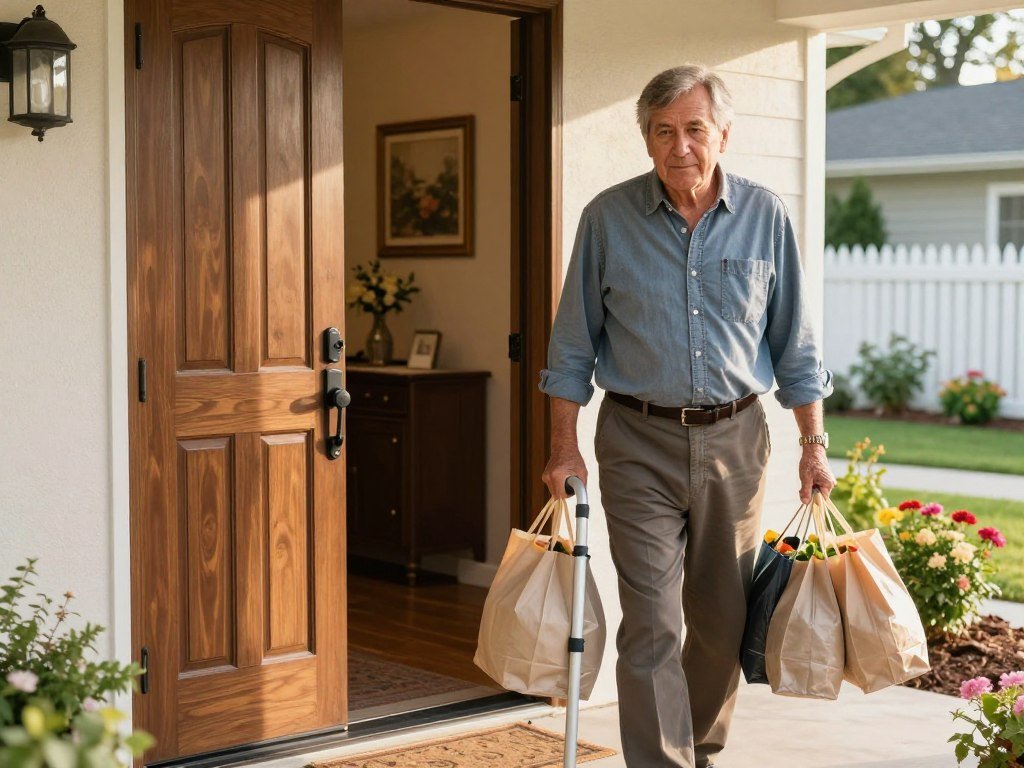
A heavy entry can be difficult to manage when you are using a mobility aid or have both hands full. A residential operator can open and close an existing door, making access easier without changing your route. Hold-open time is the interval a powered door remains open before it begins to close automatically.
Picture coming home with grocery bags and needing to reach a latch. An automatic door opener for home can reduce that effort, but the control must suit the person using it. You will want to match the operator to the door and choose a control you can use with ease.
Consider when the entry is used and who needs it most. A setup should help at the right time without making it awkward for other people to pass through. The right setup should make one specific entry easier to use without making ordinary passage awkward.
Key Takeaways
- Match the operator to the door.
- Choose a control you can reach.
- Check how the door works without power.
- Keep everyday passage comfortable for everyone.
- Ask for an in-person entry assessment.
Which Automatic Door Opener for Home Fits Your Door?
A residential swing operator is the natural starting point for a free-swinging home door, while heavier or unusual doors may need a different operator. Start with the door itself, not the largest product you can find.
An automatic door opener and closer for home should suit the door’s swing, weight, latch, and clearance. A model that does not fit those details may not open the door as intended.
In new construction, at least 60% of public entrances must be accessible. The rule also covers entrances serving tenancies, parking facilities, pedestrian tunnels, and elevated walkways. See the U.S. Access Board entrance rules for details.
A heavy-duty automatic door opener is a capacity choice, not a default upgrade for every home entry.
That distinction matters when you compare products with very different ratings. Commercial systems can serve settings that need more power or handle a different door design.
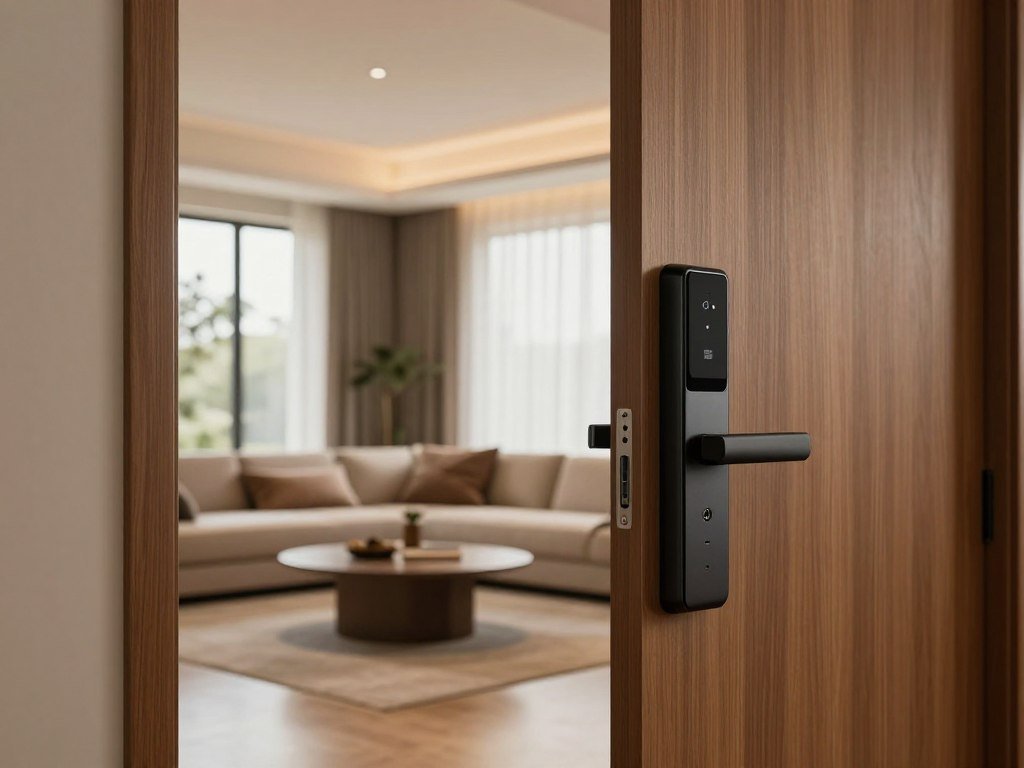
Residential swing operators for existing doors
The Open Sesame Model 133 is designed for free-swinging residential doors. It opens to angles up to 120 degrees and weighs 10 lb., with dimensions of 2 5/8 by 4 by 14 1/8 inches.
Those details make it one residential example, not a universal fit. Your door’s swing and hardware still matter, especially if the latch needs a release device.
A handicap door opener for a home should match the person’s needs and the actual entry. A doorway used by someone with a walker may call for a different setup than one used by someone with limited hand strength.
When a heavier-duty operator makes sense
STANLEY lists its light-duty Magic Access for doors up to 125 lb. and its M-Force for doors up to 700 lb. These ratings point to different operator categories, not a single scale of better and worse.
Commercial and special-application products address settings such as double doors, storm or screen doors, and gates. Their features may not suit an ordinary residential swing door.
Confirm the door’s swing and rated weight against the operator’s specifications before choosing a model.
Which Controls and Safety Features Should You Compare?
A pushplate is a straightforward choice when the person using the doorway can reach and operate a wall control. The best control is one the user can activate reliably from the usual approach.
Accessible hardware must work with one hand, require no more than 5 lbf, and sit 34 to 48 inches above the floor or ground. The ADA also sets a 5 lbf maximum opening-force limit for most accessible doors and gates.
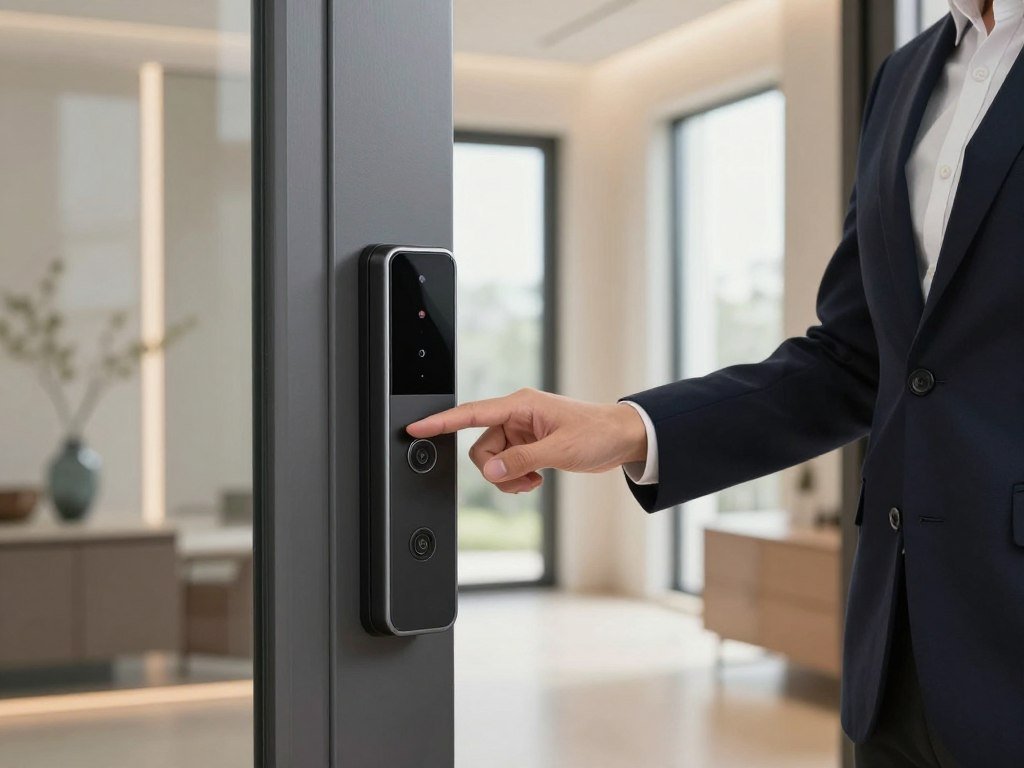
Push buttons, remotes, and app controls
An automatic door opener with a push button can use a wall-mounted pushplate. An automatic door opener with a remote control can use a coded transmitter, so you can activate the door from a distance.
Some products offer app or voice control. Compatibility varies by system, so check support for the exact model and smart-home platform. A beginner’s smart-home device guide can help you compare platforms and controls.
Compare these common control options before choosing:
- Remote or coded transmitter
- Wall pushplate
- Proximity or infrared sensor
- Mat or wireless security-entry system
Sensors, timing, and accessible operation
An automatic door opener with a sensor needs a detection range suited to your approach path. Options include proximity sensors, infrared motion sensors, and wave-to-open controls that respond to a hand movement.
The Model 133 offers proximity settings of 3, 6, or 9 feet and an adjustable hold-open time of 5 to 30 seconds. It accepts coded transmitter signals, wireless security-entry systems, and wired touchplates, pushplates, mats, and infrared sensors.
The unit includes a standard remote and an electric strike, a latch-release device for a locked door. It runs on 16-24 VAC/DC, with a 12V DC, 1.2Ah sealed lead-acid battery and a supplied 20 VA transformer requiring 115 VAC, 60 Hz service.
The battery powers operation during an external power failure. The door can also be operated manually when the unit is not opening, holding, or closing it.
ADA’s 5 lbf opening-force limit measures the continuous force needed to open a door, not the initial force needed to overcome its seal. Fire doors, exterior hinged doors, and devices that keep doors or gates closed have exceptions. Confirm obstacle detection for the specific model rather than assuming it is included.
Choose the control based on the user’s reliable reach and the way they approach the door.
What Do Installation, Cost, and Code Checks Involve?
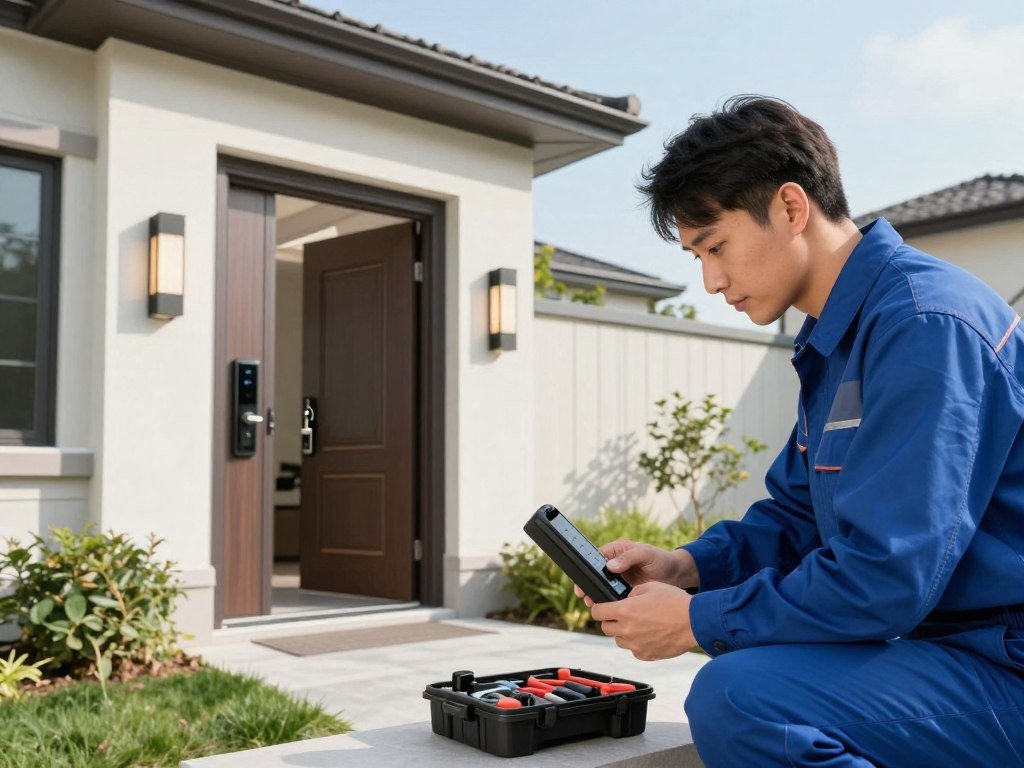
Ask for an itemized estimate that separates the operator, installation labor, and add-on hardware. That split helps you compare a kit price with a complete installed system.
Residential equipment estimates are $2,000-$2,500, with installation adding a few hundred dollars. The equipment and labor total depends on the door, wiring, latch release, sensors, and installation work.
Commercial pricing is a separate comparison, not a residential installed-cost estimate. A residential equipment estimate of $2,000-$2,500 was published July 31, 2025.
Kit contents and price examples
A handicap door opener kit may bundle controls with a receiver. Check the included parts against the entry, since a button kit alone does not include a complete operator system.
| Item | Scope | Price |
|---|---|---|
| Residential opener equipment | Equipment estimate | $2,000-$2,500 |
| Commercial-grade operator | Operator price | $1,300-$2,500 |
| Outsourced installation | Commercial labor estimate | $500-$1,000 |
| Accessories | Commercial accessories | $150-$500 |
| Battery-free wireless push-button kit | Wireless push-button kit | $204.75 |
A wireless kit with two transmitters, a receiver, pushplates, and mounting boxes is listed at $637.79. A touchless wireless wave-to-open kit with two actuators and a receiver is listed at $578.89.
Code, clearance, and power-off checks
Automatic door openers for handicapped access must meet the rules for the entrance and egress route, not just the operator’s features. Under the 2021 International Building Code, some occupancies need power-operated or low-energy doors at accessible public entrances when occupant load exceeds the applicable table threshold.
The ICC explains that doors on an accessible means-of-egress route need maneuvering clearance in the egress direction, unless they have battery backup, unlock or unlatch, or break away when power fails. Check which code edition your local jurisdiction follows.
Full-energy M-Force operation must meet ANSI/BHMA A156.10. Low-energy operation with knowing-act activation complies with ANSI/BHMA A156.19. The ICC’s automatic door requirements explain related code rules.
The 2022 Record 8000/8100/8200 Series manual requires the door to open without power. It limits the force needed to open the door with power disconnected to 50 pounds, which is distinct from the ADA opening-force rule.
Power loss changes how a door behaves, so a powered test alone cannot show whether you can still use the entry.
Before agreeing to installation, ask the installer to demonstrate the door’s manual operation with power disconnected.
Conclusion
A suitable operator is one that fits the door and makes everyday access more manageable for the person using it. The best choice matches the doorway and the user’s ability to operate its control.
Consider who uses the entry, how they approach it, and whether they can activate the control without strain. A product’s features matter only when they work for that person in that space.
Arrange an in-person assessment of the intended entry before you settle on a setup. Ask an accessibility installer to assess the entry in person and demonstrate both powered and manual operation.
FAQ
Can an automatic door opener release a deadbolt?
It can release a compatible latch, but a deadbolt may need different hardware. The Open Sesame Model 133 includes an electric strike that releases a locked door’s latch. An electric strike does not mean every deadbolt will work with the operator. Check the lock type and how it engages before choosing a system, especially if the door uses a separate deadbolt.
Will a battery backup keep the door working through a long outage?
A battery backup can keep some systems working during an external power failure, but runtime depends on the system and how often you use it. The Model 133 has a battery that supplies power during an outage. Ask how long that battery can support your expected use, and whether the system gives a warning as its charge runs low.
Can an automatic opener work on an exterior door with weather stripping?
It may work, but the door’s seal, swing, latch, and operator capacity need to be assessed together. Weather stripping can affect how much effort the door needs to open, while a tight latch can change how it moves. An exterior door also faces conditions that an indoor door does not. Have the complete entry checked before selecting an operator.
Does an automatic opener always close the door after opening?
No, operation depends on the model and its settings. Many systems open, hold, and then close the door automatically. The hold-open time controls how long the door stays open before closing begins, and some models let you adjust that interval. Check the product’s operating mode so it fits how people use the entry.
Can a person open the door manually when the operator is off?
Some operators allow manual use when they are not actively moving or holding the door. The Model 133 allows manual operation when it is not opening, holding, or closing the door. Behavior can differ when power fails or a mechanism stops. Ask the installer to show how the specific model works without power.
How do I keep a proximity sensor from triggering too early?
Choose a detection range that matches the path people take toward the door, then test it from that approach. The Model 133 offers 3-foot, 6-foot, and 9-foot settings. A shorter range may reduce early activation, while a longer range may help someone who needs more time to reach the doorway. Test the setting with the person who will use it.



