
Ever watched a game and wondered why one player keeps dribbling up the court while another never leaves the paint? That’s not random. Basketball positions are the invisible framework that decides who handles the ball, who shoots, who sets screens, and who protects the rim. They shape every possession, even when nobody calls out a play.
The twist is that positions in basketball are not written into any official rulebook. They are coaching conventions, and those conventions have shifted dramatically over the past decade. This article breaks down the five traditional roles, explains what each one actually does, and shows why modern basketball increasingly ignores the labels altogether.
Why Positions Exist in the First Place
Basketball is played five-on-five on a court with a hoop at each end, and someone has to organize the chaos. Positions emerged as a practical division of labor. A team needs a player who can bring the ball up against pressure, players who can score from different spots, and someone tall enough to defend the basket.
Neither the NBA rulebook nor FIBA’s international rules formally assign position names to players. The rulebooks define court dimensions, fouls, and conduct, but not who stands where on offense. Positions are a coaching language, a shorthand that helps teams communicate matchups, rotations, and responsibilities.
That distinction matters. Because positions are conventions rather than laws, they evolve. And they have evolved fast.
The Five Traditional Positions
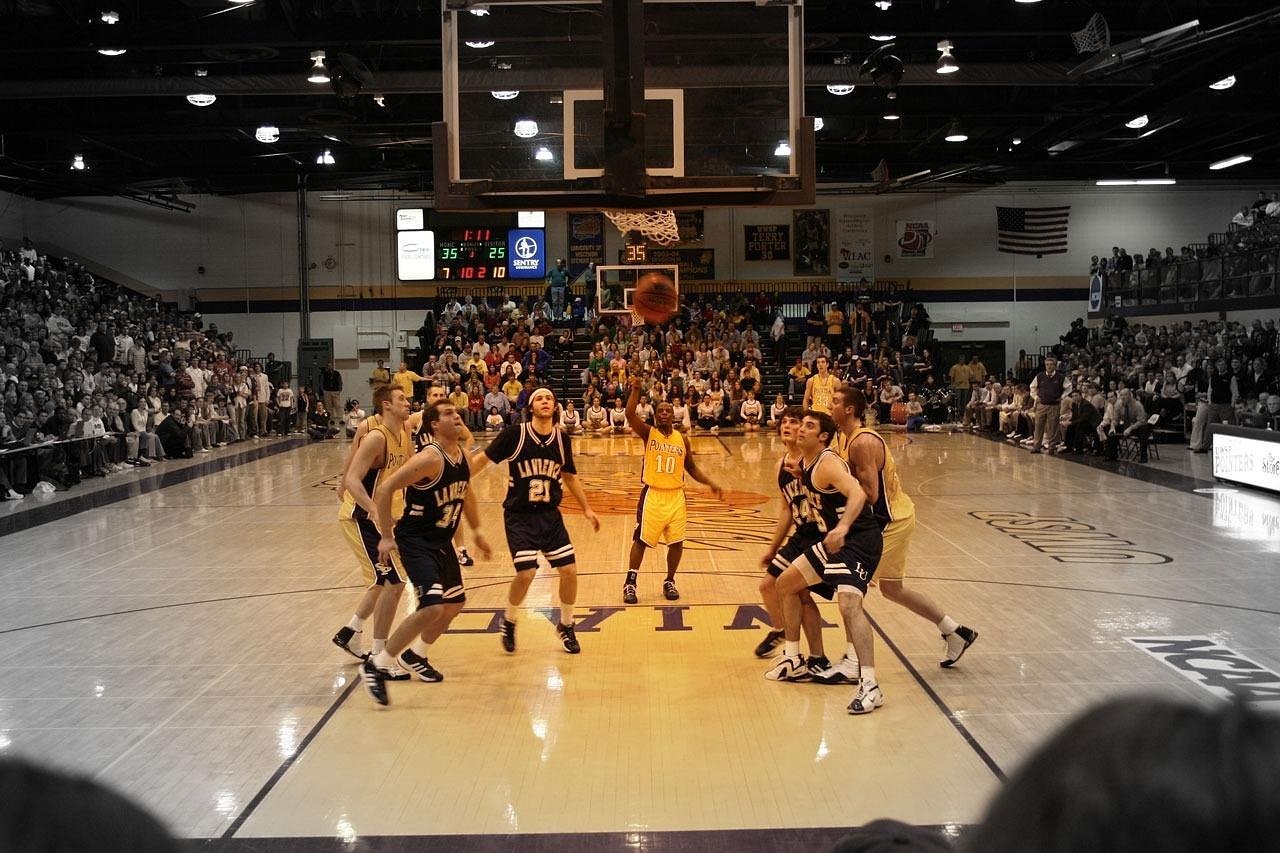
Most fans still learn the game through the classic numbering system, one through five. The numbering is conventional too, not codified, but it’s used almost universally in playbooks and broadcasts.
| Number | Position | Primary Job | Typical Skill Set |
|---|---|---|---|
| 1 | Point guard | Run the offense, distribute the ball | Ball handling, vision, decision-making |
| 2 | Shooting guard | Perimeter scoring | Shooting, off-ball movement, defense |
| 3 | Small forward | Versatile wing play | Scoring variety, defensive flexibility |
| 4 | Power forward | Interior scoring and rebounding | Strength, mid-range touch, screen setting |
| 5 | Center | Rim protection and paint scoring | Height, rebounding, shot blocking |
The Point Guard: The Floor General
The point guard is usually the smallest and quickest player on the floor, though that’s a stereotype rather than a rule. What defines the role is responsibility. The point guard brings the ball up, calls the play, and decides when to push the pace and when to slow things down.
Great point guards think two passes ahead. They read a defense and find the teammate who is open because of a rotation rather than only the one waving for the ball. The role demands composure under pressure, because opposing teams often pick up the ball handler full court to disrupt rhythm.
Practical tip: if you’re coaching a young point guard, resist the urge to make everything about scoring. The best development path is decision-making under pressure, and that means letting them make mistakes with the ball rather than pulling them after every turnover.
The Shooting Guard: The Perimeter Scorer
The shooting guard, or off-guard, is typically the team’s primary perimeter scorer. This player works off the ball, uses screens, and hunts open looks from three-point range and mid-range.
Modern shooting guards also need to defend. A scorer who can’t stay in front of anyone becomes a target in switching schemes. That two-way demand is why players like VJ Edgecombe, the Bahamian guard redefining two-way basketball, draw so much attention. The role has expanded from pure shooting to shooting plus disruption.
The Small Forward: The Swiss Army Knife
The small forward is historically the most versatile position. This player needs enough size to defend bigger wings, enough quickness to guard smaller ones, and enough scoring touch to punish mismatches.
Coaches often describe the small forward as the position that fills whatever gap the roster has. On a team with a dominant center, the small forward becomes a secondary creator. On a team with two elite guards, the small forward becomes a defensive stopper. Flexibility is the job description.
The Power Forward: Interior Anchor
The power forward plays closer to the basket, setting screens, crashing the boards, and scoring in the paint. Traditionally this was a bruising role built on strength and physicality.
That has changed. Modern power forwards are often asked to shoot three-pointers, because a big man who can’t shoot lets the defense collapse into the paint and clog driving lanes. The stretch four, a power forward who spaces the floor from deep, has become close to a requirement rather than a luxury.
The Center: The Last Line of Defense
The center is usually the tallest player and the team’s rim protector. On defense, the center’s job is to deter drives and contest shots without fouling. On offense, the center sets screens, finishes around the rim, and creates second-chance points on the offensive glass.
The best centers do more than that. They anchor a defense by communicating rotations, and they punish smaller defenders in the post. But the fundamental role remains the same: protect the basket.
How Positionless Basketball Changed Everything
Something shifted in the 2010s. Teams started winning with lineups that ignored traditional size requirements, and the league noticed. The most visible example was the Golden State Warriors’ run of championships with small, switchable lineups in the mid-to-late 2010s, which convinced coaches that skill and versatility could beat size.
The logic is straightforward. If every player on the floor can shoot and defend multiple positions, the offense creates more space and the defense can switch every screen without a mismatch. Traditional positions create predictable advantages; positionless basketball creates unpredictability.
Analytics accelerated the shift. Shot-location data, which became widely available through league tracking systems in the 2013-14 era, showed that mid-range jumpers were less efficient than three-pointers and shots at the rim. That insight pushed teams to spread the floor, and spreading the floor required big men who could shoot and guards who could defend up a position.
The result is a blurring of roles. The distinction between small forward and power forward has nearly collapsed. Many teams now describe players as guards, wings, and bigs rather than assigning a number.
What Positionless Basketball Means in Practice
Here’s where theory meets reality. Positionless basketball sounds elegant, but it demands specific things from players:
- Shooting from multiple spots. A wing who can only shoot from the corner is easier to defend than one who can shoot from anywhere.
- Defensive versatility. Switching screens only works if every player can survive a mismatch for a few seconds.
- Decision-making speed. Without fixed roles, players must read and react rather than run scripted actions.
- Conditioning. Switching everything is tiring. Legs matter in the fourth quarter.
A common mistake at the youth and amateur level is copying professional positionless schemes without the skill base to support them. If your players can’t shoot or defend multiple spots, a positionless system just creates confusion. Traditional roles exist for a reason: they give less experienced players clear, learnable jobs.
Positions at Different Levels of the Game
Position conventions vary by level and country, and that’s worth understanding whether you’re a player, coach, or curious fan.
Youth basketball often uses small-sided formats with fewer players and simplified roles. Many youth programs deliberately avoid locking kids into positions early, because a ten-year-old’s future height and skill profile are impossible to predict. Forcing a tall kid to only play center can stunt their ball handling for years.
High school and college generally use the traditional five positions, though modern college offenses increasingly borrow professional spacing concepts.
International basketball uses the same five roles but with different terminology. European coaching literature often refers to the playmaker, off-guard, small forward, power forward, and pivot. The labels differ; the responsibilities are nearly identical.
Professional basketball has moved furthest toward role fluidity, but even there, positions haven’t disappeared. They’ve become flexible descriptions rather than fixed assignments.
Common Mistakes People Make About Positions
A few misconceptions come up again and again, and clearing them up makes the game easier to follow.
Mistake one: assuming height determines position. Height influences position, but skill decides it. A tall player with guard skills may play on the perimeter, and a shorter player with strength and rebounding instincts can thrive inside.
Mistake two: treating positions as rules. They aren’t. A coach can assign any player to any role. If a team wants its center to bring the ball up, nothing in the rulebook prevents it.
Mistake three: thinking positionless means positions don’t matter. Positionless basketball actually demands more positional awareness, not less. Players must understand every role because they may fill any of them on a given possession.
Mistake four: ignoring defensive assignments. Fans focus on offense, but positions are often defined by who guards whom. A player’s defensive assignment tells you more about their role than their scoring stats do.
How Positions Shape Player Development
If you’re developing as a player, position awareness matters for a practical reason: coaches evaluate players by role fit. Understanding what your position requires helps you train the right skills.
Guards should prioritize ball handling under pressure, change-of-direction quickness, and pull-up shooting. Wings should build a repeatable jump shot, defensive footwork, and the ability to finish through contact. Bigs should develop screening angles, rebounding positioning, and enough shooting touch to stay on the floor in modern lineups.
The most valuable players in modern basketball are the ones who can fill more than one role. That’s not a new idea, but it’s more true now than ever. A player who can guard three positions and shoot from two levels will always find minutes.
For fans who want to go deeper into how the game’s history shaped today’s roles, the story of the Detroit Pistons players who built basketball city shows how specific rosters defined positional identities for a generation. And if you’re curious how positions get translated into digital form, the way basketball video games assign ratings by position reveals how deeply the five-role framework is embedded in how we think about the sport.
Conclusion
Positions in basketball are less rigid than they look and more important than they seem. The five traditional roles, point guard through center, still provide the vocabulary coaches use to build lineups, assign matchups, and develop players. But the modern game has stretched those roles into flexible descriptions rather than fixed boxes.
The practical takeaway is simple. Learn the five positions because they teach you what each job on the floor requires. Then learn to play beyond them, because the players who thrive at every level are the ones who can handle more than one job. Whether you’re watching a game, coaching a youth team, or working on your own skills, understanding positions gives you a lens for seeing what’s actually happening on the court.
Frequently Asked Questions
What are the five positions in basketball?
The five traditional positions are point guard, shooting guard, small forward, power forward, and center, often numbered one through five. Each role carries different responsibilities for ball handling, scoring, and defense. The numbering is a coaching convention, not an official rule.
Are basketball positions written into the official rules?
No. Neither the NBA rulebook nor FIBA’s international rules formally assign position names. The rulebooks define court dimensions, fouls, and player conduct. Positions are coaching and analytics conventions that teams use to organize responsibilities and matchups.
What does positionless basketball mean?
Positionless basketball is an approach where players aren’t locked into traditional roles. Lineups are built around skill and versatility, so every player can shoot, handle the ball, and defend multiple positions. It became prominent in the 2010s and relies heavily on spacing and switching.
Is the point guard always the shortest player on the team?
Not necessarily. The point guard is usually the primary ball handler and playmaker, but height varies. Some modern point guards are tall enough to defend wings. The role is defined by responsibility and decision-making, not by size.
Do youth players need fixed positions?
Most youth programs avoid locking young players into one position too early. Children’s future height and skill development are hard to predict, so early specialization can limit growth. Many coaches rotate players through multiple roles to build well-rounded skills.
How has analytics changed basketball positions?
Analytics showed that three-pointers and shots at the rim are more efficient than mid-range jumpers. That pushed teams to spread the floor, which required big men who could shoot and guards who could defend bigger players. The result is a blurring of traditional roles, especially between small forward and power forward.



