
What happens when a 600-pound bear meets a 400-pound lion? It sounds like a nature documentary showdown, but the truth is stranger and more interesting. These two predators almost never share the same ground. Any “bears vs lions” contest is either a thought experiment, a captive accident, or a piece of ancient Roman theater. Still, comparing them tells us a lot about how two very different killers survive. Size, social behavior, weaponry, and habitat all tilt the odds in different directions depending on the scenario. Here is a clear-eyed look at how the matchup breaks down, what science actually supports, and why the popular answer is more complicated than a viral video suggests.
Do Bears and Lions Ever Meet in the Wild?
Short answer: essentially no. Brown and grizzly bears roam North America, Europe, and parts of Asia. Lions live in sub-Saharan Africa, with one small Asiatic population in India’s Gir forest. Their ranges do not overlap today. That means no wild bear has ever squared off against a wild lion in a natural setting.
The only real encounters happened in captivity or in history. Roman arenas staged venationes, elaborate animal spectacles that sometimes pitted bears against lions for public entertainment. Those were staged fights between stressed, injured animals in artificial spaces. They tell us almost nothing about how either species performs on its own terms.
That context matters before anyone crowns a winner. A “fight” between a bear and a lion is really a comparison of two body plans and two hunting strategies, not a recorded event.
Size and Strength: The Bear’s Clear Advantage
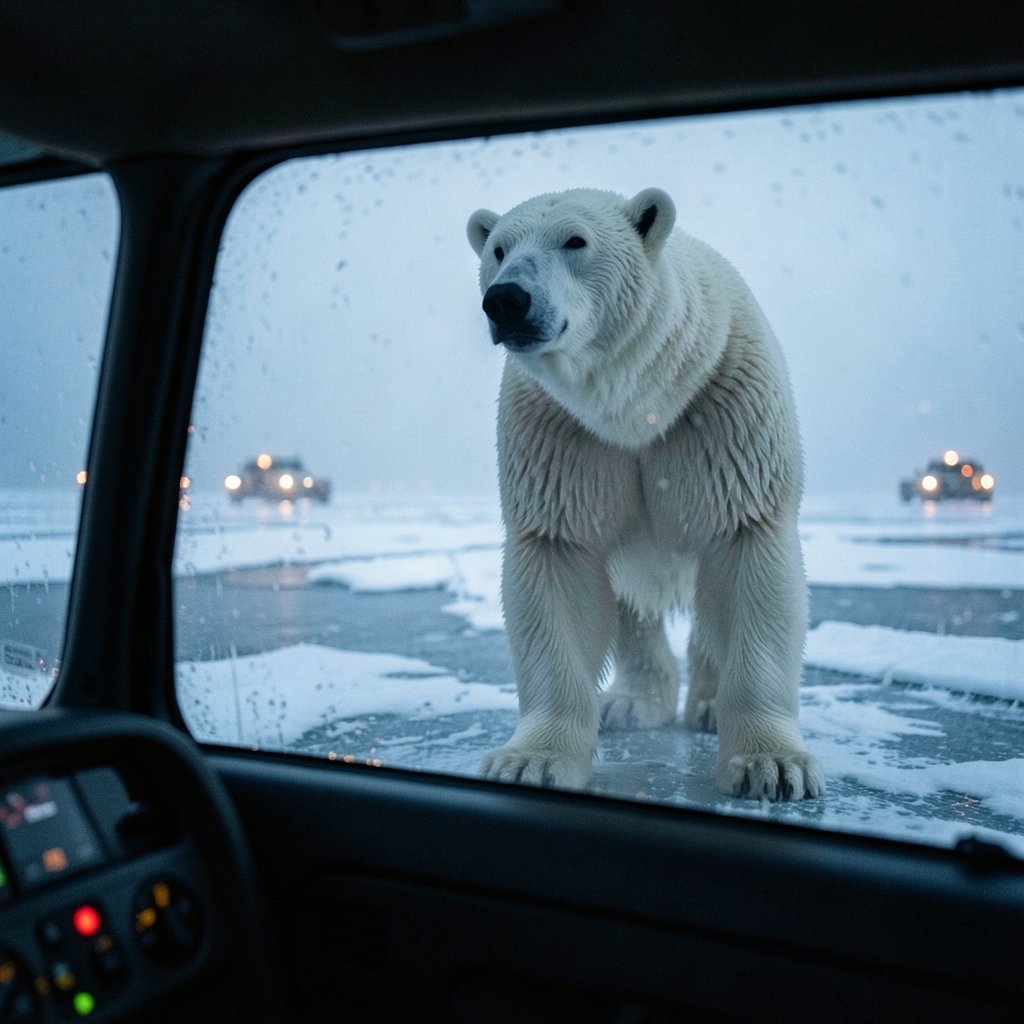
If you line up the biggest individuals, the bear wins the tape measure almost every time.
| Trait | Brown Bear (adult male) | Lion (adult male) |
|---|---|---|
| Typical weight | 200–600 kg (varies by subspecies and season) | 150–225 kg |
| Build | Massive forelimbs, thick hide, fat layer | Lean, muscular, built for bursts of speed |
| Primary weapons | Claws and forelimb power for grappling | Claws for gripping prey, jaws for a throat bite |
| Top speed | Roughly 50 km/h in short bursts | Roughly 60–80 km/h in short bursts |
| Social structure | Solitary (except mothers with cubs) | Pride-living and cooperative |
Polar bears push the scale even higher, with adult males often reaching 350–700 kg. A lion is an elite athlete built for acceleration and precision. A bear is a bulldozer built for digging, flipping logs, and overpowering prey at close range.
Weight ranges shift with population, sex, season, and food supply, so treat these as approximate bands rather than fixed numbers. Even at the low end, though, the bear carries a substantial mass advantage.
How Each Animal Fights
Lions are specialists. A pride typically hunts together, with females doing most of the work, using ambush, cooperation, and a choking bite to the throat or muzzle. A male lion’s job leans more toward territory defense, which is why male lions are built for explosive collisions with rivals. Their fighting style is fast, targeted, and built around ending things quickly. (Read detroit lions vs minnesota vikings match player stats)
Bears fight differently. They rear up, use their forelimbs and claws to rake and grapple, and rely on sheer durability to absorb punishment. A brown bear’s hide is thick, and its fat layer adds protection. Bears also wrestle each other during mating season, so they have real practice at close-quarters combat. (Read chicago bears vs washington commanders match player)
That difference in style is the crux of the debate. A lion’s best path to victory is a fast, clean bite before the fight becomes a grapple. A bear’s best path is to close the distance and use weight and leverage. If the bear gets its paws on the lion, the size gap becomes very hard to overcome. (Bear)
The Pride Factor Changes Everything
One-on-one comparisons favor the bear. Real-world encounters would not be one-on-one, though.
Lions are the only truly social big cats. A lone bear stumbling into a pride’s territory would face multiple adults at once, and lions are known for mobbing threats. Cooperative defense is a genuine force multiplier. A coalition of lions attacking together is a completely different problem from a single lion. (Packers vs Lions Player Stats: 2026 Match Guide)
Bears, by contrast, are solitary outside of mothers with cubs. They have no backup. This is the strongest argument for the lion side of the debate, and it is why any honest answer has to specify the scenario. Lone bear versus lone lion is one question. Lone bear versus a pride is another. (Lion (Panthera leo))
Durability, Endurance, and the Long Fight
Short fights favor speed and precision. Long fights favor mass and durability. A bear has more of both.
Bears also carry a psychological edge in close combat: they are used to being the largest animal in their environment. A lion, meanwhile, is used to being an apex predator that other animals avoid. Neither has much experience with an opponent of comparable or greater size, which makes predictions even shakier.
There is no peer-reviewed study that establishes a general winner in a bear-lion fight. Claims to the contrary usually trace back to staged videos, circus anecdotes, or menagerie accounts, all of which involve captive animals in unnatural conditions. Those accounts are unreliable evidence, and the outcome in any single case would depend heavily on species, sex, size, health, and enclosure.
What Ancient Arenas Actually Tell Us
Roman venationes are the most commonly cited “evidence” for bear-lion fights. They deserve a skeptical read. These were human-arranged spectacles, often involving animals that were wounded, exhausted, or tethered. The point was entertainment, not fair competition. Classical sources describe the shows, but they do not provide controlled observations of combat ability.
The same caution applies to modern viral clips. A short video rarely shows the animals’ condition, age, or the circumstances leading up to the confrontation. Treat dramatic footage as spectacle, not science.
Conservation Status: Two Very Different Stories
The two species also sit in very different places on the conservation map.
Lions are listed as Vulnerable on the IUCN Red List, with the African lion assessed in 2014. The Asiatic lion, a distinct subspecies, is Endangered. That population survives in a single location, the Gir forest in Gujarat, India, where recent counts have hovered in the hundreds. A single-population species is one disease outbreak or habitat crisis away from disaster.
Brown bears are listed as Least Concern globally, though local populations face pressure in parts of Europe and North America. Polar bears, the largest bear species, face a much more serious outlook tied to sea-ice loss.
Conservation statuses are revised periodically, so current assessments are worth checking directly rather than relying on older articles. The takeaway is that both animals are under real pressure, just at different scales.
Legal and Ethical Reality
Staged fights between protected wildlife are illegal in most jurisdictions and constitute animal cruelty. Bear-baiting, a related blood sport, was banned in Britain in 1835. Modern animal welfare law in most countries treats pitting large predators against each other as a criminal act, not a curiosity.
That legal reality is why the bears vs lions question is best handled as a biology comparison. The interesting part is not who would win a cage match. It is how two predators evolved such different solutions to the same basic problem: killing large prey and defending territory.
Practical Lessons for Wildlife Watchers
For anyone who actually spends time in bear or lion country, the comparison has real-world value.
- Know which animal you are dealing with. Bear safety advice (make noise, avoid surprising them, never run) does not transfer to lion country, where standing tall and backing away slowly is the standard guidance.
- Respect social structure. A lion sighting often means more lions are nearby. A bear sighting usually means one animal, though a mother with cubs is the most dangerous scenario.
- Never assume a “winner” narrative. Viral comparisons distort behavior and encourage risky encounters.
- Support habitat protection. Both species need connected, protected landscapes far more than they need internet debates.
The most common mistake people make is treating wild predators as characters in a matchup. The second most common is underestimating a mother bear with cubs, which is the one scenario where the size gap matters least and the stakes are highest.
The Verdict: It Depends on the Scenario
So who wins? The honest answer is that the question needs a scenario before it has an answer.
| Scenario | Likely Edge |
|---|---|
| One large brown bear vs one male lion | Bear, due to mass, durability, and grappling ability |
| One bear vs a lion pride | Lions, due to numbers and cooperative defense |
| Polar bear vs lion | Polar bear, given the even larger size gap |
| Asiatic lion vs small bear subspecies | Closer to even, depending on individual size |
| Any staged or captive fight | Meaningless as evidence |
The bear wins the physical comparison. The lion wins the social one. Neither wins the historical one, because the historical “fights” were rigged spectacles. And no rigorous study settles the matter, which means confident claims on either side deserve skepticism.
Conclusion
Bears vs lions is less a showdown than a study in contrast. The bear brings mass, durability, and a grappling style honed by a solitary life. The lion brings speed, precision, and the rare advantage of fighting as a team. In a one-on-one contest, the bear’s size is hard to argue with. In a real territorial encounter, the pride changes the math entirely.
What makes the comparison worth reading is not a winner. It is what the two animals reveal about evolution, social behavior, and the limits of pitting wild predators against each other for entertainment. Both are extraordinary survivors facing genuine conservation pressure. The best outcome for everyone involved is that they never meet at all.
FAQ
Do bears and lions live in the same places?
No. Brown and grizzly bears live in North America, Europe, and parts of Asia, while lions live in sub-Saharan Africa and one small area of India. Their ranges do not overlap in the wild, so natural encounters do not happen.
Who would win in a fight between a bear and a lion?
In a one-on-one matchup between a large brown bear and a male lion, the bear has the edge because of its greater mass, thicker hide, and grappling ability. Against a whole pride, the lions would likely prevail through numbers and cooperation. No scientific study settles the question.
How much bigger is a bear than a lion?
Adult male brown bears typically weigh 200 to 600 kg depending on subspecies and season, while adult male lions usually weigh 150 to 225 kg. Polar bears are larger still, with males often reaching 350 to 700 kg.
Did Romans really make bears fight lions?
Yes, Roman venationes included staged animal spectacles that sometimes featured bears and lions. These were human-arranged events involving captive, often stressed animals, so they are not reliable evidence of natural combat ability.
Are lions or bears more endangered?
Lions are more threatened overall. The African lion is listed as Vulnerable, and the Asiatic lion is Endangered with a single wild population in India’s Gir forest. Brown bears are listed as Least Concern globally, though some local populations face pressure.
Is it legal to stage a fight between a bear and a lion?
No. Pitting protected wildlife against each other is illegal in most jurisdictions and is considered animal cruelty. Bear-baiting was banned in Britain in 1835, and modern animal welfare laws in most countries prohibit this kind of spectacle.