Plumbing has always been a hands-on trade, but the business behind it is changing fast. The best AI tools for plumbers in 2028 do the work that used to eat up evenings: answering calls, booking jobs, writing quotes, chasing invoices, and reminding customers about maintenance. A plumber who once spent two hours a night on paperwork can now finish most of it before leaving the driveway.
That matters because plumbing businesses run on tight margins and tighter schedules. A missed call is often a lost job, and a quote that arrives a day late is a quote that loses to a faster competitor. AI tools close those gaps without hiring a full office team, which is why even one-van operations are adopting them. The tools below are built for, or work especially well for, small plumbing firms.
This guide covers seven tools worth a serious look in 2028, from full job-management platforms to AI assistants that draft customer replies and estimates. Each one is judged on what it actually does for a plumbing business: scheduling, quoting, customer communication, invoicing, and how easy it is to use from a van.
Key takeaways
- The best AI tools for plumbers in 2028 handle booking, quoting, reminders, and invoicing, not just one of those jobs.
- Jobber and Housecall Pro are the strongest all-round choices for small plumbing firms that want one system.
- ServiceTitan suits larger teams with dispatchers, while FieldPulse and ServiceM8 fit leaner one- or two-van operations.
- AI assistants such as ChatGPT-style tools are best used for drafting estimates, replies, and follow-ups, with a human checking every price.
- Pick the tool that fits your current job volume first; switching systems mid-season costs far more than the monthly fee.
| Tool | Best for | Standout AI feature | Starting point |
|---|---|---|---|
| Jobber | Small plumbing firms | AI quote and invoice drafting | Paid plans, per user |
| Housecall Pro | Booking and dispatch | AI call answering and scheduling | Paid plans, per user |
| ServiceTitan | Larger teams | AI dispatch and call insights | Custom pricing |
| FieldPulse | Lean operations | Smart scheduling and reminders | Paid plans, per user |
| ServiceM8 | One-van businesses | Automated job cards and reminders | Paid plans, per user |
| Thryv | Marketing and reviews | AI review replies and campaigns | Paid plans |
| Podium | Customer messaging | AI text replies and review requests | Paid plans |
The seven tools below are ordered by how much of a plumbing business they cover, starting with the most complete platforms. A good rule of thumb is to shortlist two, trial both on real jobs for a fortnight, and only then commit.
1. Jobber
Jobber is the closest thing to a complete office for a small plumbing firm. It combines quoting, scheduling, invoicing, and reminders, and its AI drafts quotes and invoices from job notes, so a plumber can send a price before leaving the customer’s home. The mobile app is built for field use, with offline access and simple job tracking.
Its strongest feature is the quote-to-invoice flow: a job starts as a quote, becomes a scheduled visit, and ends as an invoice with payment links, without retyping customer details. Automated reminders cut no-shows, and the AI assistant suggests follow-ups for quotes that have gone quiet.
Pros: complete quote-to-cash flow, strong mobile app, AI-drafted quotes and follow-ups, good for teams of one to twenty. Cons: costs add up per user, advanced reporting sits on higher plans, and the AI drafts always need a price check.
2. Housecall Pro
Housecall Pro is built around one idea: no missed calls and no empty slots. Its AI call answering picks up when the team is on a job, books the visit, and logs the details into the schedule. For plumbers, who often miss calls while under a sink, that is the difference between a booked week and a quiet one.
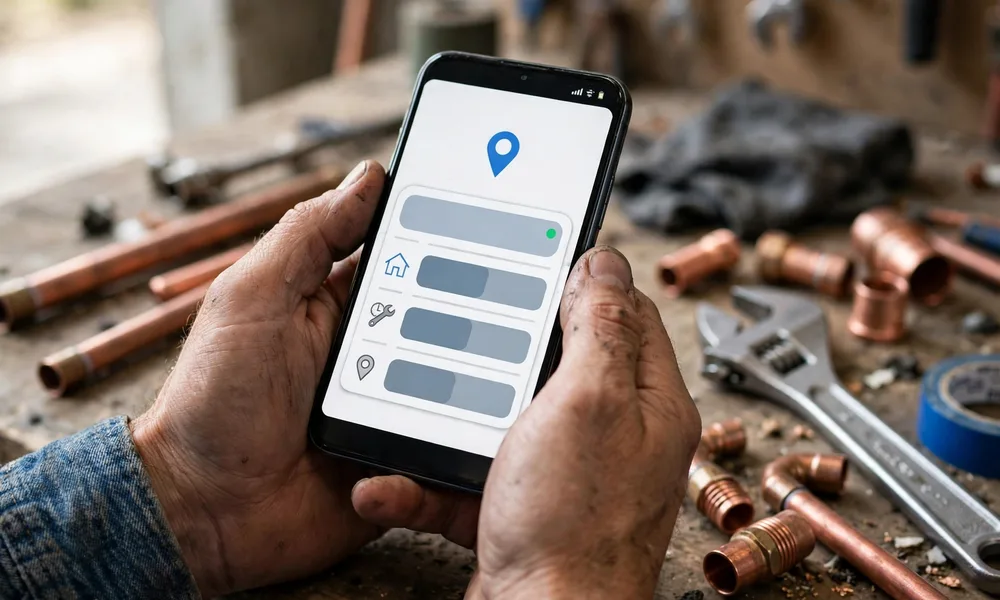
Beyond answering calls, it handles dispatch, estimates, invoicing, and online booking, letting homeowners book directly. The dispatch board shows who is where, and its AI flags estimates sent days ago with no reply.
Pros: AI call answering, strong dispatch board, online booking for customers, good technician app. Cons: pricing rises with add-ons, some features need the higher tiers, and setup takes a day or two to get right.
3. ServiceTitan
ServiceTitan is the heavyweight option, designed for plumbing companies with dispatchers and multiple vans. Its AI scores recorded calls, showing which bookings were won or lost and why, and its dispatch suggests the nearest available technician with the right skills.
It covers the whole business: marketing, call booking, dispatch, estimates, invoicing, and payroll. A ten-van company will use most of it; a one-van firm will pay for features it never touches, and setup takes real training time.
Pros: powerful call insights and dispatch, end-to-end business management, excellent for larger teams. Cons: custom pricing that is usually the most expensive here, long setup, overkill for solo plumbers.
4. FieldPulse
FieldPulse is a lighter option for plumbers who want scheduling and invoicing without a steep learning curve. It handles scheduling, estimates, invoices, and customer records, and its automation sends reminders and follow-ups unaided.
Its features focus on the practical: smart scheduling suggestions, automated reminders, and estimate templates that pull in common parts and labour rates. It has less call intelligence than ServiceTitan and less marketing depth than Thryv, but the core job flow is solid.
Pros: easy to learn, affordable, good scheduling and reminders, quick estimates. Cons: fewer AI features than the big platforms, limited marketing tools, and reporting is basic.
5. ServiceM8
ServiceM8 suits one-van and two-van plumbing businesses where simple job cards and fast invoicing matter most. Jobs are created in seconds, dispatched to a phone, and invoiced on site, with card payment taken before the van leaves.
Its strength is speed: a plumber can quote, complete, and invoice a tap replacement in one visit without touching a laptop. Its automation is modest but well aimed: it fills job cards from templates and sends reminders on time. It is less suited to firms that need deep reporting.
Pros: very fast on-site invoicing, simple job cards, good for solo operators, strong recurring-job handling. Cons: limited advanced AI, basic reporting, and less useful once a firm grows past a handful of staff.
6. Thryv
Thryv is less a job manager and more a growth platform, which is why some plumbers pair it with a scheduling tool. It manages the customer list, sends campaigns, requests reviews after each job, and uses AI to draft replies.
Its AI can reply to a five-star review in seconds, draft a seasonal maintenance offer, and remind past customers about annual checks. The result is steadier repeat work. Thryv is not the best scheduler here, so firms usually use it alongside a job tool.
Pros: strong review and marketing automation, AI-drafted replies, good for repeat business. Cons: not a full dispatch tool, adds a second subscription, and campaigns need a human eye before sending.
7. Podium
Podium focuses on the conversation after the job is booked. Its AI assistant answers customer texts, handles common questions about pricing and availability, and sends review requests the moment a job finishes, turning satisfied customers into visible five-star reviews.
The platform also centralises messages from text, web chat, and social channels into one inbox, so nothing gets lost between a Facebook message and a text. Its AI drafts replies in the firm’s tone and flags messages that need a human, such as an emergency leak. Like Thryv, it works best paired with a scheduling platform rather than alone.
Pros: excellent AI text replies, strong review generation, one inbox for all messages. Cons: not a job-management tool, priced per location, and AI replies need checking on pricing questions.
How to choose the right AI tool for your plumbing business
Start with your biggest time sink. If missed calls are the problem, Housecall Pro or Podium will pay for themselves fastest. If quoting and invoicing eat your evenings, Jobber or ServiceM8 will help most. If you run several vans, ServiceTitan is the serious option. Match the tool to the pain, not the feature list.
Next, check the practical details: does it work offline in a basement, can a technician learn it in a day, and does it connect to your accounting software? A two-week trial on real jobs answers all of this better than any demo. Also compare the total cost with one recovered job a month, which usually covers the subscription.
Similar trade businesses face the same choices, and the best AI tools for truck drivers in 2028 show how scheduling and dispatch AI works in another field-based trade. The lesson carries over: the tool that fits the working day wins. For general business AI, the best AI chatbots for business are a useful comparison.
Plumber AI checklist: get set up in a week
- List your three biggest time sinks, such as missed calls, late quotes, or unpaid invoices.
- Shortlist two tools that fix those specific problems, not the ones with the most features.
- Run a two-week trial on real jobs, with one technician testing the mobile app daily.
- Load your real price list and common parts so AI quotes use your numbers, not guesses.
- Set up automated reminders, review requests, and follow-ups before you go live.
- Review the first month: jobs booked, quotes sent, invoices paid, and time saved each week.
Frequently asked questions
What is the best AI tool for plumbers in 2028?
For most small plumbing firms, Jobber or Housecall Pro is the best all-round choice, because each covers quoting, scheduling, and invoicing with useful AI features. Larger companies with dispatchers usually get more from ServiceTitan, while solo plumbers often prefer the speed and simplicity of ServiceM8.
Can AI tools answer calls for a plumbing business?
Yes. Tools such as Housecall Pro and Podium use AI to answer calls and texts and book visits, passing urgent jobs to a human. Emergency calls and complex pricing should still reach a person quickly.
How much do AI tools for plumbers cost?
Most charge a monthly subscription per user, varying by plan and add-ons. Small firms usually pay for one or two users plus a call-answering add-on, and one extra booked job usually covers it.
Will AI replace plumbers?
No. AI handles the office work around plumbing, such as booking, quoting, and reminders, but it cannot fix a leak or fit a boiler in person. The skilled work stays human.
Do these tools work for a one-van plumbing business?
Yes, and solo operators often benefit most, because there is no office team to share the admin. ServiceM8 and FieldPulse suit small operations, while Jobber scales from one van upwards.
Is my customers’ data safe with AI plumbing tools?
Reputable tools encrypt customer data, but check where data is stored, who can access call recordings, and how long they are kept. Avoid putting sensitive details into free AI chat tools. For workflow ideas, the best AI tools for creating workflows for small teams in 2027 show how small teams automate routine work safely.
Bottom line
The best AI tools for plumbers in 2028 are the ones that quietly remove admin from the working day. Jobber and Housecall Pro are the safest starting points for most firms, ServiceTitan suits bigger teams, and ServiceM8 or FieldPulse fit lean operations. Add Thryv or Podium when reviews and repeat customers become the priority, and use a general AI assistant for drafting, never for final pricing.
Pick one tool, trial it on real jobs for two weeks, and measure calls answered, quotes sent the same day, and invoices paid on time. If those numbers move, the tool has earned its place.