

Ever been stranded on a trail with a wobbly crank and nothing but a phone that says “no service”? Most riders have, or will. The fix isn’t a $400 professional tool chest. It’s a smart, small kit that covers the repairs that actually happen, and knowing which budget options don’t fall apart the first time you lean on them.
This guide cuts through the marketing. It explains what a budget bike repair tool kit should contain, where cheap kits cut corners, and how to spend wisely whether you’re building a home kit or a saddlebag kit.
What Counts as “Budget” in Bike Tools?
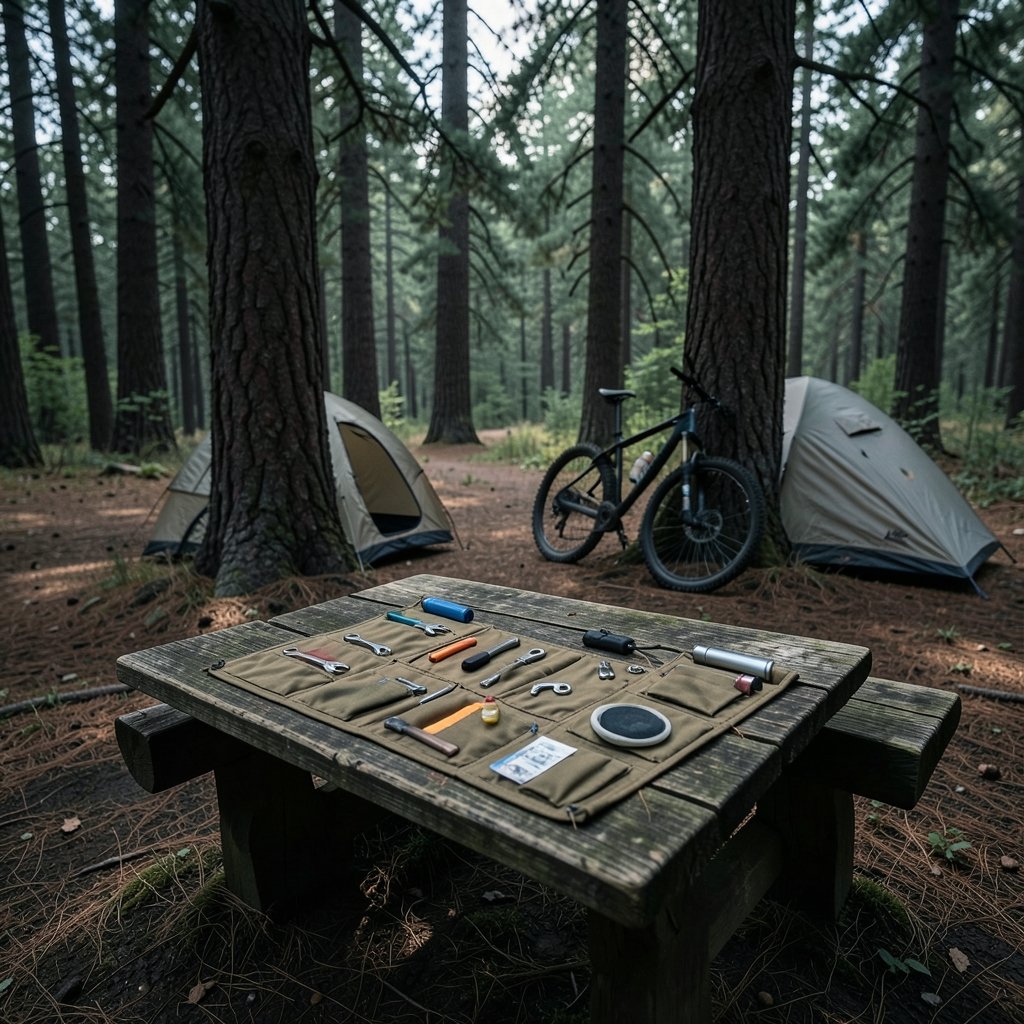
There’s no fixed definition, and that’s the first thing to understand. Retailers slap “budget” on everything from a $12 multi-tool to a $150 home kit. For this guide, budget means the lower price band that still uses materials strong enough to survive real torque, roughly the entry level up to the point where you’re paying for brand prestige rather than function.
The price gap between budget and pro tools comes from three places: steel quality, machining tolerance, and finish. A cheap hex key and an expensive one look identical until the cheap one rounds out a bolt head. That’s the failure that matters, and it’s the one to screen for.
What a Budget Kit Actually Needs


Most breakdowns fall into a handful of categories: a flat tire, a slipped or snapped chain, a loose bolt, a rubbing brake, or a wheel that’s gone out of true. A kit earns its place if it handles those.
The Non-Negotiables
- Tire levers. Buy two or three sturdy ones. Thin, flexible levers snap under stubborn tires.
- Hex (Allen) keys, at minimum 4, 5, and 6 mm, which cover most stem, seatpost, and brake bolts.
- A chain tool matched to your chain speed. Chain widths differ, and a tool for an 8-speed chain can mangle an 11-speed one.
- A spoke wrench sized to your nipples. Most are 3.2 mm, but check.
- A patch kit or a spare tube, plus a pump.
- Screwdrivers, Phillips and flathead, for derailleur limit screws and misc hardware.
The Nice-to-Haves
- A cassette tool and chain whip if you plan to remove a cassette at home.
- A bottom bracket tool matched to your frame’s standard.
- A torque wrench in the low range (typically 4 to 6 Nm for cockpit bolts).
- Cable cutters, which are not the same as wire snips.
A kit that skips the chain tool and spoke wrench is a starter kit, not a repair kit. That distinction saves a lot of disappointment.
Where Cheap Kits Cut Corners
Budget tool kits fail in predictable ways. Knowing the pattern lets you inspect before you buy.
Soft hex keys. The most common problem. Cheap keys are made from low-grade steel that deforms under load, rounding both the tool and the bolt. Test one on a stubborn bolt before you trust it on your bike.
Weak chain tools. A chain tool that bends or whose pin snaps is worse than none, because you’ll be mid-repair with a broken chain and a broken tool. Look for a tool with a replaceable pin and a solid body.
Mismatched sizes. Kits that claim “fits all bikes” often include a spoke wrench that fits nothing on your wheels or a chain tool for the wrong chain width. Check your bike’s actual specs first.
Skipped torque specs. A cheap torque wrench that’s inaccurate is more dangerous than no wrench on carbon parts. If the tool can’t be trusted, hand-tight plus care beats false precision.
Missing the boring stuff. Patches that don’t stick, levers that flex, pumps that leak. These small failures add up on the roadside.
Home Kit vs. Saddlebag Kit: Two Different Jobs
Riders often buy one kit and expect it to do everything. It won’t. A home kit and a roadside kit solve different problems.
| Feature | Home kit | Saddlebag kit |
|---|---|---|
| Priority | Full repair capability | Portability and speed |
| Typical contents | Hex keys, chain tool, cassette tool, cable cutters, torque wrench | Multi-tool, tire levers, patch kit, mini pump |
| Weight matters? | No | Yes |
| Budget sweet spot | Spend on steel quality | Spend on compactness and reliability |
| Common mistake | Buying a giant kit with tools you’ll never use | Buying a flimsy multi-tool that rounds bolts |
The practical move is to buy a solid home kit and a separate, small roadside kit. Bundling both into one purchase usually means compromising on one or the other.
If you’re also shopping for a laptop to plan routes or log rides, the same budget logic applies to hardware, as this breakdown of the best gaming laptops under 1000 that actually fit a budget shows. (Ai ad generators really cost 2026 realistic budget guide)
How to Inspect a Budget Kit Before Buying
You can’t torque-test a kit in the store, but you can spot red flags fast.
- Check the steel. Look for chrome vanadium (CrV) or S2 steel markings on hex keys and bits. Unmarked steel is a gamble.
- Flex the levers. A good tire lever resists bending. A bad one folds.
- Inspect the chain tool. Does the pin look replaceable? Is the body solid metal or thin stamped steel?
- Confirm sizes. Match the spoke wrench and chain tool to your bike’s actual components, not the box’s claims.
- Read the return policy. Budget tools are where returns matter most.
A five-minute inspection catches most of the problems that generate one-star reviews.
Building a Kit Cheaper Than Buying One
Sometimes the smartest budget move is assembling your own kit from individual tools. You skip the filler items and spend on the pieces that matter.
The trade-off is time and research. Buying individual hex keys, a chain tool, and levers separately usually costs more per item than a bundled kit, but you avoid paying for tools you’ll never touch. For riders who know their bike’s specs, that’s often the better deal.
The same principle applies across gear categories: buying exactly what you need beats buying a bundle with filler. It’s the logic behind choosing a design tool that fits your workflow rather than a bloated suite, as covered in this guide to Figma alternatives beginners choose to find the right design tool.
The Multi-Tool Question
Folding multi-tools are the most popular budget purchase and the most misunderstood. They’re brilliant for roadside fixes and poor substitutes for a home kit.
A good multi-tool includes hex keys, a chain tool, screwdrivers, and sometimes a spoke wrench, all in a pocketable package. The catch is mechanical advantage. Short arms mean less torque, and cheap pivots mean flex. For a loose seatpost clamp on the trail, that’s fine. For a stubborn bottom bracket, it’s not.
Buy a multi-tool for emergencies, not for overhauling your bike. And check that its chain tool matches your chain width, because many don’t.
Torque Wrenches on a Budget
Carbon handlebars and seatposts have torque limits for a reason. Over-tighten and you can crack expensive components. A budget torque wrench is worth having, but only if it’s accurate enough to trust.
Two practical rules: buy a wrench that covers the low range where bike bolts live, and verify it against a known-good wrench if you can. If you can’t verify it, treat its readings as a guide rather than gospel and tighten cautiously.
For most alloy components, hand-tight with a bit of judgment is fine. The torque wrench matters most on carbon.
Common Mistakes Riders Make
Buying the biggest kit. More tools means more clutter and more filler. A focused kit beats a sprawling one.
Skipping the chain tool. Chains break. It’s the single most useful tool in the bag.
Ignoring chain width. A mismatched chain tool damages links. Match it to your drivetrain.
Trusting a cheap multi-tool for everything. It’s an emergency tool, not a workshop.
Forgetting the pump and patches. A repair kit without inflation is half a kit.
Not learning to use the tools. The best kit is useless if you can’t true a wheel or break a chain. Practice at home before you need it on the road.
That last point deserves emphasis. A rider who knows how to use three basic tools will out-repair a rider with a full chest and no practice. Skill is free; tools aren’t.
When to Spend More
Budget tools make sense for most riders, most of the time. There are moments when spending more pays off.
If you ride daily, commute in all weather, or maintain multiple bikes, the tools get used hard. Better steel and tighter tolerances last longer and cause fewer stripped bolts. In that case, upgrading the hex keys and chain tool first is the smart order.
If you ride occasionally and keep your bike well maintained, a budget kit covers nearly everything you’ll face. Save the money for tires and brake pads, which affect your ride far more than a fancier spoke wrench.
A Realistic Budget Breakdown
Here’s a rough way to think about spending, keeping in mind that prices shift with retailers and seasons.
| Item | Priority | Budget approach |
|---|---|---|
| Multi-tool | High (roadside) | Solid brand, check chain tool fit |
| Tire levers | High | Buy sturdy ones, not the thinnest |
| Patch kit | High | Cheap and effective |
| Mini pump | High | Test the seal before relying on it |
| Chain tool | High | Replaceable pin, solid body |
| Hex key set | High | CrV or S2 steel |
| Spoke wrench | Medium | Match your nipple size |
| Torque wrench | Medium | Low range, verify accuracy |
| Cassette tool and chain whip | Low (home only) | Buy when you need it |
| Cable cutters | Low (home only) | Buy when you need it |
The pattern: spend on the tools you’ll use most and the ones where failure is costly. Save on the occasional-use tools until you actually need them.
Maintaining Your Kit
A budget kit lasts longer with basic care. Wipe tools dry after wet rides to prevent rust. Store the kit somewhere dry. Check the patch glue hasn’t dried out before a long ride. Replace worn hex keys before they round a bolt.
Small habits keep cheap tools working like expensive ones. The rider who maintains a modest kit beats the one who neglects a fancy one.
Conclusion
The best budget bike repair tool kit isn’t the biggest or the cheapest. It’s the one that covers the repairs that actually happen, uses steel that won’t round your bolts, and matches your bike’s real specs. Buy a focused home kit, a small roadside kit, and learn to use both before you need them.
Spend where failure hurts: hex keys, chain tool, tire levers. Save where it doesn’t: cassette tools and cable cutters you’ll rarely touch. Do that, and a modest budget goes a long way toward keeping you rolling.
FAQ
What should every budget bike repair kit include?
At minimum: tire levers, hex keys in 4, 5, and 6 mm, a chain tool matched to your chain width, a spoke wrench that fits your nipples, a patch kit or spare tube, a pump, and Phillips and flathead screwdrivers. Those cover flat tires, broken chains, loose bolts, and wobbly wheels, which are the most common roadside problems.
Are cheap bike multi-tools worth buying?
Yes, for roadside emergencies. They’re compact and cover basic fixes. But they give little force at the tool tip and often flex under load, so they’re not a substitute for a home kit. Check that the multi-tool’s chain tool matches your chain speed before relying on it.
How much should a beginner spend on bike tools?
A beginner can cover the essentials for a modest amount by focusing on the high-use tools: a multi-tool, tire levers, a patch kit, a pump, a chain tool, and a hex key set. Skip cassette tools and cable cutters until you actually need them. Spending more on steel quality pays off more than buying more tools.
Do I need a torque wrench for my bike?
It depends on your components. For alloy parts, hand-tight with care is usually fine. For carbon handlebars and seatposts, a torque wrench is worth having because over-tightening can crack expensive parts. Buy one that covers the low range where bike bolts live, and verify its accuracy if you can.
Can I build my own kit cheaper than buying a bundle?
Often yes, if you know your bike’s specs. Buying individual tools lets you skip filler items and spend on the pieces that matter. Bundles usually cost less per item but include tools you may never use. For riders who know what they need, assembling a kit is often the better deal.
Why do cheap hex keys strip bolts?
Low-grade steel deforms under load, rounding both the tool and the bolt head. Look for chrome vanadium (CrV) or S2 steel markings. If a key feels soft or flexes on a stubborn bolt, stop before you damage the fastener and replace the key.



