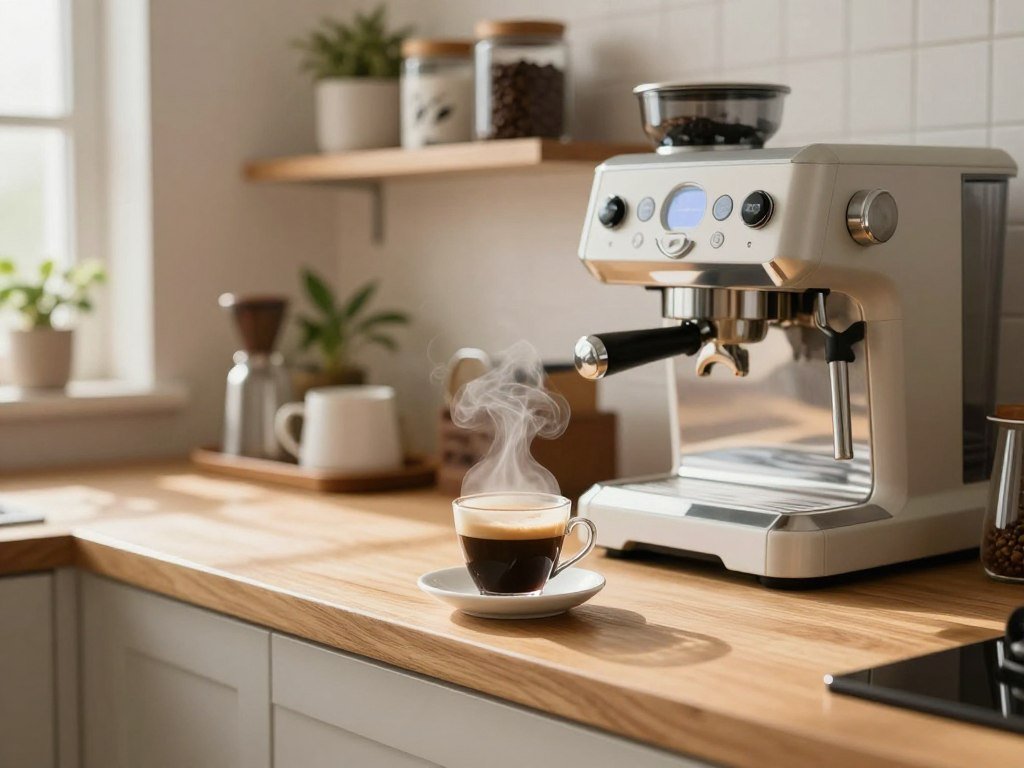
A first home setup can make a satisfying espresso without starting with a café-sized equipment budget. The best budget espresso machine still asks you to balance ease, control, and the cost of the full setup.
An affordable machine can make enjoyable drinks, but it may not include everything you need. Your coffee routine, counter space, and willingness to adjust each shot all shape the right choice.
Extraction percentage means the share of the dry coffee dose that dissolves into the brewed espresso. It offers one way to judge a shot, alongside its taste and texture.
Key Takeaways
- A low-cost machine can make enjoyable espresso at home.
- The full setup may cost more than the machine alone.
- Integrated grinders save steps, while separate grinders offer flexibility.
- Counter space and daily workflow matter as much as features.
- Good shots come from steady doses and small grind changes.
Choose your setup around the drinks you make most and the counter space you actually have.
Best Budget Espresso Machine for Most Homes
The Casabrews CM5418 is the lowest-cost listed pick, while the Bambino Plus is the strongest fit for someone prioritizing fast startup. Your best fit depends on how much convenience you want and how much control you expect to manage.
“Budget” can mean the machine price alone or the full setup cost. That difference changes which espresso machines count as affordable, especially when you still need a grinder.
| Pick | Model | Listed price | Best fit |
|---|---|---|---|
| Lowest-cost listed pick | Casabrews CM5418 | $119 | Compact entry setup |
| Fast, compact upgrade | Breville Bambino Plus | $400 | Quick heat and milk drinks |
| Integrated-grinder step-up | Breville Barista Express | $700 | One-machine workflow |
| Integrated-grinder premium option | KitchenAid 5KES6551 | $799 | Adjustable grind and basket choices |
The CM5418 listed at $119 keeps the entry price low, while the Bambino Plus adds quick heat and milk-making ease. These listed prices were reported for 2026.
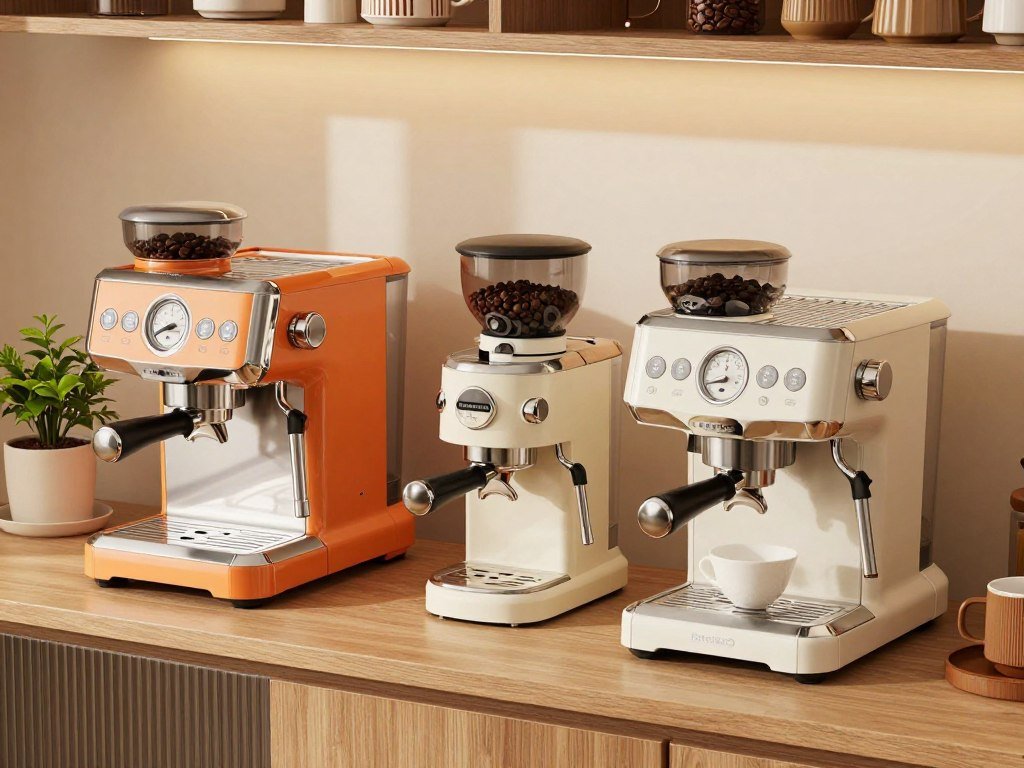
The Barista Express and KitchenAid include an integrated grinder, so you avoid adding a separate grinder to the counter. Their higher machine prices may still stretch a tight budget.
Think about whether you prefer pressing fewer buttons or making more brewing choices yourself. Extra settings help only when you plan to use them.
Treat the table as a shortlist, then choose by how much control you want to manage each day.
Is the Casabrews CM5418 a Good Starter Machine?
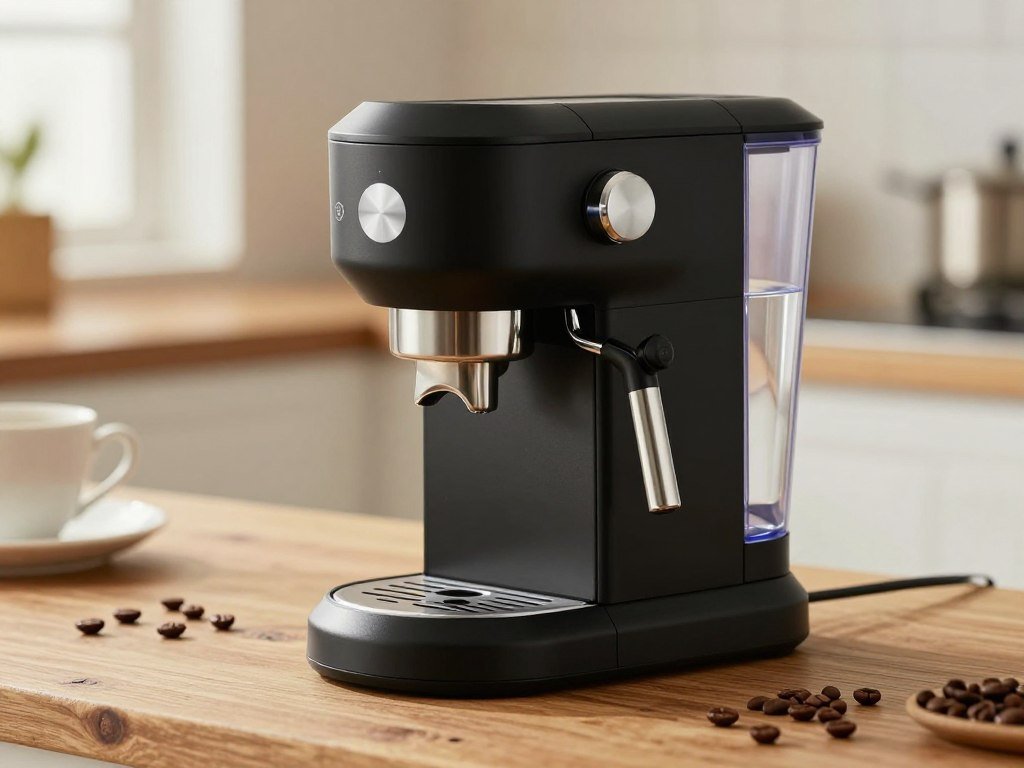
The CM5418 offers a compact entry point, but its basket needs a careful dose and grind. For a small coffee station, its removable tank and compact footprint make daily use simpler.
Keep the double-shot dose at or below the stated 15 grams. A 16-gram test dose clogged the double-shot filter basket, so a small change can affect the shot.
What its small format gets you
The removable tank holds 34 fluid ounces, which lets you fill it at the sink instead of moving the whole espresso maker. That can suit a narrow counter or a coffee shelf.
The portafilter can feel tight when you lock it into place. Treat that as a practical quirk, not a reason to force the handle or lean the machine against the counter.
How to avoid a stuck or clogged basket
Use this three-step checklist when a shot stalls or the portafilter feels hard to lock:
- Stay at or below the stated double-shot dose of 15 grams.
- Choose a grind close to table salt, not powdered sugar.
- Boil a clogged filter basket for 5-10 minutes, then rinse it.
The salt-like grind gives water a path through the coffee without making the basket as likely to clog. A fine grind may also make the handle harder to lock.
If the portafilter takes unusual force to lock, reduce the dose before forcing the machine against the counter.
What Does the Breville Bambino Plus Do Better?
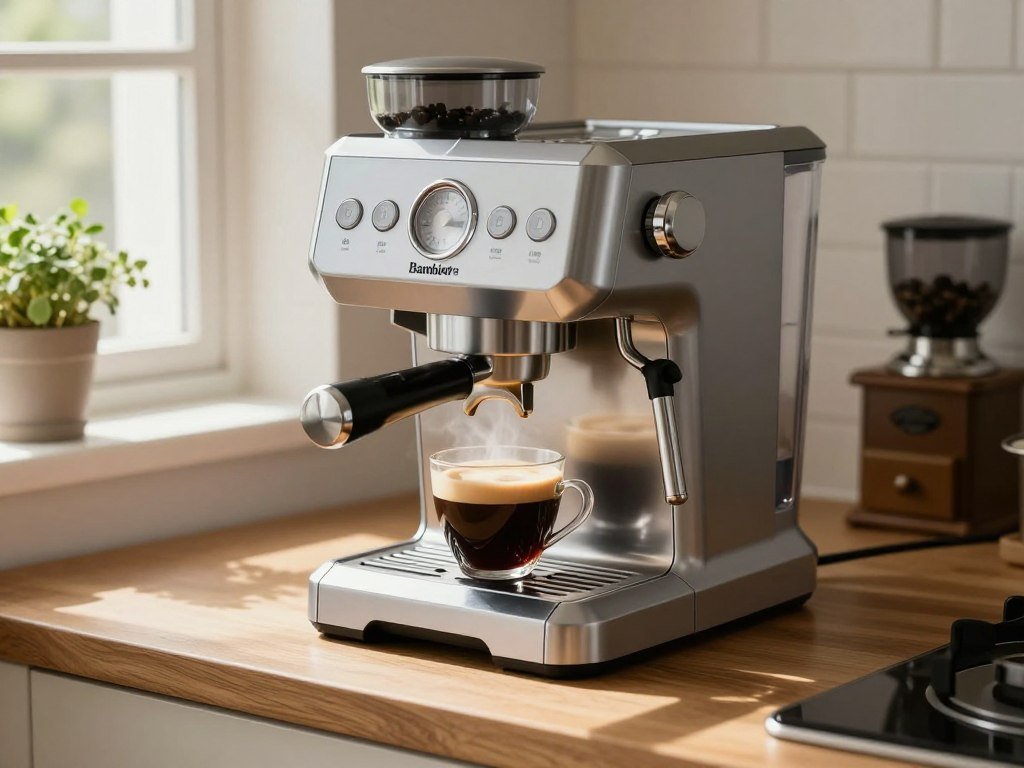
If waiting for a machine to warm up is the deal-breaker, the Bambino Plus heats in just 3 seconds. That quick start suits a rushed morning when you want espresso without a long wait.
Pre-infusion and built-in PID temperature control add useful brewing control. Pre-infusion wets the coffee before full pressure begins, while PID control helps manage brew temperature.
Fast startup and controlled brewing
The machine brews at 9 bars of extraction pressure and allows pre-infusion for up to 12 seconds. That gives you a short warm-up with room to adjust how brewing starts.
Its 64-fluid-ounce water tank means fewer trips to refill during a busy stretch. The powerful steam wand also makes the machine a strong option for milk drinks.
Basket size and upgrade options
The Bambino Plus uses a 54 mm basket, a size that leaves room to try compatible IMS baskets. Such an upgrade can appeal if you want to explore basket choices without changing machines.
Check your existing tools before adding accessories. A basket or tamper made for another size may not fit this machine well.
Check that your existing basket accessories match the machine’s 54 mm size before buying add-ons.
Is the Breville Barista Express Worth Its Higher Price?
The Barista Express earns consideration when you want more control without assembling separate brew and grinder stations. Its one-machine workflow brings several useful espresso settings together.
Its measured extraction percentage of 18.6% sits within the 18%-22% target range. One reading cannot guarantee that every shot will taste the same.
What the controls handle
Dose control helps you set how much ground coffee goes into the portafilter. This can make it easier to repeat a recipe after you find a dose you like.
Low-pressure pre-infusion wets the coffee before full brewing pressure. PID temperature control helps keep brew heat steady, while the manual steam wand gives you direct control over milk.
These features suit a curious barista who wants to adjust a shot rather than rely on one preset. They still take practice, and extra control does not make each change an automatic improvement.
What the measured shot results mean
The Barista Express reached a maximum total dissolved solids reading of 12.4%. Total dissolved solids, or TDS, measure the amount of dissolved material in brewed coffee.
That figure differs from extraction percentage, which compares dissolved coffee with the dry dose. Taste remains important, since a number cannot describe every cup’s balance or flavor.
Record the dose, grind setting, shot time, and taste when you test a new recipe. A short log makes it easier to spot what changed.
Keep a short shot log so you can connect changes in dose or grind to the cup.
What Does the Ninja Luxe Cafe Offer in One Machine?
The Ninja Luxe Cafe combines an integrated grinder with a large 70-fluid-ounce water tank. That built-in setup can appeal if you want grinding and brewing in one place.
Its 25 grind settings give you more adjustment than a fixed-grind setup. A large tank can also reduce refill interruptions during a day of making coffee.
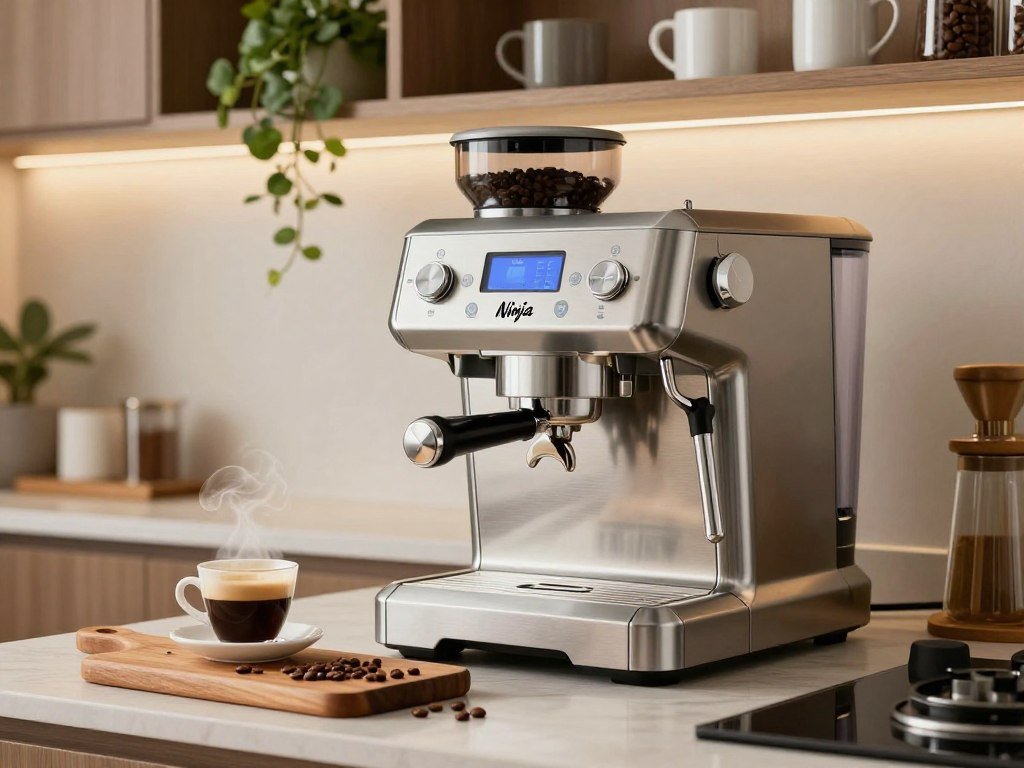
Grind settings let you change how fine the beans are ground for espresso. More settings can help you make smaller changes, though the count alone cannot tell you how easy the grinder is to use.
Think about your counter before giving a machine room for every feature. An integrated grinder can reduce separate steps, but it still takes space beside your cups and other tools.
Your daily routine matters too. Consider whether you will change grind settings often or prefer a simpler setup that asks for fewer decisions.
A larger water tank is handy when several people make coffee, or when you brew more than one drink at a time. It does not replace good planning for counter access and refills.
Decide whether you will use the grinder adjustments often enough to justify giving them counter space.
Who Should Choose the MiiCoffee Apex V2?
Choose the Apex V2 if changing pressure, temperature, and pre-infusion is part of the fun for you. This manual control suits a technically curious home user.
The external over-pressure valve can be set to 9 bars or around 6-7 bars. Neither setting guarantees a better drink, so judge changes by the result in your cup.
Adjusting brew pressure and temperature
The 58 mm portafilter fits a common size used by many espresso tools. Adjustable PID temperature control lets you change brew heat, and adjustable pre-infusion changes how brewing begins.
You can explore pressure changes with the external valve, then compare the taste and shot behavior. Small changes make it easier to learn what a setting does.
Managing the separate brew and steam systems
A dedicated brew boiler works alongside a thermoblock for steaming. The separate systems support both tasks, but the machine still needs about 7-10 minutes to warm up.
The display shows shot time and steaming time, which can help you track a routine. It also helps you notice when a change affects one part of the process.
Use the display’s shot-time readout to change one variable at a time.
What Should You Know About the KitchenAid 5KES6551?
The KitchenAid 5KES6551 is for buyers who value adjustment options more than a small footprint. Its larger size comes with basket and brew-temperature choices.
Allow 13.58 inches of width, 14.09 inches of depth, and 17.56 inches of height. Check cabinet clearance, since the machine needs more than a small patch of counter.
Grind and basket adjustments
The 58 mm portafilter accepts pressurized and non-pressurized baskets. Pressurized baskets can be more forgiving, while non-pressurized baskets give you more direct control over the coffee bed.
Three brew-temperature settings let you choose among different heat levels. These options can suit someone who wants to test changes instead of using one fixed setting.
The bean hopper comes off, and an ionizer is intended to reduce static in the chute. These details may help with handling beans, but they do not promise a mess-free grind.
Heat-up, steaming, and noise
The machine takes roughly 50 seconds to heat, then about 20 seconds to become ready to steam. Those are separate steps in the workflow, so plan for both when making a milk drink.
During testing, the grinder measured around 60-64 dB. That gives you a practical sense of its sound, though the room and nearby surfaces can affect how loud it feels.
Counter fit and removable parts
The 2.7-liter water tank holds a substantial amount, but its position still matters when you need to remove it. Leave space for access to the hopper and portafilter too.
The listed $799 price places the machine in a higher-cost tier. Its adjustment options may matter more to you than a compact profile.
Measure the full counter depth and height clearance before committing to this larger machine.
Do You Need a Built-In or Separate Grinder?
A built-in grinder saves a separate step, while a separate grinder gives you more freedom to change equipment later. The right route depends on convenience, grind flexibility, and your total budget.
The best budget espresso machine with a grinder depends on whether convenience outweighs grind flexibility. For the best espresso machine under $500 with a grinder, a machine and separate grinder must fit the combined limit.
| Machine | Integrated grinder | Grind adjustment | Baskets or portafilter |
|---|---|---|---|
| Casabrews CM5418 | No | Not applicable | Machine portafilter |
| Bambino Plus | No | Not applicable | 54 mm basket |
| Barista Express | Yes | Conical burr grinder with 18 settings | Dose control |
| KitchenAid 5KES6551 | Yes | 15 external and 8 internal adjustments | 58 mm portafilter and two basket types |
The Casabrews CM5418 and Bambino Plus do not have built-in grinders. The Barista Express uses a conical burr grinder with dose control and 18 settings.
The KitchenAid uses an integrated conical burr grinder, with 15 external and 8 internal adjustments. Its hopper holds 8.8 ounces of beans.
Both the Barista Express and KitchenAid are listed above the $500 ceiling. A separate grinder may work under that limit if the machine and grinder prices fit together.
The Gaggia Classic has a 58 mm portafilter and can be modified with a PID. That may appeal if you want a machine that supports later changes.
Choose the separate-grinder route if you want the grinder to serve other brew methods too.
Which Standalone Grinder Fits Your Budget?
The Turin DF54 is the lowest-priced of these three single-dose options, while the Eureka Mignon Zero is the quieter measured choice. Pick by your routine, not by burr size alone.
The DF54’s measured retention ranged from 0.05-0.3 grams, depending on bean type and humidity. Retention is the coffee left inside a grinder after use.
| Grinder | Listed price | Burrs and adjustment | Measured noise or retention |
|---|---|---|---|
| Turin DF54 | $199 | 54 mm flat stainless-steel burrs, stepless | 0.05-0.3 g retention by bean and humidity |
| Turin DF64 | $399 | 64 mm flat burrs | About 70 dB; about 0.2 g with bellows |
| Eureka Mignon Zero | $499 | 55 mm flat steel burrs, stepless | About 55 dB; about 0.2 g retention |
The DF54 has stepless adjustment, so you can make fine changes without choosing among fixed steps. Its retention result changed with the beans and room humidity.
The Turin DF64 was listed at $399 and measured about 70 dB. With its bellows, it retained about 0.2 grams.
The Eureka Mignon Zero was listed at $499. Its 55 mm flat steel burrs use stepless adjustment, and it measured about 55 dB.
The DF54’s $199 listed price makes it the lowest-priced option in this comparison. The Baratza Sette 30 is an entry-level espresso grinder, while the Eureka Mignon Specialita is a higher-end comparison.
Noise and retention matter in different ways. A quieter grinder may suit an early routine, while low retention can reduce the grounds left behind.
If low retention matters, compare the grinder’s measured result with the bean and room conditions you actually use.
Can You Build a Budget Espresso Setup Under $500?
A best budget espresso machine under $500 can be a sensible machine purchase, but the full setup budget must leave room for a grinder. The machine alone does not make espresso-ready grounds.
Espresso needs a grinder that can grind fine enough and adjust in small steps. If it cannot grind fine enough, shots may run too fast; wide gaps between settings can make dialing in frustrating.
Keep the machine and grinder in the same budget
The Casabrews CM5418 is the lower-cost machine choice, while the Bambino Plus adds quick heat and brewing controls. Either way, your complete setup also needs a suitably adjustable grinder.
A low machine price can leave more money for the grinder, but check the combined cost before you decide. Espresso grounds need a fine, steady grind, not just a grinder labeled for coffee.
Choose where to spend for more control
Use this three-item checklist to plan the core setup:
- Machine that fits your budget and routine
- Grinder that reaches a fine espresso setting
- Basic dose-measuring tools
A scale or other dose-measuring tool helps you keep the coffee amount steady. That makes it easier to tell whether a grind change affected the shot.
Extra controls can be useful, but they do not replace a grinder that can make small adjustments. Put your money toward the parts you will use every day.
Confirm the machine and grinder together fit your actual spending limit before choosing accessories.
Can These Machines Fit a Small Kitchen?
The Casabrews CM5418 and Bambino Plus take up less width than the Barista Express. Width is only one check, since depth, height, and access can shape where a machine fits.
Leave room to remove the tank, open the hopper, and lock in the portafilter. A machine that fits its base on the counter may still be awkward to use.
| Machine | Width | Depth | Height | Weight |
|---|---|---|---|---|
| Casabrews CM5418 | 5.47 inches | 12.28 inches | 11.97 inches | 8 pounds |
| Breville Bambino Plus | 7.5 inches | 13.5 inches | 12 inches | Not supplied |
| Breville Barista Express | 13 inches | 15 inches | 16 inches | 24.03 pounds |
| De’Longhi Stilosa | 13.5 inches | 8.07 inches | 11.22 inches | 9.6 pounds |
The CM5418 is narrow, and the Bambino Plus is also relatively narrow. The Barista Express is wider and deeper, which may matter on a crowded counter.
The De’Longhi Stilosa is 8.07 inches deep, but it is 13.5 inches wide. Compare all three dimensions instead of assuming one number tells the full story.
Weight affects whether you can move a machine for cleaning or storage. The CM5418 weighs 8 pounds, while the Barista Express weighs 24.03 pounds.
A low cabinet may limit access even when the machine fits under it. Leave enough overhead space to reach removable parts with ease.
Measure the space with cabinet clearance and tank removal in mind, not just the machine’s base.
What Makes an Espresso Shot Well Extracted?
A useful first check is whether the extraction percentage falls within the 18%-22% target range. That range describes the share of the dry coffee dose that dissolves into the brew.
Extraction percentage and total dissolved solids measure different things. Extraction compares dissolved coffee with the dry dose, while total dissolved solids measure dissolved material in the drink.
Use extraction percentage as one check
Testing of more than 20 models included espresso weight, total dissolved solids, and extraction percentage. Those measures can help compare shots, but they cannot replace tasting the coffee.
The Specialty Coffee Association states brewing conditions of 195°F-205°F and 9-10 bars. Treat those figures as brewing conditions, not a promise that every shot will taste the same.
A useful evaluation also considers shot weight, taste, and how the portafilter handles. Check whether the machine stops automatically, since that affects how closely you need to manage each shot.
Evaluate the whole brewing routine
Keep the dose steady as you adjust the grind, then compare the shot’s weight and taste. A repeatable routine makes each change easier to judge.
Use this short dialing-in list:
- Keep the dose consistent.
- Change the grind in small increments.
- Compare shot weight and taste.
A shot that falls within the target range may still taste sour, bitter, or unbalanced. Use the number as one clue, then judge the cup itself.
Change one brewing variable at a time so you can tell which adjustment affected the cup.
Which Machine Makes the Best Milk Drinks?
For a milk-focused choice, the KitchenAid produced the best-tasting latte in its test group, while the Bambino offers a powerful wand to practice with. Your taste or learning goal can guide the pick.
The KitchenAid is the taste-focused choice, while the Bambino’s steam wand suits practice. A wand you can control matters when you are learning to make smooth milk.
Choose a wand you can control
The KitchenAid’s latte result stood out among its test group. Coffee experts recommended the Breville Bambino, whose powerful steam wand gives you room to learn milk technique.
For a cappuccino or latte, you need milk with a smooth texture rather than large bubbles. A powerful wand can help, but a gentle hand still matters.
Texture the milk gradually
Start with cold cow’s milk or oat milk, then follow these three steps:
- Begin with cold milk.
- Keep the wand tip just below the surface, around half to three-quarters of the way up the tip.
- Aerate gently before continuing to texture the milk.
Aggressive aeration can create large bubbles. Continuing to aerate after the milk feels warm can do the same, so pay attention as you work.
Stop aerating once the milk is warm enough, then focus on creating a smooth texture.
How Do You Maintain a Budget Espresso Setup?
A quick rinse and wipe after each session is easier than letting coffee residue build up. A few minutes of care can help keep stale flavors from lingering.
Frequent machine use calls for a deeper descale about every three months. Follow the manual for the right method, since machines can have different care needs.
Clean the brew path after use
Use this five-item after-use checklist:
- Remove the used coffee puck.
- Rinse the portafilter.
- Flush the group head with clean water.
- Empty and wash the drip tray.
- Wipe and briefly purge the steam wand.
These steps clear grounds, milk, and water from parts you use each time. Doing them soon after brewing helps keep residue from drying in place.
Descale on a routine
Descaling removes mineral buildup inside the machine. Frequent use calls for a deeper descale about every three months, though your machine’s manual should guide the exact method.
Use the cleaning product and process the maker allows. A cleaning method that works for one machine may not suit another.
Keep the manual near your coffee tools or save its care steps where you can find them. That makes routine upkeep easier to remember.
Follow the machine’s own descaling instructions rather than substituting a cleaning method that its manual does not recommend.
Conclusion
The right pick is the one that fits both your daily routine and the complete setup you can afford. For a straightforward start, choose the Casabrews CM5418.
Choose more control only if you plan to use the adjustments. A grinder and enough counter space also belong in your decision, not just the machine.
You do not need every feature to enjoy espresso at home. A steady routine and a grinder that suits the machine can matter more than a long feature list.
Measure your counter and decide whether you need a grinder before making your final choice.
FAQ
Can I use pre-ground coffee in a budget espresso machine?
Yes, you can use pre-ground coffee in many budget espresso machines. Fresh grinding gives you more control over grind size, which can help you adjust a shot. Follow the basket guidance for your machine, since some baskets work better with certain grinds. Avoid an overly fine grind that can clog the basket or slow water flow.
Is a 15-bar pump better than a 9-bar espresso machine?
No, a pump’s advertised maximum pressure does not show the pressure used to extract every shot. The Bambino Plus brews at 9 bars, which is a specific brewing pressure rather than a pump’s maximum rating. Compare the machine’s brewing pressure and controls, not just a larger number printed in its sales details.
How often should I descale a home espresso machine?
For frequent use, a deeper descale about every three months is a useful interval. Mineral buildup can collect inside the machine over time, and regular care helps address it. Follow the machine manual for its exact descaling method, since the right process can differ by model. Do not assume one cleaner suits every espresso maker.
Can I make espresso and steam milk at the same time on a budget machine?
Workflow depends on the machine’s heating setup. The MiiCoffee Apex V2 uses a dedicated brew boiler alongside a separate thermoblock for steaming. That design supports both brewing and steam functions, but your routine still depends on the machine’s controls and timing. Check how your model handles switching between espresso and steam before planning simultaneous use.
Do I need a burr grinder for espresso?
A burr grinder is useful when it can reach a fine enough setting and allows small adjustments. Espresso can be hard to dial in with a grinder that has coarse, widely spaced steps. If each setting changes the grind too much, you may struggle to get a shot that runs at a pace you like. Keep the dose steady while testing.
What does a 54 mm or 58 mm portafilter size affect?
The portafilter size affects which baskets and other accessories fit. The Bambino Plus uses a 54 mm basket, while the MiiCoffee Apex V2 and Gaggia Classic use 58 mm portafilters. Check the size before buying a basket or tool, since accessories made for one size may not fit another. Matching sizes helps avoid a purchase that cannot be used.
Why is my espresso shot running too fast?
A grind that is too coarse may let water pass through the coffee too quickly. Adjust the grind finer in small increments, and keep the dose consistent while testing. Changing one variable at a time makes it easier to see what helped. If the shot still runs quickly, check that the dose and basket match the machine’s guidance.