

The best CRM for nonprofits in 2027 is the one that tracks donors, grants and volunteers in one place without eating the budget it is meant to protect. For most nonprofits, that means a tool built for fundraising and donor relationships, with discounted or free pricing for registered charities. The short answer: Bloomerang and DonorPerfect lead for donor-focused organisations, Salesforce Nonprofit Cloud suits larger nonprofits with complex needs, and HubSpot’s free CRM is a strong starting point for small charities.
A nonprofit CRM is not a sales CRM with different labels. Donors are not customers, and the relationship is not a pipeline to a single close. It is a long-term connection built on trust, gratitude and impact, and the CRM has to support that — tracking gifts, campaigns, events, volunteers and grants over years, not quarters.
Key takeaways
- Nonprofit CRMs are built around donors, not deals: gift history, campaigns and retention matter most.
- Many vendors offer free or heavily discounted pricing for registered nonprofits — always ask.
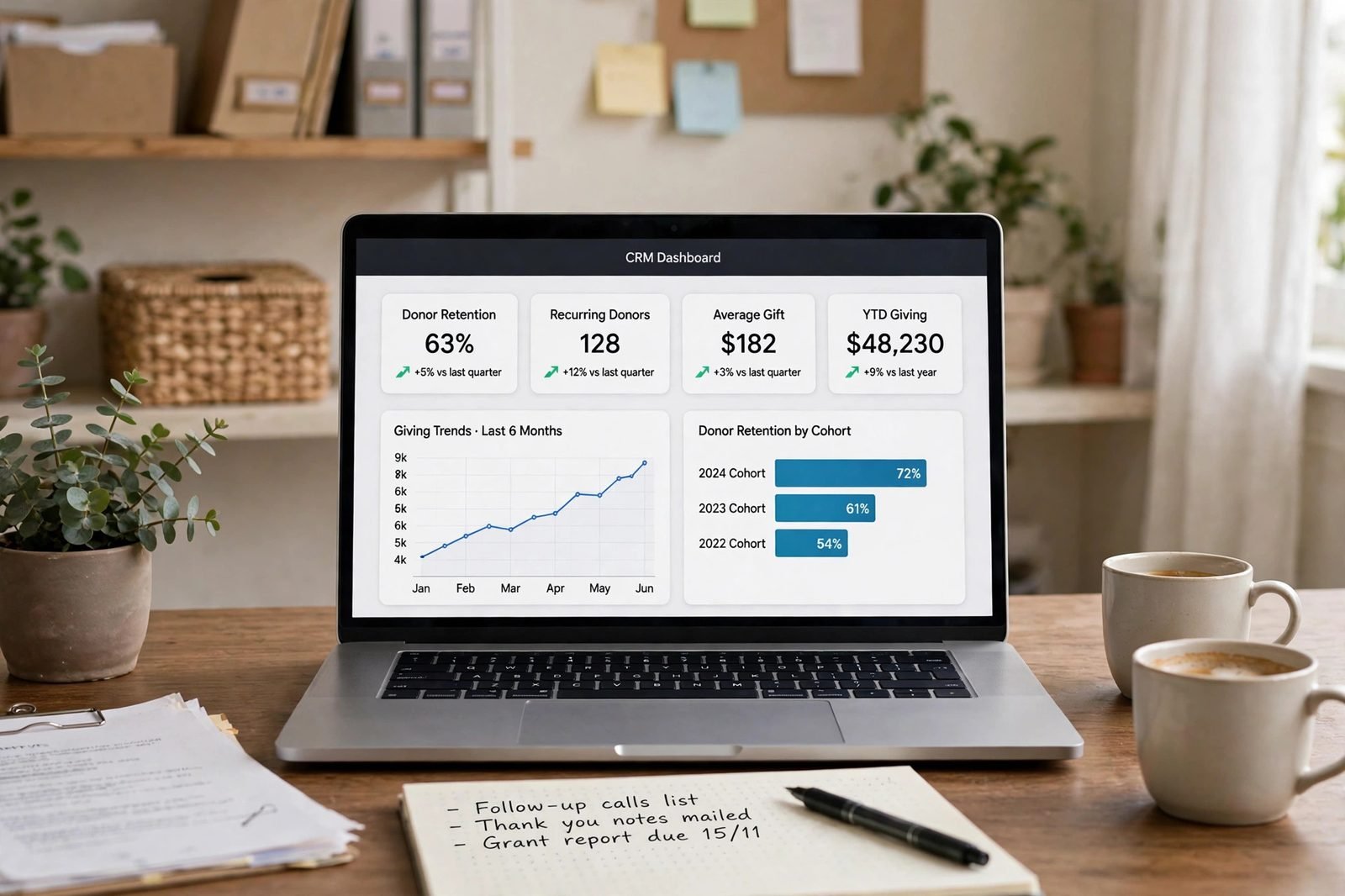
- Donor retention is the metric that matters; a CRM should make it visible.
- Check current pricing and discount eligibility before you commit.
What nonprofits need from a CRM
The first test is donor management. Your CRM should hold a complete history for every donor: gifts, campaigns, events attended, communications received and notes from every conversation. When a donor calls, anyone on the team should be able to see that history in seconds.
The second test is fundraising support. Look for gift tracking, pledge management, recurring donations, campaign reporting and integration with your donation platform. If the CRM cannot show you how a campaign performed, it is not doing its job.
The third test is price. Nonprofits run on tight budgets, and many CRM vendors offer discounts or free plans for registered charities. Always ask, and compare the discounted price rather than the headline rate. Check current pricing and confirm your eligibility before budgeting.
The best CRM for nonprofits in 2027
Bloomerang
Bloomerang is a donor management CRM built specifically for small and mid-sized nonprofits. It focuses on donor retention, with clear dashboards showing who gave, who lapsed and who is at risk, plus built-in email and engagement tracking.
Best for: small and mid-sized nonprofits that want a donor-focused CRM that is easy to learn.
It is less of a full CRM than Salesforce, so large organisations with complex programme needs may outgrow it. Check current pricing and confirm nonprofit discounts.
DonorPerfect
DonorPerfect is a long-established donor management system with strong gift tracking, reporting and integrations. It handles donations, pledges, events, volunteers and grants, and it is used by thousands of nonprofits of all sizes.
Best for: nonprofits that want a proven, full-featured donor management system with deep reporting.
The interface feels dated next to newer tools, and setup takes time. Check current pricing, as DonorPerfect prices by records and features.
Salesforce Nonprofit Cloud
Salesforce Nonprofit Cloud, formerly the Nonprofit Success Pack, is the most powerful option here, with donor management, programme tracking, fundraising and reporting in one system. It suits larger nonprofits with dedicated admin support and complex needs.
Best for: larger nonprofits with complex programmes and staff to manage the system.
It is also the most complex and expensive to run well. Salesforce offers discounted pricing for nonprofits, so check current pricing and confirm eligibility before committing.
HubSpot CRM
HubSpot’s free CRM is a genuine option for small nonprofits, covering contacts, deals, email and tasks at no cost. It is not built for donor management, but it can be configured for it, and HubSpot offers nonprofit discounts on paid plans.
Best for: small nonprofits that want a free, reliable CRM and are willing to configure it for donors.
You will need to adapt its sales-focused structure to donations, and gift tracking will be basic without add-ons. Check current pricing and discount eligibility for paid plans.
Zoho CRM
Zoho CRM offers a free tier and low-cost paid plans, with customisation that suits nonprofits willing to shape the tool around donor workflows. It integrates with common donation and email platforms.
Best for: budget-conscious nonprofits that want a flexible CRM at a low price.
It is not donor-specific, so expect setup work to get gift tracking and campaign reporting right. Check current pricing and confirm nonprofit discounts.
Little Green Light
Little Green Light is an affordable donor management CRM for small nonprofits, with gift tracking, donor profiles, event management and reporting in a simple interface. It is a popular choice for organisations moving off spreadsheets.
Best for: small nonprofits moving from spreadsheets to a proper donor CRM.
It is lighter on automation and integrations than the bigger tools, so growing organisations may need to upgrade later. Check current pricing before choosing.
Comparison table
| CRM | Nonprofit focus | Standout feature | Who it suits |
|---|---|---|---|
| Bloomerang | High | Donor retention dashboards | Small and mid-sized nonprofits |
| DonorPerfect | High | Gift tracking and reporting | Nonprofits wanting a proven system |
| Salesforce Nonprofit Cloud | High | Power and customisation | Larger nonprofits |
| HubSpot CRM | Low | Free tier | Small nonprofits |
| Zoho CRM | Low | Value and flexibility | Budget-conscious nonprofits |
| Little Green Light | High | Affordability and simplicity | Small nonprofits leaving spreadsheets |
How to choose: a checklist for nonprofits
Use this checklist before you sign up, and revisit it after a month of real use.
- List your donor data. Write down everything you track now — gifts, pledges, events, volunteers, grants — and check the CRM holds all of it.
- Ask about nonprofit pricing. Contact the vendor directly and confirm discounts, free plans and eligibility before you compare prices.
- Test donor retention reporting. Check the CRM can show retention rates, lapsed donors and giving trends without a spreadsheet.
- Check the donation integration. Confirm gifts flow in automatically from your donation platform rather than being entered by hand.
- Trial with real donor data. Import a sample of real records and see whether the team can find, update and report on them easily.

Mistakes nonprofits make with CRM
The biggest mistake is choosing a sales CRM and trying to force donors into a deal pipeline. Donors are not deals, and the mismatch shows up in bad reporting and frustrated staff. Pick a tool built for donors, or be prepared for serious customisation.
The second mistake is neglecting data hygiene. Duplicate donor records, missing gift history and out-of-date addresses make the CRM untrustworthy, and an untrustworthy CRM gets ignored. Spend time cleaning data before you migrate, not after.
The third is underinvesting in training. A CRM only works if the whole team uses it the same way. Agree on simple rules — every gift logged, every conversation noted — and review them until they stick.
For a broader look at picking business software, see our guide to how to choose a CRM for a small business and our roundup of the best CRM software for startups.
Donor retention: the number that matters
New donors are expensive to find; keeping existing donors is far cheaper. That makes donor retention the single most important metric for most nonprofits, and your CRM should make it visible.
A good CRM shows you who gave last year but not this year, who is giving less, and who is ready for a thank-you call rather than another ask. That information turns a generic mailing list into a set of real relationships.
Set a simple rule: every lapsed donor gets a personal touch before they get another appeal. The CRM can flag them automatically; the call is yours to make.
FAQs
What is the best free CRM for nonprofits?
HubSpot CRM offers a free tier that suits small nonprofits, and Salesforce offers discounted pricing for eligible organisations. Always ask vendors about nonprofit discounts before choosing.
Do nonprofits get discounts on CRM software?
Many do. Salesforce, HubSpot, Zoho and others offer discounted or free plans for registered nonprofits, but eligibility and terms vary. Check current pricing and confirm your eligibility directly with the vendor.
What is the difference between a CRM and donor management software?
Donor management software is a type of CRM built for nonprofits, focused on gifts, donors and campaigns rather than sales deals. Many nonprofits use one or the other, and some use both.
How much does a nonprofit CRM cost?
It ranges from free tiers to substantial subscriptions for large organisations, with discounts often available. Check current pricing at your actual record count and confirm any nonprofit discount.
Can a CRM help with grant tracking?
Yes — the better nonprofit CRMs track grants, deadlines, applications and reporting requirements alongside donor data. If grants are a major income source, make this a must-have.
Is Bloomerang or DonorPerfect better?
Bloomerang is easier to learn and suits small and mid-sized nonprofits focused on retention; DonorPerfect offers deeper reporting and suits organisations that want a proven, full-featured system. Trial both with your real data.
Conclusion
The best CRM for nonprofits in 2027 is the one that keeps donor relationships at the centre and fits a budget that respects the mission. Bloomerang and DonorPerfect lead for donor-focused organisations, Salesforce Nonprofit Cloud suits larger nonprofits with complex needs, and HubSpot’s free CRM is a strong starting point for small charities. Your next step is to ask each vendor about nonprofit pricing, trial one with real donor data, and check whether retention reporting actually improves. If it does, the CRM is doing its job.
If your nonprofit also relies on consultants, read our guide to the best CRM for consultants.



