
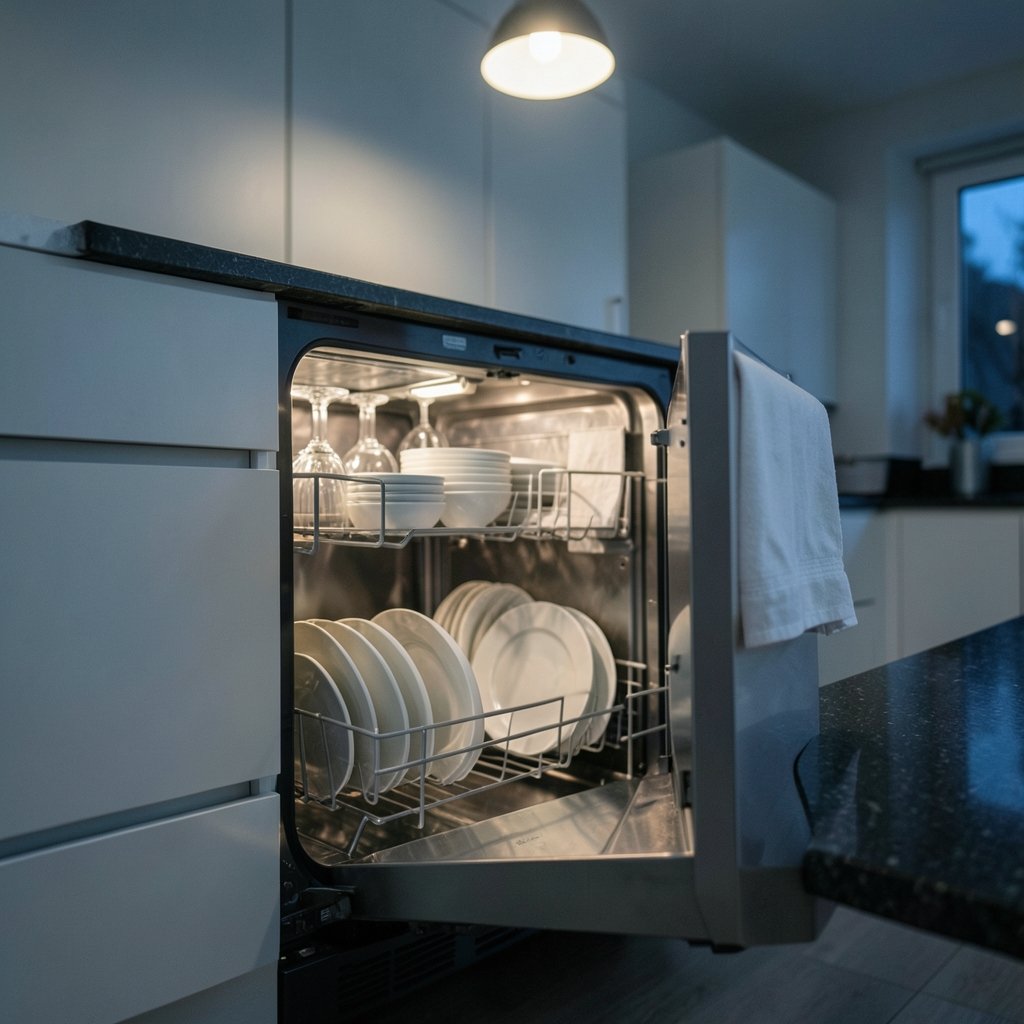
What if the dishwasher that saves you the most money isn’t the cheapest one on the shelf? That’s the awkward truth most buying guides skip. The sticker price is the number you see once, but energy, water, noise, repairs, and lifespan are the numbers you live with for a decade. Get the value equation right and a mid-priced machine can quietly beat both the budget box and the premium flagship. Get it wrong and you’ll pay twice: once at the till, and again on every utility bill.
This guide breaks down how to judge a dishwasher by real value rather than marketing. It covers the labels that matter, the specs worth paying for, the traps that catch most buyers, and the practical checks that separate a smart purchase from an expensive mistake.
Why the Sticker Price Is Only Half the Story
A dishwasher is one of the few appliances where running costs can rival the purchase price over its life. Energy and water use usually outweigh the purchase-price gap between mid-range models, which means a machine that costs a little more upfront but sips electricity and water can end up cheaper overall.
Think about how often the thing runs. A busy household might run five to seven cycles a week. Over ten years, that’s thousands of cycles. A small difference in energy per cycle compounds into a meaningful sum, and a small difference in water per cycle matters even more in regions where water is metered or scarce.
The same logic applies to almost any big purchase where the headline number hides the true cost. It’s the reason a careful buyer looks past the sticker on a car or a console and asks what ownership actually costs. The same discipline that helps you judge the best SUV value for 2026 applies to a kitchen appliance: the price tag is the start of the conversation, not the end.
Read the Energy Label Like a Pro
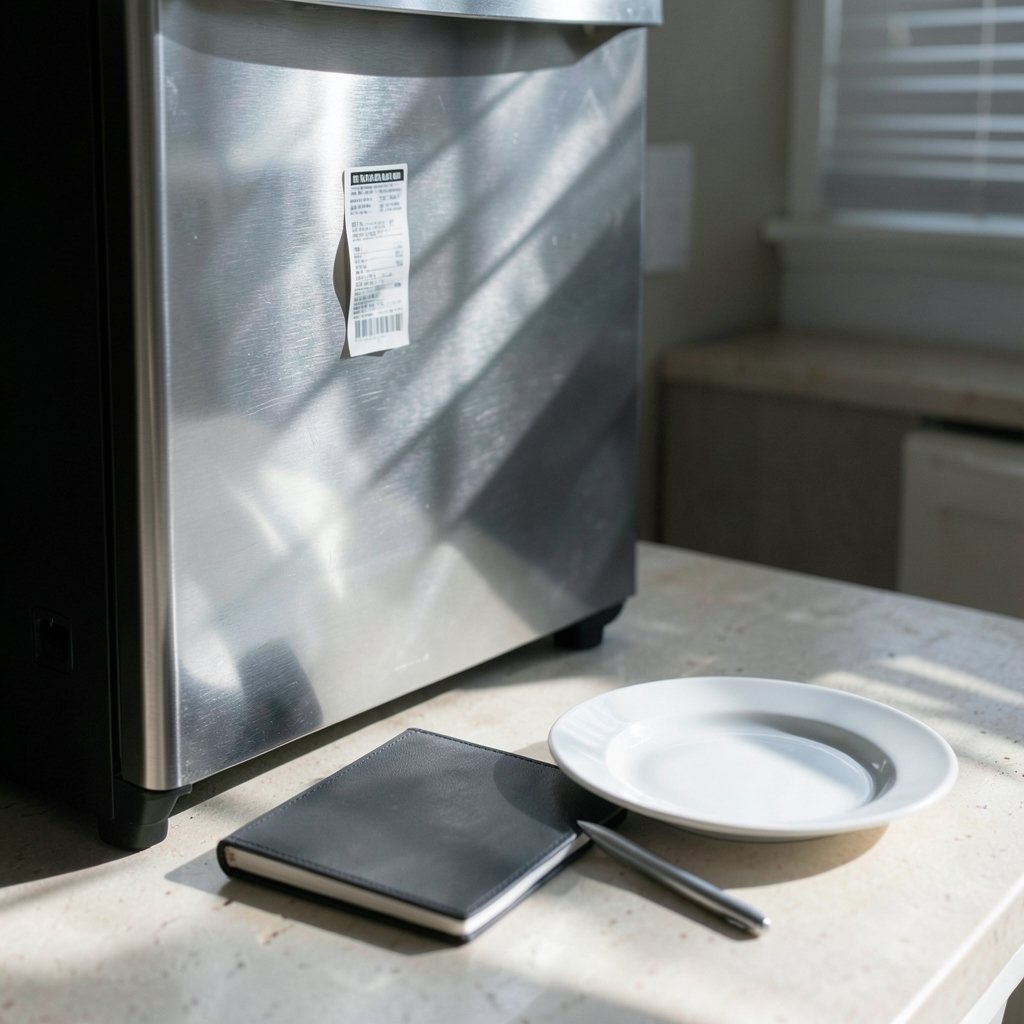
In the EU, dishwashers have been rated on a rescaled A–G energy label since 1 March 2021. There is no A+ or A+++ anymore. That matters because older stock and secondhand listings still use the old scale, and an old A+++ can look better than it is next to a new A or B.
The rescaled label reports more than a letter grade. It shows energy per 100 cycles, water per cycle, airborne noise in dB(A), and programme duration. Those four numbers are the real comparison tools. A model with a slightly worse letter grade but lower water use and a shorter eco programme may genuinely cost less to run in your home.
For buyers in the US, the equivalent signal is the ENERGY STAR mark and the yellow EnergyGuide label, which estimates yearly operating cost. Federal efficiency standards for residential dishwashers are set under the Energy Policy and Conservation Act, and those standards have been revised over the years, so always check the label on the specific unit rather than trusting a model-year claim.
The numbers that actually move your bill
| Spec | What it tells you | Where to find it |
|---|---|---|
| Energy per 100 cycles | Running cost over time | EU energy label |
| Water per cycle | Utility and environmental cost | EU energy label |
| Noise in dB(A) | Comfort, especially open-plan homes | EU energy label |
| Place settings | Real capacity, standardised | EU energy label |
| Programme duration | How practical the eco cycle is | EU energy label |
| Estimated yearly cost | Ballpark running cost | US EnergyGuide label |
Capacity: Place Settings Beat Marketing Claims
Capacity is quoted in place settings, and full-size models typically run from 12 to 16. Here’s the catch: the EU label uses a standardised place-setting definition, which makes cross-brand comparison far more reliable than a manufacturer’s own claim about “14 covers” or “extra-large tub.”
In practice, capacity is where buyers make their most expensive mistake. A 12-place model bought for a family of five will run more often than a 14-place model, and every extra cycle adds energy, water, and detergent. Two place settings can quietly erase the savings of a cheaper machine.
Practical tip: count your actual daily load. Plates, bowls, glasses, mugs, cutlery, plus the awkward stuff like chopping boards and saucepan lids. If your sink is regularly stacked after one meal, you need the larger tub. If you live alone and run the machine twice a week, a slimline model may be the smarter buy, and paying for capacity you never fill is wasted money.
Noise: The Spec People Forget Until It’s Too Late
Noise is measured in dB(A), and lower ratings cost more. That premium is real but often worth it. A machine running at 44 dB(A) is noticeably quieter than one at 52 dB(A), and in an open-plan kitchen or a home where the dishwasher runs during dinner, that gap is the difference between background hum and genuine irritation.
The trap here is that quiet models sometimes trade noise for longer cycles or slightly higher energy use. Check the noise figure and the eco programme duration together. A very quiet machine with a four-hour eco cycle is fine if you run it overnight, but frustrating if you need dishes back quickly.
Budget-conscious buyers should know that quiet operation is one of the clearest examples of paying for something you’ll notice every single day. Unlike a fancy interior light or a smartphone app, noise reduction delivers value on every cycle.
Where the Money Actually Goes: Features Worth Paying For
Not all upgrades are equal. Some genuinely reduce running costs or extend lifespan; others are decoration. Here’s how to sort them.
Worth the money
- Good energy and water ratings. Directly cuts running costs.
- A usable eco programme. Short enough that you’ll actually use it.
- Adjustable upper basket and folding tines. Lets you fit real pots and pans, so fewer hand-washed items.
- A filter you can remove and clean easily. Clogged filters are a top cause of poor cleaning and smells.
- Available spare parts. Door seals, spray arms, and baskets should be replaceable years later.
- Decent noise rating. Comfort you feel daily.
Usually not worth the premium
- App connectivity. Rarely changes how clean dishes get.
- Interior lighting. Novelty.
- Third rack on a small tub. Can steal height you need for glasses.
- Auto-dose detergent systems. Convenient, but they lock you into specific products and add a failure point.
- Steam or “extra hygiene” cycles. Useful in specific cases, rarely essential.
The repair angle deserves more attention than it gets. Long-term value depends heavily on parts availability and repair costs, and right-to-repair rules are evolving in both the EU and US. Before buying, check whether the brand sells seals, spray arms, and filters as spare parts, and whether local technicians service that brand. A cheap machine from a brand nobody repairs is not a bargain. The same principle applies to electronics: knowing what a repair should cost protects you from being overcharged, whether it’s a dishwasher or a laptop repair quote you want to sanity-check.
The Budget Traps That Catch Smart Buyers
Most bad dishwasher purchases aren’t caused by ignorance. They’re caused by a handful of predictable traps.
Trap one: buying on the showroom cycle time. The quick programme looks great on the box, but it usually uses more energy and water. The eco cycle is the one that saves money, so check its duration before you commit.
Trap two: ignoring installation costs. Delivery, old-unit removal, plumbing adjustments, and cabinetry trimming can add a surprising amount. A “cheap” machine that needs a plumber to fit isn’t cheap.
Trap three: assuming integrated means better. Fully integrated models look cleaner but often cost more for the same internals. If budget is tight, a freestanding model with the same energy rating delivers identical running costs.
Trap four: chasing the top letter grade. The jump from a B to an A can carry a large price premium for a modest running-cost saving. Do the arithmetic on your actual usage before paying for the last grade.
Trap five: forgetting water hardness. In hard-water areas, without a built-in softener or regular salt, limescale shortens the machine’s life and degrades cleaning. That’s a hidden cost that can wipe out any efficiency gain.
How to Compare Two Models in Five Minutes
When you’re standing in a shop or scrolling a retailer page, a simple routine cuts through the noise.
- Find the energy label and note energy per 100 cycles, water per cycle, noise in dB(A), and place settings.
- Multiply energy per 100 cycles by your estimated annual cycles (say 250) to get a rough yearly energy figure.
- Do the same for the second model and compare the difference over five years.
- Check the eco programme duration. If it’s over three hours, ask whether that fits your routine.
- Confirm spare parts availability and whether local technicians service the brand.
- Add installation and old-unit removal to the price before comparing totals.
- Read reviews specifically about reliability after two or three years, not first impressions.
That last step matters more than any spec sheet. Early reviews describe how a machine performs when new. Long-term reviews describe how it performs when the honeymoon is over, and that’s the version of the machine you’ll actually own.
Matching the Machine to Your Household
The best-value dishwasher is the one that fits how you actually live, not the one that wins a lab test.
| Household type | Priority | What to look for |
|---|---|---|
| Single or couple | Low capacity, low water use | Slimline or 9–12 place settings, short eco cycle |
| Family of four or more | Capacity and durability | 13–15 place settings, robust baskets, easy filter |
| Open-plan kitchen | Quiet operation | 44 dB(A) or lower, overnight-friendly timer |
| Hard-water area | Limescale protection | Built-in softener or easy salt access |
| Rental or temporary home | Low install cost | Freestanding, standard connections |
| Long-term owner | Repairability | Spare parts availability, service network |
There’s a broader lesson here about how prices behave in any product category. Timing, platform, and model cycle all shift what you pay, whether you’re watching a PlayStation 5 price increase ripple through the market or tracking when a PS5 price drop finally lands. Appliances follow the same rhythm: end-of-line models, seasonal sales, and new-label transitions all create windows where value improves sharply. If you can wait for a label changeover, you can often buy last year’s A-rated model at a genuine discount.
The Verdict: What Best Value Really Means
The best dishwasher for the price is rarely the cheapest and rarely the flagship. It’s the machine with a solid energy and water rating, enough standardised place settings for your household, a noise level you can live with, an eco programme you’ll actually run, and spare parts you can still buy in five years.
Spend your money in this order: efficiency first, capacity second, noise third, repairability fourth, and convenience features last. That ranking reflects how the costs actually land. Efficiency and capacity affect every single cycle. Noise affects every day. Repairability decides whether year eight is cheap or expensive. App features affect almost nothing.
Do the five-minute comparison, check the label rather than the brochure, and add installation to the total before you decide. A dishwasher is a ten-year purchase, and the buyers who get the best value are the ones who treated it that way from the start.
Frequently Asked Questions
Is a more expensive dishwasher always cheaper to run?
No. Price and efficiency are related but not locked together. A mid-priced model with a strong energy and water rating can cost less to run than a premium machine with extra features and the same letter grade. Always compare energy per 100 cycles and water per cycle rather than assuming the higher price buys lower running costs.
How many place settings do I actually need?
Count a typical day’s dishes. A couple usually manages with 9 to 12 place settings, while a family of four or more generally needs 13 to 15. Buying too small means more cycles, which costs energy and water every week. Buying too large wastes money upfront, so match the tub to your real load.
Does a lower dB(A) rating really matter?
Yes, if the kitchen is open to living space or the machine runs in the evening. The difference between roughly 44 dB(A) and 52 dB(A) is easy to hear. Quiet models cost more, but the benefit is felt on every cycle rather than once at purchase, which makes it one of the better value upgrades.
Are smart features worth paying for?
Rarely. App control, interior lighting, and auto-dose systems add cost and complexity without improving cleaning or cutting running costs. Money is better spent on efficiency, capacity, noise reduction, and repairability. Convenience features are fine when they come free with an otherwise strong machine, but they shouldn’t drive the decision.
How long should a dishwasher last?
Most full-size machines are built to last around ten years with reasonable care. Lifespan depends heavily on water hardness, filter cleaning, and whether parts remain available. Regular salt in hard-water areas and a monthly filter clean are the two habits that most reliably extend life.
Should I buy an end-of-line model to save money?
Often yes. When a brand refreshes a range or a new energy label phase arrives, outgoing models get discounted while keeping the same internals. Check that spare parts and service are still available for that model, confirm the label figures, and make sure the warranty is intact. Done carefully, end-of-line buying is one of the simplest ways to get genuine value.



