
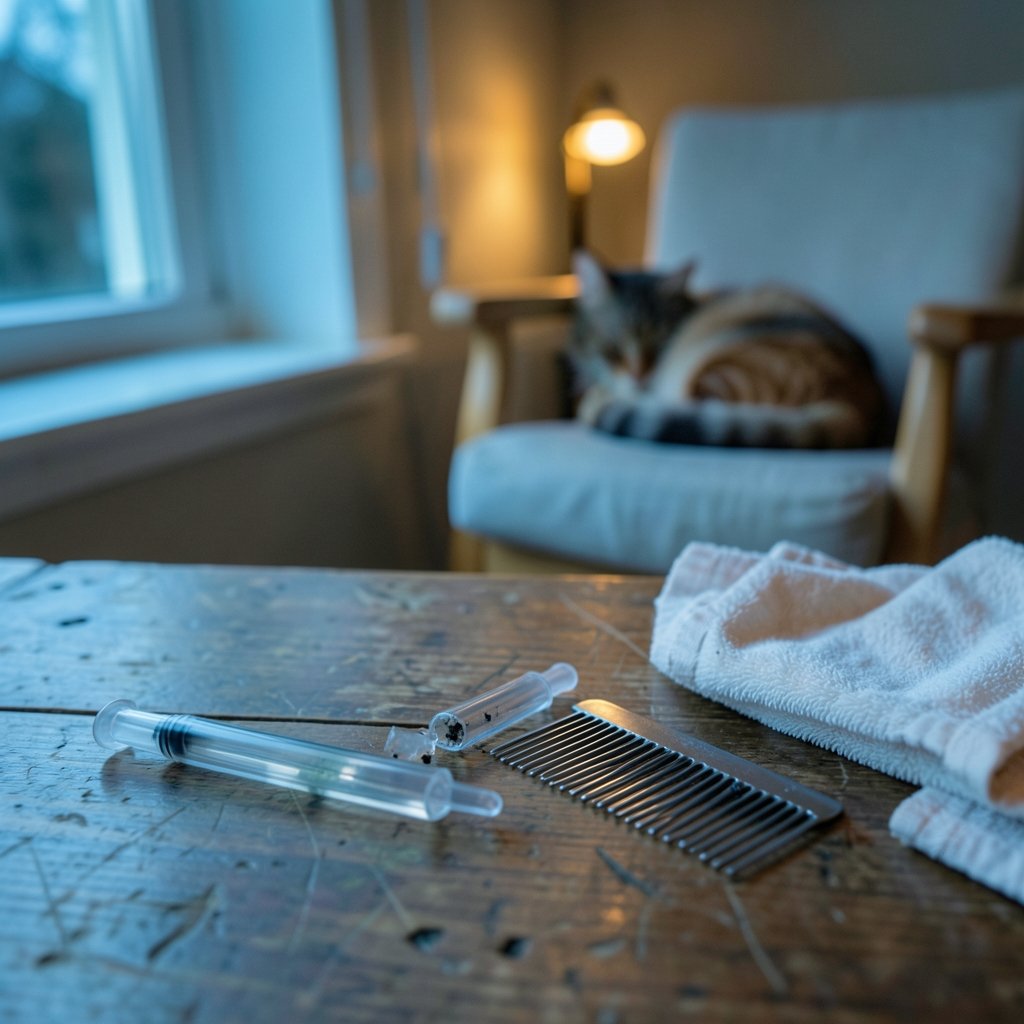
What if the flea product sitting in your cupboard right now is doing almost nothing? That is not a scare tactic. It is the reality for a lot of cat owners who buy the cheapest spot-on they can find, apply it once, and then wonder why the scratching never stops. Fleas are stubborn, they breed fast, and the products that beat them fall into a few clear categories. Understanding those categories matters far more than chasing a brand name. (About Fleas)
Why Flea Control Fails More Often Than People Expect
The cat flea, Ctenocephalides felis, is the species responsible for nearly every infestation on a household cat. A single female can lay dozens of eggs a day, and those eggs fall off the cat into carpets, bedding, and sofa cushions. That means roughly 95 percent of an infestation lives in the environment, not on the animal. Treating only the cat is like bailing water without plugging the leak.
The second reason treatments fail is application error. Spot-ons get parted fur instead of skin contact, doses get split between two cats, or a bath happens two days after application and washes the product away. The third reason is skipped months. Most flea life cycles run three weeks to several months depending on temperature and humidity, so stopping treatment in October after a quiet September almost guarantees a spring rebound.
The Main Active Ingredients, Compared

Modern flea control rests on a handful of drug families. Each works differently, and that difference explains why one product lasts a month while another lasts three.
| Active ingredient | Class | Typical duration | Prescription needed? | Notes |
|---|---|---|---|---|
| Fipronil | Phenylpyrazole | About 1 month | No (varies by country) | Kills fleas and ticks; older, widely available |
| Imidacloprid | Neonicotinoid | About 1 month | No (varies by country) | Adulticide only; often paired with a growth regulator |
| Selamectin | Avermectin | About 1 month | Usually yes | Also covers some worms and ear mites |
| Fluralaner | Isoxazoline | 8–12 weeks | Yes | Oral or topical; long residual |
| Afoxolaner | Isoxazoline | About 1 month | Yes | Oral chew; flea and tick |
| Sarolaner | Isoxazoline | About 1 month | Yes | Oral; often combined with other actives |
| Methoprene / pyriproxyfen | Insect growth regulator | Varies | No | Stops eggs and larvae; not an adulticide alone |
Two practical rules follow from that table. First, an insect growth regulator paired with an adulticide attacks both the fleas you see and the ones developing in the carpet. Second, isoxazolines deliver the longest single-dose protection, which is why veterinary clinics lean on them for cats that hate monthly handling.
Prescription Versus Over-the-Counter: The Real Difference
Over-the-counter products are not automatically weaker, and prescription products are not automatically better. The distinction is mostly about regulation and oversight. Prescription flea medicines have been reviewed for efficacy and safety at a specific dose in a specific species, and a veterinarian confirms your cat’s weight, age, and health status before dispensing.
That oversight matters most for kittens and for cats with underlying conditions. Many adulticides carry minimum age or weight limits, and some are not labeled for use in pregnancy or nursing. A vet visit also catches the mistake people make most often: using a dog product on a cat. Permethrin, a common dog flea ingredient, is severely toxic to cats and can cause tremors, seizures, and death. Never split a dog dose, never guess, and never assume “natural” means safe.
What to Look For When Choosing
A sensible buying checklist looks like this:
- Confirm the species label. The package must say cat, with a weight range that matches your cat.
- Check the duration. A monthly product and a three-month product are not interchangeable on cost per month unless you do the math.
- Decide on handling. If your cat fights topical application, an oral chew or a long-acting spot-on removes the monthly battle.
- Pair with environmental control. Vacuuming, hot washing bedding, and treating carpets with an appropriate product break the life cycle.
- Ask about household risk. If you have dogs, keep their permethrin products physically separated from the cat’s sleeping areas.
The Environmental Half of the Job
No product on a cat can outrun an untreated house. Vacuum every room, especially under furniture and along skirting boards, then seal and dispose of the bag or empty the canister outside. Wash pet bedding at a hot setting. Steam-clean carpets where possible, because heat kills eggs and larvae that vacuuming misses.
For persistent indoor infestations, an insect growth regulator spray or fogger designed for indoor flea control stops development without relying solely on insecticide. Outdoor cats and multi-pet homes usually need the longest, most consistent schedule, since reinfestation pressure never drops to zero.
Common Mistakes That Waste Money
Applying to the wrong spot. Spot-ons go on the skin at the base of the skull, where the cat cannot lick them off. Parting the fur and dabbing on top of it does nothing.
Bathing too soon. Most topical products need 48 hours to distribute through the skin’s oil layer. A bath before that window strips the protection.
Treating one cat in a multi-cat home. Every cat in the household needs coverage, even the ones that never go outside. Fleas hitch rides on shoes and clothing.
Waiting for itching before treating. Some cats show almost no scratching despite a heavy flea load. Look for flea dirt, the small dark specks that turn reddish-brown when wet on a paper towel.
Switching products every month. Rotation without a reason creates confusion about what worked. Give a correct product a fair trial of at least three months alongside environmental control.
When to Call the Vet Instead of the Shop
Some situations need professional input rather than a shelf decision. Kittens under the label’s minimum age, pregnant or nursing queens, cats with a history of seizures, and cats already showing hair loss or open sores from scratching all warrant a call. So does any cat that develops lethargy, drooling, tremors, or wobbliness after a flea product is applied. Those are signs of a possible adverse reaction, and prompt veterinary care is the right response.
Cats with flea allergy dermatitis are a special case. These cats react to flea saliva and can scratch themselves raw after a single bite. For them, consistent year-round prevention matters more than any single product choice, and a vet may add medication to calm the skin while the infestation clears. (Flea)
Matching the Product to the Cat
The best flea treatment is the one your cat will actually receive on schedule. That sounds obvious, but it reframes the decision. A slightly less potent product applied reliably every month beats a premium product applied twice and abandoned.
For an easy-going indoor cat in a low-risk home, a monthly spot-on with an added growth regulator is a reasonable, economical baseline. For a cat that hates being handled, a long-acting isoxazoline reduces the number of battles to a handful per year. For a multi-cat household with outdoor access, consistent year-round coverage plus environmental control is the only combination that holds. For kittens, follow the label age limit strictly and let a vet guide the first product.
Conclusion
There is no single best flea treatment for every cat, but there is a best approach: pick a product labeled for cats, match the duration to your cat’s tolerance for handling, treat every animal in the home, and attack the eggs and larvae in the environment at the same time. Do those four things and most infestations collapse within a couple of months. Skip any one of them and you will keep buying products that never quite finish the job.
Frequently Asked Questions
How often should I treat my cat for fleas?
Most monthly products should be reapplied every 30 days, while long-acting isoxazoline products last 8 to 12 weeks. Follow the specific label rather than a general rule. In warm climates or homes with outdoor pets, year-round treatment is usually more effective than seasonal dosing, because flea populations do not fully die off in mild winters.
Are flea collars worth using?
Modern flea collars have improved, and some deliver active ingredient slowly over several months. However, collars cover mainly the head and neck area and can be chewed or lost. They work best as part of a combined plan, not as a standalone solution for a cat with an active infestation.
Can I use a dog flea product on my cat?
No. This is one of the most dangerous mistakes in pet care. Permethrin and some related compounds are highly toxic to cats, and reactions can be severe. Always use a product specifically labeled for cats, at the correct weight range.
What if my cat keeps getting fleas after treatment?
Reinfestation almost always comes from the environment or from untreated pets in the home. Vacuum thoroughly, wash bedding hot, treat carpets, and make sure every cat and dog in the household is covered. Also confirm the product is being applied to skin, not fur, and that no bath happened within 48 hours.
Do indoor cats need flea treatment?
Yes, generally. Fleas travel indoors on shoes, clothing, and other pets, and an indoor-only cat can still develop a full infestation. Many vets recommend at least seasonal coverage for indoor cats, especially in multi-pet homes.
What are the signs of a bad reaction to a flea product?
Watch for drooling, vomiting, lethargy, wobbliness, tremors, or seizures after application. Topical products can also cause redness or hair loss at the application site. Stop using the product and contact a veterinarian promptly if any of these appear.
A Final Word on Cost and Value
Flea treatment is one of those recurring costs that rewards a little arithmetic. A cheap monthly spot-on that fails halfway through the month and needs a second application costs more than a pricier product that simply works. Do the math on cost per protected month, not cost per box, and factor in the cost of a vet visit triggered by a preventable reaction. The cheapest option is the one that ends the infestation the first time.
It also pays to buy from a reputable supplier. Counterfeit and improperly stored flea products circulate online, and a product that has baked in a hot delivery van may not perform as labeled. Your vet clinic, a licensed pharmacy, or a well-known retailer is a safer bet than a marketplace listing with no batch information.
Finally, keep a simple record. Note the product name, the active ingredient, the date applied, and any reaction. That log does two things: it prevents accidental double-dosing when two people in the household both think it is treatment day, and it gives your vet a clear history if a problem develops. In a multi-cat home, a wall calendar or a phone reminder works just as well.
Flea control is not glamorous, and it is not complicated once the pieces are in place. Label for cats, correct weight range, consistent schedule, every pet covered, environment treated, and a vet on call for the exceptions. That is the whole method — and it is the one that keeps working long after the last itchy week is forgotten.
Keep the log where you can see it. A note stuck inside a cupboard door or a shared phone reminder is enough; the point is that treatment day is visible to everyone who might reach for the box. Review the record at the end of each season and note whether the product held for its full stated duration. If fleas reappeared early, that pattern is useful information for your next vet conversation, whether it points to a handling problem, a reinfestation source, or a product that suits your cat poorly. Small records like this turn flea control from a recurring guess into a routine you can actually trust.



