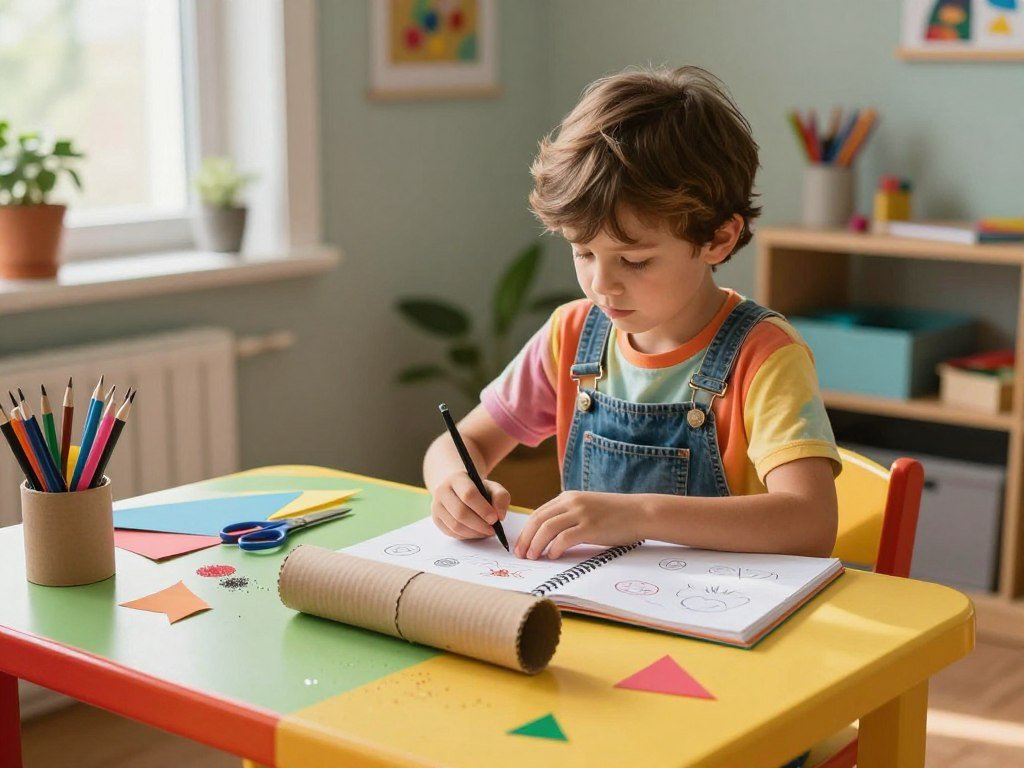
A cardboard tube, a clean can or a magazine page can become something useful with a little planning. Upcycling means turning a discarded item into a useful or decorative object instead of throwing it away. The best from best picks include low-prep decor, handy organizers, garden projects and playful builds.
These ideas give common leftovers a clear job, from holding desk supplies to starting seeds. When children cut, roll, slot or glue with age-appropriate help, a project can support fine motor skills. They can also develop fine motor control by placing small details or joining simple parts. Adults can help with tricky steps, while kids make customized choices about color, shape and finish.
Key Takeaways
- Choose a project based on the material and the job it needs to do.
- Check that reusable materials are clean, dry and sturdy.
- Match each task and tool to the child’s skill.
- Test fit and stability before adding decorations.
- Let glue and paint dry before using a finished project.
- Choose a project that uses a material you already have and leaves the child room to make it their own.
Which Best From Best Crafts Fit Your Space and Supplies?
The strongest all-purpose choices are a cereal-box divider for storage, bottle-cap artwork for a quick display and a self-watering planter for a small growing project. Best depends on the job: choose a divider for drawer order, a planter for growing, and a frame for displaying a photo.
These best waste crafts use common household materials for different tasks. The table compares ten waste craft ideas by their main material and likely use. EPA’s student and educator resources include environmental science activities about reducing, reusing and recycling waste.
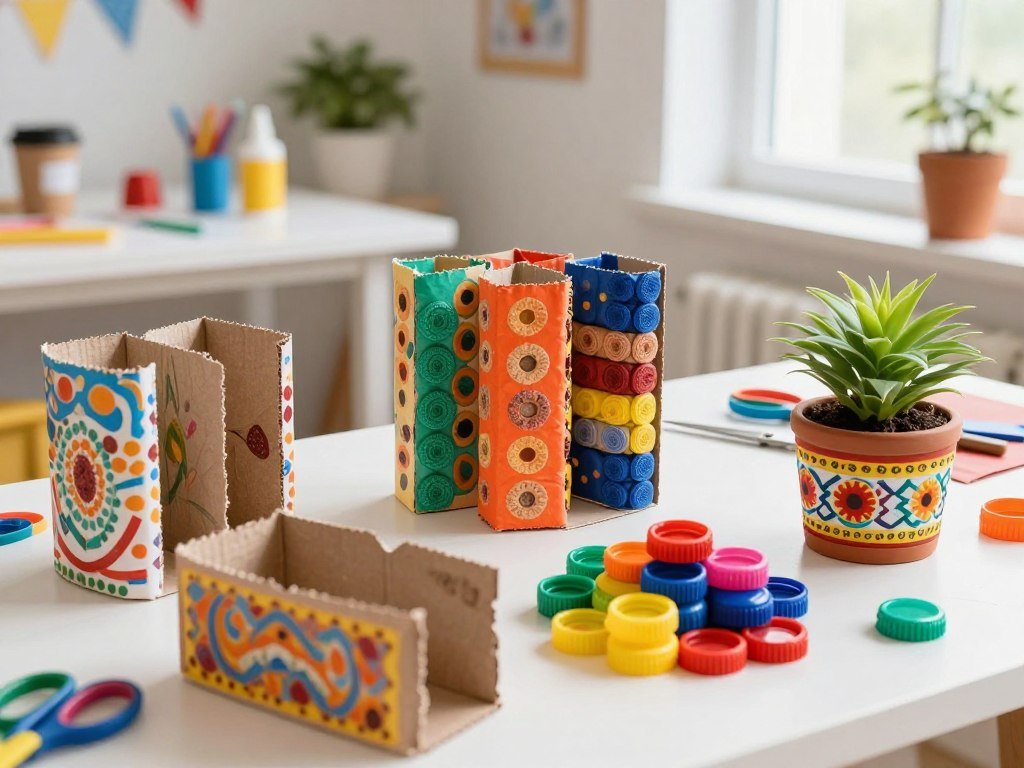
| Project pair | Main reused material | Best use |
|---|---|---|
| Cardboard tube rocket and bottle-cap art | Tube and caps | Playful display |
| Jar-lid photo frame and cereal-box drawer divider | Lid and box cardboard | Keepsake and organization |
| Paper-bead necklace and tin-can planter | Magazine paper and clean can | Wearable decor and planting |
| Egg-carton seed starter and self-watering planter | Carton and plastic bottle | Starting or watering plants |
| Coffee-can drum and paper-mache bowl | Can and paper | Music and small-item storage |
Pick by purpose first: storage needs a divider, a photo needs a frame, and a small plant needs a planter.
For an engaging best waste craft at home, match the project to a material you already have. A waste craft activity can be a bottle-cap picture, a drawer divider or a seed starter. These waste material craft ideas make it easier to choose without buying a special kit.
Before starting, check that the chosen container is clean, dry and sturdy enough for its new use.
How Can Children Use Craft Materials More Safely?
Start a children’s project with water-based supplies, age-appropriate scissors and adult oversight for cutting. Choose supplies meant for children, and avoid products with strong solvents or sprays. Toxic-Free Future recommends water-based markers, crayons, colored pencils, glue sticks, white library paste, white school glue, tape and water-based paints.
The ACMI seal is a better choice than no seal, but it does not promise zero risk. Avoid children’s craft products without an ACMI Non-Toxic seal, and remember that the seal is not a guarantee that a product is non-toxic. Pair scissors with the child’s age and ability.
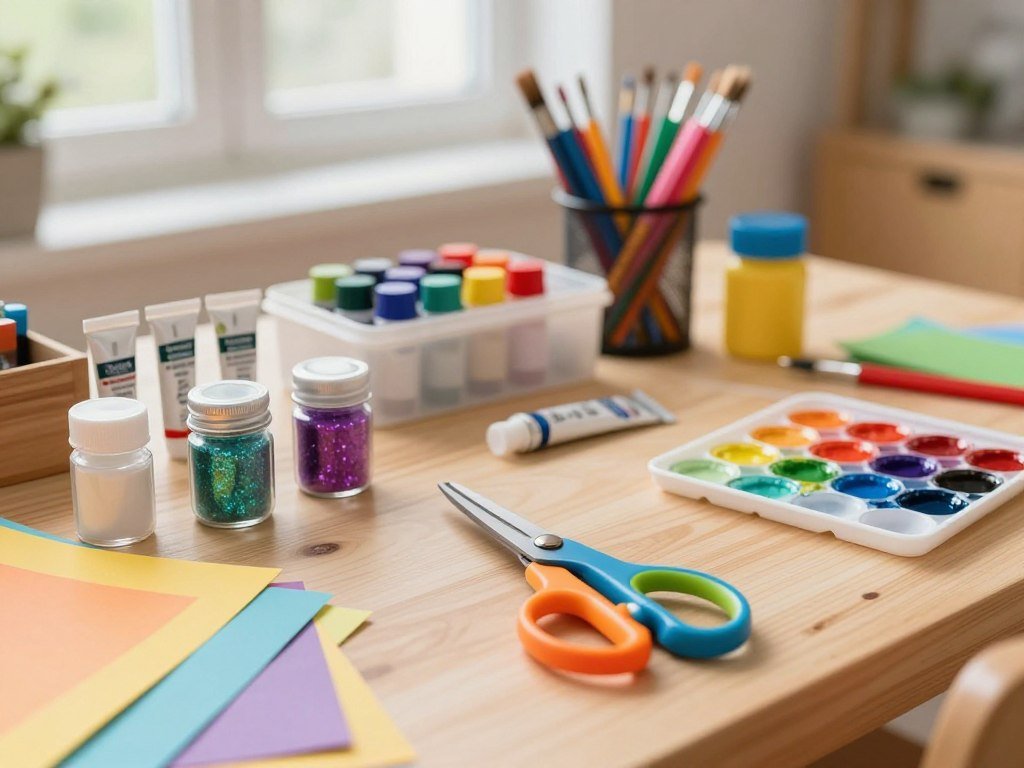
| Supply choice | Safer option | Avoid for children |
|---|---|---|
| Markers | Water-based markers | Solvent-based markers |
| Drawing tools | Crayons or colored pencils | Sharp or metal drawing pieces |
| Glue | Glue sticks, white library paste or white school glue | Spray adhesive, rubber cement, model glue, contact cement, super glue or epoxy |
| Paint | Water-based tempera, poster paint or paint pans | Oil-based paint, paint thinner, spray paint or powdered paint |
| Craft pieces | Metal-free yarn, buttons or popsicle sticks | Sharp or metal pieces |
For the materials needed best suited to young crafters, use simple tools and washable supplies. Fevicol Mrrangeela tempera and Fevicol MrFevicryl acrylic are search terms some families may see on paint labels, but check each product’s directions and warnings.
Keep a separate checklist beside the table so adults can prepare the work area before children begin.
- Water-based coloring supplies
- Scissors suited to the child
- Washable work surface
- Adult-supervised cutting
Keep products in their original containers so the label remains available during the activity.
What Can You Make From Bottles and Caps?
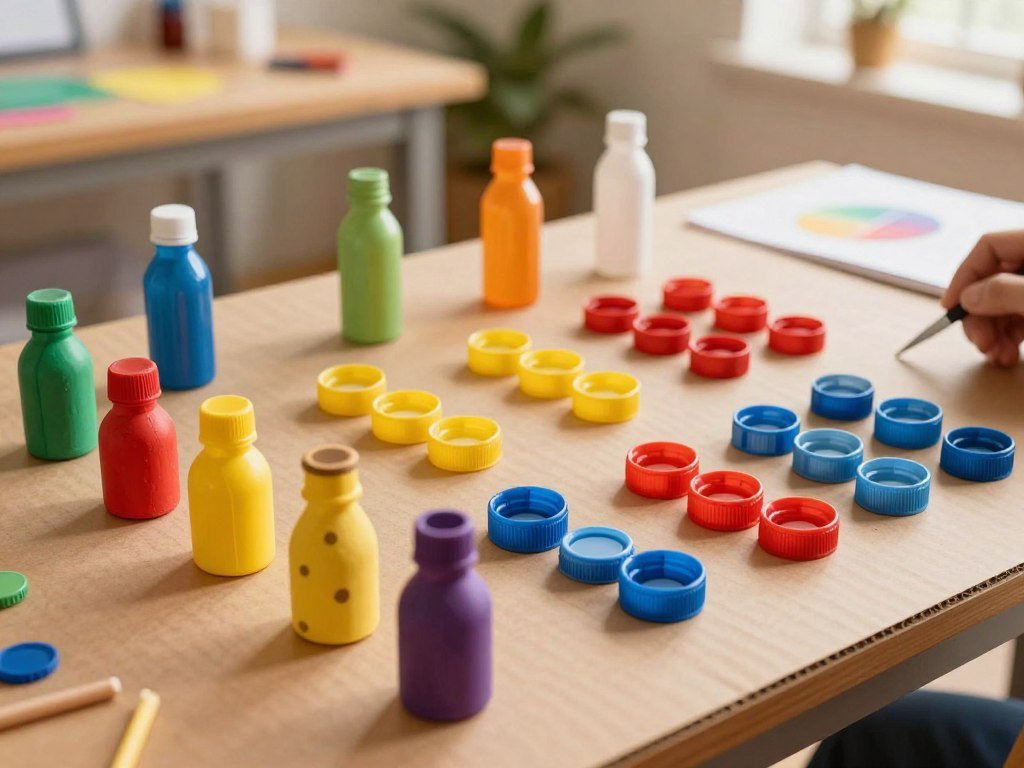
A cap collage is the quickest choice when children want to arrange bright pieces without shaping a bottle. A bottle noisemaker adds sound and movement, while the cap collage offers a simple glue-and-arrange task. Pick the build that fits the play or display space.
A full activity guide needs a stable base and a planned opening before anyone cuts or decorates a container. Plan the opening and base before decorating, especially when a build will hold something or stand upright.
Bottle crafts for play and display
For kids, best from best can mean a bottle noisemaker made with a plastic bottle, paper, ribbon, newspaper and wooden beads. Other playful bottle crafts include an alien made from a recycled glass bottle and a rocket-themed piggy bank.
A waste-paper piggy bank combines a plastic ball and corrugated sheet. You can also build an LED photo stand around a small upcycled box and an image. A plastic-bottle brush holder keeps brushes together, while a bird vase gives a waste bottle a new display role.
A cardboard tube rocket uses an empty toilet paper or paper towel roll, paint, colorful paper and glue. Aluminum foil can form an optional nose cone. Bottle-cap art uses caps glued to sturdy cardboard, with marker or paint details if desired.
Small bottle upgrades for the garden
A self-watering planter uses a plastic bottle cut in half. Invert the top into the lower section to make a reservoir, then thread a cotton wick through the neck. The wick carries water toward the growing medium.
A cotton wick through the bottle neck is the key part of this self-watering design. A bottle-cap watering spout offers another small garden helper: pierce small holes in a cap, then attach it to a filled bottle.
Have an adult make any opening or cut in a plastic bottle before a child decorates it.
Which Cardboard Projects Solve Everyday Storage and Play Needs?
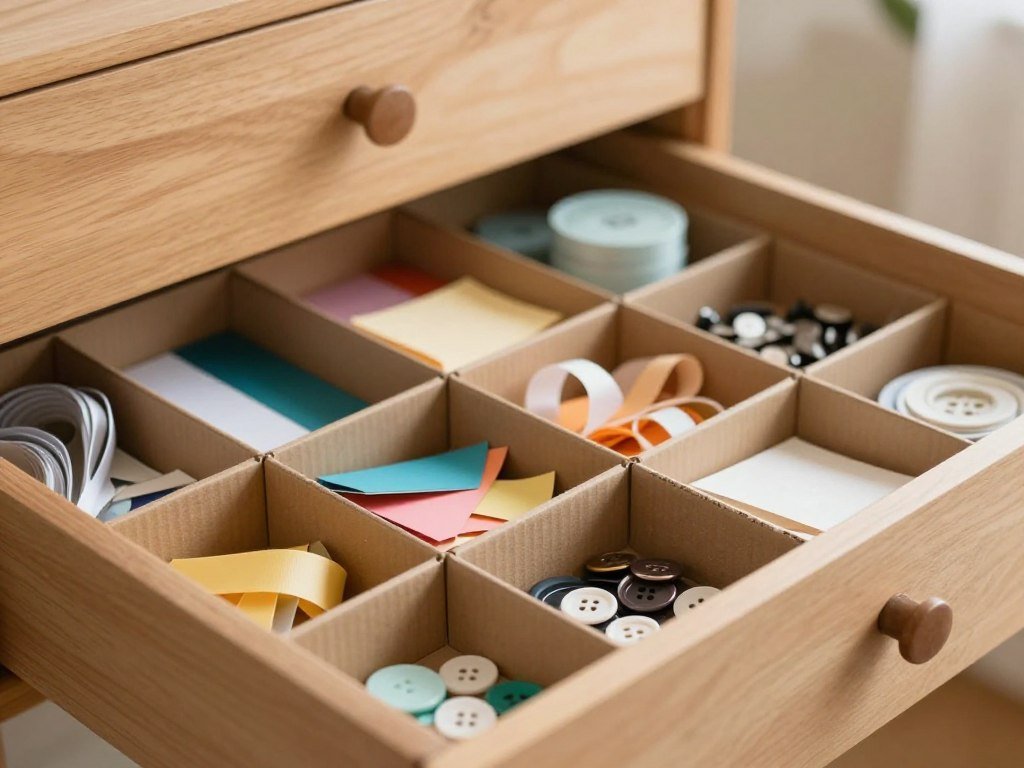
A cereal box becomes a useful divider when its cardboard is cut to the drawer’s height and slotted into a grid. Fit matters: cardboard works best when its size matches the drawer, shelf or object it will hold.
Cardboard waste crafts can solve small storage problems without a special box. Check the dimensions against the intended space before decorating, since paint or fabric cannot fix a divider that does not fit.
Organizers from boxes and cartons
Wrap a tissue box to make a basket-like storage bin. A newspaper craft box can hold small items, while a shoebox can become a school-bus diy toy box for toys or school supplies.
Cereal boxes can also become handmade journals, gift tags, templates, bookmarks and storage labels. Those uses suit thin cardboard that bends or cuts more easily than a thick shipping carton.
Cardboard gifts and tabletop creations
A reused box can become a 3D card with comic prints, and corrugated cardboard can frame a small photo. Other gift ideas include Rakhi gift boxes, owl trinket boxes and a small photo frame for a friend.
A reindeer key holder uses cord and buttons, while tissue-roll badges can use popsicle sticks. For a bus coin box, add plastic lids and a cap as details. A cardboard phone stand is another practical build.
A cardboard project earns its space when it fits the drawer, shelf or item it will hold. Test a cardboard organizer in its intended space before adding fabric, paint or other finishes.
How Do Paper Scraps Become Decor and Gifts?
Long magazine triangles can be rolled into beads, while broader magazine strips can form tubes for bowls and frames. Choose narrow strips for small pieces and broad strips for larger shapes.
Magazine tubes can also make coasters, wall art and decorative panels. Using chart papers can add a backing or bright accent, though chart paper is not required for every project.
Rolled-paper designs
To make paper beads, cut long triangles from magazine pages and roll each one around a skewer. Glue the tip in place, then let the beads dry. Apply varnish only after they have dried.
Roll magazine pages into tubes for a bowl, picture frame or coaster. Let rolled pieces dry before shaping or wearing them, so their glued ends stay in place during assembly.
Layered paper projects
A paper-mache bowl uses newspaper or magazine strips coated in glue and water over a bowl-shaped mold or balloon. Use the finished bowl for keys or jewelry, not food.
CD mosaic art uses small pieces cut from old CDs. Arrange them on a frame, flower pot, coaster or canvas for a bright, reflective surface.
A useful activity guide includes drying time as a real step, without guessing how long a project needs. Label a paper-mache bowl for keys or jewelry so nobody mistakes it for food-safe dishware.
What Can Clean Cans and Jar Lids Become?
A clean food tin can be a pencil pot, herb planter, paintbrush holder, utensil holder or mini vase. Match the container to the task, since one can may serve a desk or a small plant.
A tin-can planter uses a clean, dry can decorated with paint, stickers or washi tape. Add soil and a small plant or succulent. Check the rim for sharp edges before using any can as a container.
| Reused item | Project | Useful for |
|---|---|---|
| Cleaned food tin | Pencil pot | Desk supplies |
| Cleaned food tin | Herb planter | Small plant |
| Cleaned food tin | Paintbrush holder | Art supplies |
| Cleaned food tin | Mini vase | Display |
| Old jar lid | Photo frame | Keepsake |
A tin-can pencil pot starts with a tin, a file and paint. An adult should file the can’s edge as part of that project. Clean food tins can also hold kitchen utensils or serve as small planters.
A jar-lid photo frame uses an old lid, paint, a photo and glue. Attach an optional magnet to the back to display it on a magnetic surface. It makes a small keepsake from a lid that might otherwise be discarded.
Clean tins can work as a flower vase home accent, but choose one with a sound base. Check the rim for sharp edges before using any can as a container.
Which Recycled Projects Work for a Small Garden?
An egg carton and compost make a compact starting point when the goal is to begin seeds. For seed starting, the cardboard carton holds separate spaces for seedlings as they begin to grow.
A small garden can also use a wick-fed bottle planter, a decorated tin-can planter or a bottle-cap watering spout. These are small-scale project choices, not a promise that every plant will thrive.
Starting seeds in reused containers
An egg-carton seed starter pairs a cardboard egg carton with compost. The carton offers a simple material match for a waste craft activity with a garden use.
Each carton section can begin a seedling, making it easy to keep small starts apart. Think of the carton as a starting container, not a guarantee of plant success.
Watering and planting helpers
The wick-fed bottle planter draws water from its lower reservoir through a cotton wick. A decorated tin-can planter holds soil and a small plant, while a pierced-cap bottle can help water a container.
Pick among them based on the task: starting seeds, holding a small plant or giving a container water. Keep the project small enough for the materials and space you have.
Any planter with drainage or a water reservoir can spill. Keep it on a surface that can tolerate spills.
How Can Recyclables Become Toys and Instruments?
Egg-carton creatures suit children who enjoy painting separate shapes and adding small details. Building and testing these projects can develop fine motor skills when the task matches the child’s ability.
Cutting, slotting, rolling and placing small decorations ask children to control their hands as they work. The right project gives them room to try each task without making every step difficult.
Toy builds from boxes
Cut individual cups from an egg carton and add paint, googly eyes, beads or pipe cleaners to create creatures. Corrugated-box block toys give children pieces to stack and arrange.
A shoebox school bus can use sponge details, while a tabletop plane can combine upcycled boxes, craft sticks and buttons. These builds turn familiar shapes into toys with distinct parts.
- Carton creatures
- Cardboard blocks
- Shoebox bus
- Coffee-can drum
Instruments from cans and bands
An empty coffee can can become a drum. A shoebox and rubber bands can make a simple string instrument for plucking and listening.
Children can test how different band tension changes the sound. The test gives them a way to compare the instrument’s parts through play, without needing a measured result.
Small toy trinkets upcycled from cartons or boxes can have loose pieces. Check each finished toy for loose pieces before handing it over for play.
What Useful Home Accents Can You Make From Fabric and Glass?
Two fabric squares knotted around a cushion pad make a no-sew cover without requiring a needle. For decor, fabric can also cover shipping-box cardboard to create a wall panel.
Wooden-stick-and-shell mirror frames add texture around a reflective surface. A cork noticeboard is another unique best out-of-waste idea for home decor.
Soft furnishings and wall displays
Cut two fabric squares slightly larger than a cushion pad. Insert the pad, then knot the square edges around it to hold the cover in place.
Wrap shipping-box cardboard in fabric for wall decor. A cardboard flower press is another way to reuse shipping-box material, while wooden sticks and shells can frame a mirror.
Decorative pieces with extra care
A wine-bottle candle holder starts with a clean bottle with its label removed. Decorate the glass, then insert a tall candle. Glass and flame projects require adult handling and supervision.
Felt sheets and tissue rolls can form sanitizer pouches. Foam and cardboard can also become wall decor, with layers arranged to create a raised design.
Keep a lit candle on a stable, heat-safe surface and within an adult’s view.
How Can You Turn Scraps Into Outdoor Projects?
A toilet-paper roll, birdseed, nut butter and twine are the basic materials for a simple hanging feeder. For a feeder, spread nut butter on the roll, press birdseed onto it, then hang it in a tree with twine.
People with nut allergies should choose a suitable alternative instead of nut butter. Check local guidance about feeding wildlife before placing food outdoors.
A feeder is a small waste material craft that puts a household tube to outdoor use. Its simple shape also makes it easy to prepare with materials already on hand.
Fire starters are for adults, not unsupervised children. They can use cardboard tubes, dryer lint and wax paper or newspaper, but they involve fire-related materials.
Cardboard tubes, dryer lint and wax paper are materials used in DIY fire starters. Keep that project separate from children’s outdoor crafts, and do not treat it as a play activity.
Take down a feeder that becomes wet, dirty or difficult to keep clean.
Which School Projects Teach Reuse and Science?
A school project is strongest when students can explain both what they made and how reusing the material helped. Connect the build to a process, such as reducing, reusing or recycling waste.
The EPA’s Science Fair Fun booklet gives students in grades 6-8 environmental science project ideas about reducing, reusing and recycling waste materials.
Project themes for class or a science fair
Grades 6-8 students can connect a science-fair activity to reducing, reusing or recycling waste. A cardboard flower press made from shipping-box cardboard offers an object to investigate or display.
A strong school project explains a process, not just a decorated object. Students can describe how the press holds flowers or how reuse shaped the design.
Building a display with reused materials
A Kargil Vijay Diwas moving tabletop can use corrugated sheet and a barbecue stick. A cardboard rocket display offers another way to build a subject from reused material.
A 3D card can combine an upcycled box with comic prints. A small upcycled box and an image can also form a photo stand for a personal display.
| School project | Reused materials | Learning or display focus |
|---|---|---|
| Flower press | Shipping-box cardboard | Pressing and displaying flowers |
| Moving tabletop | Corrugated sheet and barbecue stick | Movement |
| 3D card | Upcycled box and comic prints | Layered design |
| Rocket display | Cardboard tube and colorful paper | Design and reuse |
| Photo stand | Small upcycled box and image | Personal display |
Ask the teacher whether the finished project needs to demonstrate a process, a design or both.
How Do You Plan a Waste-Material Craft From Start to Finish?
Plan backward from the object’s job, because its size and stability determine which scrap is useful. Start with the finished use, then choose materials that suit its shape and purpose.
A detailed steps full activity guide should mark adult-help cuts or holes and note when pieces must dry before use. These details keep assembly from turning into a rushed guess.
- Choose the finished use.
- Match it to a clean, dry reusable item.
- Sketch the size and openings.
- Gather suitable adhesives and decorations.
- Assemble, dry and test the object.
Check the fit before decorating. A common mistake is covering a container before confirming that it fits its shelf, drawer or plant.
For a full activity guide, make the order clear: decide the job, check the size, then gather supplies. A simple sketch can show where pieces join and where an opening belongs.
Detailed steps should also name the points where a cut or hole needs adult help. They should mark when glue or paint needs to dry before the object gets handled or tested.
Make a quick paper or cardboard template whenever the final dimensions need to fit another object.
How Can a Project Fit a Child’s Age and Skill?
Match the child to the task, not just the finished object, by deciding who will cut, measure and assemble each part. Adult judgment and the child’s demonstrated ability matter more than an exact age label.
Sorting shapes, controlling glue and placing small details can develop fine motor skills when the child is ready. Choose the task by what the child can do with control, then adjust the build around that skill.
Younger children and adult-led making
For younger children, an adult can prepare pieces for gluing, coloring and placing larger decorations. The child can choose colors and arrange parts without managing each cut.
A simple build can still feel personal when children decide where pieces go. Keep the task focused on actions they can complete with confidence.
Older children and more involved builds
Older children can try supervised measuring, rolling paper beads and slotting cardboard dividers. A multi-part tabletop build can also let them plan how the pieces fit together.
Adults can adjust the number of steps and the size of each part. An activity guide should make clear who will measure, cut and assemble each piece.
If a child cannot use a tool with control, have an adult prepare the pieces and let the child handle decoration.
How Should You Sort and Store Recyclable Craft Materials?
A small, sorted supply is more useful than a large box of mixed scraps. Group materials by type and condition so you can find the right piece without sorting everything again.
Separate paper and cardboard, plastic containers and caps, clean tins and lids, and fabric or yarn. Set aside anything dirty, damp or damaged.
Sort by material and condition
Keep similar items together and separate small parts from flat pieces. Check what you have before starting a waste craft activity, rather than collecting every scrap that might someday be useful.
Food residue or moisture can make an apparently reusable container unsuitable for storage. Only keep materials that remain clean and dry.
Keep a small project-ready supply
Materials needed best means collecting only what a chosen project uses. A few sorted supplies are easier to handle than a bin filled with unrelated items.
- Clean and fully dry containers
- Flattenable cardboard
- Sorted caps and buttons
- Labeled bags or bins for small parts
Recheck stored materials before crafting and discard pieces that have become damp or contaminated.
What Common Mistakes Make Recycled Crafts Less Useful?
A craft can look finished and still fail if its base tips, its joints loosen or it does not fit the intended space. Test first, then decorate once the basic shape works.
Weak cardboard joints can sag, oversized decorations can unbalance a small object, and a poorly matched container can fail its intended job. Check fit and stability before adding decorations, then let glue or paint dry before handling the craft.
Test the base and joints before finishing a craft, or its decorations may hide a weak design.
A cardboard faux cactus can give a child a cactus-like display without the prickly hazards of a real cactus. Recycled cardboard can be cut and painted to make the shape.
Fire starters are an adult-use project made with cardboard tubes, dryer lint and wax paper or newspaper. They are not a children’s activity, and they should not be treated as a toy.
- Weak joints can let cardboard parts sag.
- Large decorations can tip a small base.
- A mismatched container may not serve its purpose.
- Wet glue or paint can mark hands and surfaces.
Test the object gently before putting it to work or displaying it.
Conclusion
The most satisfying upcycle is the one that gives an everyday leftover a job you actually need. A clean material and a clear purpose make it easier to choose a useful project.
Pick one idea that fits your available time, space and supplies. A small start can lead to crafts creative learning, especially when a child helps shape the final design.
Set aside one clean, dry material today and sketch what you want it to become.
FAQ
What are the easiest best out of waste crafts for kids?
Bottle-cap art, a cardboard tube rocket and an egg-carton creature are easy choices for many children. Bottle caps can be arranged and glued onto a sturdy base, while an adult can prepare pieces for the rocket or creature. Choose a task the child can manage, and have an adult handle cutting. Keep the first project small enough to finish in one sitting.
How do you make a self-watering planter from a plastic bottle?
Cut the bottle in half, invert the top into the bottom reservoir and thread a cotton wick through the neck. The lower half holds water, while the wick carries it toward the growing medium in the upper section. An adult should make the cut and check that the two halves sit securely. Set the planter on a surface that can handle spills.
Can a paper-mache bowl hold food?
No, a paper-mache bowl should hold keys or jewelry, not food. Newspaper or magazine strips coated in glue and water form a craft surface, not food-safe dishware. A bowl-shaped mold or balloon can shape the project as it dries. Label the finished bowl clearly so nobody mistakes it for a serving dish.
What can I make from cereal boxes besides drawer dividers?
Cereal boxes can become handmade journals, gift tags, templates, bookmarks and storage labels. Their thin cardboard is useful for small projects that need pieces cut or folded by hand. You can also use it for a gift box or a simple photo frame. Check that each piece is clean and dry before you begin.
Are ACMI Non-Toxic seals a guarantee that children’s art supplies are non-toxic?
No, the ACMI seal is not a guarantee that a product is non-toxic or risk-free. It is a better choice than buying a children’s craft product with no seal, but you should still read the label. Follow the product directions and keep the original container nearby. Match supplies and tools to the child’s ability.
How can I make a recycled-material project suitable for a school science fair?
Connect the project to reducing, reusing or recycling, then have students explain the process or design it demonstrates. A flower press can show how cardboard helps hold flowers for display. Students can also describe how reused materials shaped a model or moving tabletop. Check the assignment so the finished work meets the teacher’s goal.