
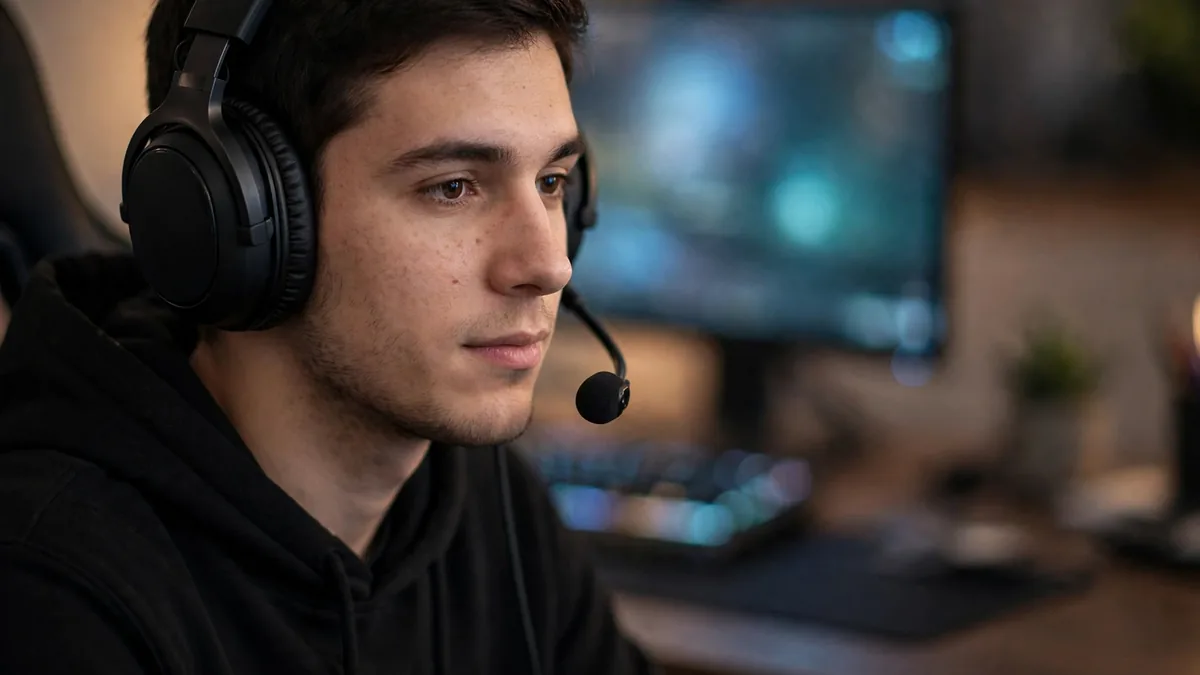
The best headphones for gaming in 2027 are the ones that let you hear the game before you see it. The best headphones for gaming combine precise spatial audio, a microphone your teammates can actually understand, and comfort that lasts through a long session. A good gaming headset is not a luxury extra; it is the difference between hearing footsteps behind you in time and finding out about them from the kill screen.
Gaming headsets have improved sharply in the last few years. Wireless latency is now low enough that competitive players can trust it, battery life regularly passes 40 hours, and spatial audio has moved from a gimmick to a genuine advantage in shooters and open-world games. At the same time, the market is crowded, and many headsets look similar while sounding very different.
This guide compares eight gaming headsets that are genuinely good in 2027, from premium wireless flagships to strong mid-range options. Every pick was judged on sound quality, spatial audio, microphone clarity, comfort, battery life, and how well it works across PC, PlayStation, Xbox, and Nintendo Switch. Prices are approximate starting prices, so check current pricing before you buy.
Key takeaways
- The SteelSeries Arctis Nova Pro Wireless is the best overall gaming headset, with excellent sound, a swappable battery, and strong spatial audio.
- The HyperX Cloud Alpha Wireless has the best battery life here, at around 300 hours on a single charge.
- The Razer BlackShark V2 Pro is the best choice for competitive shooters, with clear positional audio and a sharp microphone.
- Check platform compatibility before buying, since some headsets work fully on PC but lose features on PlayStation or Xbox.
- Comfort matters as much as sound, because a headset that hurts after an hour will sit in a drawer.
At a glance: the shortlist
| Product | Best for | Starting price | Standout limit |
|---|---|---|---|
| SteelSeries Arctis Nova Pro Wireless | Best overall | From $349 | Premium price |
| HyperX Cloud Alpha Wireless | Battery life | From $199 | No Bluetooth |
| Razer BlackShark V2 Pro | Competitive play | From $199 | Fewer extras than rivals |
| Logitech G Pro X 2 Lightspeed | Esports pros | From $249 | Expensive for casual players |
| Corsair Virtuoso RGB Wireless XT | Premium sound | From $269 | Heavier than rivals |
| Turtle Beach Stealth 700 Gen 3 | Console gaming | From $199 | Software can be fiddly |
| Astro A50 X | Multi-platform | From $379 | Very expensive |
| SteelSeries Arctis Nova 7 | Mid-range value | From $179 | Microphone is good, not great |
SteelSeries Arctis Nova Pro Wireless — Best overall
The SteelSeries Arctis Nova Pro Wireless is the most complete gaming headset you can buy in 2027. Its sound is detailed and well balanced, with strong bass that never drowns out footsteps or dialogue, and the 360-degree spatial audio gives a clear sense of direction in competitive games. The headset also handles music and films well, so it works as an everyday headset too.

The standout feature is the swappable battery system. Two batteries are included, and one charges in the base station while the other powers the headset, so you effectively never run out of charge. The base station also works as a DAC with a display for adjusting volume and equaliser settings. Comfort is excellent, with a suspension headband that spreads the weight evenly, and the retractable microphone is clear enough for team chat and streaming.
Pros: Excellent sound and spatial audio; swappable batteries; comfortable suspension headband; clear retractable microphone.
Cons: Premium price; base station takes up desk space; the design is understated for some tastes.
HyperX Cloud Alpha Wireless — Best for battery life
The HyperX Cloud Alpha Wireless has a battery life that borders on absurd: around 300 hours on a single charge. That means weeks of gaming between charges for most players, and the headset never becomes a chore to keep powered. The sound is warm and punchy, with dual-chamber drivers that keep bass and mid-range frequencies clean and separate.
Pros: Around 300 hours of battery life; comfortable memory-foam earcups; solid build; clear detachable microphone.
Cons: No Bluetooth; no active noise cancelling; the design is plain.
Razer BlackShark V2 Pro — Best for competitive play
The Razer BlackShark V2 Pro is built for players who care about winning first and everything else second. Its spatial audio is precise, making it easy to judge the direction and distance of footsteps, reloads, and gunfire, which is exactly what competitive shooters demand. The sound profile is tuned for clarity rather than heavy bass, so important cues never get lost.
Pros: Precise positional audio; excellent microphone; light and comfortable; 70-hour battery.
Cons: Fewer premium extras than rivals; bass is lighter than some players prefer; no Xbox support on this model.
Logitech G Pro X 2 Lightspeed — Best for esports pros
The Logitech G Pro X 2 Lightspeed is the headset many professional players actually use, and it is easy to hear why. The graphene drivers deliver detailed, accurate sound with very low distortion, and the wireless connection is fast and stable enough for tournament play. The sound is neutral rather than bass-heavy, which suits players who want to hear exactly what the game is doing.
Pros: Accurate, detailed sound; tournament-grade wireless; comfortable for long sessions; works across platforms.
Cons: Expensive for casual players; neutral sound may feel flat for films; no active noise cancelling.
Corsair Virtuoso RGB Wireless XT — Best for premium sound
The Corsair Virtuoso RGB Wireless XT is the pick for players who want their headset to sound as good with music and films as it does in games. The high-resolution audio support and detailed drivers give a rich, spacious sound, and the spatial audio works well in open-world and cinematic games. The aluminium build looks and feels premium, and the RGB lighting adds a touch of style to a gaming desk.
Pros: Rich, detailed sound; premium aluminium build; excellent microphone for streaming; Bluetooth and wireless included.
Cons: Shorter battery life; heavier than rivals; premium price.
Turtle Beach Stealth 700 Gen 3 — Best for console gaming
The Turtle Beach Stealth 700 Gen 3 is made for console players first, with versions for PlayStation and Xbox that connect directly without extra dongles. The sound is punchy and immersive, with strong bass that suits action games, and the spatial audio helps with direction in shooters. The headset also works on PC and mobile over Bluetooth, so it covers most of a player’s devices.
Pros: Great for PlayStation and Xbox; 80-hour battery; strong bass; flip-to-mute microphone.
Cons: Companion app can be fiddly; the design is bulky; sound is bass-heavy for music.
Astro A50 X — Best for multi-platform players
The Astro A50 X is the headset for players who own more than one console and a PC. Its base station switches between PlayStation, Xbox, and PC at the press of a button, with HDMI video pass-through that keeps the setup simple. That alone makes it worth considering for a multi-platform living room, where swapping cables between systems is a daily annoyance.
Pros: One-button switching between PC, PlayStation, and Xbox; excellent sound; clear microphone; premium build.
Cons: Very expensive; 24-hour battery is shorter than rivals; the base station is large.
SteelSeries Arctis Nova 7 — Best mid-range value
The SteelSeries Arctis Nova 7 brings much of what makes the Nova Pro great down to a more affordable price. The sound is clear and well balanced, the spatial audio works well in shooters, and the headset connects to PC, PlayStation, Switch, and mobile over 2.4 GHz wireless or Bluetooth. Simultaneous wireless and Bluetooth means you can hear game audio and take a phone call at the same time.
Pros: Great value; works across PC, console, and mobile; simultaneous wireless and Bluetooth; comfortable suspension headband.
Cons: Microphone is good rather than great; no swappable battery; plastic build feels less premium.
How to choose
Start with your platform, because compatibility is the easiest mistake to make. Some headsets work fully on PC but lose features on Xbox or PlayStation, and a few models are sold in separate versions for each console. If you play on several platforms, look for a headset with 2.4 GHz wireless, Bluetooth, and a wired option.
Next, decide what matters most in the sound. Competitive shooter players should prioritise clear positional audio and a sound profile that highlights footsteps and reloads, while players who enjoy open-world and story games may prefer a richer, more cinematic sound. A good microphone matters too, since your team can only act on callouts they can hear clearly, and the microphone quality in our guide to the best headphones for podcasting shows what clear voice pickup should sound like. Finally, weigh comfort and battery life together: a headset under 300 grams with at least 30 hours of battery will handle long sessions without becoming a distraction, and budget wireless options such as those in our guide to the best wireless headphones under $100 prove that good sound does not have to cost a fortune.
Checklist: before you buy
- Confirm the exact model works fully on your platform, whether that is PC, PlayStation, Xbox, or Switch.
- Test the headset for at least an hour to check comfort, especially the clamping force and earcup heat.
- Check battery life with spatial audio on, since advertised figures often assume it is off.
- Make sure the microphone is clear in a real game, not just in a quiet room.
- Look for simultaneous wireless and Bluetooth if you take calls while you play.
- Keep the receipt and the return policy, since fit and sound preference vary from person to person.
Frequently asked questions
Are wireless gaming headsets as good as wired ones?
Yes, for most players. Wired still wins for absolute reliability and for players who never want to think about charging, but wireless is now the default choice for most gamers.
Do I need spatial audio for gaming?
It helps a lot in competitive games, where hearing the direction of footsteps or gunfire gives you a real advantage. It is less important for casual and puzzle games, but since most good gaming headsets now include it, there is little reason to buy one without it.
Can I use a gaming headset for music and calls?
Yes, and the best ones on this list handle music well, with detailed sound and comfortable fits. Their microphones are also usually better than those on music headphones, which helps on work calls.
How much should I spend on a gaming headset?
For most players, between $179 and $249 covers the sweet spot, with clear sound, good microphones, and long battery life. Spending more buys premium features like swappable batteries, multi-platform base stations, and higher-resolution audio, while spending less can still get you a solid headset if you choose a model with a good microphone and comfortable fit.
Do gaming headsets work on PlayStation and Xbox?
Many do, but not all, and some are sold in separate versions for each console. Always check the exact model against your console before buying, and be careful with listings that mention only one platform.
What is the best gaming headset for long sessions?
Look for a light headset with a suspension or well-padded headband, breathable earcups, and at least 30 hours of battery life. The SteelSeries Arctis Nova Pro Wireless and the HyperX Cloud Alpha Wireless are both excellent for long sessions, for different reasons: the first for its comfort and swappable batteries, the second for its huge battery life and plush earcups. If you play in a noisy room, a headset with good isolation, like those in our guide to the best noise-cancelling headphones under $150, can also help you stay focused.
The bottom line
For most players, the SteelSeries Arctis Nova Pro Wireless is the best gaming headset in 2027, because it combines excellent sound, strong spatial audio, a clear microphone, and a swappable battery system that removes charging from the equation. Competitive players should look at the Razer BlackShark V2 Pro, while the HyperX Cloud Alpha Wireless suits anyone who hates charging.
Whatever you choose, match the headset to your platform first, then to the games you play most. Check current pricing before you buy, and test the headset in real games during the return window.



