Steam’s indie library has a strong pick whether you want a sprawling world, a quick laugh, or a challenge that keeps changing. The best indie games on Steam can make that choice feel wide, especially when your free time shifts from week to week. This 2026 selection spans established favorites and newer releases, with action, co-op, strategy, puzzles, and quieter experiences. Each pick suits a different kind of player, so no single title needs to fit everyone.
Your available time matters as much as genre. A demanding adventure may reward long sessions, while a short comedy can fit one evening. Some games also ask you to learn systems, plan with friends, or accept ongoing changes during development. These differences shape whether you will enjoy starting a new release or leave it untouched in your library. The recommendations below pair each game with the kind of play it supports best.
Use the genre and session-length clues in each recommendation to narrow the choice to a game you will genuinely want to start.
Key Takeaways
- Choose a game by its core activity, not its score alone.
- Match session length to the time you can give it.
- Pick co-op games around your group’s preferred pace.
- Early access suits players who accept ongoing development.
- Check Steam pages for current release and system details.
How to Choose the Best Indie Games on Steam
The quickest way to find a strong indie pick is to match its core loop to the kind of time you want to spend. Start with the activity, then narrow by difficulty, story, and whether you want company. A genre label can help, but two games in the same category may ask for very different habits.
Choose by your preferred play style and available time before comparing reviews. Steam’s tags help you browse genres, filter searches, and find related titles through its Steam tags documentation. If you are also planning a PC upgrade, this budget gaming PC guide covers hardware choices.
| Genre | Typical play loop | Best fit | Example titles |
|---|---|---|---|
| Metroidvania | Explore, gain abilities, revisit routes | Patient players who enjoy unlocking paths | Hollow Knight, Ori and the Blind Forest |
| Farming and life sim | Plan daily tasks and build relationships | Players who like gentle, self-set goals | Stardew Valley, Fields of Mistria |
| Sandbox adventure | Gather, craft, build, and explore | Curious players who make their own goals | Terraria, Core Keeper |
| Roguelike | Play a run, learn, then try again | Players who enjoy changing challenges | Hades II, Slay the Spire |
| Narrative RPG | Meet characters and make story choices | Players who value dialogue and role-play | Disco Elysium, Undertale |
Hollow Knight, Stardew Valley, and Terraria remain sensible all-time starting points. They arrived in 2017, 2016, and 2011, respectively, and still show how varied indie games can be. This 2026 selection also includes newer releases, so it can help if you have already played those familiar favorites.
Use this five-point checklist before you choose:
- Challenge: Do you want a demanding test or a forgiving pace?
- Session length: Will you play for minutes, hours, or many nights?
- Story focus: Do you want a clear plot or room to make goals?
- Company: Are you playing alone or with a group?
- Early access: Are ongoing changes acceptable to you?
Steam sale discounts change over time, so check the current listing and wishlist games you may want later. A high review count can signal broad interest, yet it cannot tell you whether the core activity suits your taste.
A strong review score cannot tell you whether a game’s daily play will suit your own taste.
Review counts are useful context, but they cannot replace the genre, activity, and play-time clues that matter to you.
Does Hollow Knight Fit Players Who Want a Demanding Metroidvania?
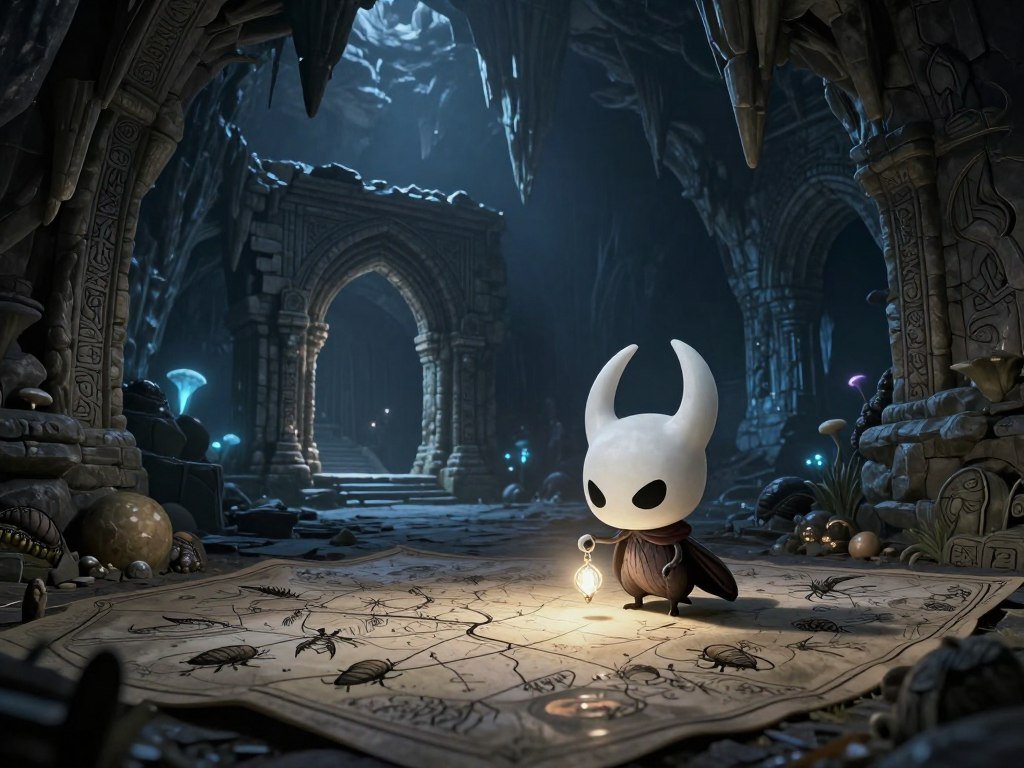
Hollow Knight is a strong choice if you enjoy a demanding 2D adventure that opens up as you explore. The game takes place in an underground insect kingdom, where careful exploration leads to new areas and power-ups. It released in 2017 and remains a notable indie game for players who like combat with a learning curve.
Expect tough boss fights and a world that does not explain every route. Its combat rewards timing and attention, rather than button-mashing through each room. Bosses ask you to study attack patterns, then adjust your movement when a fight changes pace.
Why it remains a notable indie video game on Steam
Hollow Knight has earned a lasting place among the best indie video games on Steam because its challenges connect to exploration. Each victory can make the next stretch feel earned, especially when a boss blocks a route you want to see. Players who enjoy practice may also find achievements that mark progress beyond the main path.
The game’s areas feel distinct, and their routes connect in ways that reward memory. You may pass a sealed door early, then return with a new skill and understand how the map fits together. That sense of discovery gives the game purpose beyond its hardest fights.
Its map does not always point you toward the next useful room. You may need to pause, check a landmark, and decide which path deserves another attempt. That small act of planning can make the world feel like a place you are learning, not a list of errands.
What its exploration asks of players
The interconnected map asks you to remember landmarks and accept that some paths remain closed for a while. Items and power-ups can change how you move or fight, giving earlier rooms a new purpose. This structure suits players who like to revisit places with better tools.
The tradeoff is patience. A wrong turn can add travel time, and a difficult encounter may take several attempts. Those moments feel rewarding if you like building knowledge through play, but they can slow down a session when you want a clear route.
Pick it when learning a world through repeated exploration sounds rewarding rather than exhausting.
Is Stardew Valley the Right Cozy Farming Game?
Stardew Valley fits players who want to build a routine at their own pace and make a small community feel familiar. The farming and life simulator gives you room to choose how each day unfolds. It released in 2016, and its appeal comes from goals you set across farming, relationships, and other daily activities.
You do not need to follow one fixed route to make progress. A day can center on crops, visits, fishing, or another task that catches your interest. The game gives structure, but it does not require you to optimize every system at once.
| Play style | Main activity | Source of progression | Best-fit player |
|---|---|---|---|
| Farming routine | Plant crops and tend animals | Harvests and farm upgrades | Players who like visible daily results |
| Relationship-focused play | Talk with townspeople and give gifts | Closer bonds with characters | Players drawn to community stories |
| Open-ended daily planning | Mix chores, fishing, and exploration | Skills, discoveries, and chosen goals | Players who enjoy changing plans each day |
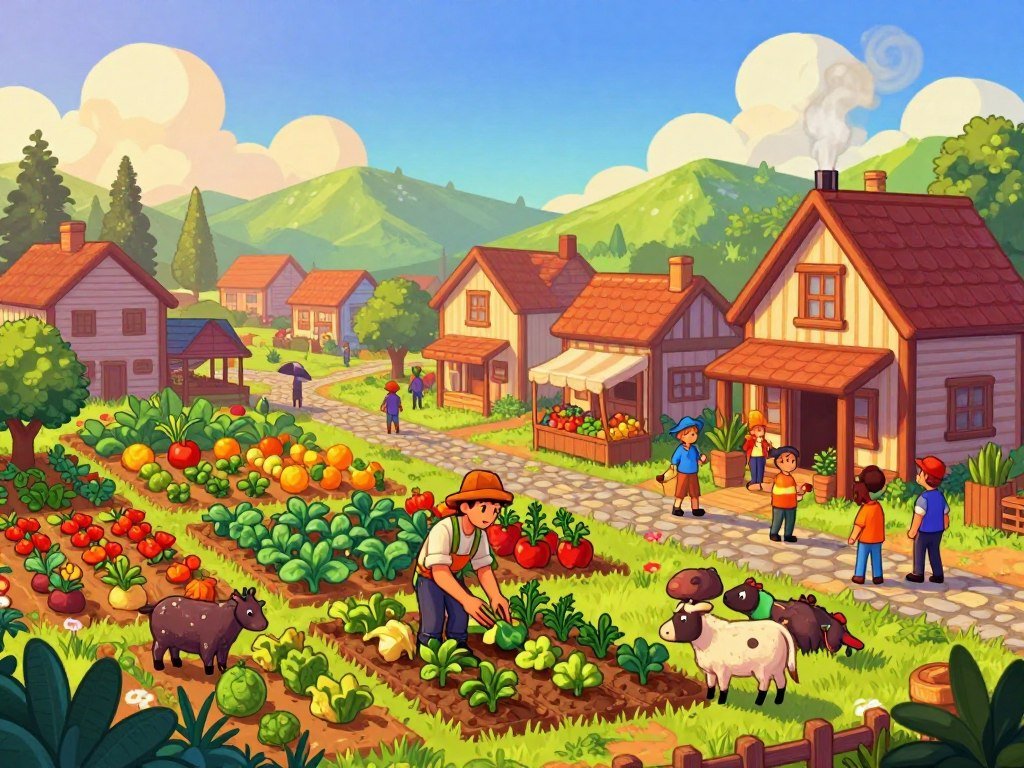
The game fits when a personal routine feels more appealing than a strict mission list. You can decide that one day is for planting and another is for getting to know a neighbor. Small goals add up, even when you leave other systems alone.
The characters help the town feel lived in because their relationships grow over time. You can learn more about them by talking and choosing how to spend your days. There is no need to treat every conversation as a task to clear.
That freedom can make the first hours feel busy, since several systems open at once. Pick one or two things to focus on, then add more when you understand the rhythm. Your farm does not need to become a perfect layout before it becomes enjoyable.
Start with one or two personal goals for the day instead of trying to optimize every system immediately.
Why Terraria Still Works for Sandbox Explorers
Terraria suits players who want to make their own goals in a world that keeps offering new things to explore and build. This 2D sandbox adventure focuses on exploration, building, crafting, and boss battles. Its open structure lets you choose which system to pursue next.
Terraria gives you several useful goals without forcing one story path. You can gather materials, make equipment, build a base, or prepare for a boss. Each choice can lead to another project, so the world keeps changing as your skills and items improve.
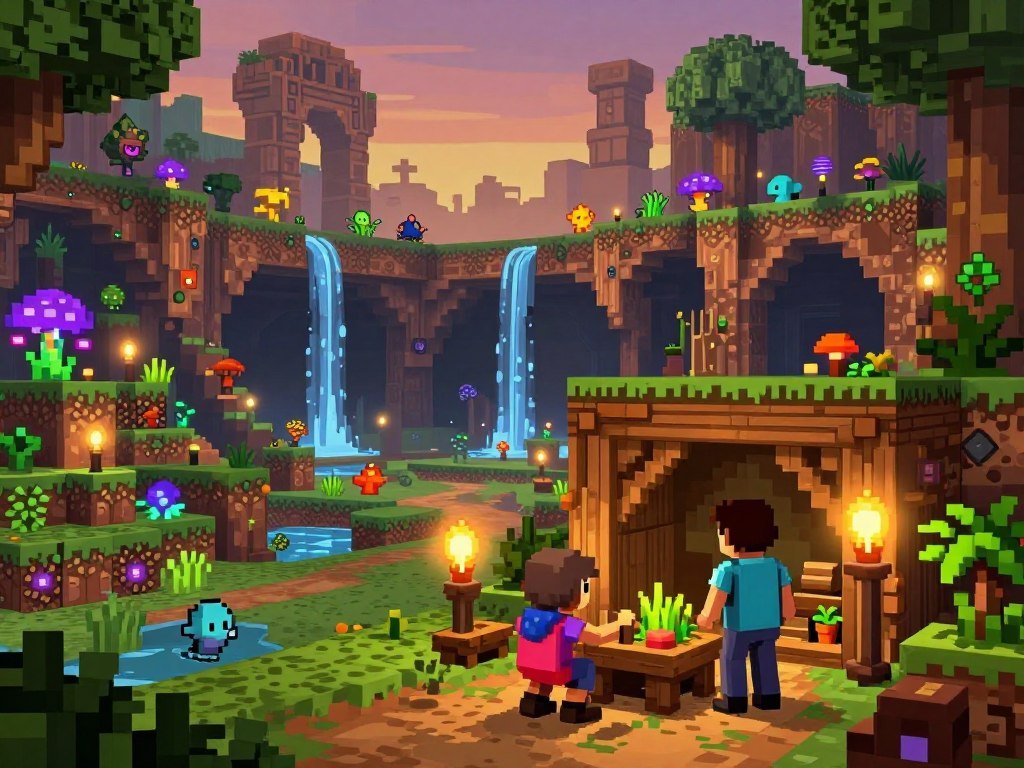
Exploration often supplies the materials that make crafting useful. A new area may hold items that change your plans, while building gives those finds a place in your growing home. Boss encounters add clear tests, but you can decide when to prepare for them.
This mix gives the game a flexible pace. One player might spend a session digging and collecting, while another focuses on building rooms or improving gear. You can also shift goals when a new discovery catches your attention.
Terraria released in 2011, yet its systems still support a wide range of play styles. Its world gives you reasons to explore without pushing you through a single sequence of story scenes. That suits players who prefer creating their own direction.
The freedom asks you to supply some motivation yourself. If you need a mission marker at every turn, the open structure may feel loose. A simple goal, such as finding materials for one upgrade, can give a session shape.
Choose it when experimenting with your own priorities sounds better than following a tightly directed story.
Which Co-op Indie Game Fits Your Group?
Choose Far Far West if your group wants a cooperative shooter, and Slay the Spire 2 if it would rather plan its way through a shared strategy game. Action or planning is the main split. Both suit friends who enjoy tackling a challenge together, but they ask for different kinds of teamwork.
Pick the game that matches how your group likes to communicate. Far Far West is an online co-op first-person shooter, or FPS, made by a team of eight people. A few months after its 2026 release, it had more than 2,000 active concurrent players.
Far Far West for cooperative first-person action
Far Far West puts real-time aiming and movement at the center of group play. Players need to respond as events unfold, which can make a session lively and quick. It fits groups that enjoy acting together without pausing to discuss every move.
Slay the Spire 2 for shared strategy
Slay the Spire 2 includes a co-op mode in 2026, giving players a shared strategy option. The pace leaves more room to talk through choices than a shooter does. It may appeal to friends who like weighing plans together and seeing how each decision affects the run.
| Game | Genre | Co-op style | Group it suits |
|---|---|---|---|
| Far Far West | First-person shooter | Online real-time action | Friends who like quick coordination |
| Slay the Spire 2 | Strategy roguelike | Shared co-op decisions | Players who enjoy discussing tactics |
| Stardew Valley | Farming and life sim | Shared farm and daily tasks | Groups who prefer a calmer pace |
Stardew Valley is another familiar co-op option when your group wants a shared farm instead of a combat test. Its slower pace can help friends settle into a session without needing sharp aim or quick calls. Decide whether you want group progress or a high-pressure challenge.
Use this checklist before you invite everyone:
- Group size: How many people plan to join?
- Aiming: Does everyone enjoy real-time aiming?
- Tactics: Will your group talk through choices?
- Runs: Does everyone want repeated attempts?
Before starting, agree whether the group wants fast coordination or time to talk through each decision.
For more ways to compare play styles and group size, see these game picks for different kinds of players.
What Makes Mina the Hollower a Standout Action Adventure?
Mina the Hollower is an easy recommendation for players who want retro-styled action and a reason to approach another run differently. It is an action-adventure game with a built-in randomizer, which can shuffle the familiar pattern. That change gives replaying a purpose beyond repeating the same route.
Its randomizer can change what you face and how you adapt. Shuffled items or enemies ask you to adjust plans rather than rely on one practiced path. Players who enjoy learning a game’s rules and then testing them under new conditions may find that especially appealing.
Mina the Hollower had a 91 average on OpenCritic in 2026. That score suggests strong critical reception, but it cannot promise that every player will enjoy its pace, story, or challenge. Reviews help set expectations; your own preferred controls and combat style still matter.
The retro look points toward a familiar action-adventure feel, while the randomizer gives experienced players a reason to try another route. A shuffled item can change how you approach a tough area. An enemy change can make a known room demand fresh attention.
This style suits players who enjoy adapting as they go. It may be less appealing if you want a carefully fixed story path or dislike surprises that affect your plans. You can still begin with the standard adventure and learn its basic rhythm first.
The map and story also matter to players who want a clear setting to explore. The randomizer changes parts of a repeat playthrough, rather than making every session feel like an unrelated game. You can build a sense of familiarity, then test how well you respond when details shift.
Try the standard adventure first if you want to learn its rhythm before adding randomized surprises.
Is Mewgenics for Players Who Like Tactical Creature Systems?
Mewgenics is a fit for players who like turning team-building choices into part of the challenge. In 2026, it was a roguelike where players built a cat army through tactical breeding. The roster is part of the strategy, not just a collection to fill.
Choose it if shaping a team sounds as interesting as winning fights. Breeding choices affect which cats you bring into tactical encounters, so planning begins before combat. Your decisions can set up strengths, limits, and new ways to approach a run.
The creature collecting angle is unusual because the game focuses on building a working army. You are not simply trying to gather every creature you see. Instead, you consider how a roster fits together and what each member can contribute.
That focus can appeal to players who like systems with several moving parts. A choice made during breeding can shape what happens later, so your team plan reaches beyond one battle. The result is a game where preparation and tactics work together.
A Mewgenics review describes its tactical combat, breeding, and base management as linked parts of play. It reports more than 10 classes, 75 abilities per class, over 900 items, and more than 200 foes.
Players who prefer direct action may find the planning less appealing. Those who enjoy adapting a roster can find satisfaction in testing a new mix after a setback. The run becomes a record of the choices that shaped your team.
Choose it if experimenting with a roster sounds as satisfying as winning the next encounter.
Should You Start Hades II in Early Access?
Hades II is a good early-access choice if you enjoy action runs and are comfortable playing while development continues. Early access is a release state in which players can play a game while its development is ongoing. Hades II is an action roguelike and was available in early access on Steam in 2026.
Start now only if ongoing development will not spoil your enjoyment. Updates may change parts of the experience as the game continues to develop. Some players enjoy seeing those changes; others would rather wait until the release state is more settled.
| Roguelike type | Core decision | Typical source of variation | Best-fit player |
|---|---|---|---|
| Action roguelike | React to threats while moving | Changing encounters and tools | Players who like fast choices |
| Tactical roguelike | Plan turns and team positions | New situations across runs | Players who enjoy careful planning |
| Deckbuilding roguelike | Choose cards and shape a deck | Different card options each run | Players who like building a strategy |
Early access can make sense when you value the chance to play during development more than a finished, stable release. It may not fit if you want every feature and system to stay fixed. Your patience with updates matters as much as your interest in the core loop.
Some players like learning a game as it changes, while others prefer to wait until the developers finish their work. Neither approach is wrong. The key is knowing whether an evolving release will feel exciting or distracting to you.
Hades II’s action focus makes its repeated runs central to the appeal. If you enjoy trying new approaches after a defeat, the format may hold your attention. If updates make you worry about changing progress, waiting could feel better.
Check the current Steam page for the game’s release status before deciding when to jump in.
Can Denshattack Run Well on Steam Deck?
Denshattack is a promising Steam Deck option, with 60fps on the LCD model using optimized settings and performance often above 70fps on OLED. Model and settings matter when you judge the results. The action game sends you driving a train through trick-filled levels.
The reported results apply to optimized settings, not every setup. On a Steam Deck LCD, Denshattack ran at 60fps with the game’s optimized settings in 2026. It often ran above 70fps on the Steam Deck OLED under the same conditions.
The 2025 search for the best indie games on Steam Deck is best treated as a model-and-settings question here, not a claim that Denshattack released in 2025. The two Deck models produced different results, so one number does not describe every player’s experience.
Try the game if you enjoy fast movement and stunts built around a train. Its levels ask you to react while the action is moving, which can feel lively on a handheld screen. Fast motion may not suit players who prefer calm, slow-paced play.
Before a session, think about your hardware and how the movement feels to you. A high frame rate cannot make a fast game comfortable if the pace feels too busy. Start with the optimized setup and adjust from there.
- Deck model: Are you using LCD or OLED?
- Settings: Will you start with the optimized settings?
- Motion: Are you comfortable with fast movement?
- Stunts: Do train tricks sound fun to you?
Decky troubleshooting steps can help when a plugin issue looks separate from game performance.
Use the optimized settings as your starting point, then adjust only if the action does not feel comfortable on your Deck.
Which Free or Low-Commitment Indie Game Should You Try?
Aperture Desk Job is the clearest free starting point, while Scritchy Scratchy suits players willing to follow a longer incremental loop. Their formats differ: one teaches Steam Deck controls, and the other builds progress through scratch cards. You can choose based on the kind of activity you want.
Aperture Desk Job is free and designed as a Steam Deck controls tutorial. Scritchy Scratchy is an incremental game, with a listed completion time of around 10-15 hours in 2026. One offers a brief introduction to controls; the other gives you a longer progression path.
Aperture Desk Job as a free controls tutorial
Aperture Desk Job uses a short, guided format to teach Steam Deck controls. It can make sense if you want a free way to become familiar with the handheld. Its purpose is practical, rather than offering a long campaign or a large set of systems.
Scritchy Scratchy as a longer incremental loop
Scritchy Scratchy builds its play around scratch cards and incremental progress. The steady loop suits players who like seeing small gains stack into larger ones. Its listed completion time gives you a rough sense of the commitment, though your pace can differ.
| Game | Entry point | Core activity | Suitable player |
|---|---|---|---|
| Aperture Desk Job | Free Steam Deck tutorial | Learn handheld controls | New Deck owners |
| Scritchy Scratchy | Incremental game | Scratch cards and build progress | Players who like steady gains |
| Poco | Free point-and-click game | Uncover a character-led story | Players who enjoy dialogue |
The formats give you three clear ways to spend time. Use this short checklist to find the right fit:
- Tutorial: Do you want a guided controls lesson?
- Incremental progression: Do small gains keep you engaged?
- Point-and-click: Do you enjoy exploring with simple inputs?
Choose based on the kind of interaction you want, not simply on which option sounds quickest.
Is Wheel World a Good Pick for Exploration and Racing?
Wheel World suits players who want to race and explore, with optional activities extending play beyond the main game. The main route is only one part of the experience. Bike parts, collectibles, and races can keep you busy afterward.
A main-game playthrough takes more than five hours, before optional cleanup. Finding remaining items and clearing every race was estimated to take another two to three hours. That difference matters if you want either a focused finish or a fuller tour.
| Play focus | Activity | Completion signal | Player fit |
|---|---|---|---|
| Main-game route | Follow the central progression | Finish the main game | Players who want a clear endpoint |
| Collectible hunting | Search for bike parts and items | Find remaining collectibles | Players who like map cleanup |
| Clearing races | Complete available races | Every race is cleared | Players who enjoy testing their pace |
The main-game route gives you a natural point to stop. Optional parts and collectibles add a search task, while race completion gives you a separate challenge. These activities are not required to count the main story as finished.
That distinction makes Wheel World easier to fit around your schedule. You can complete the central route, then decide if you want more time with its map. Players who enjoy checking every corner may treat the extra tasks as part of the fun.
Playtime can stretch when you look for remaining items and aim to clear every race. If you want a shorter commitment, stop after the main game. If you enjoy cleanup, the extra activities give you more to pursue.
Decide whether you want the main route or a fuller cleanup before treating your playtime as finished.
Which Short Indie Game Suits a Single Sitting?
Pocket Boss fits a brief session, while Time Flies gives you a longer short-form run built around four checklists. Both are compact, but they offer different reasons to keep playing. One wraps up as a quick comedy; the other asks you to work through a set of goals.
Pocket Boss takes about 30-60 minutes to complete, while Time Flies takes roughly 2.5 hours for all four checklists. Those estimates describe a full playthrough of Pocket Boss and completion of every Time Flies chapter checklist. Your pace may shift with how thoroughly you explore.
Time Flies for a checklist-driven run
Time Flies divides its play into four checklist chapters. Each chapter gives you tasks to complete, so progress comes from testing what you can do and checking off goals. The full set takes roughly 2.5 hours, which makes it a short game with room for a few sessions.
Pocket Boss for a compact comedy
Pocket Boss takes about 30-60 minutes for a complete playthrough. That makes it a useful choice when you want one compact experience without a long progression track. Its comedy works best when you want a quick change of pace.
The two games suit different kinds of short play. Time Flies gives you a goal list to work through, while Pocket Boss offers a contained start-to-finish session. Neither asks you to plan a long series of evenings before you begin.
Consider how much focus you want to give a single sitting. If you like checking off small aims, the longer short-form run gives you a clear structure. If you want a fast, complete experience, the shorter comedy is easier to fit in.
Pick Pocket Boss when you want a single compact experience, and Time Flies when you want a few more minutes of goals to work through.
What Does Poco Offer Point-and-Click Fans?
Poco is a free point-and-click pick for players who want a character-led story with an unusual central figure. The game follows a clown cast out by peers, giving its story a personal focus. It was made by university students and released for free.
Its appeal rests on characters and conversation, not action-heavy play. Pointing and clicking lets you explore scenes and uncover more about the clown and those around them. The simple format keeps attention on the characters’ hearts and the story they reveal.
The premise gives the game a clear emotional starting point. A character shut out by peers can lead to questions about belonging, friendship, and how people treat each other. The game uses that setup to make its small world feel worth exploring.
Poco may suit players who like dialogue, puzzles, and stories led by unusual characters. Point-and-click play rewards looking closely and trying things in the scene. If you prefer fast combat or constant movement, its measured pace may not hold you.
Check whether these three parts sound appealing:
- Dialogue: Do you enjoy reading conversations?
- Characters: Do character-led stories hold your interest?
- Format: Are you willing to try point-and-click play?
A small cast can still carry a story when its characters give you a reason to listen.
Give it a try if the premise and conversational style appeal more than action-heavy play.
Conclusion
A good first pick is the one whose core loop sounds enjoyable before you know every detail about it. Your best choice depends on whether you want exploration, co-op, tactical decisions, a short session, or a cozy routine. Let the play style fit the time you actually have this week.
System details matter too, especially if you play on a handheld or an older PC. A quick hardware check can help you avoid a frustrating start. Choose one that fits the time and play style you have this week, then check its Steam page before you begin.
FAQ
What makes an indie game different from an AAA game?
An indie game generally comes from independent development or publishing, while AAA describes large-scale production and marketing. “Indie” does not name a genre, art style, or game size. Independent teams can make action games, role-playing games, puzzles, and many other types. The label can describe who makes or publishes a game, but it does not tell you whether you will enjoy playing it.
Are there free indie games on Steam?
Yes, Steam has free indie games, including Aperture Desk Job and Poco. Aperture Desk Job is a Steam Deck controls tutorial, while Poco is a point-and-click story about a clown cast out by peers. Their formats and goals differ, so “free” does not mean they offer the same kind of play. Check each Steam listing for its current details.
Which indie games on Steam support multiplayer?
Far Far West is an online co-op first-person shooter, Slay the Spire 2 has a co-op mode, and Stardew Valley is another familiar co-op option. The best fit depends on whether your group wants real-time action, shared strategy, or a calmer shared routine. Agree on pace and coordination before inviting everyone, especially if players have different tastes.
Can I play indie games on Steam Deck?
Yes, many indie games can run on Steam Deck, but compatibility differs by title and setup. Check each game’s Steam Deck compatibility information before you install it. Denshattack ran at 60fps on the LCD model with optimized settings and often above 70fps on OLED in 2026. Those results depend on the Deck model and the game’s settings.
Is it worth buying an indie game in early access?
Yes, early access can suit you if you are comfortable playing while development continues. Updates may change systems or add content, so the experience can shift over time. Check the current release status and update details before you start, then decide whether an evolving game fits your expectations. Players who want a stable, finished release may prefer to wait.
Do indie games go on sale on Steam?
Yes, indie games appear in Steam sales, but discounts change over time. A game’s price and sale timing can vary, so do not plan around one fixed date or discount. Check its current Steam listing and add it to your wishlist if you want to keep track. That gives you a useful reminder without assuming a set price.
How can I choose an indie game if I only have a few hours?
Choose Pocket Boss for a complete playthrough of about 30-60 minutes, or Time Flies for roughly 2.5 hours across all four checklists. Both offer clear, contained ways to spend a limited block of time. Think about whether you want a short comedy or a checklist-driven run, then choose the one that matches your mood and available evening.