

Best inventory management software for 3PL providers in 2027 has to do a job ordinary stock software cannot: track inventory belonging to dozens of different clients, bill each one accurately for storage and handling, and keep every order moving through receiving, picking, packing and shipping without a single mix-up. A third-party logistics provider lives or dies on accuracy and speed, and the wrong system shows up fast as mis-shipments, disputed invoices and clients who leave.
The tools in this guide are built for multi-client warehousing. They handle client-specific stock, separate billing rules per customer, barcode scanning on the warehouse floor, and integrations with the shopping carts, marketplaces and shipping carriers your clients already use. Prices are approximate starting prices, and you should check current pricing before you buy, because 3PL software is usually quoted per warehouse, per user or per order volume.
Our shortlist covers eight platforms, from affordable cloud systems for a single-site 3PL to enterprise warehouse management software for operators running several facilities. Logiwa WMS leads for most providers, 3PL Warehouse Manager is the simplest starting point, and Deposco is the strongest choice at enterprise scale.
Key takeaways
- Logiwa WMS is the best overall choice for most 3PL providers, with strong multi-client billing and warehouse automation.
- 3PL Warehouse Manager is the easiest way for a small or new 3PL to get running, with client portals included from the start.
- Deposco suits large multi-site operators that need deep automation and advanced order orchestration.
- Expect to pay from about $500 a month at the low end to custom enterprise pricing, usually tied to order volume and users.
- Avoid any system that cannot bill per client or give each client their own live stock view, because those two features define 3PL software.
At a glance: the shortlist
| Product | Best for | Starting price | Standout limit |
|---|---|---|---|
| Logiwa WMS | Most 3PL providers | From about $1,000/month | Custom pricing, quote required |
| 3PL Warehouse Manager | Small and new 3PLs | From about $500/month | Lighter automation than enterprise WMS |
| Deposco | Enterprise multi-site operators | Custom pricing | Longer implementation |
| ShipHero | Ecommerce fulfilment | From about $1,500/month | Best suited to ecommerce clients |
| Körber Warehouse Advantage | Complex operations | Custom pricing | Enterprise cost and setup time |
| Extensiv | Multi-warehouse networks | Custom pricing | Quote-based, varies by volume |
| Infoplus | Fast setup | From about $800/month | Fewer advanced automation tools |
| Datex FootPrint WMS | Regulated goods | Custom pricing | Specialist focus, higher cost |
Logiwa WMS — Best overall
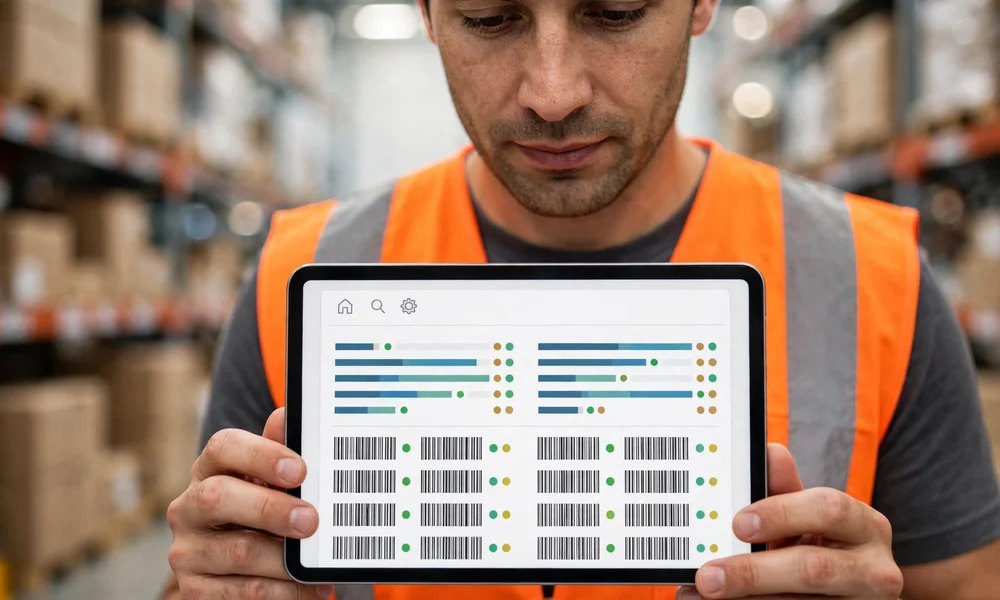
Logiwa WMS is a cloud warehouse management system designed around the way 3PLs actually work. Each client gets separate inventory, separate billing rules and a self-service portal showing their own stock levels, inbound shipments and order status. Stock can never be picked against the wrong client, and storage and handling charges are calculated automatically from the rules you set per customer. If your operation is still small, inventory software built for smaller operations is a useful comparison before you commit to a full WMS.
Pros: True multi-client inventory and billing; client self-service portals; strong carrier and ecommerce integrations; scales across warehouses.
Cons: Custom pricing means you must request a quote; implementation takes planning and training time.
3PL Warehouse Manager — Best for small and new 3PLs
3PL Warehouse Manager is built specifically for third-party logistics, and it shows in the details. Client billing is central rather than bolted on: storage, handling, pick-and-pack and value-added services are all tracked and invoiced per client, with rates you can set individually. Each client gets a portal to view stock, place orders and check shipment status, which cuts the daily back-and-forth that eats into a small team’s time.
Pros: Purpose-built for 3PL billing and client portals; quick to set up; lowest starting price among dedicated 3PL tools.
Cons: Less automation depth than enterprise WMS; reporting is simpler than Logiwa or Deposco.
Deposco — Best for enterprise scale
Deposco is an enterprise-grade platform for 3PLs and retailers that run complex, high-volume fulfilment. Its strength is orchestration: orders are routed across warehouses, stores and drop-ship suppliers using rules you define, so the system picks the fastest and cheapest fulfilment path automatically. For a 3PL serving large ecommerce brands, that logic is what keeps service levels high during peak season.
Pros: Powerful order orchestration across sites; demand planning and labour tools; built for high-volume enterprise fulfilment.
Cons: Custom enterprise pricing; long implementation and training period.
ShipHero — Best for ecommerce fulfilment
ShipHero is a warehouse management system built for ecommerce fulfilment, and it is a natural fit for 3PLs whose clients mostly sell online. It connects directly to Shopify, Amazon, Walmart, eBay and other sales channels, pulling orders in automatically and pushing tracking back without manual work. Picking, packing and shipping are fast and barcode-driven, with batch picking and smart carton selection that keep per-order costs down.
Pros: Excellent ecommerce and marketplace integrations; fast picking and packing workflows; easy staff training.
Cons: Multi-client billing is less deep than dedicated 3PL systems; starting price is higher than 3PL Warehouse Manager.
Körber Warehouse Advantage — Best for complex operations
Körber Warehouse Advantage is an enterprise warehouse management system suited to 3PLs with complex operations: multiple warehouses, high SKU counts, automation equipment, or demanding service-level agreements. It handles layout optimisation, labour planning, slotting and task sequencing, so work is ordered efficiently rather than left to whoever is nearest. For operators with conveyor systems, sorters or automated storage, it integrates with the equipment rather than working around it.
Pros: Deep warehouse optimisation and automation support; strong multi-client handling; built for large, complex sites.
Cons: Enterprise pricing and long setup; needs skilled staff to run well.
Extensiv — Best for multi-warehouse networks
Extensiv is a cloud platform aimed at 3PLs and brands that fulfil from more than one location. It brings order management, warehouse management and inventory visibility together, so a 3PL can see stock across all its sites in one place and route orders to the warehouse that makes the most sense. That network view is its main strength: it prevents the common problem of one warehouse running out while another sits on the same stock.
Pros: Network-wide inventory visibility; order management and WMS in one platform; scales across multiple warehouses.
Cons: Quote-based pricing; some features need add-ons depending on plan.
Infoplus — Best for fast setup
Infoplus is a cloud warehouse management system that a 3PL can get running quickly. It covers receiving, putaway, picking, packing and shipping, with barcode scanning and mobile apps, and it includes multi-client inventory, client portals and billing for storage and services. The interface is clean and the setup process is lighter than enterprise systems, so a small team can be live in weeks rather than months.
Pros: Fast implementation; clean interface; solid multi-client billing and portals for the price.
Cons: Fewer advanced automation features; best suited to small and mid-sized 3PLs.
Datex FootPrint WMS — Best for regulated goods
Datex FootPrint WMS is a warehouse management system with a strong focus on regulated industries, including food, pharmaceuticals and chemicals. For a 3PL that stores lot-controlled or serialised goods, it offers the traceability that general-purpose systems lack: lot and expiry tracking, FEFO picking, recall management and detailed audit trails. That matters when a client audit or a product recall depends on knowing exactly where every unit has been.
Pros: Excellent lot, expiry and recall traceability; strong audit trails; full multi-client 3PL features.
Cons: Specialist pricing and setup; more than a general 3PL needs.
How to choose
Start with your client mix. A 3PL that serves ecommerce brands needs strong shopping cart and marketplace integrations and fast pick-and-pack; a 3PL handling regulated goods needs lot traceability above all. Then count your warehouses and order volume: a single-site operator can run well on 3PL Warehouse Manager or Infoplus, while a multi-site operator should look at Logiwa, Deposco or Extensiv. Billing matters too — check that storage, handling and value-added services can each be priced per client, because that is where a 3PL makes its margin.
Ask every vendor for a demo using your own data: a real client, real SKUs and a real order. Watch how receiving, picking and billing work in practice, and ask how long onboarding takes and what it costs. Also confirm the integrations your clients need, since a missing integration means manual work every day. Good delivery visibility matters as well, and pairing your WMS with proof-of-delivery tools can cut the disputes that follow a lost or damaged parcel.
Checklist: before you pay
- Run a free trial or demo with your own client data, SKUs and order patterns.
- Confirm per-client billing for storage, handling, pick-and-pack and value-added services.
- Check that each client gets a live portal showing only their own stock.
- Verify integrations with your clients’ ecommerce platforms, marketplaces and carriers.
- Ask about the renewal price and how fees change as order volume grows.
- Confirm data export options, so you can leave with your client and stock records intact.
Frequently asked questions
What is 3PL inventory management software?
It is warehouse software built for third-party logistics providers. It tracks stock belonging to different clients separately, manages receiving, picking, packing and shipping, and bills each client for storage and handling. It also gives each client a portal to view their own inventory and orders.
How much does 3PL warehouse software cost?
Most systems in this guide start from about $500 to $1,500 a month, with enterprise platforms quoted on order volume, warehouse count and users. Always check current pricing and ask what is included, because scanning hardware, onboarding and integrations can add to the bill.
Can one system handle several warehouses?
Yes. Logiwa, Deposco, Körber and Extensiv are all built for multi-warehouse operations, with network-wide stock visibility and order routing. Smaller systems such as 3PL Warehouse Manager and Infoplus suit single-site or two-site providers.
Do 3PL clients get their own login?
Most dedicated 3PL systems include a client portal, so each customer can check stock levels, inbound shipments and order status without contacting your team. Confirm this in any demo, because it is one of the biggest time-savers a 3PL system offers.
What is the difference between a WMS and inventory software?
Inventory software tracks stock levels; a warehouse management system also controls the physical work — where goods are put away, how picks are sequenced, and how packing and shipping happen. A 3PL needs a WMS, because accuracy on the warehouse floor is the service it sells. If you also serve sellers across many channels, compare with our guide for multichannel sellers to see how the requirements differ.
How long does it take to switch warehouse software?
A small cloud WMS can go live in a few weeks; an enterprise system can take three to six months including data migration, integration setup and staff training. Plan the switch during a quiet period and run both systems in parallel for at least one full billing cycle.
The bottom line
For most 3PL providers, Logiwa WMS is the best overall pick: it handles multi-client inventory, billing and portals properly, and it scales from one warehouse to several. 3PL Warehouse Manager is the best starting point for a new or small provider, and Deposco is the strongest choice for large multi-site operations that need advanced orchestration.
Whichever system you choose, insist on a demo with your own data and confirm the billing rules before you sign. The right 3PL software should make your clients more confident, your invoices more accurate and your warehouse faster — if it does not do all three, keep looking.



