

The best laptops for pharmacy students in 2027 have to handle a demanding mix of work: dense pharmacology textbooks, drug reference databases, anatomy diagrams, research papers and long hours of revision. Pharmacy school is reading-heavy and detail-heavy, so the laptop that works best is the one with a sharp, comfortable screen, a keyboard that stays pleasant through thousands of pages of notes, and a battery that survives a full day in lectures and the library.
What matters most is not gaming power or a huge screen. A pharmacy student needs at least 16 GB of memory to keep reference databases, PDFs and a browser full of research tabs open at once, 512 GB of storage for lecture recordings and study files, and a display that renders small text and detailed diagrams clearly. Weight matters too: anything over 1.5 kg gets tiring in a bag carried across campus, and a laptop that dies after five hours will fail in the library.
The eight laptops below cover every realistic budget, from a strong sub-$700 pick to premium ultrabooks, and each one was chosen for a strength a pharmacy student will actually use. Prices are approximate starting prices, so check current pricing before buying.
Key takeaways
- The MacBook Air M4 is the best overall pick for pharmacy students, with silent operation, a superb screen and battery life past 15 hours.
- The HP Spectre x360 14 is the best 2-in-1, letting students annotate pharmacology PDFs and diagrams by hand.
- Buy 16 GB of memory and 512 GB of storage as a minimum; 8 GB is no longer enough for a four-year degree.
- Pharmacy students should prioritise screen clarity, keyboard comfort and battery life over graphics power.
- Check current pricing before buying, since student discounts and seasonal sales move these prices often.
At a glance: the shortlist
| Product | Best for | Starting price | Standout limit |
|---|---|---|---|
| MacBook Air M4 | Best overall | $999 | No fan, limited ports |
| Lenovo ThinkPad T14 Gen 6 | Heavy note-taking | $1,199 | Plain design |
| Dell XPS 14 | Premium Windows | $1,499 | Heavier than rivals |
| HP Spectre x360 14 | 2-in-1 flexibility | $1,299 | Shorter battery in tablet mode |
| Asus Zenbook 14 OLED | Display for diagrams | $899 | Modest battery |
| Microsoft Surface Laptop 7 | Microsoft 365 | $999 | Not user-upgradable |
| Acer Swift Go 14 | Budget pick | $649 | Plastic build |
| Lenovo IdeaPad Slim 5 | Battery life | $749 | Average screen brightness |
MacBook Air M4 — Best overall
The MacBook Air M4 is the easiest recommendation on this list because it does everything a pharmacy student needs without fuss. The M4 chip handles drug reference databases, dozens of browser tabs and video calls at the same time, and it does so silently, since the laptop has no fan. Battery life regularly passes 15 hours of real use, which means a full day of lectures, library revision and a study group without a charger.
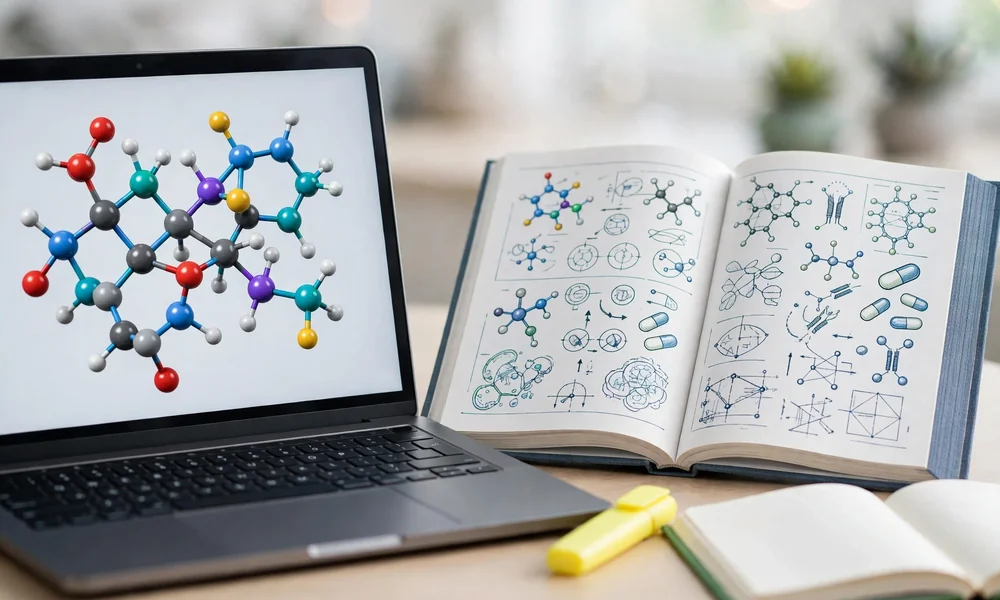
At 1.24 kg it is light enough to carry all day, and macOS runs the full Microsoft 365 suite, including Word, PowerPoint and Teams, without issue. Students comparing general student machines will find the same strengths in our guide to the best laptops for students, where the Air also leads.
Pros: Outstanding battery life, silent fanless design, excellent screen and keyboard, very light. Cons: Only two USB-C ports, no internal upgrades, premium accessories cost extra.
Lenovo ThinkPad T14 Gen 6 — Best for heavy note-taking
The ThinkPad T14 Gen 6 is built for students who type all day. Its keyboard is the best on any laptop here, with deep travel and a precise feel that makes long lecture notes and revision summaries far less tiring.
It ships with Intel Core Ultra processors, 16 GB or 32 GB of memory, and plenty of ports, including USB-A and HDMI, which is handy for connecting to library monitors and projectors. Pharmacy students who run statistical software or keep huge reference libraries open will appreciate the 32 GB option.
Pros: Best-in-class keyboard, very durable, generous ports, good display options. Cons: Plain design, heavier than ultrabooks, speakers are only average.
Dell XPS 14 — Best premium Windows laptop
The Dell XPS 14 is the premium Windows alternative for pharmacy students who want a larger, sharper screen and serious build quality. Its 14.5-inch display is available with a high-resolution OLED option that makes anatomy diagrams, molecular structures and charts look superb, and the aluminium and glass construction feels as solid as anything on this list.
The invisible touchpad and borderless keyboard divide opinion, but most users adapt within a week. Battery life is solid at around 10 to 12 hours, and the laptop charges quickly over USB-C.
Pros: Superb OLED display option, premium build, strong performance, fast charging. Cons: Heavier than ultrabooks, touchpad takes getting used to, expensive.
HP Spectre x360 14 — Best 2-in-1
The HP Spectre x360 14 folds flat into a tablet, which makes it the most flexible laptop here. Pharmacy students can type notes in laptop mode, then flip the screen to annotate pharmacology PDFs, sketch molecular structures and mark up diagrams with a stylus in tablet mode.
The 14-inch OLED touchscreen is bright and vivid, the keyboard is comfortable, and the Intel Core Ultra processor keeps everything responsive. Battery life is around 10 hours in laptop mode and shorter in tablet mode, so students with very long days should carry the compact charger.
Pros: Versatile 2-in-1 design, stylus support, stunning OLED touchscreen. Cons: Shorter battery in tablet mode, expensive, stylus sold separately on some models.
Asus Zenbook 14 OLED — Best display for diagrams
The Asus Zenbook 14 OLED delivers the most impressive screen per dollar on this list. Its 14-inch OLED panel produces deep blacks, vivid colours and sharp text, which makes detailed diagrams, molecular structures and long reading sessions easier on the eyes.
At around 1.28 kg it is easy to carry, and the Intel Core Ultra processor with 16 GB of memory handles every standard study task. Battery life is the one compromise, at roughly 8 to 10 hours, so students with very long days should carry the compact charger.
Pros: Stunning OLED screen, light and portable, strong value, good keyboard. Cons: Battery life is modest, no dedicated graphics, speakers are small.
Microsoft Surface Laptop 7 — Best for Microsoft 365
The Surface Laptop 7 runs on Qualcomm Snapdragon X processors, and that architecture brings two real advantages: battery life that rivals the MacBook Air, and instant wake from sleep.
The 13.8-inch touchscreen is bright and accurate, the aluminium body feels premium, and the keyboard is comfortable and quiet. Most study software now runs natively on ARM, though a few niche legacy applications still need emulation, so students should check any specialist course software first.
Pros: Excellent battery life, instant wake, great touchscreen, premium build. Cons: Some legacy apps need emulation, storage is not user-upgradable, limited ports.
Acer Swift Go 14 — Best budget pick
The Acer Swift Go 14 proves that a pharmacy student does not need to spend four figures to get a capable laptop. For around $649 it offers a 14-inch display, an Intel Core Ultra processor, 16 GB of memory and 512 GB of storage, which is the exact specification that matters for reference databases, documents, research and revision.
The trade-offs are visible: a plastic chassis rather than metal, average speakers and a display that is good rather than great. None of those affect coursework. Battery life is respectable at around 9 hours, and at 1.3 kg it is light enough for daily carrying.
Pros: Excellent price, full 16 GB and 512 GB specification, light, solid battery. Cons: Plastic build, average screen and speakers, no premium features.
Lenovo IdeaPad Slim 5 — Best battery life
The Lenovo IdeaPad Slim 5 is the endurance pick on this list, with battery life that regularly reaches 12 to 14 hours of real use. For pharmacy students with back-to-back lectures, long library sessions and evening revision, that stamina means the charger can stay at home.
It is not a premium machine: the chassis is mostly plastic, the screen is good rather than great, and the speakers are average. But the combination of long battery, light weight and a fair price makes it a sensible choice for students who value a full day of untethered work above all else. Students who want a sharper screen for detailed diagrams should compare it with our guide to the best laptops for designers.
Pros: Excellent battery life, light, fair price, comfortable keyboard. Cons: Average screen brightness, plastic build, average speakers.
How to choose
Start with the specification floor: 16 GB of memory, 512 GB of storage and a processor from the current generation. That combination will stay fast for a full degree, while 8 GB of memory or a 256 GB drive will feel tight by year two. Next, weigh the machine itself in a store if possible, because a laptop you carry every day should feel light, and the keyboard and screen are the parts you touch and look at for thousands of hours.
Then think about how you study. If you annotate PDFs and diagrams by hand, a 2-in-1 like the HP Spectre x360 14 is worth the premium. If you mostly type and read, a standard ultrabook is lighter and cheaper. Students who also edit video for presentations or portfolios should look at our guide to the best laptops for video editing for machines with stronger processors and displays. Finally, buy the warranty and a protective sleeve; a cracked screen in exam week is far more expensive than either.
Checklist: before you pay
- Confirm 16 GB of memory and 512 GB of storage in the exact configuration you are buying.
- Check whether your course needs Windows-only software before choosing a MacBook.
- Look for a student discount, education store pricing or a seasonal sale.
- Test the keyboard and screen in person if you can, or check the return window.
- Confirm the battery life claim against independent reviews, not just the manufacturer.
- Buy a sleeve, a USB-C hub and accidental-damage cover if your budget allows.
Frequently asked questions
How much should a pharmacy student spend on a laptop?
Most pharmacy students should budget $700 to $1,400.
Is a MacBook or a Windows laptop better for pharmacy school?
Both work well, since Microsoft 365 runs fully on macOS.
Do pharmacy students need a dedicated graphics card?
No, not for standard pharmacy coursework. Integrated graphics handle reference databases, documents, diagrams, presentations and video calls.
How much storage does a pharmacy student need?
512 GB is the right minimum.
Is 16 GB of memory really necessary?
Yes. With a browser full of research tabs, reference databases, Word and a video call open at once, 8 GB machines slow down noticeably.
Should I buy a laptop with a touchscreen?
It is optional but useful. A touchscreen helps with annotating PDFs and diagrams, and the HP Spectre x360 14 makes the best use of it.
The bottom line
For most pharmacy students, the MacBook Air M4 is the best laptop to buy in 2027: it is fast, silent, light and lasts a full day on battery. Windows users should pick the HP Spectre x360 14 for its annotation ability and OLED screen, or the Lenovo ThinkPad T14 Gen 6 for its keyboard and durability. Students on a tight budget lose very little by choosing the Acer Swift Go 14.
Whatever you buy, get 16 GB of memory, 512 GB of storage and a machine light enough to carry every day. Prices change often, so check current pricing and student discounts before you order, and buy early enough to set everything up before term starts.



