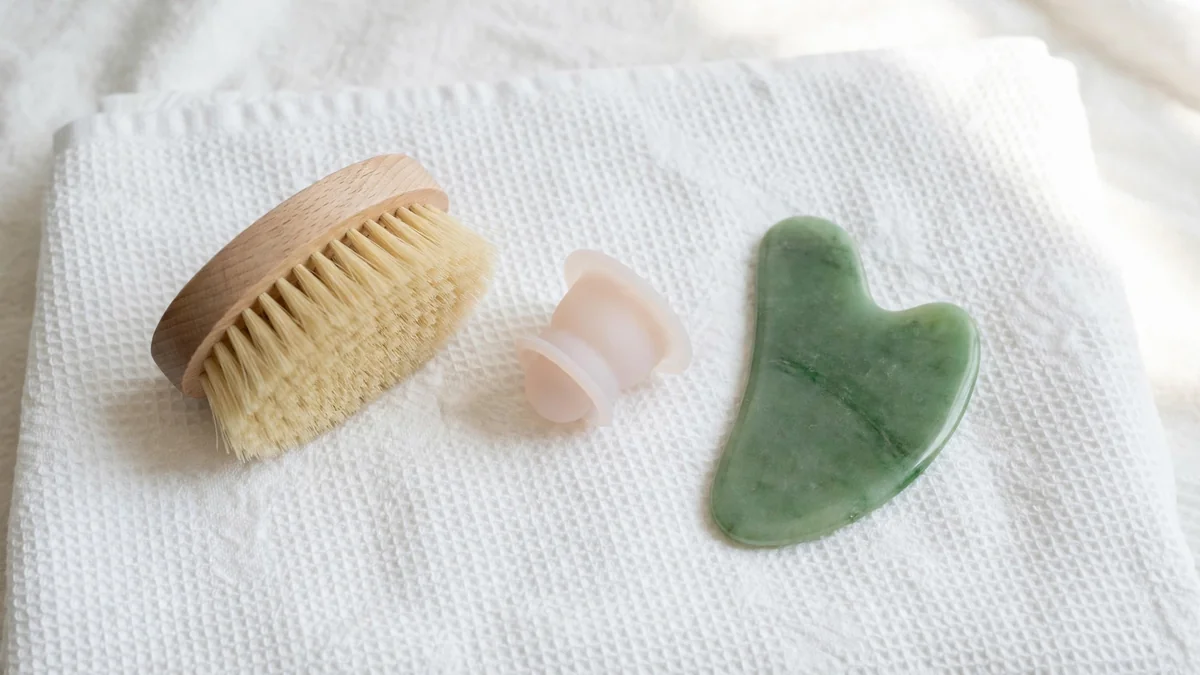
The best lymphatic drainage tools help your body do what it already does — move lymph fluid, reduce puffiness and support circulation — with a little mechanical help. From a $15 dry brush to a $300 microcurrent device, the category has grown fast, and the claims have grown faster than the evidence.
What matters most is what the evidence actually supports. Gentle massage and dry brushing can reduce puffiness and feel good; no tool detoxes your body or replaces medical treatment. The best tools here are the ones that are pleasant to use daily, well made and honestly marketed.
We compared ease of use, build quality, versatility and price across the leading lymphatic drainage tools. The seven below are the strongest picks for 2027, from a classic dry brush to a high-tech facial device.
Key takeaways
- Best overall: the Mount Lai Gua Sha — the most versatile and best-made tool here.
- Best budget pick: a natural bristle dry brush, which costs under $20 and works well.
- Best high-tech pick: the SolaWave Wand, which combines microcurrent with light therapy.
- Keep expectations honest: these tools reduce puffiness and feel good — they do not detox your body.
- Use gentle pressure and clean your tools after every use.
At a glance: the shortlist
| Product | Best for | Starting price | Standout limit |
|---|---|---|---|
| Mount Lai Gua Sha | Face and body | From $28 | Needs technique |
| Mio Skincare Dry Brush | Body brushing | From $18 | Too firm for some skin |
| SolaWave Wand | Face | From $149 | Small treatment area |
| Herbivore Jade Roller | Daily facial massage | From $32 | Effects are temporary |
| Kitsch Ice Roller | Morning de-puffing | From $18 | Needs freezer time |
| Therabody TheraFace PRO | Face and scalp | From $399 | Expensive |
| ReFa Carat | Face and body | From $220 | Premium price |
Mount Lai Gua Sha — Best overall
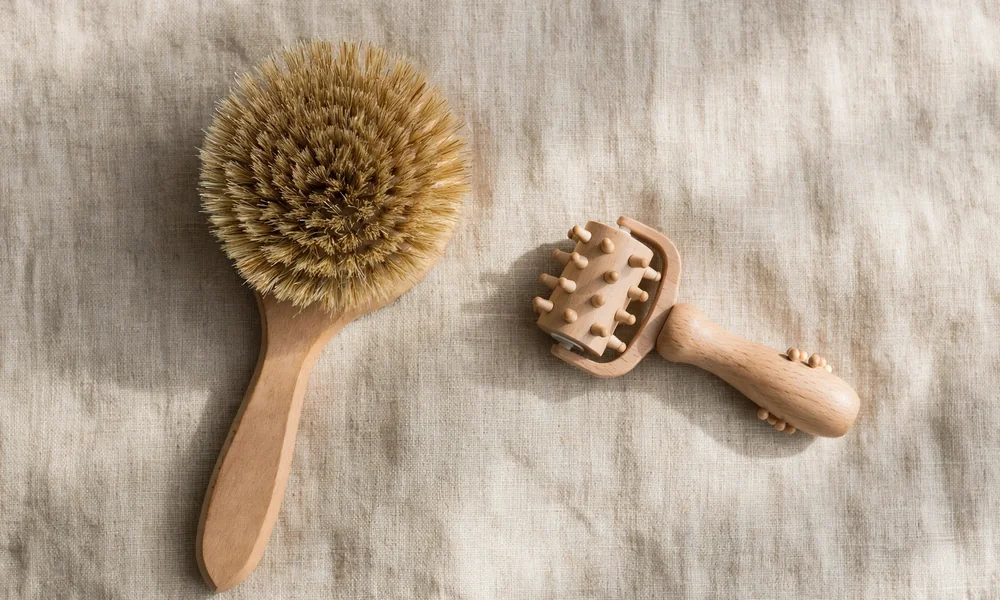
Mount Lai’s gua sha stones are the best-made in this category: smooth, well-shaped rose quartz and jade, in sizes for face and body. Used with light pressure and facial oil, gua sha reduces morning puffiness and feels genuinely relaxing.
It needs a little technique — light strokes, always towards the lymph nodes — but the learning curve is short. For the price and the quality, it is the best lymphatic tool here.
Pros: Excellent quality stone, versatile, affordable, relaxing to use.
Cons: Needs a little technique, needs facial oil.
Mio Skincare Dry Brush — Best budget pick
A natural-bristle dry brush is the simplest lymphatic tool there is: brush dry skin in light strokes towards the heart before a shower, and it exfoliates, stimulates circulation and wakes you up. Mio’s brush has firm natural bristles and a comfortable handle, and it costs less than $20.
The bristles are firm, so sensitive skin should start gently. But for the price, nothing here delivers more for less.
Lymphatic tools are part of a wider wellness routine — our guide to the best wellness gadgets covers the gadgets that support healthier days.
Pros: Very cheap, effective exfoliation, energising, simple to use.
Cons: Bristles too firm for sensitive skin, needs regular cleaning.
SolaWave Wand — Best high-tech pick
The SolaWave Wand combines microcurrent, red light therapy, warmth and facial massage in one handheld device. Used daily, it reduces puffiness and gives skin a temporary glow — and the warming head makes it the most pleasant tool here to use.
The treatment area is small, so a full face takes a few minutes, and the results are temporary rather than permanent. But for a daily facial ritual, it is the most enjoyable high-tech option.
Pros: Microcurrent plus light therapy, warming head, pleasant to use.
Cons: Small treatment area, results are temporary.
Herbivore Jade Roller — Best roller
The jade roller is the classic facial lymphatic tool: a smooth stone roller that de-puffs the face, especially around the eyes, and feels cool and calming. Herbivore’s version is well made, with a dual-ended roller for face and under-eyes.
The effects are temporary — an hour or two of reduced puffiness — but for a morning routine, that is enough. Keep it in the fridge for extra cooling.
Pros: Affordable, cooling, easy to use, good quality stone.
Cons: Effects are temporary, roller can loosen over time.
Kitsch Ice Roller — Best for puffiness
The Kitsch Ice Roller is a stainless steel roller you keep in the freezer and roll over the face in the morning. The cold reduces puffiness fast, tightens the look of skin temporarily, and wakes you up — all for under $20.
It needs freezer time, so it is not spontaneous, and the cold is intense for the first minute. But for fast morning de-puffing, nothing here works quicker.
Pros: Very cheap, fast de-puffing, simple, durable.
Cons: Needs freezer time, cold is intense at first.
Therabody TheraFace PRO — Best multi-function
The TheraFace PRO is the most capable facial device here: microcurrent, LED light, percussive massage and a cleansing ring, with attachments for face and scalp. It is the only tool here that treats the scalp as well as the face, which matters for lymphatic flow.
It is expensive, and the number of attachments can feel overwhelming. But for a full facial routine in one device, it is the most complete option.
Pros: Most functions, face and scalp attachments, excellent build.
Cons: Very expensive, many attachments to manage.
ReFa Carat — Best premium roller
The ReFa Carat is a platinum-coated roller with a solar panel that generates a gentle microcurrent as you roll. It works on face and body, the double rollers knead the skin, and the build quality is the best of any roller here.
The microcurrent is gentle and the price is high for a roller. But for a premium tool that lasts years, the ReFa is the best-built option in this roundup.
Pros: Excellent build, solar microcurrent, face and body use.
Cons: Premium price, microcurrent is very gentle.
How to choose
Start with your goal. For morning puffiness, a roller or ice roller is enough. For a daily ritual, a gua sha stone or a dry brush is the better buy. And for a high-tech facial routine, the SolaWave or TheraFace are the options — but check the price against how often you will actually use them.
Then check the practicalities: whether the tool needs oil, charging or freezer time, and whether you will use it daily. A lymphatic tool only works if you use it — the best one is the one that fits your routine.
Finally, think about the routine. The best lymphatic tool is the one that fits into a routine you already have — a dry brush before the shower, a roller while the coffee brews. If it needs a special occasion, you will not use it.
For tracking how your body responds, our roundup of the best wearable wellness devices shows which wearables track recovery and sleep best.
Also check the material. Natural stone, stainless steel and natural bristles last years with basic care; cheap plastic and glued parts do not. A tool you use daily should be built to survive daily use — and the best tools here are the ones that still look new after a year.
Common mistakes to avoid
- Pressing too hard. Lymphatic massage should be gentle — hard pressure bruises and does not move more fluid.
- Expecting a detox. These tools reduce puffiness and feel good; they do not detox your body, whatever the marketing says.
- Using inconsistently. A tool used daily for two weeks beats one used hard once a month — consistency is the whole point.
- Not cleaning tools. Brushes and rollers collect bacteria — clean them after every use.
- Using tools on broken or irritated skin. Never use a brush or gua sha on sunburn, cuts or rashes.
- Buying the most expensive tool first. Start with a $20 dry brush or gua sha stone — you may not need anything more.
Checklist: before you pay
- Use gentle pressure — lymphatic massage should never hurt.
- Always work towards the lymph nodes, not away from them.
- Use facial oil with gua sha and rollers to avoid dragging skin.
- Clean every tool after use to prevent bacteria build-up.
- Be consistent — daily use for two weeks beats occasional use.
- See a doctor for persistent swelling — tools do not treat medical conditions.
Frequently asked questions
What is lymphatic drainage?
Lymphatic drainage is gentle massage that encourages lymph fluid to move towards the lymph nodes. It can reduce puffiness and support circulation, but it does not detox the body.
Do lymphatic drainage tools actually work?
For reducing puffiness and improving the look of skin temporarily, yes — gentle massage and cold tools help. Claims about detoxing or permanent results are not supported by evidence.
How often should I use a lymphatic drainage tool?
Daily, or at least several times a week, with gentle pressure. Consistency matters more than intensity.
Is dry brushing safe?
For most people, yes, with light pressure on intact skin. Avoid broken, irritated or sunburned skin, and stop if it hurts.
What is the difference between gua sha and a jade roller?
Gua sha uses a flat stone scraped gently across the skin, which allows more pressure and shaping. A jade roller rolls over the skin and is gentler and quicker. Both reduce puffiness.
Can lymphatic drainage tools help with cellulite?
They can temporarily improve the appearance of skin by reducing fluid retention, but they do not remove cellulite. No tool does.
And for the sleep that supports recovery, our pick of the best wearable fitness trackers for sleep tracking explains which trackers are most accurate overnight.
The bottom line
For most people, the Mount Lai Gua Sha is the lymphatic drainage tool to buy: it is affordable, well made and genuinely relaxing to use. If you want the cheapest effective option, a natural-bristle dry brush costs under $20 and does the job on the body.
Whatever you choose, keep expectations honest and use it daily. These tools reduce puffiness and feel good — and that, used consistently, is enough.
If you are torn between two tools, start with the cheaper one. A $20 dry brush or gua sha stone tells you whether you enjoy the routine — and if you do, the premium tool is a reward, not a gamble.