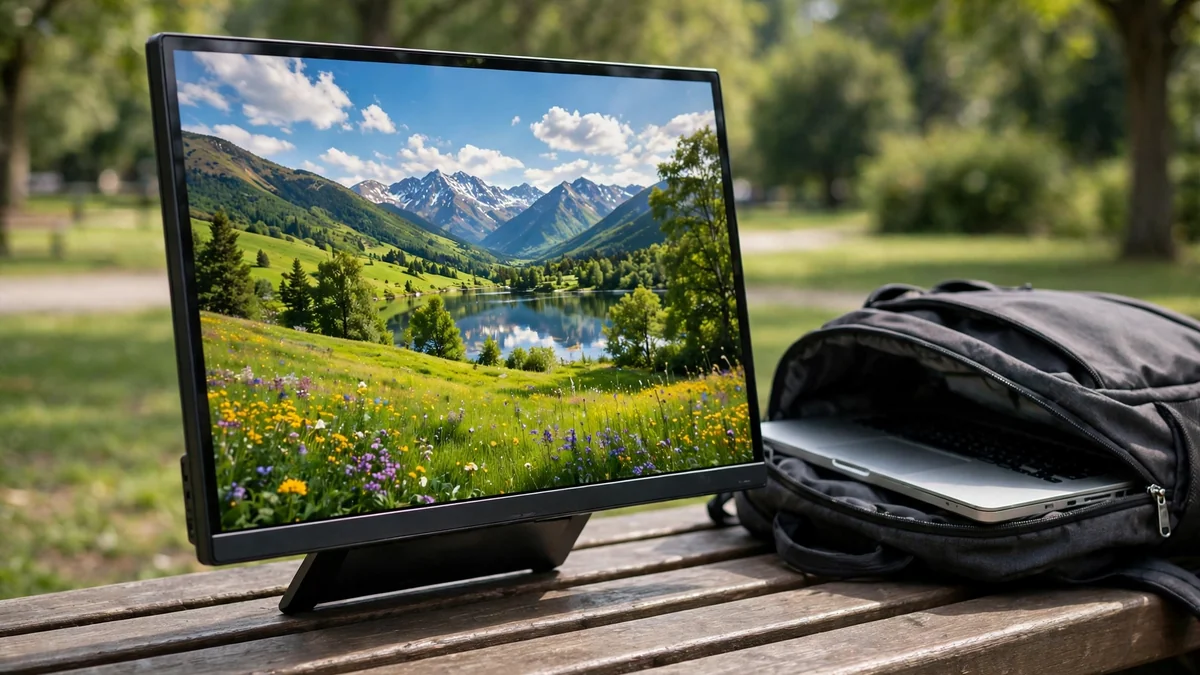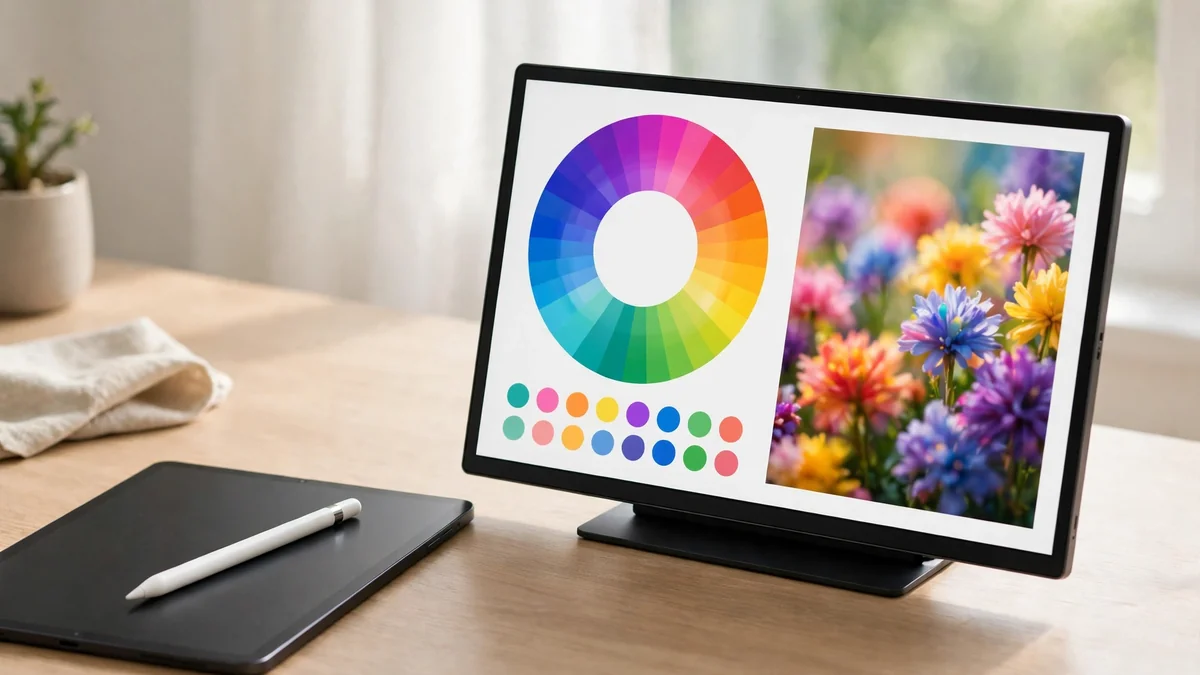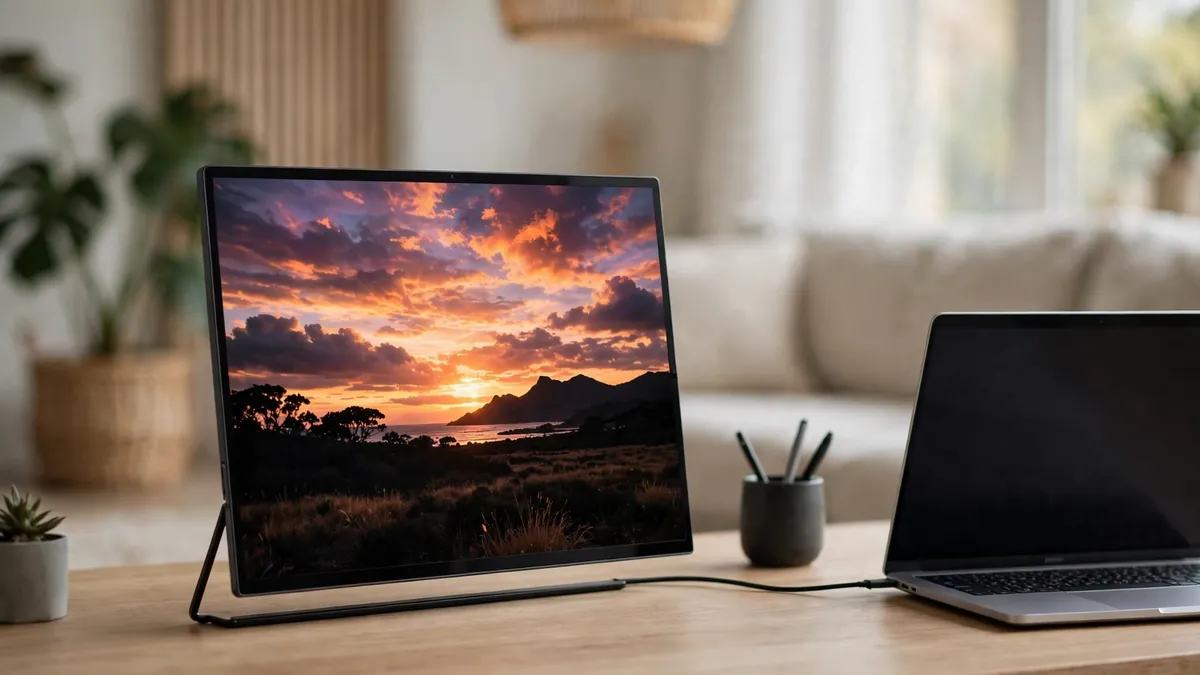
The best OLED portable monitors in 2027 bring the deep blacks and vivid color of OLED panels to a screen you can carry in a laptop bag. Unlike standard IPS panels, each OLED pixel makes its own light, so black areas are truly black and bright highlights pop. For photo editing, video work, and movies, the difference is visible the moment you open a dark image.
OLED also brings real trade-offs. These monitors cost more than IPS rivals, they can be dimmer in bright sunlight, and static images left on screen for hours raise a small risk of burn-in. They are at their best indoors, where their contrast and color accuracy shine, and they suit creative work far more than office spreadsheets.
This list covers seven OLED portable monitors, from a compact 13.3-inch panel to a 16-inch display built for color work. The ASUS ZenScreen OLED MQ16AH leads for most buyers, the Innocn 15A1F OLED is the best value, and the ASUS ZenScreen OLED MQ13AH is the pick if you want OLED in the smallest possible bag.
Key takeaways
- The ASUS ZenScreen OLED MQ16AH is the best OLED portable monitor overall, with a 15.6-inch panel and strong color accuracy.
- The Innocn 15A1F OLED is the best value OLED portable monitor, starting at about $349.
- The ASUS ZenScreen OLED MQ13AH is the most compact OLED option, with a 13.3-inch screen that fits small bags.
- OLED panels show true blacks and vivid color, but they cost more and can look dim in bright sunlight.
- Avoid leaving static images on an OLED screen for hours, since that raises the risk of burn-in.
At a glance: the shortlist
| Product | Best for | Starting price | Standout limit |
|---|---|---|---|
| ASUS ZenScreen OLED MQ16AH | Most buyers | About $499 | 400 nits, dimmer outdoors |
| ASUS ZenScreen OLED MQ13AH | Compact bags | About $399 | 13.3-inch screen is small |
| Innocn 15A1F OLED | Value buyers | About $349 | Basic stand and case |
| Innocn 13A1F OLED | Small OLED screens | About $299 | 13.3-inch panel, less workspace |
| UPERFECT 15.6-inch OLED | Color work | About $429 | Heavier than slim rivals |
| Arzopa 16-inch OLED | Big-screen OLED | About $379 | Color accuracy varies by unit |
| KTC 14-inch OLED | Travel | About $329 | 14-inch panel, no touchscreen |
ASUS ZenScreen OLED MQ16AH — Best overall
The ASUS ZenScreen OLED MQ16AH is the best OLED portable monitor for most buyers because it balances size, color, and portability. Its 15.6-inch full HD OLED panel shows deep blacks, rich color, and a 100,000:1 contrast ratio that IPS panels cannot match. Photos and video look striking, and text stays sharp at normal viewing distance.

It connects over a single USB-C cable for video and power, and it also has mini HDMI for older machines. At about $499, it is expensive, but it is the most complete OLED portable monitor here. If you want a larger desk display as well, the best OLED monitors include full-size options with the same panel strengths.
Pros: Excellent OLED contrast and color, single-cable USB-C, slim and light.
Cons: Expensive, 400 nits is dim outdoors, no touchscreen.
ASUS ZenScreen OLED MQ13AH — Best for compact bags
The ASUS ZenScreen OLED MQ13AH packs the same OLED quality into a 13.3-inch screen, and it is the smallest monitor in this list. It weighs under 1.3 pounds, slips into a laptop sleeve, and runs from a single USB-C cable. For travelers who want OLED color without carrying a 16-inch panel, this is the obvious pick.
The smaller screen means less room for timelines and toolbars, so it works best as a second display for reviewing photos and video rather than as a main editing screen. At about $399, it costs nearly as much as the larger MQ16AH, so you pay for portability rather than size.
Pros: Very light and compact, true OLED blacks, single-cable USB-C.
Cons: Small screen for editing, nearly the price of the 15.6-inch model, no touchscreen.
Innocn 15A1F OLED — Best for value buyers
The Innocn 15A1F OLED is the cheapest way to get a 15.6-inch OLED portable monitor, starting at about $349. Its full HD OLED panel shows the same deep blacks and vivid color as pricier rivals, and it covers a wide color range that suits photo editing. For buyers who want OLED image quality without paying $500, this is the pick.
The savings show in the accessories: the stand is a basic kickstand and the included case is simple. Brightness is about 400 nits, so it is best indoors. If you can live with a plain stand, the panel itself is the star, and it is hard to beat at this price.
Pros: Lowest price for a 15.6-inch OLED, vivid color, good for photo editing.
Cons: Basic stand and case, 400 nits indoors only, no touchscreen.
Innocn 13A1F OLED — Best for small OLED screens
The Innocn 13A1F OLED is a 13.3-inch OLED portable monitor that starts at about $299, making it the cheapest OLED monitor in this list. Its full HD OLED panel is bright and colorful, it weighs about 1.2 pounds, and it connects over a single USB-C cable. It is a good match for a 13-inch laptop.
Thirteen inches is tight for editing timelines or large spreadsheets, so this works best as a preview screen for photos and video, or as a second display for streaming and media. For the price, though, it is the easiest way to try OLED on the go.
Pros: Cheapest OLED in this list, very light, single-cable USB-C.
Cons: Small screen for editing, basic accessories, no touchscreen.
UPERFECT 15.6-inch OLED — Best for color work
The UPERFECT 15.6-inch OLED portable monitor is built for color work, with a wide color range and factory calibration that suits photo and video editing. Its full HD OLED panel shows accurate skin tones and smooth gradients, and it connects over USB-C or mini HDMI. A built-in stand holds it at several angles.
It is slightly heavier than the slimmest OLED rivals, and its design is plain, but the panel quality is what matters here. At about $429, it sits between the budget Innocn and the premium ASUS models, and it is a strong choice for creators who need reliable color on the road.
Pros: Wide color range, factory calibration, USB-C and mini HDMI.
Cons: Heavier than slim rivals, plain design, no touchscreen.
Arzopa 16-inch OLED — Best for big-screen OLED
The Arzopa 16-inch OLED portable monitor gives you the largest OLED screen in this list, starting at about $379. Its 16-inch full HD OLED panel shows deep blacks and bright color, and the extra inch over 15.6-inch models gives timelines and toolbars a little more room. It connects over USB-C with a single cable.
Color accuracy can vary between units, so creators who need precise color should check the panel with a calibration tool or stick with the ASUS models. For movies, streaming, and general creative work, though, the large OLED screen is impressive for the price.
Pros: Largest OLED screen here, good value, single-cable USB-C.
Cons: Color accuracy varies by unit, basic stand, no touchscreen.
KTC 14-inch OLED — Best for travel
The KTC 14-inch OLED portable monitor is the travel pick in this list, weighing about 1.3 pounds with a 14-inch full HD OLED panel. It is small enough for a laptop sleeve, bright enough for indoor work, and it runs from a single USB-C cable. Its deep blacks make movies look far better than on an IPS panel of the same size.
Fourteen inches is a compromise for editing work, so this suits photographers and video creators who want a portable preview screen rather than a full editing station. At about $329, it is one of the cheapest OLED monitors here and the easiest to carry daily.
Pros: Light and compact, vivid OLED color, low price for OLED.
Cons: Small screen for editing, no touchscreen, basic kickstand.
How to choose
Start with size. A 15.6-inch OLED panel is the best balance of workspace and portability, a 13.3-inch model suits small bags and travel, and a 16-inch screen gives editing timelines more room. Resolution is full HD across this list, so size and panel quality matter more than pixel counts here.
Next, think about brightness and where you will use the monitor. OLED panels in this list reach about 400 nits, which is fine indoors but weak in direct sunlight. If you work outside or near bright windows, an IPS portable monitor may serve you better, and a wide desk display is another option, as our guide to the best ultrawide monitors shows.
Finally, protect the panel. OLED screens can develop burn-in if the same static image stays on screen for many hours, so use a screensaver, hide taskbars, and vary what you display. Prices change often, so check current pricing before you buy, and buy from a seller with a clear return policy.
Checklist: before you pay
- Confirm your laptop outputs video over USB-C, or that you have a free HDMI port for the monitor.
- Check the brightness rating and plan to use the monitor indoors, since OLED panels are dimmer outdoors.
- Measure your bag, since a 16-inch monitor needs more space than a 13.3-inch one.
- Read the return policy, because dead pixels are the most common OLED complaint.
- Compare the starting price with the current price, since OLED monitors go on sale often.
- Plan how you will avoid burn-in, with a screensaver and varied content on screen.
Frequently asked questions
Is OLED better than IPS for a portable monitor?
Yes, OLED is better for contrast and color, with true blacks and vivid highlights that IPS cannot match. IPS panels are usually brighter and cheaper, so they suit bright rooms and tight budgets better.
Do OLED portable monitors suffer from burn-in?
Burn-in is possible if the same static image stays on screen for many hours, but it is rare in normal use. Use a screensaver, hide static taskbars, and vary your content to keep the risk low.
Are OLED portable monitors good for photo editing?
Yes, OLED portable monitors are excellent for photo editing because of their wide color range and deep blacks. Check the color coverage in the specifications, and calibrate the panel if you need precise color for client work.
Can I use an OLED portable monitor outdoors?
You can, but most OLED portable monitors reach about 400 nits, so they look dim in direct sunlight. They are at their best indoors or in shade, where their contrast stands out.
Do OLED portable monitors need a separate power supply?
No, most OLED portable monitors draw power from your laptop over a single USB-C cable. Older laptops or mini HDMI connections may need a USB-C power cable as well, so check the connection type before you buy.
What size OLED portable monitor should I buy?
A 15.6-inch screen is the best balance of workspace and portability for most buyers. A 13.3-inch model suits travel, while a 16-inch panel is best for editing timelines, and the best monitors for video editing include larger desk options if you want even more room.
The bottom line
For most buyers, the ASUS ZenScreen OLED MQ16AH is the best OLED portable monitor: the right size, strong color, and a simple single-cable setup. If your budget is tight, the Innocn 15A1F OLED gives you the same OLED image quality for about $349, and if you travel light, the ASUS ZenScreen OLED MQ13AH fits the smallest bag.
Whichever model you choose, check current pricing before you buy, plan to use it indoors, and take simple steps to avoid burn-in. OLED is the most vivid screen you can carry, and for creative work on the go it is worth the premium.