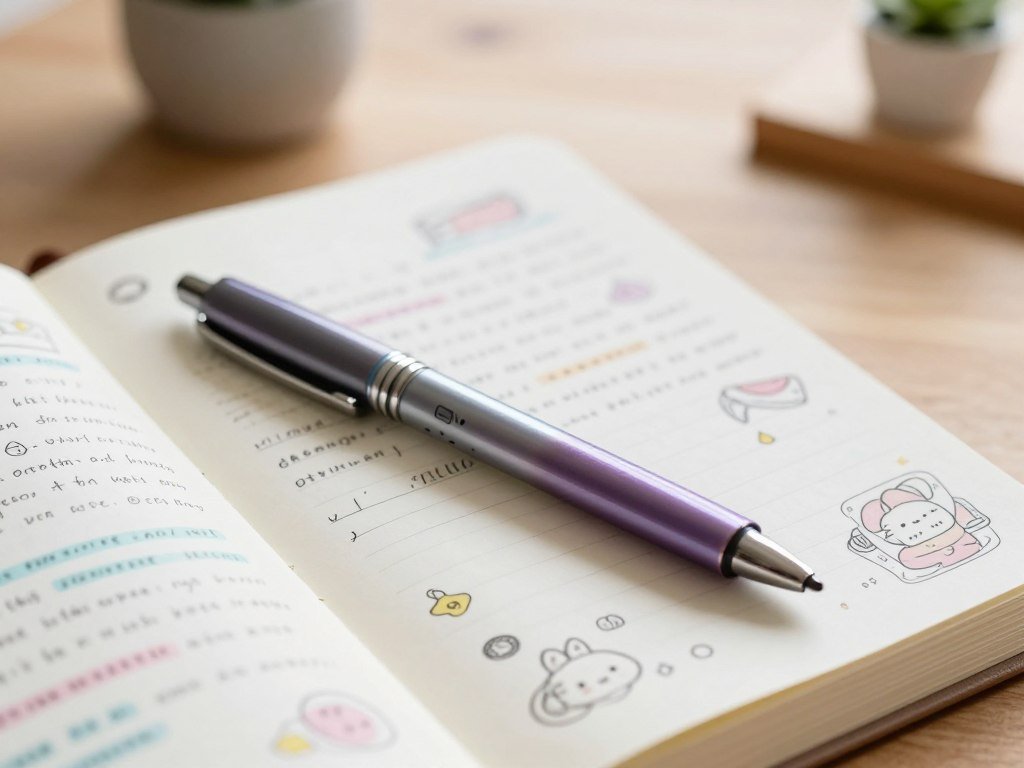
For everyday journaling, a quick-drying gel pen is a practical starting point, while fine-liners and fountain pens suit more specific writing preferences. Your writing style, hand comfort, ink behavior, and journal paper all shape how a pen feels over time. A pen that feels easy in your hand can make writing a more comfortable habit.
Ghosting means faint writing shows through a sheet from the other side, without ink actually bleeding through. Bleed-through happens when ink spreads or marks the reverse side. Those effects can change how you use a page, especially when you write on both sides.
You will find options for everyday notes, creative layouts, and fountain pen writing. The right pick depends on what you write and how you like your lines to look, not just the pen’s label.
If you also weigh paper against digital notes, compare the best tablets for handwritten notes and see whether a stylus fits your routine. A small test on the paper you plan to use is the simplest way to find a pen that feels right.
Key Takeaways
- Start with a quick-drying gel pen for everyday entries.
- Choose a fine tip for small, compact handwriting.
- Use fineliners for neat layouts and brush pens for lettering.
- Try a ballpoint if fast drying matters most.
- Test ink on both sides of your journal paper.
How to Choose the Best Pens for Journaling
If your notes are cramped, an extra-fine or fine tip gives you more control than a broad one. Fine lines can keep small handwriting clear, while broad strokes may crowd a tight page. A fine nib is a useful starting choice if you want a fountain pen.
For compact handwriting, start with a fine or extra-fine tip. Stub and italic nibs suit expressive lettering because they make thick downstrokes and thin side-to-side strokes. Try a few line shapes before choosing a nib for daily entries.
A pen should feel steady through a long entry, not just during a quick test.
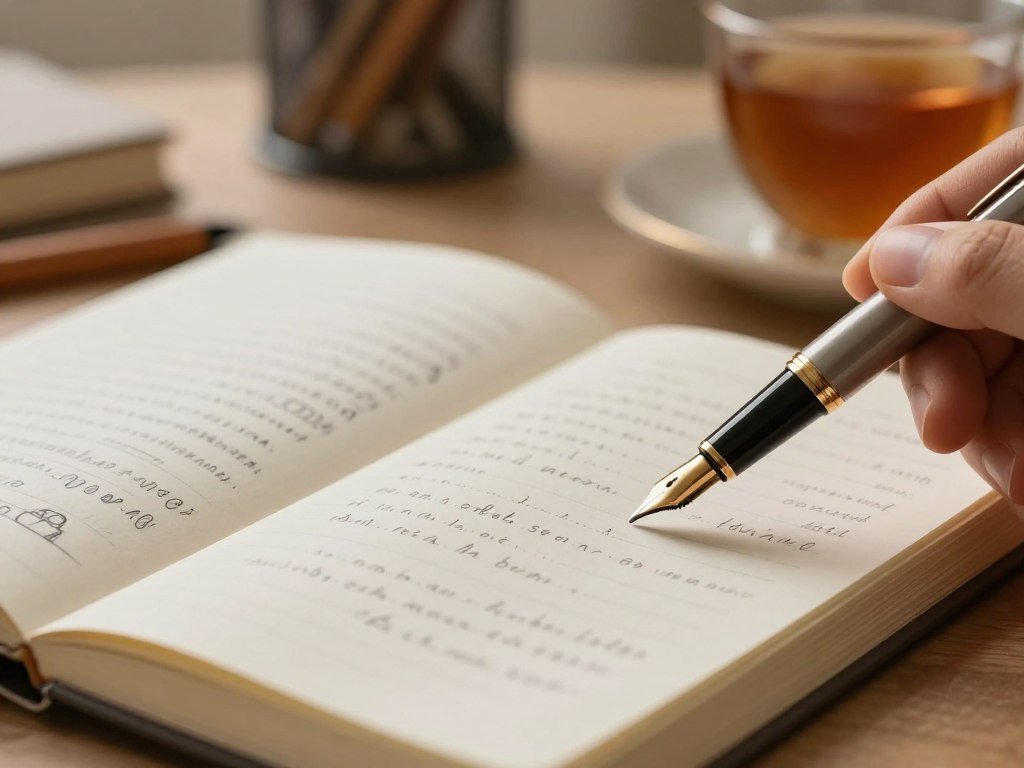
Match tip size to your handwriting
Tip size changes how much room each letter takes on the page. An extra-fine fountain-pen nib can suit tiny notes, while a fine nib works well for many everyday hands. The visible line also depends on ink flow and the paper surface.
Choose a broader tip when you want your words to stand out or your lettering to show more shape. If you switch between notes and headings, a pen with interchangeable nibs can give you more options.
Check grip, balance and ink filling
Grip shape, pen balance, and the pressure needed to write matter during longer entries. A thick or shaped grip may feel more relaxed, while a heavy pen can tire your hand. Test a few lines in your usual writing position.
Fountain pens use either pre-filled cartridges or bottled ink. A cartridge-filled pen takes a compatible cartridge, while a converter draws ink from a bottle. Not every pen uses the same cartridge shape, so check which refill fits your model.
Cartridges are simple to carry and replace, while bottled ink gives you more color choices. Before choosing a refill system, decide whether carrying bottled ink fits your routine.
Which Pen Type Fits Your Journaling Routine?
Gel pens are an easy everyday choice, while fountain pens and fineliners give you more control over line character and detail. Your routine helps narrow the choice: quick notes favor convenience, while layouts may call for precise lines. Ballpoints dry fast, while rollerballs often feel more fluid.
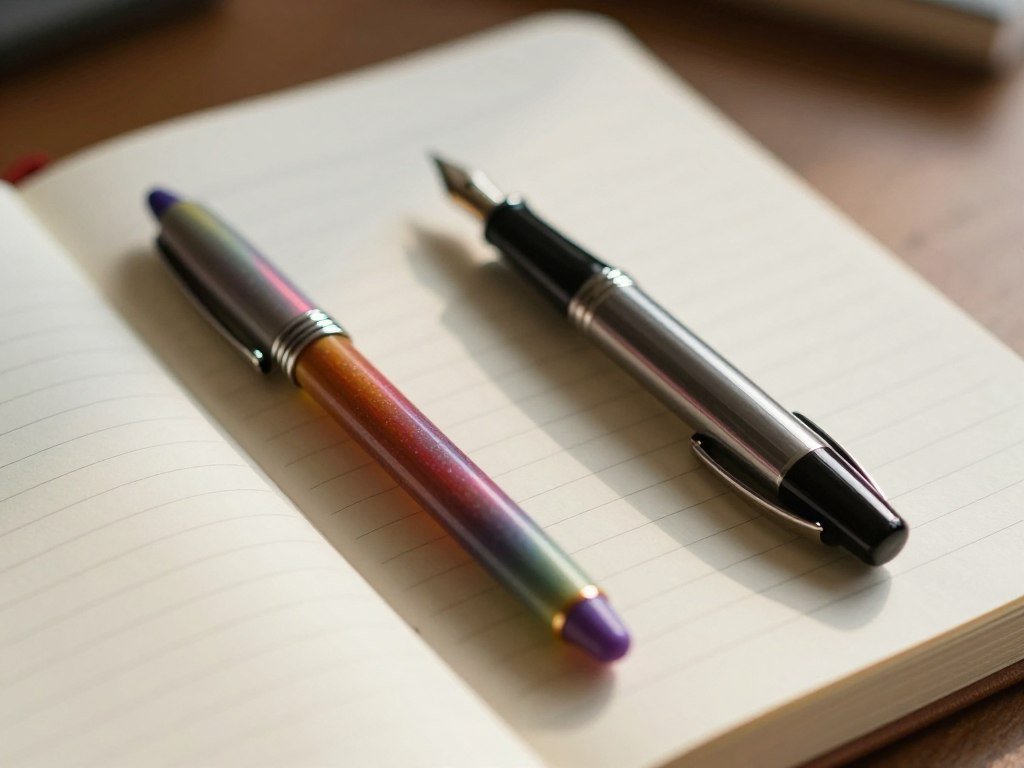
Gel and ballpoint pens for everyday entries
Ballpoint pens use low-viscosity oil-based ink that dries almost instantly and bonds to paper to resist smearing. That makes them convenient for quick notes and busy days. The Pilot Dr. Grip has a double-layer grip, with firm material over soft rubber, and its tip-weighted design can reduce writing pressure.
Rollerballs use water-based ink, which flows smoothly across the page. That fluid feel can suit long entries, though the ink may take longer to dry. Gel ink is also water-based, but thicker, and it can make bold lines with less effort.
Among fountain pen filling designs, the TWSBI 580 has a piston-filling system and interchangeable nibs. Opus 88 Japanese-style eyedropper pens hold large ink volumes; the Jazz, Omar, and Minty are among its larger models. The TWSBI Vac Mini has a shutoff valve designed to keep ink from spilling into the cap during pocket carry. The Pilot Custom 823 uses vacuum filling and holds a large amount of ink.
Fineliners and brush pens for layouts
Fineliners make narrow, controlled marks for boxes, labels, and small drawings. Brush pens have flexible tips that make varied strokes, which suit titles and lettering. Both can add detail to a spread without changing the pen you use for ordinary notes.
Fountain pens for expressive writing
Fountain pens offer expressive lines with little pressure from your hand. Fine and medium nibs suit everyday entries, while broader or stub nibs favor expressive marks. Their ink flow can make writing feel smooth, but each ink and nib combination behaves differently on paper.
For journaling, fountain pens suit writers who enjoy a lighter touch and more line variation. A ballpoint may be simpler if you want a pen that is ready for quick notes with minimal fuss.
| Pen type | Ink behavior | Good fit | Tradeoff |
|---|---|---|---|
| Ballpoint | Oil-based; dries fast | Quick notes | Can feel less fluid |
| Rollerball | Water-based; fluid flow | Long entries | May dry more slowly |
| Gel | Thick water-based ink | Bold everyday lines | Drying varies by ink |
| Fountain pen | Liquid ink; varied line | Expressive writing | Needs filling and care |
For a pocket pen, check that its cap and filling design suit the way you carry it.
Which 10 Pens Are Worth Trying?
These ten choices cover quick everyday notes, detailed bullet layouts, and the appeal of fountain pen writing. Start with the task you do most, then consider the grip and line you prefer. No single pen suits every writer or every journal.
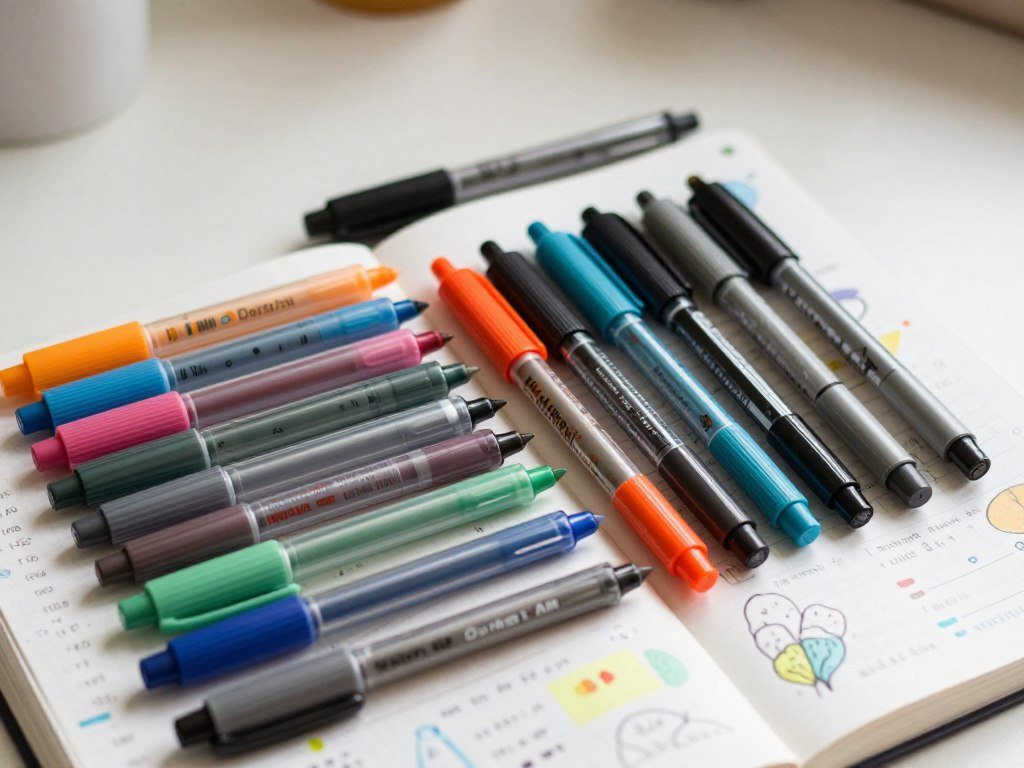
Everyday writing
These five pens suit routine notes, lists, and longer entries. Each offers a different balance of line feel, refill choice, or handy feature.
- Pilot G2: A familiar gel pen option for smooth everyday writing.
- Pentel EnerGel Deluxe: EnerGel and Zebra Sarasa resisted immediate smudging in a pen test. The EnerGel Deluxe is one of several EnerGel versions.
- Muji gel pen: Choose among 0.25, 0.38, 0.5, and 0.7 mm tip sizes.
- Uni-ball Jetstream: Its quick-drying ballpoint ink suits fast notes.
- Zebra Sarasa Mark On: Its ink is designed for highlighter use. Let it dry for 5 to 10 seconds before highlighting.
Pentel EnerGel also comes in X, XM, and Sterling versions. The X uses 84% recycled materials, and the XM uses 54% recycled materials. These details may help you compare versions if recycled content matters to you.
Layouts, color, and fountain pens
These options cover precise marks and fountain pen writing. Sakura Pigma Micron and Staedtler Triplus Fineliner are also common choices for bullet journaling.
- Sakura Pigma Micron: The 03 wrote smoothly in a journal test, while the 005 skipped.
- Staedtler Triplus Fineliner: A fineliner option for tidy layouts and small labels.
- Pilot Kakuno: A beginner fountain pen that feels slightly heftier than the similarly priced Platinum Preppy and Prefounte.
- Lamy Safari: Its triangular grip supports a clear hold, and its nibs come in fine, medium, and broad sizes. The nibs slide off for replacement.
- TWSBI ECO: This piston-filling pen costs $36.99 and requires bottled ink.
For more gel choices, Pilot G2 Premium Gel Ink Roller Pens, Pentel EnerGel Deluxe Gel Pens, Sakura Pigma Micron pens, and Staedtler Triplus Fineliners all suit bullet journaling. The Kaweco Sport range includes Classic, Skyline, Collection, aluminum AL-Sport, and Carbon Fiber AC-Sport models.
Refined design and durable construction are personal priorities, not proof that a pen writes more smoothly. If you want product and review updates by email, you can sign up for the newsletter. Try your preferred tip and grip on a short entry before committing to a long session.
Which Pens Smear Least for Left-Handed Writers?
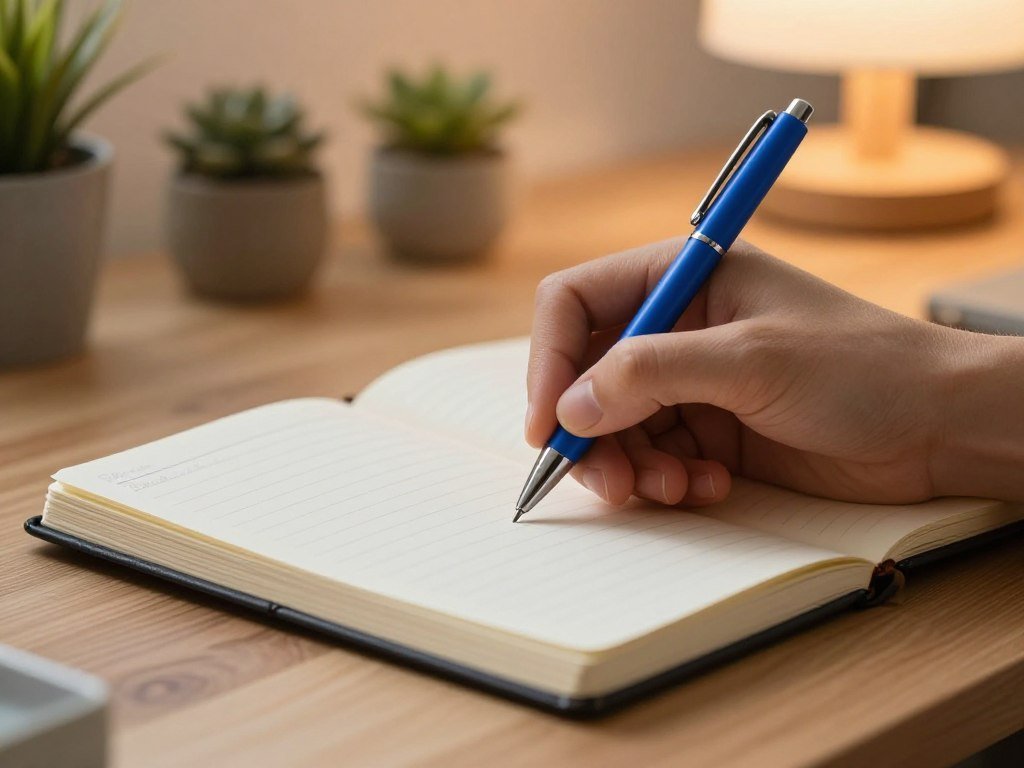
If your hand travels across fresh writing, start with a quick-drying ballpoint and test it in your usual writing position. Hand position matters because some left-handed writers keep their hand below the line, while others write with their hand passing over fresh ink. A quick-drying ballpoint is a strong starting point for left-handed writing.
Quick-drying choices for underwriters
Underwriters keep their hand below the line as they write. That position gives fresh ink room to dry before the hand moves across it. The Uni-ball Jetstream is a quick-drying ballpoint option for left-handed underwriters.
The Fisher Space Pen uses a pressurized refill, and its fine-point refill is recommended for left-handed writers. A fast-drying ink can help, but the exact result still depends on the writer’s hand, ink, and paper.
Nib and hand position both matter
Overwriters move their hand across the line they have just written. That can bring skin into contact with wet ink, even with a pen that dries quickly. A different hand angle may help keep the palm away from new marks.
Fine and extra-fine fountain-pen nibs lay down less ink than broader nibs. The smaller ink load can shorten drying time and help prevent smudging, though it cannot guarantee a clean page in every setup.
| Option | Relevant feature | Best fit |
|---|---|---|
| Uni-ball Jetstream | Quick-drying ballpoint | Left-handed underwriters |
| Fisher Space Pen | Pressurized fine-point refill | Writers who want a fine point |
| Fine or extra-fine fountain nib | Lays down less ink | Fountain pen users seeking less ink |
A fine fountain nib can suit fountain pen users who want to lay down less ink. Let a test line dry in the same position you use for a full page before settling on a refill.
How Can You Avoid Bleed-Through in a Bullet Journal?
Thin journal paper can show writing from the reverse even when ink has not crossed through the sheet. Ghosting is that faint show-through; bleed-through means ink spreads or marks the reverse side. Test both sides of the actual journal page before filling a spread.
Thin paper, heavier ink application, and ink absorption can affect feathering or show-through. A heavier touch may put more ink on one spot, while an absorbent surface can change how the line spreads. These effects depend on the paper and ink combination.
Match the ink to the page
Paper weight and surface feel offer useful clues, but they cannot promise a result with every pen. Yu-Sari notebook paper weighs 70 gsm, and ink dried in 15 to 20 seconds in a test. Dominant Industry Takasago notebooks use 88 gsm paper, while Maruman Mnemosyne notebooks use bright white 80 gsm paper.
Stalogy pages have printed dates and thin paper suited to everyday carry. Midori MD Paper has a writing surface with a comfortable amount of feedback. Cosmo Air Light paper has an almost-glossy surface that shows ink colors, shading, and sheen vividly.
For felt-tip options, Sharpie Fine and Ultra Fine pens are different from regular Sharpie markers. They are described as not bleeding through journal paper like regular markers. Le Pen fineliners showed no bleeding and only minor ghosting in journal tests. Deeper, more vibrant colors showed more ghosting.
Check both sides before filling a spread
A test on a loose sheet may not match the page in your bullet journal. The paper’s texture, coating, and thickness can change how ink looks and dries. Make the test where you plan to write, using the same pen and pressure you expect to use.
Paper and ink combinations matter more than a blanket promise that one pen prevents bleed-through.
Check a line, a filled-in patch, and any colors you plan to use. Make a short front-and-back test in a spare area before using a new ink across a finished spread.
Conclusion
The right choice is the pen that feels comfortable and behaves well on the paper you actually use. Match the ink and tip to the task, whether you write small daily notes or build detailed layouts.
Your hand and paper can change how the same pen feels from one journal to another. A short test gives you a clearer answer than the label on a pen or its tip size alone.
Write a few lines on a spare page or a hidden area of your journal. Check the line, then turn the page and look for marks or show-through. Pick one promising option and test a few lines before making it your everyday journal pen.
FAQ
Can I use fountain pen ink in any fountain pen?
No, a fountain pen needs an ink container or filling system that fits its design. A cartridge-filled pen takes a compatible cartridge, while a converter lets the pen draw bottled ink. Cartridge shapes can differ between models, so one brand’s cartridge may not fit another pen. Check the pen’s filling type before choosing ink.
Is an extra-fine fountain pen nib always better on thin paper?
No, an extra-fine nib lays down less ink than a broad nib, but it cannot prevent every paper issue. Thin paper may still show faint writing from the reverse, and some inks may spread or mark the back. Paper surface, ink flow, and your writing pressure all affect the result. Test the pen on the journal page you plan to use.
Are archival pens always waterproof?
No, archival qualities and water resistance are separate properties. A pen may use ink meant to last, but that does not by itself show how the ink reacts to water. Check the ink’s stated features for your purpose, especially if you may spill water on the page. A small water test on spare paper can help you see how it behaves.
How often should I clean a fountain pen used for journaling?
Clean a fountain pen when you change ink and when its flow becomes unreliable. The right timing depends on how often you write and which ink you use, so a fixed calendar may not suit every pen. If the line skips or stops, clean the pen before adding more ink. Follow the cleaning steps for your model.
Can a gel pen work for both journaling and highlighting?
Yes, some gel pens are made to work with highlighters. Zebra Sarasa Mark On ink should dry for 5 to 10 seconds before you highlight over it. That wait helps the ink set, though the result can still depend on the highlighter and paper. Test the exact pen, highlighter, and journal paper together on a spare page.
Does a pen’s tip size tell me how wide every brand’s line will look?
No, tip size alone does not tell you exactly how wide a line will look across brands. Paper texture, ink flow, and pen design also affect the mark. A fine tip may look different on smooth paper than on a more absorbent page. Compare a sample from each pen on the paper you use for journaling.



