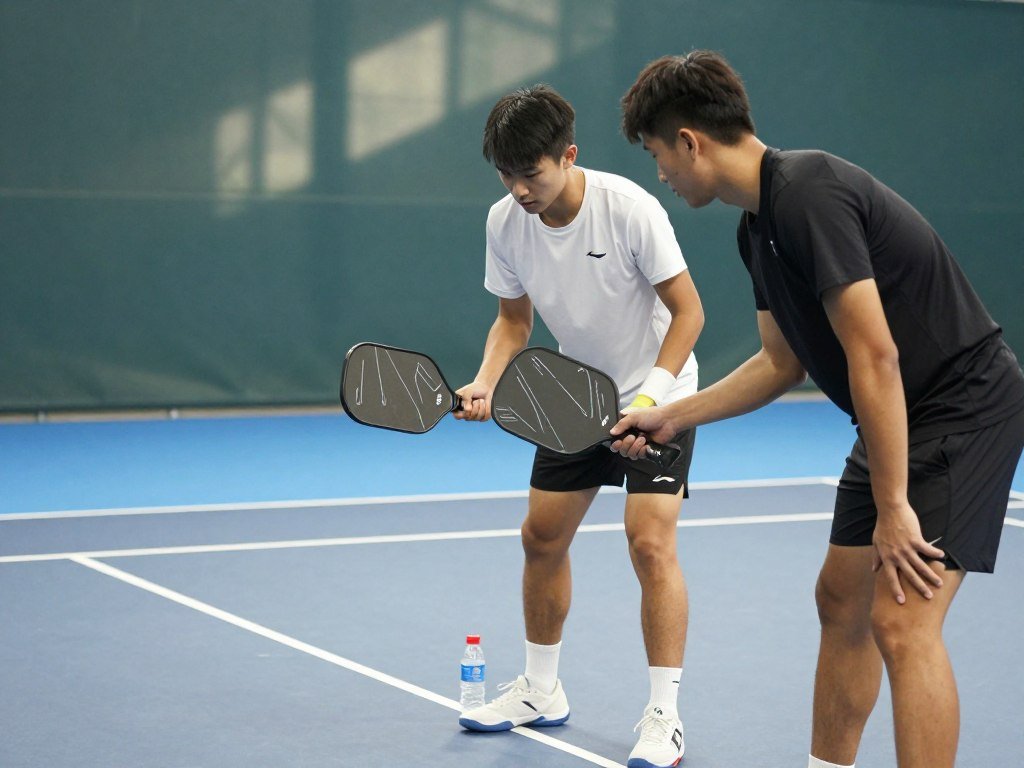
A paddle that makes soft shots feel calm can suit one player better than a more powerful option that suits another. Your choice affects how the ball feels off the face, how quickly you can move through a swing, and how much you spend. There is no single best fit for every player.
The JOOLA Ben Johns Perseus Pro IV 16mm is the overall pick in the 2026 Pickleball Central list. Other picks suit control, power, tighter budgets, or casual use. This comparison of ten options gives you a practical way to narrow your choices by skill, style, and price.
Key Takeaways
- Start with the shots you want your paddle to support.
- Consider control, power, or an all-court balance.
- Compare swing weight and twist weight, not just scale weight.
- Look at the exact paddle shape, core, face, and handle.
- Choose a price that fits how often you play.
- The right shortlist is the one that fits the shots you rely on and the amount you want to spend.
Best Pickleball Paddles for Your Game
For a strong all-around starting point, shortlist the JOOLA Ben Johns Perseus Pro IV 16mm, then switch models if your priority is softer control, harder drives or a lower price. That is a starting point, not a rule for every player. The 2026 Pickleball Central list names it as the overall pick at $250.
Match your first choice to the shots you want to make more often. Choose the Vatic Pro Prism Flash for control, the Mark UnMarked 2026 Elongated for high power, or the Six Zero Coral Pro Hybrid for all-court balance. The Onix Z5 Graphite is a beginner-friendly widebody option.
Use the overall pick as a comparison point, then choose the paddle that fits your own game and budget.
Swing weight is a measure of how heavy a paddle feels as it rotates through a swing, rather than how heavy it is on a scale. A paddle’s swing weight can affect how easy it feels to move during fast play.
Every paddle in Pickleball Central’s 2026 list is USA Pickleball approved and comes with a 30-day Paddle Test Drive. Those terms apply to the paddles in that list. A test opportunity can help you judge a paddle’s response better than specs alone.
The best pickleball paddles for one player may feel too lively, slow, or costly for another. Use the quick-fit picks to narrow the field, then compare the details that matter to your shots. Treat the overall pick as a starting point, not a rule that every player should buy the same model.
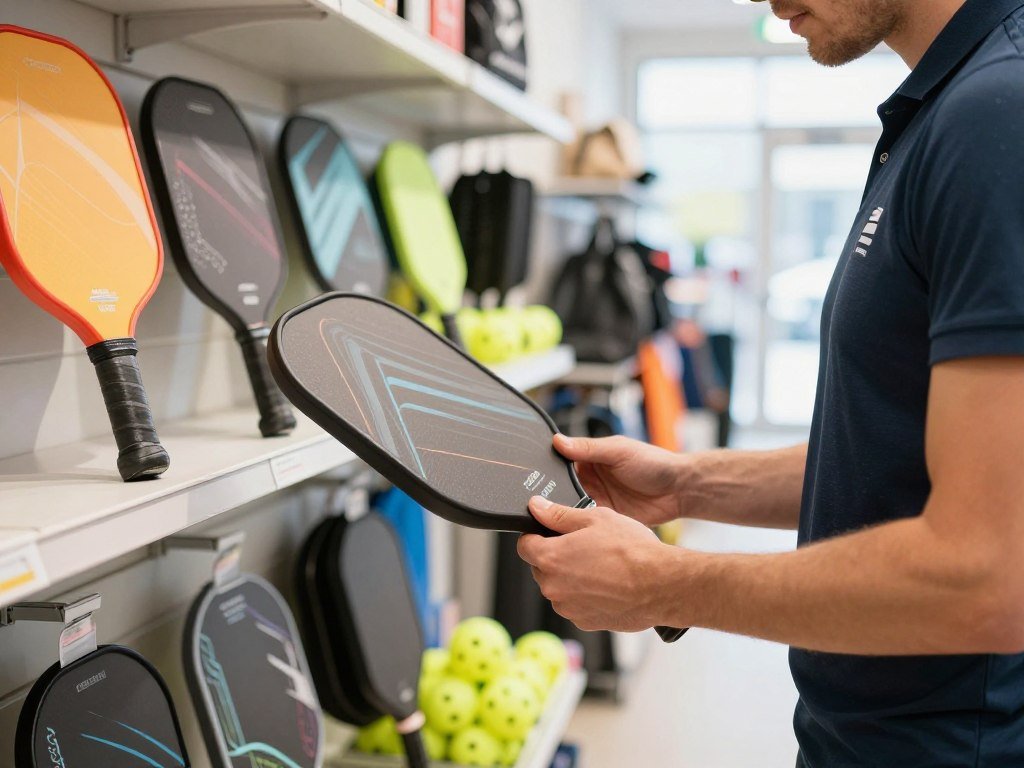
How Should You Match a Paddle to Your Playing Style?
Choose for the shots you need to trust most, since the same extra pop that helps a drive can make a soft reset harder to keep low. Start with your least reliable shot, then weigh how much pace or spin you want. A pickleball paddle can support control, mixed play, or offense-first choices.
More pop can help in fast exchanges but leave less room for soft touch. It may make dinks and resets less forgiving, especially when you need the ball to land low. You can also build offense through swing speed and spin instead of choosing a high-pop paddle.
Control for dinks, drops and resets
Control paddles suit players who want to place the ball carefully near the kitchen line. A calmer response can help you keep dinks low, land drops in the right area, and reset a fast shot without sending it long.
Pickleball Effect rates the Vatic Pro Prism Flash 16mm 10 for control, 3 for power, and 3 for pop. That mix points to a measured feel rather than easy pace from a short swing.
All-court balance for mixed play
An all-court paddle suits a player who moves between soft shots and attacks. Balanced power and control let you keep a rally steady, then step into a drive when the ball sits up.
Spin can add shape to an attack or help you change the ball’s path. A useful all-court feel should not make dinks and drops feel like a separate skill set.
Power for drives and fast hands
Power paddles help add pace to drives and counters. They can suit players who attack often, but a lively face may send a soft shot too far when your swing is short.
Pickleball Effect rates the Spartus Spitfire Elongated 8.5 for power, 8 for pop, 5.5 for control, and 9.5 for spin. The LUZZ Glider 2026 rates 6.5 for power, 6 for pop, 8 for control, and 8.5 for spin.
- Choose control if your soft game needs the most help.
- Choose all-court balance if your rallies change pace often.
- Choose power if you want more pace on attacks.
If you are unsure, start with the style that supports your least reliable shot, not the one that makes your best shot look more impressive.
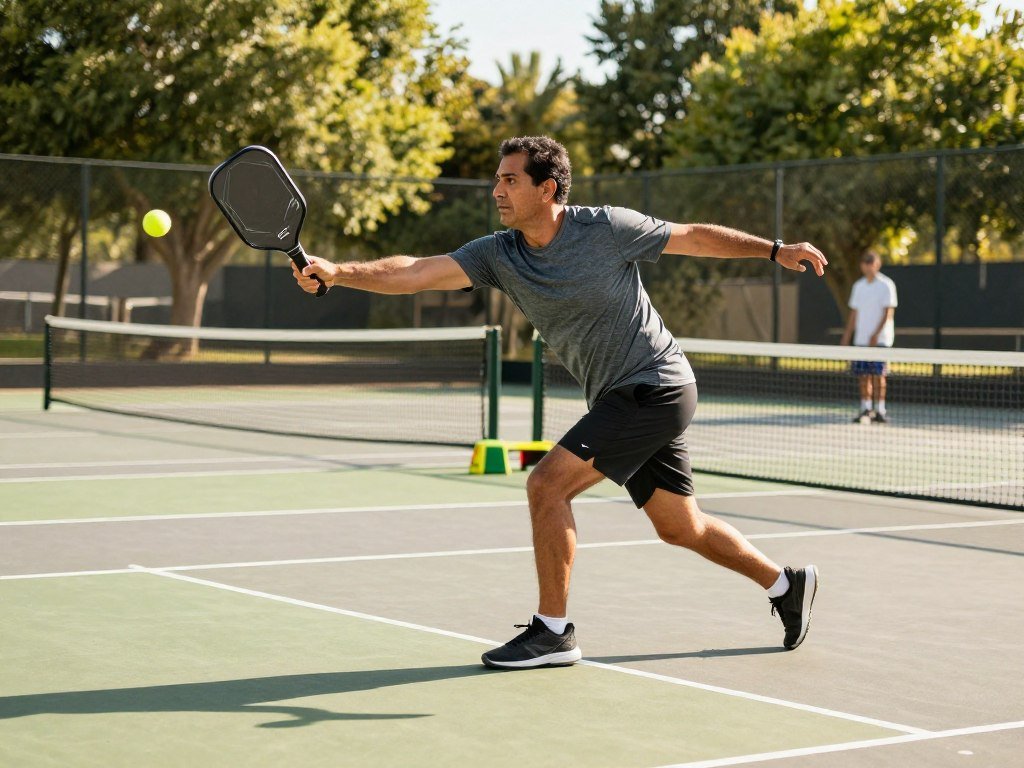
Is a 14mm or 16mm Paddle Better?
For most players who want stability and a forgiving sweet spot, 16mm is the safer starting point, while 14mm may suit a player who specifically wants more pop. Thickness is a clue, not a full performance rating. The core can affect feel, but modern design makes simple thickness rules less reliable.
Sixteen-millimeter paddles generally have higher twist weights and larger sweet spots than 14mm paddles. That can help the paddle resist twisting on mishits. Thickness alone does not reliably predict power or pop.
Across Pickleball Effect’s database, 14mm paddles averaged 2,005 RPM of spin, while 16mm paddles averaged 2,029 RPM. The small gap does not make core thickness a useful spin ranking on its own.
| Grouping | Average swing weight |
|---|---|
| All 14mm paddles | 113.5 |
| All 16mm paddles | 114.5 |
| Gen 4 14mm paddles | 114.4 |
| Gen 4 16mm paddles | 113.3 |
The broad database averages and Gen 4 averages point in different directions. Pickleball Effect measured 168 Gen 4 paddles, including 144 with 16mm cores. That sample makeup helps explain why one thickness rule cannot cover every design.
The JOOLA Ben Johns Perseus Pro IV 14mm is described as having more pop and a lighter swing than its 16mm version. That model comparison shows why the exact paddle matters more than a general thickness label.
Compare the feel of the exact model and thickness you plan to buy, because core thickness does not predict power by itself.
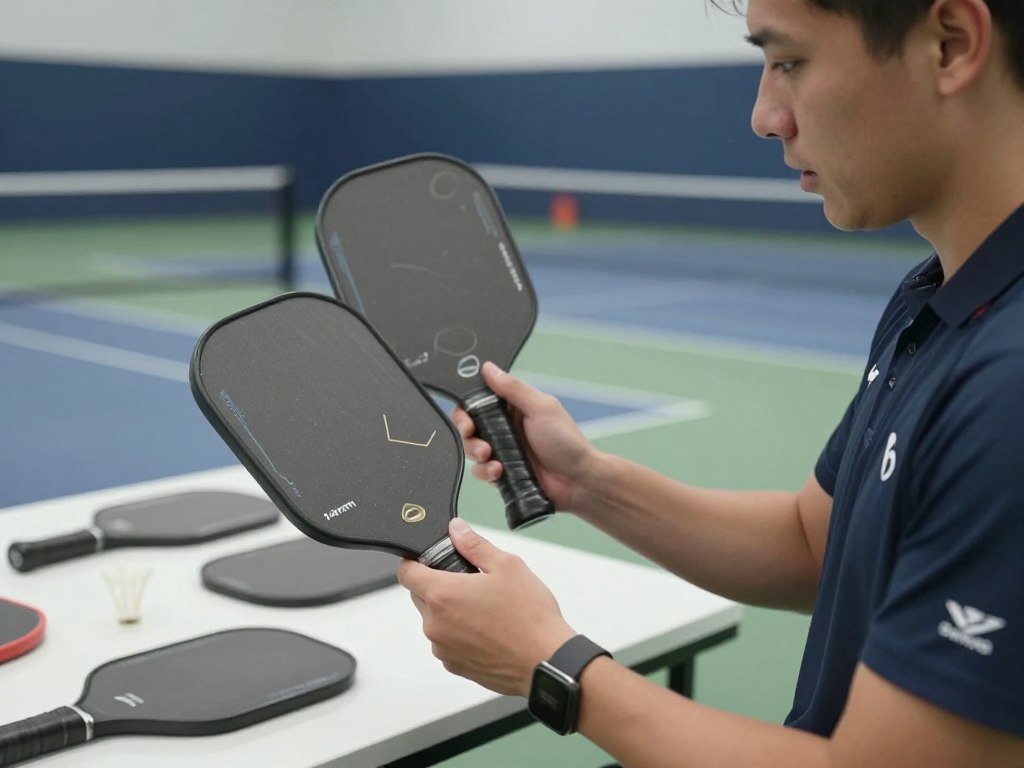
What Do Swing Weight and Twist Weight Tell You?
A paddle can feel easy to move in your hand yet resist mishits poorly, so swing weight and twist weight answer different questions. One tracks motion; the other helps show how steady the paddle feels when contact misses the center.
Around 115 is a middle-of-the-road swing weight. Most paddles fall between 100 and 130. Lower values are generally easier to maneuver, while higher values often need more adjustment in quick exchanges.
Swing weight describes how heavy a paddle feels as it rotates through a swing. It can affect how quickly you move the paddle at the kitchen line, even when two paddles have similar scale weights.
Twist weight describes resistance to twisting on off-center contact. A higher twist weight can help a paddle stay steadier when the ball meets the face away from its center. This can help you judge how forgiving a sweet spot may feel.
Across Pickleball Effect’s database, 14mm paddles averaged 113.5 swing weight and 16mm paddles averaged 114.5. Average twist weight was 6.24 for 14mm paddles and 6.47 for 16mm paddles.
| Paddle group | Average swing weight | Average twist weight |
|---|---|---|
| 14mm paddles | 113.5 | 6.24 |
| 16mm paddles | 114.5 | 6.47 |
| Gen 4 14mm paddles | 114.4 | Not stated |
| Gen 4 16mm paddles | 113.3 | Not stated |
Gen 4 averages differ from the broad database averages. Among Gen 4 paddles, 14mm averaged 114.4 swing weight, while 16mm averaged 113.3. These figures describe groups, not a guarantee about one model.
Compare both measurements alongside shape and how the paddle feels in a fast exchange, rather than choosing by static weight alone.
Which Paddle Fits Your Skill Level?
A beginner usually benefits more from a predictable response and a forgiving sweet spot than from maximum power. Easy control comes first when you are still learning to place the ball. More experienced players can choose a more focused feel as their shots become reliable.
Pick a paddle that helps your current game, not the game you hope to play someday. Skill level can guide your shortlist, but it does not decide which shape or handle will feel right in your hand.
Beginner players
The best pickleball paddles for beginners usually prioritize control and a generous sweet spot. A widebody shape offers a broad face, and the Onix Z5 Graphite is one concrete example.
The Z5 has a Nomex core and graphite face. A predictable response can help you focus on contact and placement before adding more pace to your shots.
Intermediate players
Intermediate players often benefit from a balance of touch and offense. As your dinks and drops improve, look for a paddle that still lets you drive or counter without making soft shots feel hard to manage.
Handle fit matters as your shots grow more varied. The JOOLA Ben Johns Perseus Pro IV 16mm has a 5.5-inch handle, while the CRBN-3 X-Series has a 5.25-inch handle.
Advanced players
The best pickleball paddles for advanced players may have more specialized power or spin. Skill alone does not make a high-power paddle the right fit; you still need to control its response during soft exchanges.
Advanced players can weigh a faster attack against touch at the kitchen line. A shape or handle that supports your preferred grip may matter as much as a high rating in one category.
Women should choose by grip comfort, handle length, shape, and maneuverability rather than assuming gender alone determines the best model. Hand size and playing style vary from player to player.
- Beginners: favor predictable control and a forgiving sweet spot.
- Intermediate players: seek touch with room to attack.
- Advanced players: choose specialized power or spin only when it fits your game.
- Women: compare grip, shape, handle length, and maneuverability.
Check that your grip and handle feel comfortable in both a one-handed swing and any two-handed backhand you use.
Which Pickleball Paddles Under $100 Are Worth Considering?
The clearest sub-$100 split is between the Vatic Pro Prism Flash for control and the Spartus Spitfire Elongated for power and spin. Both are viable choices, but they suit different shots. The Vatic Pro V-SOL Tour Flash is another power option under $100.
A lower price does not mean a paddle cannot work well. Compare construction and feel, rather than judging play by price alone. The exact shape and model name matter when you compare options.
- Vatic Pro Prism Flash 16mm: $89.99, with ratings of 10 for control, 8 for spin, 3 for power, and 3 for pop.
- Spartus Spitfire Elongated: $99.99, with ratings of 8.5 for power, 8 for pop, 5.5 for control, and 9.5 for spin.
- Vatic Pro V-SOL Tour Flash: a power paddle listed under $100.
- Vatic Pro V-SOL Pro: its $110 price reaches $99.99 with an exclusive 10% discount.
The V-SOL Pro comes in Bloom widebody, V7 elongated, and Flash hybrid shapes. Those versions can feel different in reach and handling, so the line name alone does not tell you which paddle fits.
The Prism Flash is a control-first option for players who want a calm response. The Spitfire suits players seeking more pop and spin at a similar price. Neither rating set guarantees the same feel for every player.
Best pickleball paddles under $100 can be useful for regular play, not just a first purchase. Check the exact core and face, then consider how the paddle handles your usual shots.
Confirm the exact model and shape before comparing prices, since one product line can offer several different profiles.
Which 10 Paddles Deserve a Shortlist in 2026?
A useful top ten is a set of different solutions for control, power, all-court play and value, not ten versions of the same paddle. Compare the tradeoffs as well as the names. The models below cover a range of shapes and playing needs.
Testing can combine actual gameplay with standardized in-house measurements. Pickleball Effect tests with drills and gameplay, then uses specialized equipment and set procedures. The Kitchen’s testers used several hours of drills and 5.0+ games with 5.0+ players and the Life Time LT Pro 48 ball.
| Paddle | Best fit | Shape or defining feature | Price |
|---|---|---|---|
| JOOLA Ben Johns Perseus Pro IV 16mm | Overall | Elongated, 16mm hybrid core | $250 |
| Vatic Pro Prism Flash 16mm | Control | 16mm core | $89.99 |
| CRBN-3 X-Series | Spin and offense | Raw carbon face, 16mm core | $150 |
| Spartus Spitfire Elongated | Power and spin | Elongated shape | $99.99 |
| LUZZ Glider 2026 | All-court value | Control and spin ratings | $101.15 |
The other five picks cover additional needs without repeating those table entries:
- Mark UnMarked 2026 Elongated: a high-power option.
- Six Zero Coral Pro Hybrid: a balanced, spin-focused all-court paddle.
- Onix Z5 Graphite: a beginner-friendly widebody.
- Rally Meister Wood: a low-cost paddle for casual use.
- Vatic Pro V-SOL Tour Flash: a power option under $100.
These choices are not interchangeable. A control-first model can help with soft touch, while an elongated power paddle may better suit a player who wants reach and pace.
Use the shortlist to identify the two or three models whose tradeoffs match your game.
Is the JOOLA Perseus Pro IV Worth Its Premium Price?
The JOOLA Ben Johns Perseus Pro IV 16mm is a premium option for a player who wants an elongated profile and a hybrid core. Its $250 price makes fit important before you commit. Its listed design combines reach, a textured face, and a longer handle.
The paddle has a 16mm poly/foam hybrid core, textured carbon face, and 5.5-inch handle. The elongated shape may suit a player who values reach, while the handle length may matter if you use a two-handed backhand.
Those parts describe the build, not a promise that every player will like the response. Core, face, and shape all contribute to feel, so compare the paddle with your own grip and swing.
Use this short checklist before choosing it:
- Choose it if the premium price fits your budget.
- Choose it if an elongated shape suits your game.
- Choose it if the handle works for your grip.
The Perseus Pro IV is the overall pick in the 2026 Pickleball Central list, but a product recommendation cannot guarantee that every player will prefer its feel. A paddle that suits a strong drive may feel different on a soft dink.
Before buying, make sure the elongated shape and handle length feel natural for your grip and swing.
Which Control or Spin Paddle Should You Choose?
Choose the Vatic Pro Prism Flash when soft-game control matters most, and consider the CRBN-3 X-Series if you prefer a raw-carbon face and a more offensive profile. Their strengths differ: one is control-first, while the other offers a distinct face and edge design.
Judge spin paddles by ball shaping and face durability, not spin alone. A surface can help create spin, but how it holds up matters during regular play.
Vatic Pro Prism Flash for a calm soft game
The Vatic Pro Prism Flash 16mm is listed at $89.99. Pickleball Effect rates it 10 for control, 8 for spin, 3 for power, and 3 for pop.
That profile suits a player who wants a calm response on dinks, drops, and resets. Its low power and pop ratings also mean it does not depend on a lively response to create pace.
CRBN-3 X-Series for raw-carbon spin
The CRBN-3 X-Series costs $150 and has a raw carbon face, foam-injected edges, and a 16mm polypropylene honeycomb core. Its handle measures 5.25 inches.
The CRBN-3 X-Series has a 4.8-star review rating. Its construction gives a player a different feel from the Prism Flash, though a rating alone cannot say how either paddle handles in your hand.
Compare the face and edge build along with the response you want. A spin-focused paddle should still let you manage touch shots and keep the ball in play when you shorten your swing.
Decide whether predictable touch or a more aggressive spin-oriented feel matters more to your next point.
Which Power Paddle Suits Aggressive Play?
For maximum offense, the Mark UnMarked 2026 Elongated is the more affordable power pick than the Selkirk Boomstik, while the Boomstik lets players adjust its head-heavy swing. Power has a touch tradeoff. A lively paddle may help drives but make resets harder.
More pop can make touch shots and resets harder to control. Look for enough pace to attack without making every soft contact feel like a risk.
Mark UnMarked 2026 Elongated for maximum offense
The Mark UnMarked 2026 Elongated costs $189.99. Pickleball Effect named it its power pick in an August 26, 2026 update, replacing the $333 Selkirk Boomstik Elongated.
The elongated model suits a player looking for an offense-first paddle. Its position as a power pick does not mean it will suit players who depend on a softer response at the kitchen line.
Spartus Spitfire for lower-cost power
The Spartus Spitfire Elongated is a lower-cost choice for players who want power and spin. Pickleball Effect rates it 8.5 for power, 8 for pop, 5.5 for control, and 9.5 for spin.
The Vatic Pro V-SOL Tour Flash is another power option under $100. Both give budget-minded players a way to compare power paddles with pricier designs.
Selkirk Boomstik as a premium alternative
The Selkirk Labs Project Boomstik Elongated 16mm costs $333. Its 16mm BoomCore combines PureFoam with an EVA Power Ring, and its MOI tuning system adjusts its head-heavy swing.
The tuning system gives players a way to adjust the swing feel. That feature and its price set it apart from simpler power choices, but neither guarantees a better fit for every player.
If you attack often but still need soft-shot control, test how easily you can take pace off the ball before choosing the most powerful option.
Which All-Court Paddle Offers the Best Balance?
The Six Zero Coral Pro Hybrid is the strongest fit for a player who wants a balanced profile with standout spin, while the LUZZ Glider is a value-minded alternative. Both cover mixed play, though their ratings lean in different ways.
The Coral Pro combines 7 power, 6.5 pop, 7 control, and 10 spin. The LUZZ Glider 2026 costs $101.15 and rates 6.5 for power, 6 for pop, 8 for control, and 8.5 for spin.
Six Zero Coral Pro Hybrid for spin-heavy versatility
The Six Zero Coral Pro Hybrid suits players who want to mix attacking shots with dinks, drops, and resets. Its ratings point to balanced power and control, with spin as its standout score.
That mix can suit a player who wants a spin-heavy game without choosing a power-only paddle. Use the ratings as a comparison tool, then consider how the actual response fits your swing.
LUZZ Glider 2026 for value
The LUZZ Glider 2026 offers a value-oriented route to all-court play. Its control rating is higher than its power rating, while its spin score also stands out.
The Volair CMD Hybrid is another all-court example, though it is not one of the ten featured picks. It measured 2,146 RPM of spin. Its HexGrit sits in Tier 1 for grit durability.
The Selkirk Omni Elongated measured 2,064 RPM of spin, and its surface sits in Tier 3 for grit durability. These measurements compare spin and surface durability, but they do not make either model the same choice as the Coral Pro or LUZZ.
Choose the model whose control and power balance matches your typical rally, not the one with the single highest score.
What Should Beginners and Casual Players Buy?
For a first paddle that can support regular recreational play, the Onix Z5 Graphite is a more suitable starting point than a basic wood model. It is built for play beyond occasional group games. The Rally Meister Wood suits casual use or a shared set of paddles.
The Z5 pairs a widebody shape with a Nomex core and graphite face. It costs $90, and its 765 reviews average 4.8 stars. Its broad shape can give a newer player a practical place to start.
The Rally Meister Wood costs $14. It is a low-cost option for casual games, group use, or a player who wants a simple paddle without a performance focus.
A wood paddle is not a like-for-like substitute for a modern performance model. The materials and playing feel differ, so a frequent player may notice that difference during regular games.
Consider how often you expect to play and whether the paddle will be yours alone or shared. A casual group may value low cost, while regular play can make the Z5’s modern construction a more useful fit.
Match the construction to how often you expect to play, rather than paying for features you will rarely use.
How Much Should You Spend on a Pickleball Paddle?
A sensible general budget for performance per dollar is $100-$200, but a player can find suitable options below that range. Price is only one part of fit. Paying more can buy different materials, construction, or tuning, not a guaranteed improvement for every player.
Choose a budget that matches how often you play and what you need from the paddle. These examples span basic casual use through value-focused performance choices.
| Model | Listed price | Broad category |
|---|---|---|
| Rally Meister Wood | $14 | Casual use |
| Onix Z5 Graphite | $90 | Beginner-friendly widebody |
| Vatic Pro Prism Flash 16mm | $89.99 | Control |
| Spartus Spitfire Elongated | $99.99 | Power and spin |
Those price points show that a useful paddle does not have to cost over $100. The strongest performance-per-dollar range is a guide, not a rule for every player or every type of play.
Every paddle in Pickleball Central’s 2026 picks is USA Pickleball approved and covered by a 30-day Paddle Test Drive. Those terms apply to that list, not to every seller or paddle.
Higher prices may reflect a different core, face, or tuning system. Consider whether those features match your play before paying more for them.
Compare the exact model’s fit and construction before paying extra for a newer or more expensive design.
How Long Does a Paddle Last, and How Should You Care for It?
A well-made paddle can last 1 to 5 years, with play frequency, materials, and storage affecting where it lands in that range. Frequent play can shorten its usable life, as can harsh conditions. Build quality and careful storage can help it last longer.
Wipe the face after each game and store the paddle in a cool, dry place. Heat, moisture, and regular use can change how long a pickleball paddle stays in good condition.
Grip tape also wears down during play. Replace it every year or sooner if it feels slippery in your hand. A worn grip can make the paddle harder to hold with confidence.
Use these three care steps after play:
- Wipe the paddle down after every game.
- Store it in a cool, dry place.
- Replace grip tape annually, or sooner if it feels slippery.
A paddle’s face and grip take different kinds of wear. Check the grip for lost traction and clean the face after play to remove dirt and marks.
Frequent play and harsh conditions can change how long a paddle remains usable.
Make a quick post-game wipe and a cool, dry storage spot part of your regular routine.
Conclusion
The best choice is the one that supports your most important shots without asking you to work around its weaknesses. Start with your game, then narrow the choice to a control, power, or all-court profile.
Specs can help you compare, but grip, shape, and response still matter in your hand. Choose two finalists and use a test opportunity to compare them before you commit.
Pick two finalists, compare how they feel in your hand and on soft shots, then choose the one that fits your game.
FAQ
What is the highest rated pickleball paddle?
The CRBN-3 X-Series and Onix Z5 Graphite each have a 4.8-star rating. The Onix figure averages 765 reviews, giving that rating a stated review count. A star score can help you compare user feedback, but it does not show which paddle will feel best in your grip or support your shots.
What is the #1 pickleball paddle?
The JOOLA Ben Johns Perseus Pro IV 16mm is the overall pick in the 2026 Pickleball Central list. It costs $250 and has an elongated shape with a 16mm hybrid core. That makes it a clear starting point for comparing paddles, not a universal fit for every player or budget.
Is JOOLA or Selkirk paddle better?
JOOLA is the straightforward overall recommendation, while the Selkirk Boomstik suits a player who wants an adjustable, head-heavy swing. The Boomstik costs $333 and has an MOI tuning system for adjusting its swing feel. JOOLA’s overall pick is less costly, but shape and response still matter more than brand alone.
What brand is best for pickleball paddles?
No one brand suits every style. Compare individual models from JOOLA, Vatic Pro, Selkirk, CRBN, Onix, Spartus, Six Zero, and LUZZ by shape, feel, and playing needs. A brand may offer both control and power designs, so the name alone does not tell you how a paddle will play.
What is the best all-around pickleball paddle?
The Six Zero Coral Pro Hybrid is a strong all-court choice, with ratings of 7 for power, 6.5 for pop, 7 for control, and 10 for spin. Those scores show a balanced profile with standout spin. Choose it if that mix suits your rallies, rather than treating its highest score as the only factor.
Do expensive pickleball paddles really make a difference?
Higher-priced paddles can offer different materials, construction, or tuning, but price alone does not establish a better fit. The Selkirk Boomstik costs $333 and has an adjustable swing system, while several suitable options cost under $100. A lower price can still meet your needs if the shape and response suit your game.
What is the average price of a good pickleball paddle?
A useful general spending range for performance per dollar is $100-$200. The right price depends on your play style and the construction you want, and suitable models can cost less. Decide which features matter before treating a higher price as a sign of better performance.
What is the average lifespan of a pickleball paddle?
A well-made pickleball paddle generally lasts 1 to 5 years. Play intensity, material, environmental exposure, and manufacturing quality can move it toward either end of that range. Wiping it after games and storing it in a cool, dry place can help protect it, while frequent play and harsh conditions can shorten its usable life.



