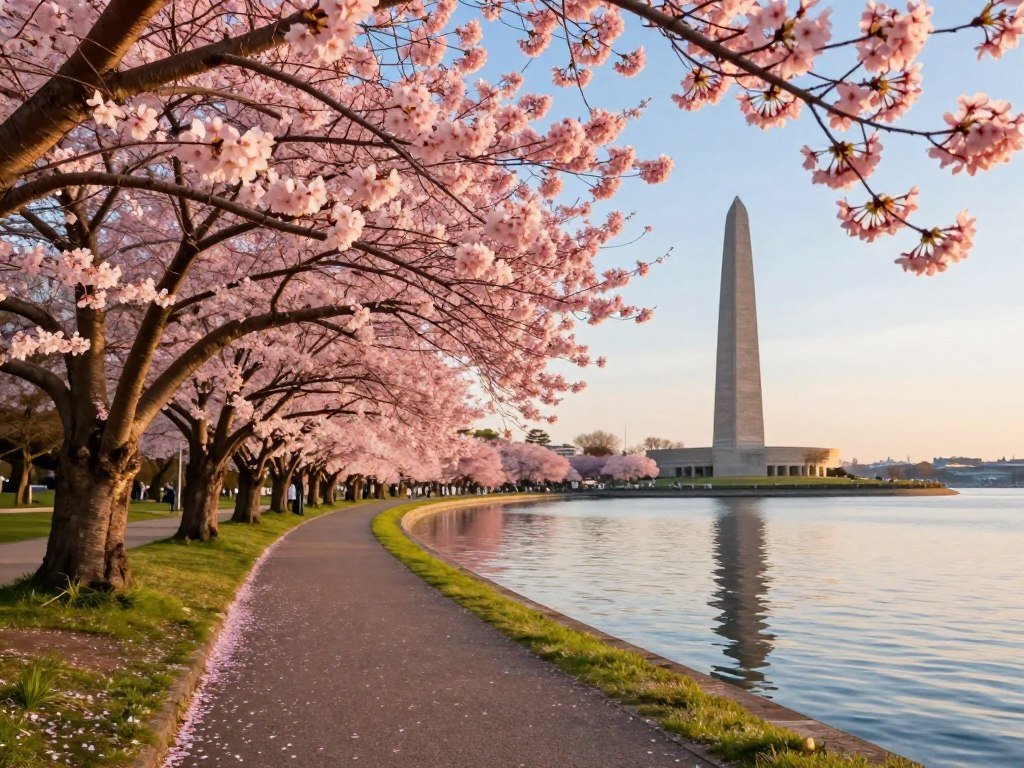
A spring trip for cherry blossoms can mean a monument-framed walk, a quiet garden path or a full day built around a local festival. These ten picks include waterfront paths, garden grounds, campus groves and festival destinations across the United States. Their flowering times differ by region, tree variety and weather, so the right spot depends partly on when you can travel. A well-chosen destination also gives you something to enjoy beyond the trees, from a city stroll to a formal garden visit. This list helps you match the setting to the kind of outing you want, then plan around its typical season. The best itinerary starts with the destination whose season and setting match your travel dates.
Key Takeaways
- Choose a region that fits your travel dates.
- Use local bloom updates to check progress close to your trip.
- Pick a setting that suits your day, from a campus grove to a festival.
- Keep your plans flexible when weather can change the display.
- Respect trees, gardens, campuses and the people who live nearby.
When Is Cherry Blossom Season Across the US?
The most reliable plan is to choose a region first, then confirm its bloom progress within about 10 days of travel. Peak bloom is the day when 70 percent of the Tidal Basin’s Yoshino cherry blossoms are open. The average date there is April 3, but the display often begins earlier.
Cherry blossom season starts at different times across the country. The Tidal Basin bloom period can last up to 14 days, but frost, heat, wind or rain can shorten it. National Park Service horticulturists cannot make an accurate peak-bloom prediction much more than 10 days ahead. Its National Park Service bloom guidance explains the timing and weather limits.
Early blossoms in the South and Southwest
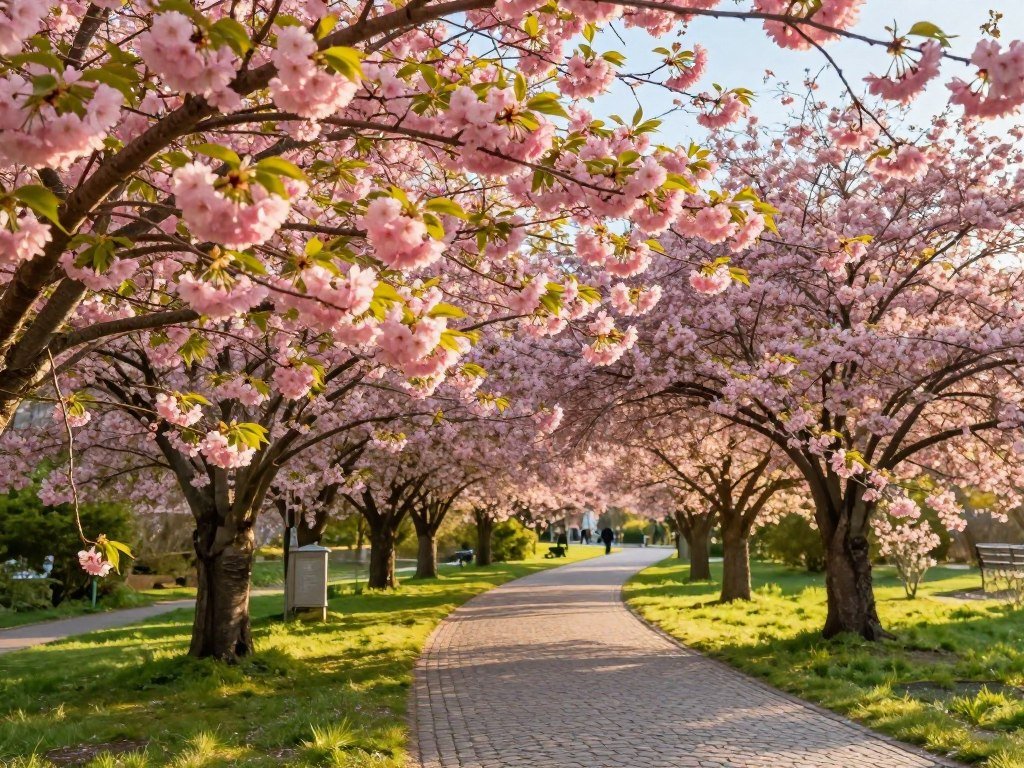
Southern and some Southwest destinations tend to flower earlier than northern sites. St. Louis offers an especially early start, with Japanese apricots blooming at the end of February. Cherries follow from March through early April, giving you more than one chance to catch flowers.
San Francisco’s typical cherry blossom peak season runs from mid-March to mid-April. The timing shifts with weather, so a date that worked last year may not match this spring. Macon also draws visitors for its large Yoshino display, though its festival dates are a separate planning factor.
Midseason displays in the Mid-Atlantic and Pacific Northwest
Washington, D.C., and Seattle both offer major spring displays, but their usual windows differ. Seattle’s Quad trees tend to peak in the third week of March, while other varieties can extend the display into early April. In D.C., the average date for peak bloom is April 3.
These windows give you a starting point, not a promise. A local bloom tracker can show whether a particular park or garden is ahead of its usual schedule. The best places to see cherry blossoms near you depend on matching local varieties and elevation to your travel dates.
Later opportunities in the Northeast
New York City gives you a wider spring window than many single-grove destinations. Its cherry blossom season typically runs from late March to early May, with many trees peaking around mid-April. That range can help if your travel plans fall after the earliest displays.
The best places to see cherry blossoms in the USA range from D.C. for an iconic setting to Macon for a large Yoshino display. Use this comparison to narrow down your trip:
| Destination | Typical viewing window | What to know |
|---|---|---|
| Washington, D.C. | Average date April 3 | Forecasts are reliable only about 10 days ahead |
| San Francisco | Mid-March to mid-April | Local peak shifts with weather |
| Seattle | Early to mid-March | Peak usually falls in the third week of March; other varieties can last into early April |
| St. Louis | Japanese apricots at the end of February; cherries March to early April | Several varieties extend the display |
| New York City | Late March to early May | Many trees peak around mid-April |
Use these windows as typical patterns, not guarantees. Before you leave, check a local tracker and keep your day plan loose enough to adjust.
- Check a local bloom tracker close to departure.
- Keep a flexible day in your itinerary.
- Identify a second nearby park or garden.
Keep one backup viewing day free, because wind or rain can shorten a local display.
A little flexibility matters most when a trip centers on a short flowering period. Check the local park or garden’s own updates, since nearby spots may be at different stages.
Best Places to See Cherry Blossoms at the Tidal Basin
For the classic Washington, D.C., blossom view, walk the Tidal Basin between the Yoshino trees and the memorials. Early April is the 2026 peak period, though the listed period began March 26. Peak bloom means 70 percent of the Yoshino blossoms are open.
The 2026 Tidal Basin peak-bloom period was March 26-April 2. The full bloom period starts several days before peak bloom and can last up to two weeks when weather allows. Japan gifted Washington, D.C., 3,000 cherry trees in 1912.
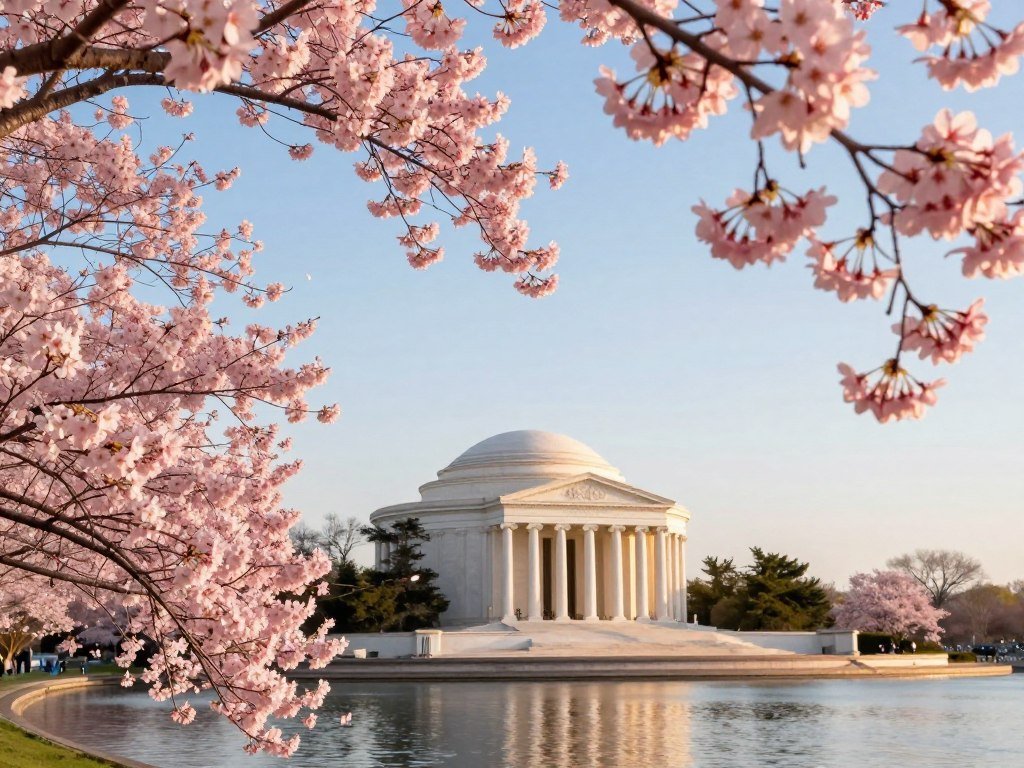
BloomFest at the Tidal Basin was scheduled for March 27-April 11 in 2026, with operating dates based on peak bloom. The 2026 National Cherry Blossom Festival’s BloomCam offers a live, year-round view of the trees. For anyone checking the best time to see cherry blossoms in DC in 2026, early April was the peak period, but the listed window starts March 26.
The two-mile paved loop gives you changing views of the Jefferson Memorial and Washington Monument. Set aside time for the full circuit, since the scene shifts as you move around the water. A quick stop at one point misses much of the memorial-side walk.
The classic monument-side walk
The Tidal Basin is the most iconic place to see cherry blossoms in Washington, D.C. Yoshino trees line the water, with the Jefferson Memorial rising behind them. From other points on the loop, the Washington Monument comes into view across the basin.
The walk is a popular choice for a first visit because the trees, water and memorials share one route. The paths can feel crowded during peak bloom, so allow time to move at a steady pace. Take care around roots and planted areas while finding a place to pause.
Transit, bikes and respectful viewing
The National Cherry Blossom Festival recommends Metro for reaching the Tidal Basin and most festival events. Smithsonian is the closest Metro station, served by the Blue, Orange and Silver lines. Capital Bikeshare is another option if you want to ride between nearby sights.
Pick the approach that fits your day:
- Take Metro and walk from Smithsonian station.
- Walk the full two-mile loop for changing views.
- Use Capital Bikeshare, with a $10 day pass or single trips costing $1 to unlock, plus $0.05 per minute for a classic bike or $0.15 per minute for an e-bike.
The year-round BloomCam can help you see how the trees look before setting out. While visiting, leave the cherry trees untouched: do not touch or climb them, pick branches or walk on roots. Ground compaction damages the trees, even when each step seems small.
Leave branches and roots untouched, even when a close-up photo would be tempting.
Quieter Cherry Blossom Spots Around Washington, D.C.
For a less crowded D.C.-area outing, trade the Basin’s central loop for a garden path, peninsula drive or residential stroll. Different settings let you enjoy the cherry trees without making the busiest waterfront your whole day. Hains Point, the National Arboretum, Dumbarton Oaks, the National Cathedral and Kenwood each offer a distinct kind of blossom viewing.
Kenwood has about 1,200 cherry trees, while the U.S. National Arboretum covers 446 acres. Those two stops suit very different plans: one is a neighborhood walk, and the other is a large garden landscape.
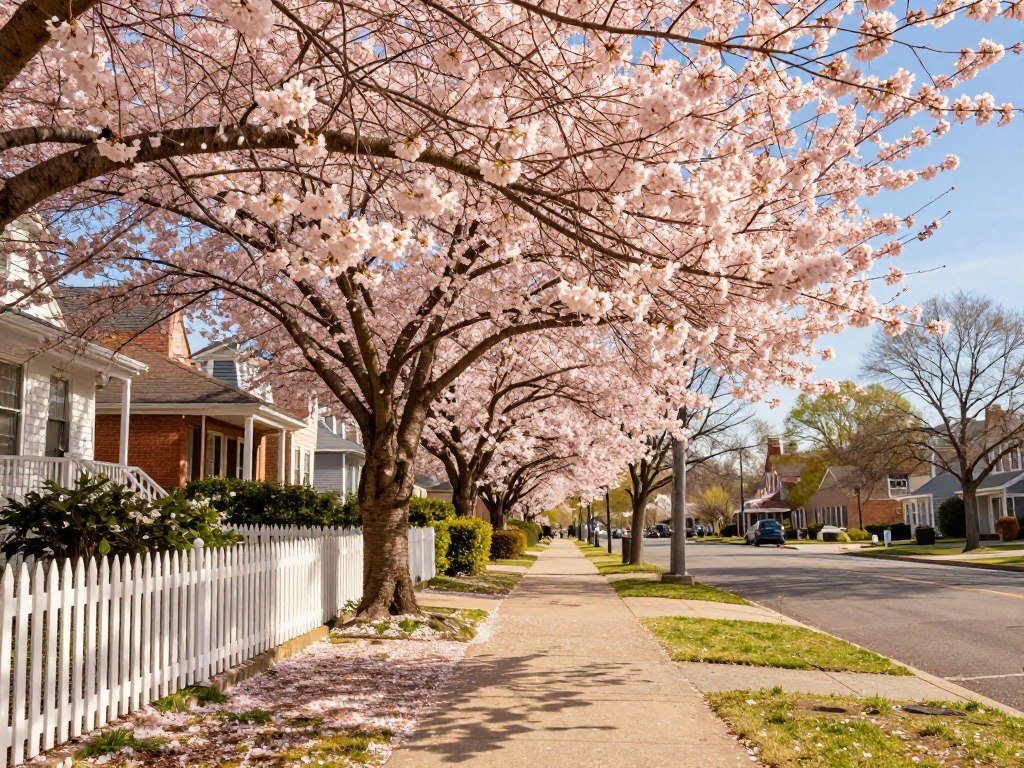
Washington’s National Park Service cherry trees grow around the Tidal Basin in West Potomac Park, at Hains Point in East Potomac Park, and on the Washington Monument grounds. Hains Point Loop is just over four miles, making it a longer waterfront outing. The Arboretum has more than nine miles of roadways across its grounds.
Consider these alternatives when choosing a route:
- Hains Point for a waterfront loop just over four miles long.
- The U.S. National Arboretum for a broad garden visit and long roadways.
- Dumbarton Oaks for Cherry Hill and flowering paths across 53 acres.
- The Bishop’s Garden at the National Cathedral for a quieter garden setting.
- Kenwood in Bethesda for a residential stroll among about 1,200 trees.
Dumbarton Oaks cherry blossoms add a garden walk with Cherry Hill as a focal area. The paths bring the flowers into a setting designed for slow exploration, rather than a loop beside a major memorial.
At the National Cathedral, National Cathedral cherry blossoms can be enjoyed alongside historic and native plants. The Bishop’s Garden offers a calmer setting for visitors who want to move between different garden beds. Keep your visit focused on the garden paths and their plants.
Kenwood cherry blossoms make a neighborhood walk rather than a ticketed-garden visit. The streets are residential, so keep noise low, do not block driveways, and stay off private property. Check the local conditions before you go, since the neighborhood’s trees do not all need to be at the same stage.
In Kenwood, keep to public sidewalks and leave the neighborhood as peaceful as you found it.
Macon, Georgia, for a Festival and a Vast Yoshino Display
Macon is the standout choice if you want a festival day surrounded by a very large Yoshino cherry display. More than 350,000 Yoshino cherry trees grow in the city, making it the large-scale choice among these ten destinations. A festival visit gives you scheduled activities as well as flowers.
The 2026 Macon International Cherry Blossom Festival was scheduled for March 20-29 at Carolyn Crayton Park. The dates belong to that season and are not a guarantee for future years. A self-guided blossom walk offers a different kind of visit, without a festival program or its park admission.
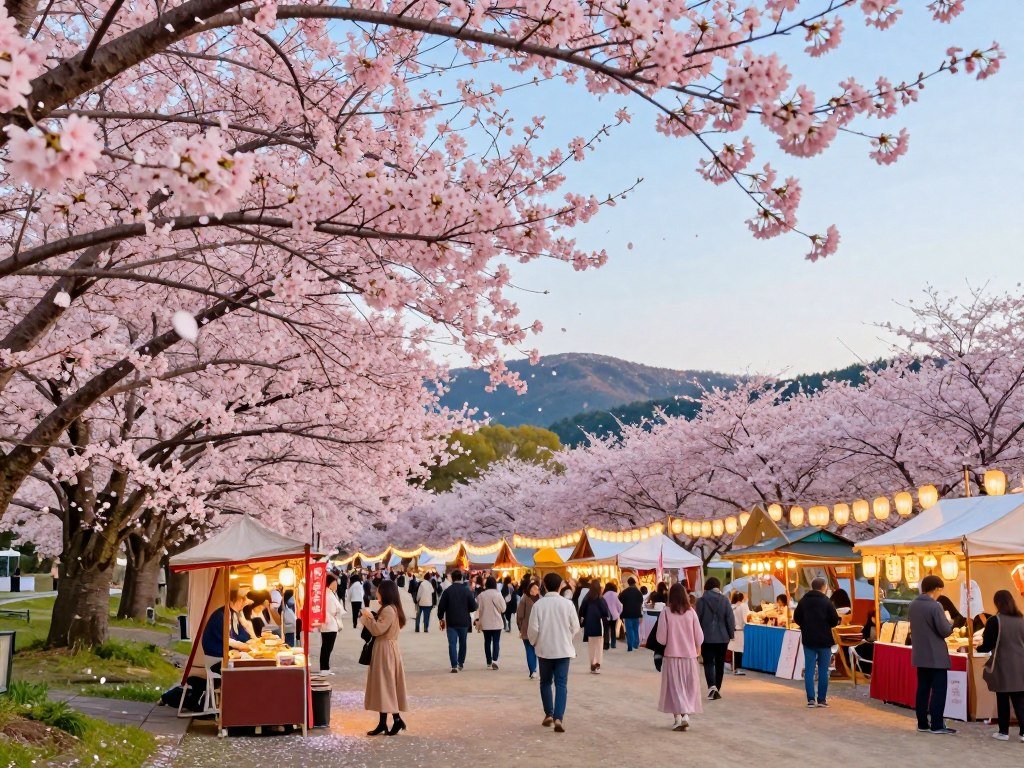
The 2026 festival dates and setting
Carolyn Crayton Park was the central event location for the 2026 festival. The event took place over ten days, giving visitors a chance to plan around the celebration rather than a single afternoon. The large Yoshino display is the reason Macon stands out among festival destinations.
A festival day may suit you if you want more than a stroll beneath the trees. Scheduled activities create a set event plan, while a self-guided outing leaves you free to choose your own route and pace. Those are different travel experiences, even when both include blossoms.
The name of the event also points to the scale of the local display. Macon’s Yoshino cherry trees are spread across the city, rather than gathered only in one formal garden. That makes the city a strong pick for travelers who want to see cherry trees as a defining part of the spring visit.
Planning around admission and viewing
For 2026, daily admission to the festival was $10, and children age 10 and under entered free. The festival’s 2026 event announcement gives the dates and listed admission details. Treat those prices as specific to that year.
A festival charge is part of the event experience, while a self-guided walk is not the same as a ticketed festival day. Think about whether you want activities and a central event site, or just time among the trees. That choice can shape how you plan your stay.
For a future season, check the local festival calendar rather than assuming the same dates will return. Festival dates can matter as much as flowering time if you hope to attend both. A blossom walk still gives you another way to enjoy Macon if your plans do not match event dates.
For a future visit, confirm the event dates and admission before building the trip around the festival.
San Francisco’s Japantown and Northern California Festival
San Francisco offers a mid-March-to-mid-April viewing window and two April festival calendars to plan around. Japantown is the neighborhood choice for a cultural festival outing, while the Northern California Cherry Blossom Festival has a larger regional reach. Their scheduled dates overlap, but each event has its own program.
The 59th Northern California Cherry Blossom Festival reported annual attendance of more than 220,000 people. That figure describes the regional festival’s reported scale, not a promise about crowd size at a specific event or time.
Two weekends in Japantown
San Francisco’s Japantown Cherry Blossom Festival was scheduled for April 11, 12, 18 and 19 in 2026. The four dates span two weekends, so you can pick the one that fits your trip. The city’s typical cherry blossom peak season runs from mid-March to mid-April.
Japantown makes sense if you want the neighborhood itself to be part of the outing. The festival dates give you a clear event window, but the city’s flowers may be at different stages across that wider season. A festival day and a peak-bloom day do not always line up.
How the regional festival differs
The Northern California Cherry Blossom Festival is a separate event from Japantown’s festival. In 2026, its first-weekend activities were scheduled for April 11-12, followed by a Grand Parade on April 18. The calendar includes both festival activities and a distinct parade event.
Use the dates below to tell the two schedules apart:
| Event | 2026 dates | Where or what |
|---|---|---|
| Japantown Cherry Blossom Festival | April 11, 12, 18 and 19 | San Francisco Japantown |
| Northern California festival first-weekend activities | April 11-12 | Festival activities |
| Northern California festival Grand Parade | April 18 | Parade event |
The events give you different reasons to visit, even though their dates overlap. Japantown’s celebration centers on one San Francisco neighborhood. The regional festival’s reported attendance shows its broad reach, though it does not predict the crowd for any single day.
For a general blossom visit, the mid-March-to-mid-April season gives you a wider window than the festival dates alone. Weather still affects when trees open, so use the calendar as an event guide rather than a bloom report. You can pair a festival outing with time in the neighborhood.
Choose the event schedule that fits your dates, and leave time to explore Japantown beyond the festival route.
Missouri Botanical Garden in St. Louis
St. Louis is a strong choice if you want a formal Japanese Garden where several cherry varieties extend the viewing season. Different flowers appear in sequence, starting with Japanese apricots at the end of February. Cherry varieties follow from March through early April.
The Missouri Botanical Garden’s Japanese Garden covers 14 acres and has more than 230 cherry trees. This gives you room to explore a garden setting rather than visit a single cluster. The changing bloom stages can make more than one visit rewarding.
Japanese apricots flower at the end of February, followed by cherries from March through early April. That sequence means the display is not tied to one single peak. If one variety has passed its best, another may still be flowering.
The garden’s collection includes several named cherry varieties. These listed counts show part of the mix:
| Cherry variety | Tree count | Place in the garden’s collection |
|---|---|---|
| Higan | 40 | Japanese Garden |
| Yoshino | 40 | Japanese Garden |
| Centennial | 20 | Japanese Garden |
Higan and Yoshino trees each account for 40 trees in the listed collection, while the garden has 20 Centennial cherry trees. The figures sit within a larger Japanese Garden collection of more than 230 cherry trees. A walk through the grounds can bring several kinds of blossom into one outing.
The garden listed admission at $16, with a $6 rate for St. Louis residents and free entry for children age 12 and under. These are the listed prices, not a guarantee of current rates. A garden visit also gives you a place to slow down between bloom areas.
Plan enough time to explore beyond the first flowering trees you see. The Japanese Garden’s size and range of varieties make a route through the grounds more useful than a quick stop at one spot. Seasonal changes can give the same path a different feel later in spring.
Check the garden’s current admission and opening details before making the visit part of a fixed itinerary.
Portland’s Cherry Trees Along the Waterfront
Portland’s Japanese American Historical Plaza puts cherry trees in a waterfront setting that is easy to pair with a city walk. The public-park location makes this a different kind of stop from a ticketed botanical garden. Tom McCall Waterfront Park has 100 cherry trees in and around the plaza.
The plaza brings 100 cherry trees together with a riverfront stroll. You can take in the flowers, then continue along the water without turning the visit into a full-day garden trip. The setting works well as part of a broader city outing.
The Japanese American Historical Plaza is the focal point for blossom viewing in this part of Tom McCall Waterfront Park. Its location makes it easy to combine the trees with time outdoors near the river. Pause to look around instead of treating the plaza as a quick photo stop.
This is a public-park experience, not a ticketed garden visit. That can make it a simple addition to a day already spent exploring the city. You can set your own pace and keep walking when you are ready.
Portland’s cherry trees do not have a fixed peak date in this guide. Local bloom progress and weather are the best clues for choosing a day, since conditions can shift the flowers’ timing. A nearby update can help you decide whether to make the plaza a main stop or a bonus visit.
As you plan, leave room for both the plaza and the riverfront walk. The trees sit in and around the Japanese American Historical Plaza, so the best view may come from taking in the area at a relaxed pace. A few minutes there can turn a passing stop into part of the outing.
The waterfront setting also gives you a clear choice of scale: spend a little time among the trees, or fold the plaza into a longer city stroll. Either way, the public park keeps the outing informal. You do not need to plan around a garden event to enjoy the views.
Build in time to pause at the plaza rather than treating it only as a quick photo stop.
The University of Washington Quad in Seattle
Seattle’s University of Washington Quad is the pick for a compact grove where blossoms frame a campus courtyard. The campus setting gives you a different view from a waterfront park or formal garden. The Quad has 29 cherry trees.
The walk from the University of Washington light-rail station to the Quad takes about 15 minutes through campus. Seattle blossoms often arrive in March, but weather can shift the timing. Do not count on one set peak date for every season.
The courtyard makes the Quad a concentrated place for cherry blossom viewing. Its 29 trees frame the campus space, creating a clear destination once you arrive. The walk from the station also gives you time to see more of campus along the way.
Plan your arrival with these options in mind:
- Walk from the University of Washington light-rail station through campus.
- Check university parking and permit rules before driving.
- Use accessible Quad entrances and accessible parking provisions when needed.
The University of Washington recommends public transit to help avoid congestion and limited parking. Its visitor parking and transportation information includes routes, access details and seasonal street closures. Campus access rules can affect where visitors may go.
The Quad remains a university space, not a public park built only for blossom viewing. Follow posted access and event rules while walking through campus. That keeps your visit in step with the needs of students and staff.
Give yourself enough time for the campus walk, especially if you plan to arrive by light rail. The route is part of the visit, not just a transfer between the station and the trees. Check parking rules before deciding to drive.
Arrive with enough time for the campus walk, and check parking rules before choosing to drive.
Dallas Arboretum and Botanical Garden
Dallas gives Texas travelers a garden-based spring outing, with Dallas Blooms scheduled across several weeks in 2026. The event window ran from February 21-April 12, but an event’s full schedule is not the same as one tree variety’s bloom period. The garden offers a managed setting for a spring visit.
Dallas Blooms was scheduled for February 21-April 12, 2026. Those dates describe the event, not a promise that cherry blossoms would stay at peak throughout. Flowering windows for individual trees are shorter and can shift with the season.
The Dallas Arboretum and Botanical Garden is a practical choice if you want to pair cherry blossom viewing with other spring flowers. The event covers several weeks, giving you a broad period to plan a garden outing. It does not mean that every plant reaches its best on the same day.
That difference matters if cherry trees are your main reason for visiting. A seasonal event can remain open while a particular tree variety has already passed its peak. The event calendar is a useful starting point, while the garden’s bloom updates speak to current conditions.
The best places to see cherry blossoms near Texas include the Dallas Arboretum and Botanical Garden. Its seasonal event makes it possible to plan around a set spring program, while the flowers themselves follow their own pace. You can make the outing broader than a search for one tree in bloom.
Before you set a date, check the garden’s current bloom updates and admission arrangements. This is especially helpful if you have a narrow travel window or want to focus on cherry trees. A little planning can keep your visit in line with what is flowering.
Consider how much of your day you want to spend in the garden. A longer visit gives you time to enjoy the full spring setting, while a shorter stop may suit a trip with several Dallas destinations. The event dates can frame the outing, but tree conditions shape the blossom view.
Check which flowers are currently in bloom if cherry trees are the main reason for your visit.
Brooklyn Botanic Garden and New York’s Cherry Season
Brooklyn Botanic Garden is the strongest New York choice for a single, concentrated cherry-tree display. The Cherry Esplanade has 76 cherry trees that bloom in unison. That grouped display gives you a focused stop within a much larger citywide season.
New York City has 40,000 ornamental cherry trees, and its season typically runs from late March to early May. Many trees peak around mid-April, though different places and varieties can flower at different times. The wider window gives you other options if one spot is past peak.
The Cherry Esplanade’s synchronized display
The Cherry Esplanade’s 76 trees bloom in unison, creating a concentrated display in one garden area. That makes it a strong pick if you want a clear focal point for your visit. You can spend your time among one notable grove rather than searching across the city.
A synchronized grove is appealing, but it can also mean a more focused viewing window at that location. If your dates miss its best display, New York’s other cherry trees offer alternatives across the city. The Esplanade is one stop within a broad urban collection.
A longer citywide viewing window
New York City’s cherry blossom season typically stretches from late March to early May, with many trees peaking around mid-April. The exact experience depends on which neighborhood and tree variety you visit. This gives you room to adjust your plans beyond one garden.
Brooklyn Botanic Garden concentrates the experience in a single setting, while a city visit can offer other places to see cherry blossoms. If one location is past peak, another neighborhood or variety may still be flowering. Check local updates before choosing where to spend the day.
The city’s 40,000 ornamental cherry trees make the garden a focused stop within a much larger spring display. That scale gives you choices, but it also means the trees will not all look the same on one date. Match your plans to the location you most want to see.
For a mid-April visit, the city’s usual peak period can make planning easier, but it remains a typical pattern. A garden visit offers a clear destination, while exploring elsewhere gives you room to change course. Check conditions close to your travel dates.
If your dates fall outside mid-April, use the city’s longer seasonal window to check other neighborhoods and varieties.
New York Botanical Garden in the Bronx
For a more expansive garden visit in the Bronx, the New York Botanical Garden has a collection of more than 200 cherry trees. The broader grounds offer a different kind of outing from a single synchronized grove. You can explore a large garden with cherry trees in more than one area.
The collection includes more than 200 cherry trees, and different trees may flower at different times. That gives you a substantial garden visit without relying on every tree reaching peak together. Check current conditions before making a special trip.
The New York Botanical Garden is a distinct Bronx option for visitors who want more room to explore. Its collection is larger than one small grove, so the experience can involve walking between garden areas. That scale sets it apart from a single row of trees.
A larger collection can offer more variety in where you look, but it does not mean every tree flowers at once. Some areas may be further along than others. Current bloom conditions help you choose the right time for a visit.
Think of the garden as a wider outing, rather than a quick stop centered on one view. The grounds give you space to spend time among different plantings and paths. Cherry blossoms are part of the visit, not a guarantee that each tree will be at peak.
If you have a full day in mind, check which areas are in bloom before setting your plans. The collection’s size can make a visit worthwhile across more than one location, but the trees may not share one schedule. Choose your route based on current conditions.
Check the garden’s current bloom conditions before you set aside a full day for the visit.
A garden visit is easier to shape when you know which areas are flowering. You can focus your time on the parts of the grounds that match your interests, then explore other paths if time allows. The larger setting offers a different pace from a compact grove.
Confirm which areas are blooming before setting aside a full day for the garden.
Conclusion
A great blossom trip starts with choosing the setting that fits your dates, whether that is a garden, waterfront or festival. Typical flowering windows can point you toward a region, but weather may shift the display. Keep your plans flexible, especially when one day of peak bloom is the main goal.
Before booking, check a local bloom tracker and the destination’s current visitor information. Those two checks help you line up flowering conditions with access, events and travel plans. Check the local bloom tracker now, then keep one flexible day available for the flowers.
FAQ
Where is the best place in the US to see cherry blossoms?
Washington, D.C.’s Tidal Basin is the iconic first choice, while Macon, Georgia, stands out for its huge Yoshino display. The Basin pairs blossoms with major memorial views along a paved waterfront loop. Macon has more than 350,000 Yoshino cherry trees, making it a strong pick if the scale of the display matters most to you.
Which US state has the most cherry blossoms?
Georgia is the strongest documented contender in this selection because Macon has more than 350,000 Yoshino cherry trees. That number describes Macon, not every flowering tree across Georgia. It does not provide a complete ranking of all states, so treat it as a city-level comparison rather than proof that Georgia has the highest statewide total.
Which US city is famous for cherry blossoms?
Washington, D.C., is the best-known U.S. city for cherry blossoms, especially around the Tidal Basin. The Yoshino trees frame the water and nearby memorials, creating a nationally recognized spring view. The Basin’s peak-bloom milestone is reached when 70 percent of its Yoshino blossoms are open, though the timing changes with weather.
How long will cherry blossoms last in 2026?
At the Tidal Basin, the full bloom period can last up to 14 days, but frost, heat, wind or rain can shorten it. The 2026 peak-bloom period was March 26-April 2. Peak bloom marks one stage within the wider display, so visitors could see flowers before or after those peak dates, depending on conditions.
What is the best time to see cherry blossoms in DC in 2026?
The Tidal Basin’s 2026 peak-bloom period was March 26-April 2. Peak bloom is the day when 70 percent of the Yoshino blossoms are open. The broader flowering period begins several days before that milestone and can last up to two weeks when weather allows, so early April was not the only possible viewing time.
Is April too late for cherry blossoms?
No, April is not too late for cherry blossoms in many U.S. destinations. New York City’s typical season runs from late March to early May, and many trees peak around mid-April. The Tidal Basin’s 2026 peak period came earlier, from March 26-April 2, so your best choice depends on the city and local bloom conditions.
Can I touch cherry blossoms?
No, do not touch or climb cherry trees, pick branches or walk on their roots. Ground compaction from footsteps damages the trees, even when visitors do not mean to cause harm. Keep a little distance for photos and stay on paths or public sidewalks. That lets you enjoy the flowers without harming the trees or nearby planting areas.



