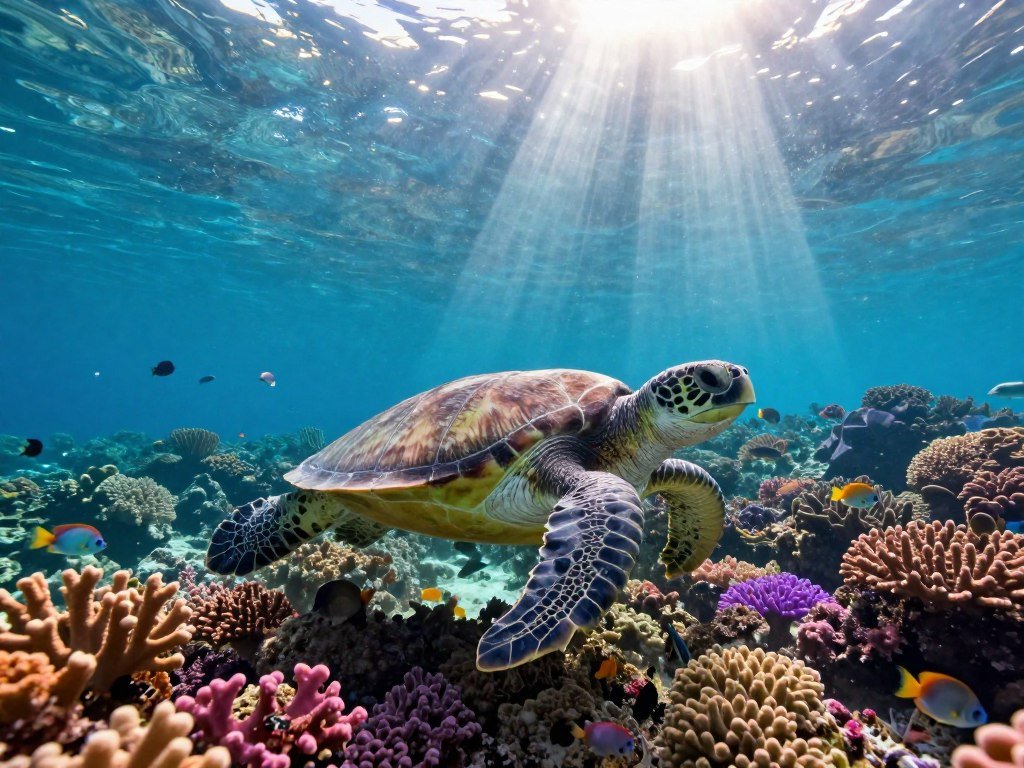
A sea turtle encounter can be a memorable part of a trip, but the best destination depends on when you travel and how you want to explore. Sea turtles are reptiles, and they spend about 96% of their lives at sea. Seven species live across the world, from tropical reefs to nesting beaches.
The ten destinations here pair turtle habitat with scenic water, reefs, islands, or beaches. Some offer shore snorkeling, while others call for a boat or a guided trip. A wild sighting is never guaranteed, even in places known for turtles. An atoll is a ring-shaped reef or island enclosing a lagoon.
Your travel time and preferred activities can help narrow the choices. You might want a simple beach entry, a guided boat tour, a dive, or a chance to watch nesting from a safe distance. Local conditions and access rules also shape what each place can offer. Choose a place for its wider nature and water activities too, so the trip remains worthwhile if turtles stay out of view.
Key Takeaways
- Wild encounters depend on the animal, season, and local conditions.
- Choose between shore snorkeling, boat trips, diving, and nesting walks.
- Keep a respectful distance and let each turtle move freely.
- Check local access rules before planning a wildlife outing.
- Pick a destination with other water and nature activities you enjoy.
How Can You Swim With Sea Turtles Responsibly?
Swimming near a sea turtle is appropriate only when you let it choose its route and keep the required distance. Calm observation is different from following an animal, and the turtle sets the pace.
In U.S. waters, NOAA recommends staying at least 50 yards away from sea turtles. In Hawaiʻi, the recommended distance is at least 10 feet, or 3 meters. Federal and state rules protect all sea turtles in Hawaiʻi, including Hawaiʻi Revised Statutes Chapter 195D and Hawaiʻi Administrative Rules 13-124.
The NOAA viewing guidelines advise against swimming with, touching, feeding, or otherwise interacting with wild turtles. These animals need room to feed, rest, and reach the surface for air.
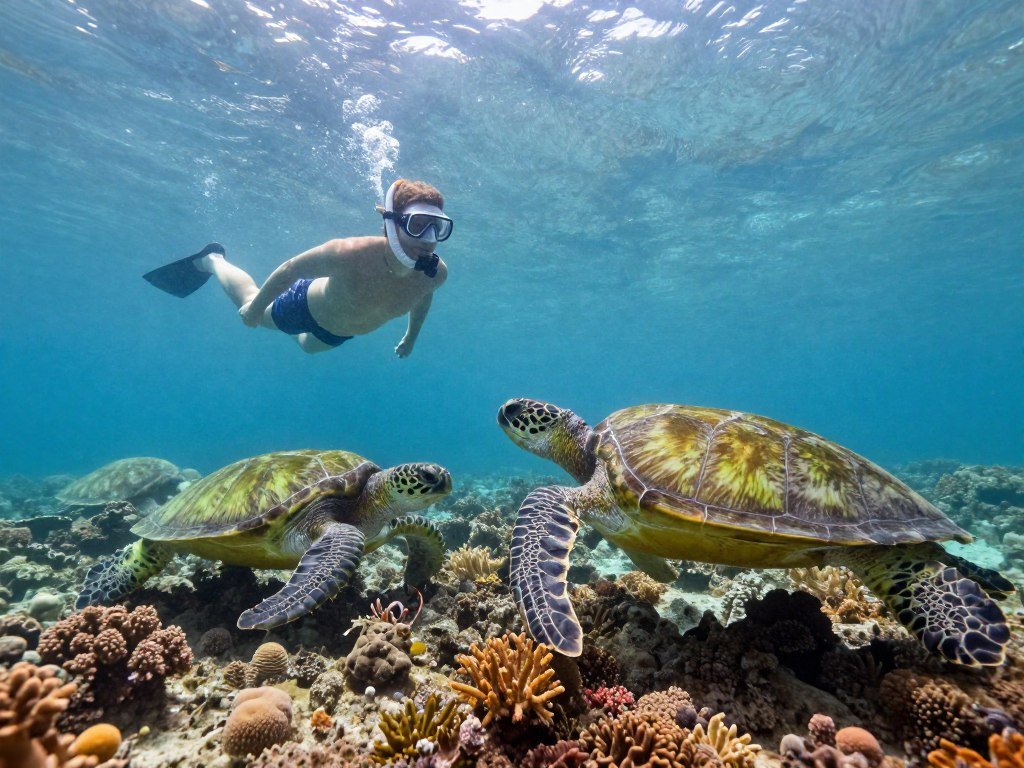
Keep the required distance, and never touch, feed, ride, or pursue a wild sea turtle.
Use these four habits whenever you see one:
- Keep the required distance for the place you are visiting.
- Never touch or feed the turtle.
- Leave its route to the surface clear.
- Move away if it changes course or seems disturbed.
Do not swim around a turtle to get a closer view. A clear path matters more than a close photo, and a sudden change in direction can signal that you are too near. If a turtle has to alter its path to get around you, give it more room immediately.
Where Can You See Turtles in Hawaii?
Hawaiʻi is the strongest U.S. choice in this guide for combining warm-water snorkeling with wild sea turtle habitat. Maui offers shore-access spots, while Oʻahu has both boat trips and beach viewing, with no guaranteed encounter.
Hawaiian green sea turtles are threatened under the U.S. Endangered Species Act. Five sea turtle species inhabit Hawaiian waters: green, hawksbill, leatherback, loggerhead, and olive ridley.
Maui’s Turtle Town and South Coast
Maui’s Turtle Town near Maluaka Beach is a known shore-snorkeling area. You can enter from the beach when conditions allow, then explore the coastal water and reef. A turtle may appear, but the place is still a good fit for a swim even without one.
The state’s nesting season runs from late April through late October. Hatchlings typically emerge from August through November. Almost 500 female green turtles nest in Hawaiʻi each year, compared with 67 in 1973. Nesting populations have grown by 5% per year over the last two decades.
An estimated 96% of Hawaiian green turtles nest at French Frigate Shoals, known as Lalo. This remote nesting site is not a visitor destination. It is part of the turtles’ protected habitat, not a place to seek a close encounter.
Oʻahu’s Turtle Canyon and North Shore
Turtle Canyon is a boat-based snorkeling option near Waikiki. Living Ocean Tours’ trip leaves from Kewalo Basin Boat Harbor and includes wildlife-rule briefings and professional snorkel guides. Its guided Turtle Canyons excursion is one optional way to explore.
Wild Side Hawaii offers shared Oʻahu tours with up to 10 guests; private trips can take up to 16. Its listed starting price is $205 per person, including snorkeling gear and a sandwich lunch. These details describe tour options, not a promise of a sighting.
Laniakea Beach, on Oʻahu’s North Shore, offers a chance to watch turtles near shore. It is a beach-viewing option, not an invitation to crowd or approach animals resting on the sand.
| Hawaiʻi location | How to encounter turtles | Practical detail |
|---|---|---|
| Maui’s Turtle Town, Maluaka Beach | Shore snorkeling | South coast beach access |
| Oʻahu’s Turtle Canyon | Boat-based snorkeling | Departs from Kewalo Basin near Waikiki |
| Laniakea Beach | Shore viewing | North Shore beach stop |
For where to swim with sea turtles in the U.S., Hawaiʻi offers the clearest match in this guide. If you want to know the best places to swim with turtles in Florida, investigate snorkeling in the Florida Keys. Encounters remain wild, and local conditions shape each outing. Follow Hawaiʻi’s 10-foot distance rule even when a turtle approaches a familiar shoreline.

Which Caribbean Reefs Offer Easy Turtle Snorkeling?
For an easy-entry Caribbean-style snorkel, Akumal’s shallow bay is the clearest fit in this pair. Tobago Cays suits a boat outing, so the easier starting point depends on how you want to reach the water.
Akumal is the most accessible choice here for a self-directed, shallow-water snorkel. The Tobago Cays fit travelers comfortable arranging boat access to a protected marine park.
Akumal’s Shallow Bay in Mexico
Akumal’s protected bay is about 15 feet, or 5 meters, deep. A sandy bottom and seagrass make it an inviting place to swim and snorkel, and green and loggerhead turtles feed in the area.
The bay’s calm, shallow water makes it easier to enter than a reef reached by boat. Still, swimmers need to leave feeding turtles room. Crowding the seagrass can disrupt the very behavior that makes the bay interesting to watch.
Loggerhead nesting also takes place on Akumal’s beaches. A long-term study recorded nesting from April through November, with most activity from May through July and a June peak. The Akumal nesting study tracked nesting activity over 24 years.
Tobago Cays and Other Caribbean Options
The Tobago Cays are a protected marine park in the Caribbean. Unlike Akumal, the outing usually depends on boat access. Baradal Island’s southern sandy beach is a recommended place to enter for snorkeling.
This choice gives you a different kind of day: a boat ride to the cays, then time in clear water around the park. The sandy access at Baradal offers a practical start, but you still need to judge conditions on arrival.
Bonaire is another Caribbean possibility for reef and water activities, though it is not one of the ten featured destinations here. It can suit travelers who want an island trip built around underwater scenery.
Akumal and Tobago Cays both bring you into turtle habitat, but their access styles differ. Akumal works best for a self-directed shallow snorkel, while Tobago Cays reward a planned boat outing. Choose a calm entry and leave enough space for turtles to feed without swimmers crowding the seagrass.
Where Can You Pair Turtle Watching With Nesting?
Choose Tortuguero for a seasonal nesting spectacle, or the Galápagos for a better chance of an in-water encounter across more months. Tortuguero centers on nesting, while the Galápagos Islands offer year-round chances to see turtles in the water.
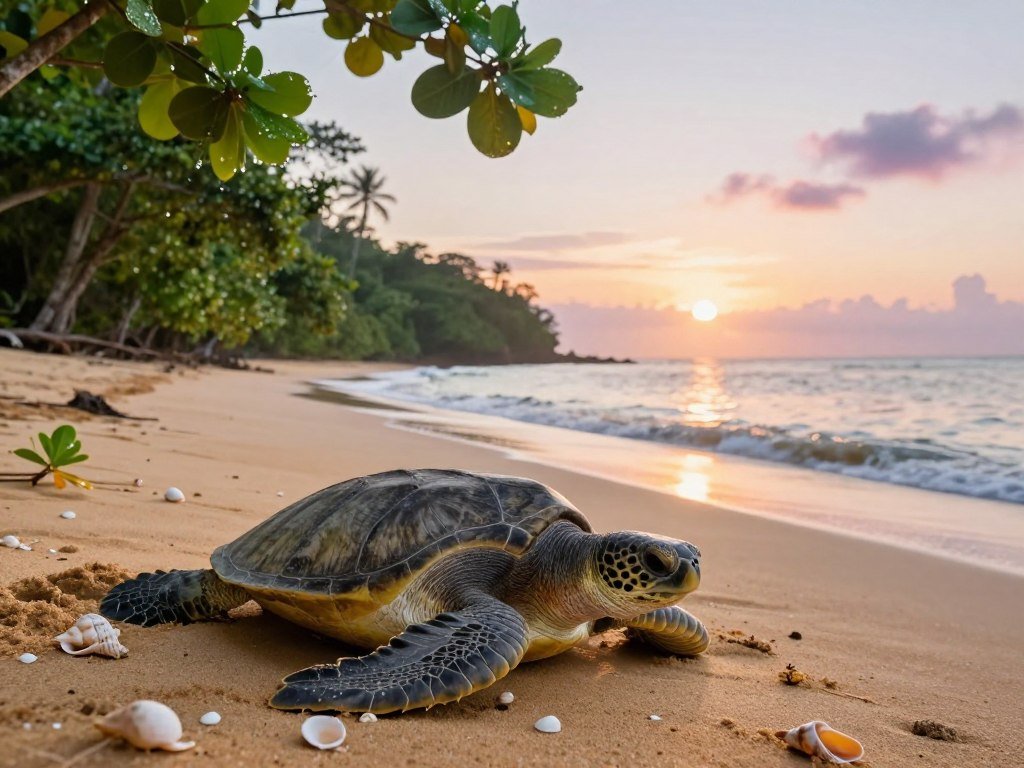
At Tortuguero, green turtle nesting runs from July to October, when more than 2,000 females come to the area. The Galápagos has green sea turtles year-round.
Tortuguero’s Caribbean Nesting Beaches
Tortuguero National Park in Costa Rica is a major nesting destination. The seasonal draw is watching green turtles come ashore, not swimming beside them at the beach.
Nighttime beach visits should be guided by a local expert. A guide can lead a quiet walk and help visitors avoid disturbing nesting turtles. Do not approach a nesting animal on your own.
Swimming directly off Tortuguero’s beach is unsafe because of waves, currents, and sharks. For an in-water outing, book an organized snorkel or dive trip instead. That keeps the beach visit focused on nesting and gives water activities a safer setting.
Galápagos Islands’ Year-Round Water Encounters
Green sea turtles live throughout the Galápagos archipelago, and snorkeling or diving can offer chances to see them year-round. Quinta Playa on Isabela Island is a principal nesting site, while other areas support water encounters.
The Galápagos suits travelers who want more than one type of wildlife experience. You can plan time in the water and explore the islands’ wider natural setting. Local sites and conditions shape which activity fits best on a given day.
The contrast is clear: Tortuguero is a seasonal nesting trip, and the Galápagos offers a longer window for in-water viewing. Each choice has a different focus, so plan the activity around the animal’s habitat. At Tortuguero, book a guided nesting walk rather than approaching a nesting turtle on your own.
What Makes Australia’s Great Barrier Reef a Strong Pick?
The Great Barrier Reef pairs extensive coral habitat with six sea turtle species, making it a strong choice for travelers who want more than one kind of underwater wildlife. The reef’s scale gives you many possible settings, rather than one single entry point.
The Great Barrier Reef extends about 1,200 miles and supports six sea turtle species. Its size makes choosing a specific reef area part of the trip plan.
The reef can suit both snorkelers and divers, with coral reefs and marine life beyond turtles. Conditions and access vary across such a large area. Pick an outing that matches your experience instead of assuming each location offers the same kind of water.
The Reef Authority says all six marine turtle species found in Australia also occur in the Great Barrier Reef area. Its marine turtle information describes their habitat and nesting cycles.
Green turtle nesting runs from late October to February. Hatchlings typically emerge from late December to April. These windows can add a nesting or hatchling focus to a reef trip, though sightings are never assured.
Reef activities can make a visit rewarding even if turtles stay out of view:
- Snorkel over coral reefs.
- Scuba dive at a suitable site.
- Explore the reef by boat.
Each activity offers a different view of the reef and asks for a different level of comfort in the water. Choose the reef area and activity to match your swimming or diving experience, rather than assuming every site has the same conditions.
Why Choose the Maldives for Reef Encounters?
The Maldives is a strong pick when you want to build a turtle-focused snorkel or dive trip around reef-rich islands. Its many atolls give you different access points, and each island has its own setting.
Five sea turtle species inhabit Maldivian waters. Hawksbills feed on sponges along Ari Atoll reefs, and green and olive ridley turtles may also be encountered.
An atoll is a ring-shaped reef or island that encloses a lagoon. The Maldives has more than 1,000 coral islands divided among 26 atolls. Reef access varies by island and trip, so a resort outing or local guide can help you find suitable water without promising a turtle sighting.
| Atoll | Turtle encounter focus | Typical way to explore |
|---|---|---|
| Ari | Hawksbills feeding on reef sponges | Guided snorkel or dive |
| Lhaviyani | Reef-based turtle viewing | Resort or boat outing |
| North Malé | Turtle habitat near island reefs | Guided snorkel or dive |
| Baa | Reef and lagoon habitat | Island-based water trip |
The table is a starting point, not a promise that every reef has turtles on every visit. Check the conditions and access at the specific island or reef before choosing where to stay.
What Can You Expect at Abu Dabbab in Marsa Alam?
Abu Dabbab stands out for the contrast between its seagrass bay and the nearby Red Sea reefs. You can look for green turtles feeding over seagrass or search reef habitat for hawksbills, with two distinct settings close together.
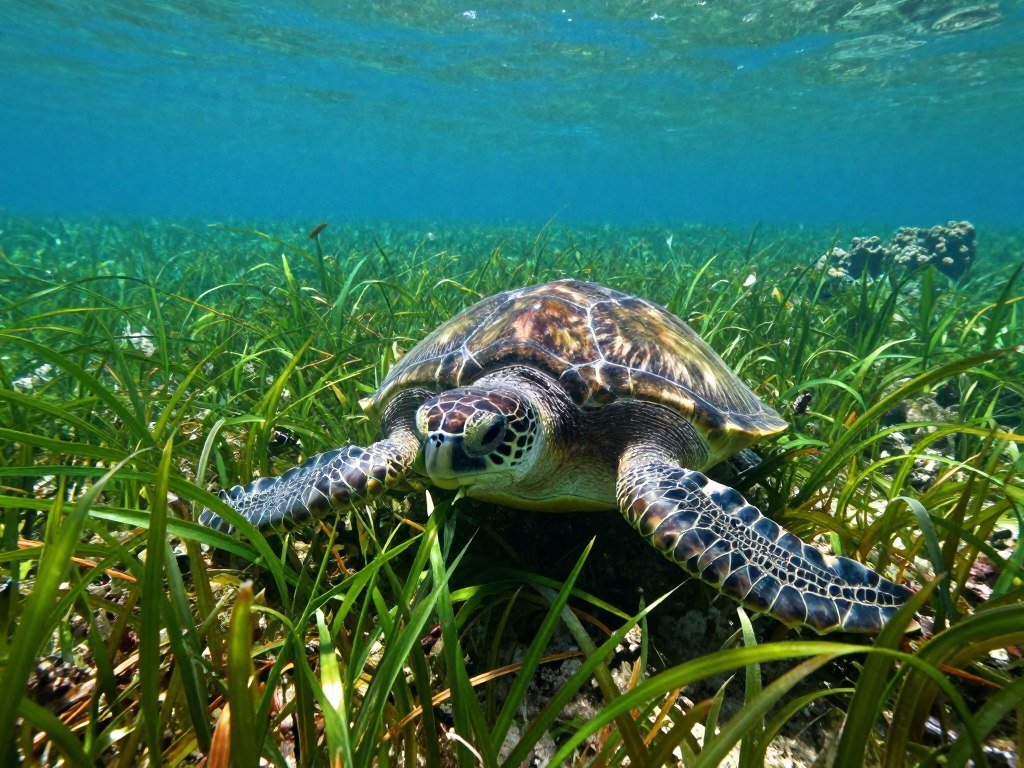
Green turtles feed on seagrass in Abu Dabbab’s sandy bay, also called Turtles Beach. Hawksbill turtles are encountered along nearby reefs.
The bay offers a beach-entry outing, while the reef gives snorkelers a different habitat to explore. Nearby marine life can make the time worthwhile even when turtles stay out of sight. A turtle’s presence still depends on chance.
Green turtles in the Red Sea use feeding grounds across the region. Satellite tracking of four turtles after nesting at Zabargad Island recorded journeys ranging from 150 to 940 kilometers. The tracking study on Red Sea turtles offers wider context, but it did not study Abu Dabbab specifically.
Abu Dabbab can suit travelers who want to enter from a beach and explore more than one habitat. Your outing may focus on seagrass, reef, or both, depending on conditions and access. Choose the habitat you want to explore, then follow local access and wildlife instructions at the beach.
Which Asian Islands Have Reliable Turtle Encounters?
Sipadan is the standout for experienced divers, while the Gili Islands and Apo Island offer different island-based ways to get in the water. Your best fit depends on whether you want a dive-centered trip or a snorkel-friendly setting.
Sipadan has year-round turtle sightings, with 20 to 30 turtles sometimes seen during a dive. That reported number is possible, not a guarantee for any single outing.
Sipadan’s Reef Diving
Sipadan suits divers who want to spend time around reef life. Turtles can be part of a dive, alongside the wider underwater setting. It is less suited to a traveler looking for a simple shore-entry snorkel.
The high reported counts make Sipadan appealing to experienced divers, but your own dive may show fewer turtles. Plan around your skills and the kind of outing you enjoy, rather than one hoped-for number.
Snorkeling Around the Gili Islands
The Gili Islands include Gili Trawangan, Gili Meno, and Gili Air. Green and hawksbill turtles are commonly encountered in the surrounding water, making the islands a practical choice for snorkelers.
You can look into shore-access snorkeling or join a guided outing. Each island offers a different base for exploring, so choose one that fits your preferred pace and access style. A guided trip can help you find suitable water, though it cannot guarantee a sighting.
Apo Island as a Philippines Alternative
Apo Island in the Philippines has a protected marine zone and year-round turtle encounters. Its protected setting gives both snorkelers and divers a reason to visit, with activity options for different comfort levels.
That makes Apo Island a useful alternative if you want a marine-protected area without planning a dive-only trip. You can choose snorkeling or diving based on your experience and the outing’s conditions.
These islands suit different ways of getting in the water: Sipadan centers on diving, while the Gilis and Apo Island offer snorkel options too. Pick the island whose access and activity suit your skills, not just the one with the biggest reported encounter.
Best Places to Swim with Turtles by Season and Region
The best match depends first on your travel month and then on how far you are willing to go for the right water conditions. Use the best time for your plans as a filter, not as a promise of a sighting.
Akumal, Tobago Cays, the Gili Islands, and Marsa Alam each have a listed seasonal window; Sipadan has year-round sightings.
| Destination | Best-visiting window | Why this timing works |
|---|---|---|
| Akumal | May through November | Loggerhead nesting activity occurs from spring into fall |
| Tobago Cays | March through June | A strong seasonal period for visiting the cays |
| Gili Islands | April through October | A favorable window for island snorkeling |
| Sipadan | Year-round | Turtles are seen in every season |
| Marsa Alam | April through October | A favorable period for reef and bay visits |
California travelers seeking tropical reef snorkeling may need to travel beyond the nearby coast. Texas travelers can consider Florida or Caribbean-facing options. For a U.S. destination, investigate the Florida Keys, where snorkeling can be part of a broader coastal trip.
For a nearby choice, identify your coast first, then check local protected-area and tour rules. Neither living near turtle habitat nor traveling in a preferred season guarantees a wild encounter.
Use this short checklist to narrow your choices:
- Your travel dates.
- Your preferred activity, such as snorkeling or diving.
- A backup wildlife or scenery plan.
A nearby coast and a favorable season can improve your options, but neither guarantees a wild sighting.
Confirm current local access rules before booking transportation or a guided trip.
Conclusion
The right turtle destination is the one that fits your dates and lets you enjoy the wider setting responsibly. Match the place to your preferred activity, whether that means a shore snorkel, a boat trip, a dive, or guided nesting viewing.
Wild encounters can never be promised, so leave room for the reef, beach, or island itself to make the day worthwhile. Choose a destination, check its current local rules, and plan a second activity for the same day.
FAQ
Where do I go to swim with turtles?
The Galápagos Islands and Sipadan offer year-round possibilities for seeing turtles in the water. Sipadan is best suited to divers, while the Galápagos has snorkeling and diving options. Match other destinations to their seasonal windows and water activities. No place can promise a wild sighting, so choose a trip that remains enjoyable without one.
Which Greek island is best for turtles?
Zakynthos, also called Zante, is a leading Greek island for turtle viewing. Its nesting season runs from May to mid-August, when loggerhead turtles come ashore. Choose a responsible viewing activity and follow local rules around nesting beaches. Seeing a turtle is never certain, even during the main season, so enjoy the island beyond its wildlife.
Why can’t sea turtles be touched?
Touching can stress or harm a wild turtle, and it may change the animal’s behavior. A turtle needs to feed, rest, and reach the surface without people interfering. In Hawaiʻi, touching or attempting to interact with sea turtles is prohibited under state and federal protections. Watch quietly instead, and let the animal move where it chooses.
Is it okay to swim with turtles?
Yes, but only as passive observation from the required distance. Do not touch, chase, feed, ride, or block a turtle’s route to the surface. Distance rules vary by place, so learn the local standard before entering the water. If the turtle changes course or seems disturbed, move away and give it more room.
What does it mean if a turtle swims up to you?
A turtle swimming toward you does not show friendliness or consent to interaction. It may be moving through its habitat or following its own route. Stay still, keep the turtle’s path open, and do not reach toward it. If it comes too close, calmly move away without turning the encounter into a chase.
Can turtles show affection to humans?
No, you should not read a turtle’s approach or tolerance as affection. Sea turtles are wild animals, not domesticated companions, and their behavior does not show human-like feelings. A turtle may pass nearby while feeding or traveling. Keep your hands to yourself and observe without trying to make contact.
What is a turtle’s biggest enemy?
Human-caused threats are major risks to sea turtles, including fishing gear, habitat loss, pollution, and disturbance. The main danger can differ by life stage and location. Hatchlings face different challenges from adults at sea, for example. Protecting nesting beaches and keeping waste and gear out of the water can reduce some pressures.