

Which refrigerator brand is really the best rated, and why does the answer change depending on who you ask? That question trips up more shoppers than almost any other appliance decision. One list crowns a premium brand, another puts a mid-priced workhorse on top, and a third insists the whole category is a coin flip. The confusion is not a sign that ratings are worthless. It is a sign that “best rated” means different things in different surveys, and the smart move is to figure out which meaning matters for your kitchen.
This guide breaks down how refrigerator brands actually get rated, where the major rating systems disagree, and how to translate a star rating into a decision you will not regret five years from now.
What “Best Rated” Really Means for Refrigerators
A brand-level rating is almost never a single number. It is usually a blend of several things: how often the appliance breaks, how satisfied owners are, how well it performs in lab tests, and how much it costs to run. Different rating organizations weight those factors differently, which is why the rankings rarely match.
There are four distinct metrics worth separating in your head:
| Metric | What it measures | Who tends to win |
|---|---|---|
| Predicted reliability | Likelihood of repair based on owner surveys | Brands with simpler designs and strong sealed-system records |
| Owner satisfaction | Would buyers recommend it again | Premium brands with thoughtful interiors |
| Lab performance | Temperature consistency, crisper humidity, noise | Brands that invest in compressor and airflow engineering |
| Value | Features and capacity per dollar | Mid-market and store-brand lines |
A brand can top one column and land near the bottom of another. That is not a contradiction. It is the whole story. Consumer Reports, for instance, builds its brand reliability scores from member surveys and publishes them alongside its tested performance scores, so a brand can earn high marks for reliability while only scoring middling on features. Meanwhile, satisfaction surveys tend to reward the experience of owning the fridge, not its repair history.
The practical takeaway: decide which metric you care about before you read a single ranking. If you are replacing a fridge that died at year six, reliability should dominate. If you are remodeling a kitchen and want the interior to feel premium every day, satisfaction and design matter more.
How Brand Reliability Ratings Are Built
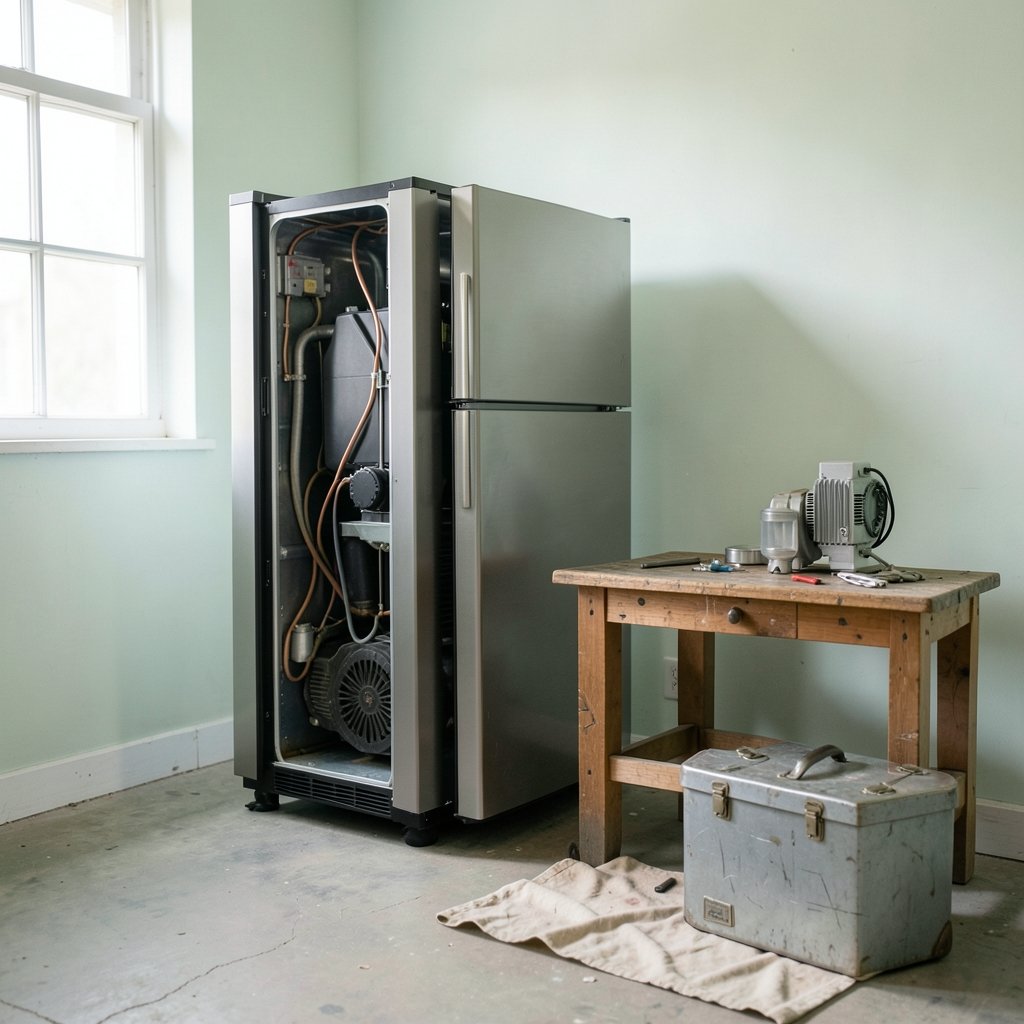
Reliability ratings for refrigerators come from owner surveys, not from lab torture tests. Survey organizations ask members to report whether their appliance needed repair and how serious the problem was, then roll those responses into a predicted reliability score for each brand. The sample sizes are large, which is why these scores carry weight.
What the surveys consistently reveal is that refrigerators are a mature, fairly reliable category. Most major brands cluster within a modest range, and the gap between the top and bottom is smaller than marketing would have you believe. The bigger differentiators are specific failure points rather than whole-brand collapse.
Three failure points dominate repair data:
- The sealed system (compressor, condenser, evaporator). Repairs here are expensive and often require a licensed technician.
- Ice makers and water dispensers. These are the most common nuisance failures and the most frequently repaired components.
- Control boards and sensors. Electronics failures are increasingly common as fridges become smarter.
When a brand earns a strong reliability score, it usually reflects a clean record on the sealed system, not a perfect record everywhere. That distinction matters because a failed ice maker is annoying, while a failed compressor can cost more than the fridge is worth. If you want to understand how quickly a cooling failure turns into a crisis, this practical guide to fixing a refrigerator that stopped cooling walks through the diagnostic steps and the point of no return.
Where the Major Rating Systems Disagree
The single most useful thing a shopper can do is read two ratings side by side and notice the conflict. That conflict is information.
Consumer Reports and J.D. Power both publish refrigerator brand rankings, but they measure different things. Consumer Reports leans on reliability and tested performance. J.D. Power’s appliance satisfaction studies lean on the ownership experience, including delivery, setup, and how the appliance feels to use. A brand that ships a flawless fridge but botches delivery can score poorly on satisfaction while scoring well on reliability.
Retailer “best of” lists are a third category entirely, and shoppers should treat them with caution. Many are built around affiliate relationships, meaning the site earns a commission when you buy. That does not make the picks wrong, but it does mean the list is optimized for conversion, not for repair data. A fridge that sells well and photographs beautifully can outrank a duller model with a better five-year record.
The most reliable approach is triangulation. Look for a brand that appears near the top of at least two independent reliability or satisfaction sources, then verify the specific model’s warranty terms. Brand-level ratings are a starting filter, not a final answer.
Energy Efficiency: The One Rating You Can Compare Directly
Most ratings involve surveys and judgment. Energy efficiency is different. It is regulated, labeled, and directly comparable between models, which makes it the most trustworthy number on the showroom floor.
In the United States, refrigerators carry an EnergyGuide label that estimates annual electricity use and cost based on standardized federal test procedures. Models that meet stricter criteria can qualify for ENERGY STAR certification, which signals efficiency above the minimum standard. Because the test method is standardized, you can compare two fridges of similar capacity and see a real difference in projected annual cost.
This matters more than most shoppers expect, because a refrigerator runs 24 hours a day, every day, for a decade or more. A model that uses noticeably less electricity can close much of the price gap over its life. The federal efficiency standards behind these labels are set through the Department of Energy’s appliance program, and the test procedures have been updated over time, so older comparison charts are not always apples to apples.
A practical tip from the showroom: ignore the sticker price and write down the estimated annual energy cost for each contender. Two fridges with a $300 price difference can flip order once you multiply the energy gap by ten years.
Warranty Terms: The Rating Nobody Advertises
Warranty coverage is the most underused comparison tool in the category, because it is concrete, verifiable, and reveals what a manufacturer actually expects to fail.
Refrigerator warranties typically split into two parts: a general warranty covering parts and labor for a limited period, and a longer sealed-system warranty covering the compressor and related components. The sealed-system coverage is the one to read closely. Some brands offer five years, some offer ten, and a few extend coverage to specific sealed-system parts for even longer. Labor is often excluded from the longer terms, which is where owners get surprised. (Best e bike brands pick one that fits your life)
When comparing brands, build a simple table with three columns: general parts and labor term, sealed-system term, and whether labor is included in the longer coverage. A brand with a ten-year sealed-system warranty that excludes labor is offering less protection than it appears. This is exactly the kind of gap that turns a manageable repair into a replacement decision, and it is why repair-versus-replace math deserves a hard look before you commit. The same logic applies to specialty units; owners of RV fridges learn quickly that repair costs can approach replacement value, as covered in this breakdown of RV refrigerator repair failures and replacement costs.
Matching a Brand to Your Actual Life
Ratings tell you what tends to happen across thousands of households. They cannot tell you which fridge fits your kitchen, your habits, or your budget. That translation step is where most buying mistakes happen.
Start with the configuration. French-door models with bottom freezers dominate the market and score well on satisfaction, but they also pack in more electronics and more failure points. Side-by-side models are simpler and often cheaper to repair. Top-freezer models remain the value and reliability champions in many surveys precisely because they have fewer features to break.
Then consider the practical realities of your space and routine:
- Measure the opening, including door swing and clearance. A fridge that does not fit is the most avoidable return in the category.
- Check the delivery path. Narrow stairwells and tight corners disqualify some large models regardless of rating.
- Think about ice and water. If you will not use the dispenser, skip it. It is the most common repair item and a frequent source of leaks.
- Plan for service access. Brands with thin local service networks can leave you waiting weeks for a technician, which matters more than a small reliability edge.
The same principle of matching a product to real life shows up in other categories. Shoppers who research an e-bike the same way, by matching specs to daily routines rather than chasing spec-sheet wins, tend to be happier with their purchase, as this guide to picking e-bike brands that fit your life explains. A refrigerator is a ten-year relationship. Buy for the life you actually live. (Ai chatbot case studies 2027 ten brands roi numbers actually)
Common Mistakes That Skew the Decision
Even careful shoppers fall into predictable traps. Here are the ones that show up again and again.
Treating a brand rating as a model rating. A brand’s average score says nothing about the specific model on the floor. Always check the model-level test results and owner reviews.
Ignoring the repair history of the exact configuration. French-door models with dual ice makers have a different failure profile than a basic top-freezer. Aggregate brand data hides this.
Overweighting the first year. Nearly every fridge works flawlessly in year one, which is when most reviews are written. The ratings that matter are built on years three through seven.
Skipping the energy math. A slightly higher price with meaningfully lower annual energy use is often the cheaper fridge over its life.
Buying on delivery-day excitement. The features that impress in the showroom, like a bright interior or a smart display, rarely drive long-term satisfaction. Temperature consistency and quiet operation do.
Assuming premium equals reliable. Price and reliability correlate weakly in this category. Some of the most consistent performers are mid-priced workhorses, while some premium brands earn their scores on design and interior quality rather than repair records.
How to Build Your Own Shortlist
A structured process beats scrolling through rankings. Here is a sequence that works.
- Set the budget and the size. Decide capacity in cubic feet and the widest dimension your opening allows.
- Filter by configuration. Choose top-freezer, bottom-freezer, French-door, or side-by-side based on how you actually use the fridge.
- Pull two independent brand ratings. Compare reliability and satisfaction sources and note where they agree.
- Shortlist three models from brands that appear on both lists. Ignore brands that only appear on one.
- Compare energy labels side by side. Write down projected annual cost for each.
- Read the warranty terms line by line. Confirm the sealed-system term and whether labor is included.
- Check local service availability. A quick search for authorized technicians in your area tells you how painful a repair would be.
- Read reviews from owners in year three and beyond. Filter for longevity, not first impressions.
This process takes about an hour and consistently produces better outcomes than picking the top name on a single list. It also mirrors how disciplined buyers approach other high-consideration purchases, such as the conversion-rate thinking behind choosing the right optimization strategy for a startup, where testing beats guessing every time. If you want to see how systematic comparison pays off in another category, this look at how e-commerce brands use AI chatbots to recover abandoned carts shows the same principle: measure, compare, then commit.
Conclusion
The best rated refrigerator brand is not a fixed answer. It depends on whether you are weighting reliability, satisfaction, efficiency, or warranty protection, and those four metrics routinely point at different names. The shoppers who end up happiest are the ones who decide which metric matters most for their situation, triangulate across at least two independent sources, and then verify the specific model rather than trusting a brand-level average.
Do the boring work: measure the opening, read the energy label, and parse the warranty. Those three steps catch more bad decisions than any ranking ever will. Then buy the fridge that fits your kitchen and your habits, and let the ratings be a filter rather than a verdict.
FAQ
Which refrigerator brand is the most reliable?
There is no permanent champion, because reliability scores are rebuilt from owner surveys each year and the leaders change. The consistent pattern is that simpler configurations with fewer electronics tend to score better on repair history, while premium brands often lead on satisfaction instead. Check the most recent reliability survey and confirm the score applies to the model you are considering, not the brand as a whole.
Are expensive refrigerator brands more reliable?
Not necessarily. Price and reliability correlate weakly in this category. Premium brands often earn their ratings through interior design, quieter operation, and better temperature consistency rather than superior repair records. Some mid-priced brands match or beat premium names on predicted reliability. Pay for the features you will use, not the assumption that a higher price buys fewer repairs.
How long should a refrigerator last?
Common estimates put average refrigerator lifespan at roughly 10 to 15 years, though figures vary by source and by how heavily the unit is used. The sealed system usually determines the end of life. Once a compressor or sealed-system repair is needed on an older unit, the repair cost often approaches or exceeds the fridge’s remaining value, which is when replacement makes more sense.
What does the EnergyGuide label actually tell me?
The EnergyGuide label estimates annual electricity use and cost for that specific model, based on standardized federal test procedures. Because every manufacturer uses the same test, you can compare models of similar capacity directly. It is the most reliable apples-to-apples number on the showroom floor, and it matters because a fridge runs continuously for a decade or more.
Is a longer warranty a sign of better quality?
Sometimes, but read the details. A long sealed-system warranty that excludes labor offers less protection than it appears to. Compare three things across brands: the general parts-and-labor term, the sealed-system term, and whether labor is covered in the longer period. A brand confident in its compressor will usually back it with a term that covers actual repairs, rather than a headline number.
Should I trust retailer “best of” lists?
Treat them as a starting point, not evidence. Many are built around affiliate commissions, so they are optimized to drive purchases rather than to reflect repair data. Use them to discover models, then verify those models against independent reliability and satisfaction sources. A fridge that ranks high on a retailer list and also appears on two independent reliability lists is a genuinely strong candidate.



