

Why does a money tree that looked perfect in the shop start dropping leaves a month after you bring it home? Most of the time, the answer is sitting right under the surface. The soil a money tree lives in decides how long water lingers around its roots, and that single factor drives more decline than light, fertilizer, or luck combined. (Gift card scam works victims rarely get their money back)
The good news: getting the soil right is simple, cheap, and takes about ten minutes. This guide covers what a money tree actually needs, a reliable mix you can build at home, the mistakes that kill these plants, and how to tell when it is time to repot.
What a money tree actually is, and why its roots behave the way they do
The money tree sold in garden centers is Pachira aquatica, a wetland species from swampy, riverbank areas of Central and South America. That origin matters. In the wild, its roots sit in soil that stays consistently damp but is also flushed constantly by moving water and loaded with air pockets from decaying plant matter. (Cbdc digital currency central bank money going digital)
In a pot, you get the damp part easily. The flushing and the air pockets are what disappear. A dense, waterlogged mix replicates the moisture of a riverbank without the oxygen, and the roots suffocate. So the goal is not “keep it dry” or “keep it wet.” The goal is a mix that holds moisture lightly and lets excess water leave fast.
One more thing worth knowing: the braided trunk so many people buy is several young stems twisted together and grown as a single plant. Each stem has its own small root system crowded into one pot, which makes drainage even more critical than it would be for a single-trunk specimen.
The one property that matters more than any ingredient
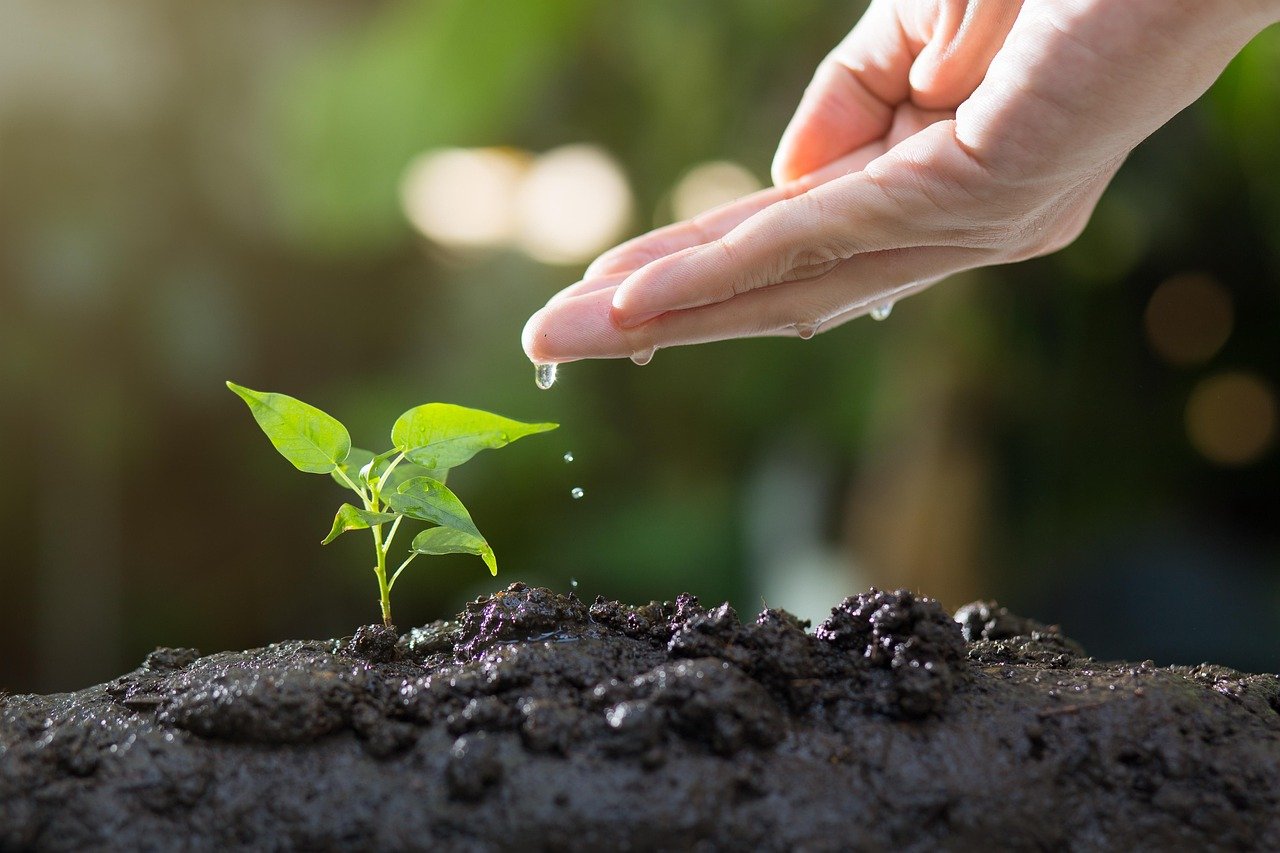
If you remember nothing else, remember drainage. Every serious source of houseplant guidance, from university extension services to botanical gardens, converges on the same advice: indoor plants need a potting medium that drains freely and holds air. Money trees are no exception.
Everything else, whether you use peat, coir, bark, or perlite, is a way of achieving that drainage while still holding enough water to keep the plant alive between waterings. A mix that drains too fast means constant watering. A mix that drains too slowly means rot. The sweet spot is chunky, airy, and slightly moisture-retentive.
The mix that works: a simple starting recipe
A reliable, widely used blend for money trees is:
| Ingredient | Share | Job |
|---|---|---|
| General-purpose potting mix | 2 parts | Holds moisture and nutrients |
| Perlite or pumice | 1 part | Creates air pockets, speeds drainage |
| Orchid bark (optional) | 1 part | Adds structure and keeps mix chunky |
That is it. Two parts potting mix to one part perlite gets most people a healthy plant. Adding a part of orchid bark makes the mix chunkier and longer-lasting, which suits larger specimens and anyone who tends to water generously.
A few practical notes from experience:
- Use a soilless potting mix, not garden soil. Field soil compacts hard in a pot and holds water like a sponge. Commercial potting mixes are built for containers, and they are typically pasteurized, which cuts down on pests and pathogens.
- Skip the sand. It is a common recommendation, but in peat-based mixes sand tends to fill the air pockets rather than create them. Perlite does the job better.
- Moisten before potting. Dry perlite floats and dry peat repels water. Mix a little water in until the blend feels like a wrung-out sponge, then pot.
- Do not add rocks to the bottom of the pot. It is one of the most persistent myths in houseplant care. A gravel layer raises the water table inside the pot rather than improving drainage. Use a pot with a drainage hole instead.
Why garden soil and heavy topsoil fail indoors
Container growing is a different environment from a garden bed. Outdoors, soil has unlimited depth, earthworms, and microbial activity to keep structure open. In a pot, none of that exists. Water has nowhere to go except down, and if the mix is dense, it sits there.
Heavy soil also compacts over time. Each watering pushes particles closer together, squeezing out the air spaces roots need. Within a few months, a money tree in garden soil is effectively growing in a brick. The roots cannot breathe, water pools at the bottom, and rot sets in. This is why soilless mixes dominate indoor growing, and it is why repotting into the right medium is often the single best fix for a struggling plant.
What about pH?
Money trees are generally reported to do well in slightly acidic to neutral soil, roughly pH 6.0 to 7.0. Most quality potting mixes already fall in or near that range, so unless you are blending your own from raw components or your plant shows clear nutrient problems, pH is not worth losing sleep over. If you do want to check, a simple probe or a home soil test kit will tell you where you stand.
Watering matters as much as the mix
Here is the part that trips people up: a well-draining mix does not protect a plant from overwatering. It just buys you more margin for error. Overwatering remains the leading cause of money tree decline, and the fix is a habit, not an ingredient.
Water thoroughly until it runs out the drainage hole, then wait. Let the top two to three inches of mix dry before watering again. Stick a finger in, or lift the pot and feel the weight. A light pot means dry soil. A heavy pot means wait a few more days.
Two habits that help:
- Empty the saucer. Water sitting in a drip tray wicks back up into the pot and keeps the bottom of the root ball permanently wet.
- Water less in winter. Growth slows, light drops, and the plant uses far less water. Most money tree deaths happen in January, not July.
If you are also thinking about the broader cost of plant care, from pots to soil to replacement plants, it helps to know where your money actually goes. The same logic applies to any purchase where the cheap option costs more later. (Identity threat detection really costs where money goes)
Choosing a bagged mix when you do not want to blend
Not everyone wants to mix their own, and that is fine. When shopping, look for these words on the bag: chunky, free-draining, for cacti and succulents, or orchid mix. A cactus mix blended half-and-half with regular potting mix makes a perfectly good money tree medium with no perlite purchase required.
Avoid bags labeled “moisture control” or heavy “potting soil” with a high topsoil content. Those products are designed to hold water, which is the opposite of what a money tree needs. Also check for a weight difference: a bag that feels unusually heavy for its size is often dense and wet, a sign of a fine, compacting mix.
Repotting: when, how, and what to change
A money tree does not need frequent repotting. Every two to three years is typical, or sooner if you see roots circling the drainage hole, water running straight through the pot, or the mix breaking down into fine crumbs.
The process is straightforward:
- Water the plant a day before to loosen the root ball.
- Choose a pot one size larger, no more, with a drainage hole.
- Gently loosen the outer roots and shake off old mix.
- Remove any soft, brown, or foul-smelling roots with clean scissors.
- Repot into fresh chunky mix, keeping the root crown at the same level.
- Water well, let it drain, and keep the plant out of direct sun for a week.
Do not fertilize for the first month after repotting. Fresh mix usually contains enough nutrients, and stressed roots do not need the extra load.
Common mistakes that undo good soil
Even a perfect mix fails if these slip through:
- No drainage hole. A decorative cachepot without a hole is a slow execution. Keep the plant in a nursery pot and drop it inside.
- Packing the mix down. Tamp lightly, never compress. Air pockets are the point.
- Watering on a schedule. “Every Sunday” ignores season, light, and pot size. Check the soil instead.
- Reusing old mix. Spent mix has lost its structure and may carry pests. Start fresh.
- Ignoring the saucer and the pot’s feet. Standing water hides under pots and behind cachepots. Check underneath after watering.
Signs your soil is wrong, and what to do
| Symptom | Likely cause | Fix |
|---|---|---|
| Yellow lower leaves, soft stems | Waterlogged mix, root rot | Repot in chunky mix, cut mushy roots |
| Crisp leaf edges, fast drying | Mix drains too fast | Add more potting mix, water more often |
| Water pools on the surface | Compacted, dense soil | Replace with fresh free-draining mix |
| White crust on the surface | Fertilizer salt buildup | Flush with water, refresh the top layer |
| Slow growth, no new leaves | Exhausted or compacted mix | Repot into fresh mix in spring |
Root rot is the one to watch. If the base of the trunk feels soft or the soil smells sour, act quickly. Lift the plant, trim away brown mushy roots, and repot into fresh mix in a clean pot. Recovery is possible if caught early.
A note on the bigger picture
Houseplant care is one of those hobbies where the cheap shortcut usually costs more in the end. Buying the right bag of chunky mix once beats replacing a plant twice. The same principle shows up everywhere, from small business tools to personal finance decisions, and it is worth keeping in mind whenever a “bargain” option looks tempting.
Conclusion
The best soil for a money tree is not a brand or a secret formula. It is a chunky, free-draining mix that holds a little moisture and lets the rest go. Two parts potting mix to one part perlite, a pot with a hole, and a watering habit built around checking the soil rather than the calendar will keep a money tree healthy for years.
Get those basics right and the plant does the rest. It tolerates the occasional missed watering, forgives a dry week, and rewards you with glossy new leaves through the growing season. The soil is not glamorous, but it is the foundation everything else rests on.
Frequently asked questions
Can I use regular potting soil for a money tree?
Yes, but not on its own. Standard potting mix is too dense straight from the bag for most indoor plants. Blend it with perlite or orchid bark at roughly two parts mix to one part perlite so water can move through freely.
Is cactus mix good for money trees?
Cactus and succulent mix is an excellent base. It is already gritty and fast-draining, so many growers use it as-is or mix it half-and-half with regular potting mix. It is a convenient shortcut if you do not want to buy perlite separately.
How often should I repot a money tree?
Every two to three years is typical, or whenever roots circle the drainage hole, water runs straight through, or the mix has broken down. Spring is the best time, since the plant is actively growing and recovers quickly.
Should I put rocks in the bottom of the pot for drainage?
No. A gravel layer raises the water table inside the pot and keeps the lower mix wetter, not drier. Use a pot with a drainage hole and a chunky mix instead. This is one of the most common houseplant myths still circulating.
Why is my money tree losing leaves after repotting?
Some leaf drop after repotting is normal shock and usually settles within two to three weeks. If it continues, check for overwatering, a pot without drainage, or mix that is too dense. Keep the plant in bright indirect light and water sparingly until new growth appears.
Can I reuse old potting mix for a money tree?
It is not recommended. Old mix loses its structure, compacts, and may carry pests or pathogens. If you must reuse it, spread it out, remove roots and debris, and blend in fresh perlite and potting mix to restore drainage.



