
What if the fastest machine in the dunes is actually the wrong one for you? That question trips up a lot of buyers. The sport UTV market is full of big horsepower numbers and bold marketing claims, and it is easy to walk into a dealership, fall for the loudest spec sheet, and drive home on something that fights you on every trail.
The truth is simpler and a little less exciting. There is no single best sport UTV. There is a best sport UTV for how you actually ride, where you ride, and what you can honestly afford to keep running. This guide breaks down what separates the real contenders, where each one shines, and the mistakes that cost people thousands before they ever hit the dirt.
What Actually Makes a UTV a Sport UTV
A sport UTV is not a formal legal category. It is a market convention, and that convention has clear edges. These machines are typically two-seat, high-output side-by-sides built for speed, suspension travel, and cornering rather than hauling lumber or towing a trailer.
The regulatory side is a different story. In the United States, the Consumer Product Safety Commission groups these vehicles as recreational off-highway vehicles, or ROVs, and applies a voluntary safety standard developed with the industry. That standard covers things like stability, occupant protection, and youth operation limits. It does not tell you which machine handles a whooped-out desert trail better. That part is on you.
Practically speaking, a sport UTV usually means:
- A 900cc to 1000cc engine, naturally aspirated or with forced induction
- Long-travel suspension tuned for jumps and rough terrain
- A low, wide stance for cornering stability
- Minimal cargo capacity and no practical towing rating
- Two seats, sometimes four in a stretched version
If a machine has a dump bed and a hitch rated for real work, it is a utility UTV wearing sporty plastic. That distinction matters more than most buyers realize.
The Main Contenders, Ranked by What They Do Best
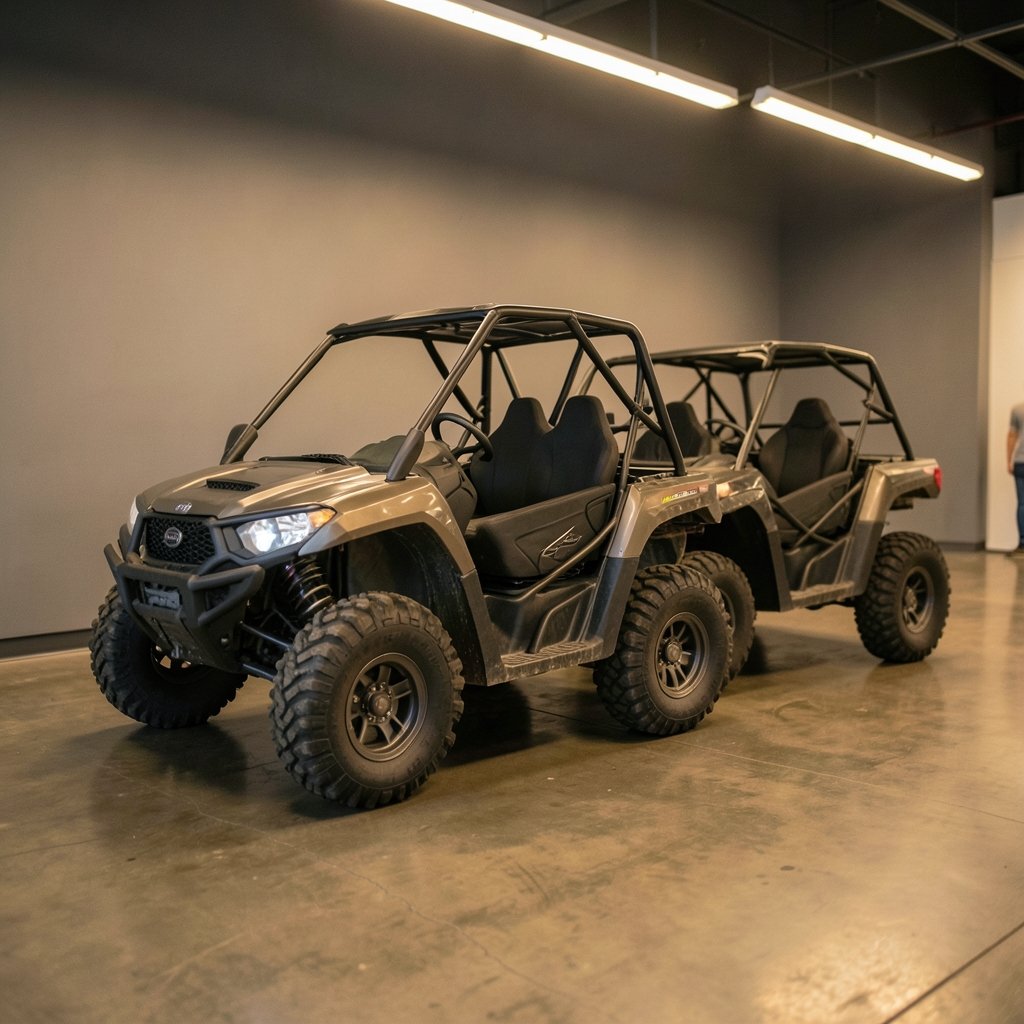
The sport segment has five names that matter, and each one owns a different kind of terrain. Ranking them in a single list is misleading, so here is the honest breakdown.
| Machine | Best At | Engine Range | Personality |
|---|---|---|---|
| Polaris RZR | All-around speed and desert running | 900cc to 1000cc turbo | The benchmark; huge aftermarket |
| Can-Am Maverick | Raw power and high-speed stability | Up to 1000cc turbo | Aggressive, planted, expensive |
| Honda Talon | Durability and low maintenance | Around 1000cc | Built to last, less flashy |
| Yamaha YXZ | Driver engagement | Around 1000cc | Manual gearbox, purist appeal |
| Kawasaki Teryx KRX | Rock crawling and technical trails | Around 1000cc | Tough, torquey, trail-focused |
The Polaris RZR launched in 2007 and has been the reference point ever since. It is the machine every rival is measured against, and its aftermarket support is unmatched. If you want parts availability at nearly any shop in the country, that matters.
The Can-Am Maverick line, built by BRP, pushes harder on peak power and high-speed composure. It is a fantastic desert weapon and a genuinely expensive one to own.
The Honda Talon takes a different path. It trades some outright flash for a reputation of staying together season after season. Riders who hate surprise repair bills tend to gravitate toward it.
The Yamaha YXZ is the odd one out and proud of it. A manual transmission in a side-by-side sounds like a gimmick until you drive one. It rewards skill and punishes laziness, which is exactly why some riders love it.
The Kawasaki Teryx KRX plays a narrower game. It is built for crawling over rocks and picking through technical terrain rather than blasting across open desert.
Match the Machine to the Terrain, Not the Brochure
The single most common buying mistake is choosing based on peak horsepower instead of riding environment. A 200-horsepower turbo machine is a joy in open sand and a handful on tight, rocky singletrack where you rarely get out of second gear.
Ask yourself where 80 percent of your riding happens. Be honest about it.
- Open desert and dunes: Prioritize power, cooling, and long-travel suspension. Forced-induction machines earn their keep here.
- Wooded trails and tight singletrack: Prioritize a manageable powerband, good low-speed manners, and a narrower footprint.
- Rock crawling: Prioritize torque, ground clearance, and durable skid plates. The KRX was built for this.
- Mixed use with family: Prioritize reliability and comfort over lap times you will never record.
A rider who buys a dune missile and then rides rocky forest trails will spend more time repairing belts and arms than riding. That is not a knock on the machine. It is a mismatch.
Turbo or Naturally Aspirated?
This is the fork in the road that shapes everything downstream. Sport UTVs with forced induction make substantial power, and they make it with extra heat, extra complexity, and extra maintenance.
Naturally aspirated machines are lighter, simpler, and cheaper to keep running. They also tend to be more predictable in technical terrain, where a sudden surge of boost can put you somewhere you did not plan to go.
The practical rule that experienced riders pass along: buy the naturally aspirated version of a good chassis before you buy the turbo version of a compromised one. Chassis and suspension do more for real-world speed than a dyno sheet. A well-set-up 1000cc machine will outrun a poorly driven turbo every time on anything but a straight line.
One more thing worth saying plainly. Turbo machines run hotter and work harder. Belt life, cooling system health, and fluid change intervals all become habits you cannot skip. If you are not the type to check those things, buy naturally aspirated.
The Safety Reality Nobody Puts on the Poster
Sport UTVs roll over. That is not a scare tactic; it is physics. High center of gravity, short wheelbase, and a driver with more confidence than experience add up to a predictable outcome.
The Consumer Product Safety Commission has documented injuries and deaths tied to recreational off-highway vehicles, and the agency’s guidance consistently emphasizes helmets, seatbelts, and age-appropriate operation. Many states require helmets and seatbelts for younger operators, and youth ROVs are capped well below adult sport machines in both engine size and speed.
What actually works in practice:
- Wear a helmet and use the seatbelt every single time, including short test drives.
- Install a proper roof and doors before you add power mods.
- Take a hands-on driving course. The first hour teaches more than a year of YouTube.
- Never let a child drive an adult sport machine, no matter how tall they are.
- Check your state’s rules before riding on any public road or trail system. There is no national standard, and laws change yearly.
The riders who get hurt are rarely the ones pushing the hardest. They are the ones who skipped the boring precautions on a casual afternoon.
What It Really Costs to Own One
Purchase price is the smallest number in the equation, and it is the one everyone fixates on. A sport UTV is a consumable machine. Belts, tires, brake pads, suspension components, and fluids all wear out faster than a casual buyer expects.
Budget for the following beyond the sticker:
- Tires: Aggressive off-road tires wear quickly, especially on hardpack and pavement.
- Belts: Turbo machines eat belts if you drive them hard in low range.
- Suspension service: Shocks need rebuilding on a schedule, not when they fail.
- Protection: Skid plates, rock sliders, and a proper roof are near-essentials, not luxuries.
- Trailer and tow rig: Most sport UTVs are not street legal, so you need a way to move them.
Insurance and registration vary enormously by state, so get quotes before you sign anything. A machine that strains your monthly budget will sit in the garage, and a parked UTV is the most expensive kind.
Buying Used Without Getting Burned
The used market is where smart buyers find value and careless buyers find someone else’s problem. Sport UTVs get driven hard. That is the point of them. The trick is separating hard use from abuse.
Practical checks that actually catch problems:
- Look at the belt housing and clutch area for burn marks, dust buildup, and signs of overheating.
- Inspect the frame and A-arms for cracks, bends, and fresh paint hiding repairs.
- Check the hours and miles together. A machine with low miles and high hours has been idled or crawled extensively.
- Ask about the break-in service. A seller who cannot answer that question did not do it.
- Test drive it cold. Warm machines hide starting issues and belt slip.
- Look at the tires. Uneven wear tells you about alignment and driving habits.
The best used deal is usually a well-maintained naturally aspirated machine from a rider who upgraded, not a heavily modified turbo build from someone chasing maximum output. Modifications are not automatically bad, but they shift risk onto you.
Where Sport UTVs Fit in the Wider Sports World
It helps to see this hobby in context. Off-road racing and recreation sit alongside much bigger sports economies, and understanding where the money flows explains why manufacturers keep pushing performance. A look at which sport actually makes the most money revenue breakdown shows just how much of the sports world runs on participation and equipment spending rather than broadcast rights.
The governance side is instructive too. Just as USA Hockey, America’s governing body that runs the sport, sets rules and safety expectations for its athletes, the off-road world relies on voluntary standards and state law to keep riders safe. There is no single referee. That means the responsibility lands on the rider, which is why the safety section above is not optional reading.
Even the digital side of sports fandom offers a parallel. The same way a site like vipbox, a sports streaming site everyone asks about, draws curious searches, off-road communities gather around forums, ride groups, and event coverage. Finding a local club is genuinely one of the best investments a new owner can make. Experienced riders will tell you which trails suit your machine and which ones will destroy it.
Conclusion
The best sport UTV is not the one with the biggest horsepower number or the loudest exhaust note. It is the one that matches your terrain, your skill level, and your maintenance habits. Buy for where you ride, not for the spec sheet you saw online. Prioritize chassis and suspension over turbo badges. Budget for consumables before you budget for accessories. And treat safety gear as part of the purchase, not an afterthought.
Get those pieces right and almost any of the five major contenders will serve you well for years. Get them wrong and even the most expensive machine in the showroom becomes a very heavy paperweight.
Frequently Asked Questions
What is the best sport UTV overall?
There is no universal winner, but the Polaris RZR is the most common answer because of its balance of performance, aftermarket support, and parts availability. Riders who prioritize durability often choose the Honda Talon instead, and those who want maximum power lean toward the Can-Am Maverick. The right answer depends on your terrain and budget.
Is a turbo sport UTV worth the extra money?
It depends on where you ride. Forced-induction machines work well in open desert and dunes where sustained power matters. On tight trails and technical terrain, a naturally aspirated machine is often easier to control, cheaper to maintain, and less prone to heat and belt issues. Buy the better chassis first, then consider forced induction.
Can a sport UTV be driven on public roads?
Rarely, and it varies by state. Most sport UTVs are not street legal from the factory. Some states allow limited road use with specific equipment and registration, while others prohibit it entirely. Check your state’s rules before assuming you can drive to a trailhead.
How much does it cost to maintain a sport UTV?
Ongoing costs typically include tires, drive belts, brake pads, suspension servicing, and regular fluid changes. Forced-induction machines generally cost more to run because they generate more heat and stress on components. Budget for these consumables before you buy accessories.
What safety gear do I need for a sport UTV?
At minimum, a helmet and seatbelt every time you ride. A proper roof, doors, and skid plates are strongly recommended. Many states require helmets and seatbelts for younger operators, and youth machines are limited in engine size and speed. A hands-on driving course is worth the investment.
How do I avoid buying a worn-out used sport UTV?
Inspect the frame and suspension for cracks or repairs, check the belt housing for overheating signs, verify hours and miles together, and ask for proof of the break-in service. Test drive the machine cold so hidden starting and belt issues show up. Favor well-maintained stock machines over heavily modified builds.



