The best tech stocking stuffers in 2026 are small, useful and genuinely fun to open: wireless earbuds, compact power banks, smart trackers and pocket speakers that cost less than a big-box gift but get used every single day.
This guide focuses on gifts under $100, with most picks starting between $15 and $60. Every item here is small enough to fit in a stocking and works with the phones most people already own.
We picked eight gifts that cover audio, charging, tracking, smart home and everyday carry. Prices below are approximate starting prices, and it is worth checking current pricing before you buy, because holiday deals move fast in December.
Key takeaways
- Wireless earbuds are the safest tech stocking stuffer for most people, starting from around $25.
- A compact 10,000 mAh power bank is the most practical pick, starting from around $20.
- Bluetooth trackers are the best low-cost gift for anyone who regularly loses keys or a wallet.
- Check the charging port before buying cables or chargers: USB-C is now the standard for most new devices.
- Avoid novelty gadgets with no clear use; the best stocking stuffers solve a problem the recipient already has.
At a glance: the shortlist
| Gift | Best for | Starting price | Standout limit |
|---|---|---|---|
| Wireless earbuds | Commuters and gym-goers | From $25 | Battery life varies by model |
| Compact power bank | Everyday carry | From $20 | 10,000 mAh charges a phone once or twice |
| Bluetooth tracker | Forgetful owners | From $25 | Needs a phone app and battery |
| Mini Bluetooth speaker | Small rooms and travel | From $30 | Modest bass at this size |
| Braided USB-C cable set | Anyone with a phone | From $15 | Check cable length and speed |
| Smart plug | Smart home beginners | From $15 | Needs Wi-Fi and an app |
| Phone grip and stand | Video calls and reading | From $12 | Check case compatibility |
| Mini LED flashlight | Outdoors and emergencies | From $18 | Rechargeable models beat disposable batteries |
Wireless earbuds — Best overall
Wireless earbuds are the classic tech stocking stuffer because they fit almost anyone. A good budget pair in 2026 offers clear sound, a comfortable fit, Bluetooth 5.3 or newer, and a charging case that adds several extra charges. Look for at least 20 hours of total listening time with the case, and ear tips in more than one size.

Models from Anker Soundcore, JBL and JLab are common starting points, and Apple AirPods remain the natural pick for iPhone owners. If the recipient runs or works out, choose a pair with an IPX4 splash rating or better. Our guide to the best wireless earbuds for running covers fit and battery life in more detail.
Pros: Useful every day, fits any stocking, wide choice at every price. Cons: Easy to lose one earbud, battery degrades over a few years.
Compact power bank — Best for practicality
A compact 10,000 mAh power bank is the gift people do not buy for themselves but use constantly once they have one. It holds roughly one to two full phone charges and fits in a jacket pocket.
Choose a model with USB-C input and output, at least 20W fast charging, and a clear battery indicator. Avoid very cheap unbranded banks with no stated capacity or safety certification.
Pros: Genuinely useful, works with almost any phone, lasts for years. Cons: Adds weight to a pocket, needs recharging itself.
Bluetooth tracker — Best for forgetful owners
A Bluetooth tracker is a small disc or card that attaches to keys, slips into a wallet or clips onto a bag, then helps the owner find it from a phone app. Apple AirTag is the obvious pick for iPhone owners, while Tile and Samsung SmartTag models suit Android households.
Direct Bluetooth range covers a room or a house, with a wider crowd network helping when the item is further away. Check which phone the recipient uses first, because trackers are tied to their maker’s network.
Pros: Cheap, tiny, saves real frustration, long battery life. Cons: Tied to one phone ecosystem, not a real-time GPS tracker.
Mini Bluetooth speaker — Best for small spaces
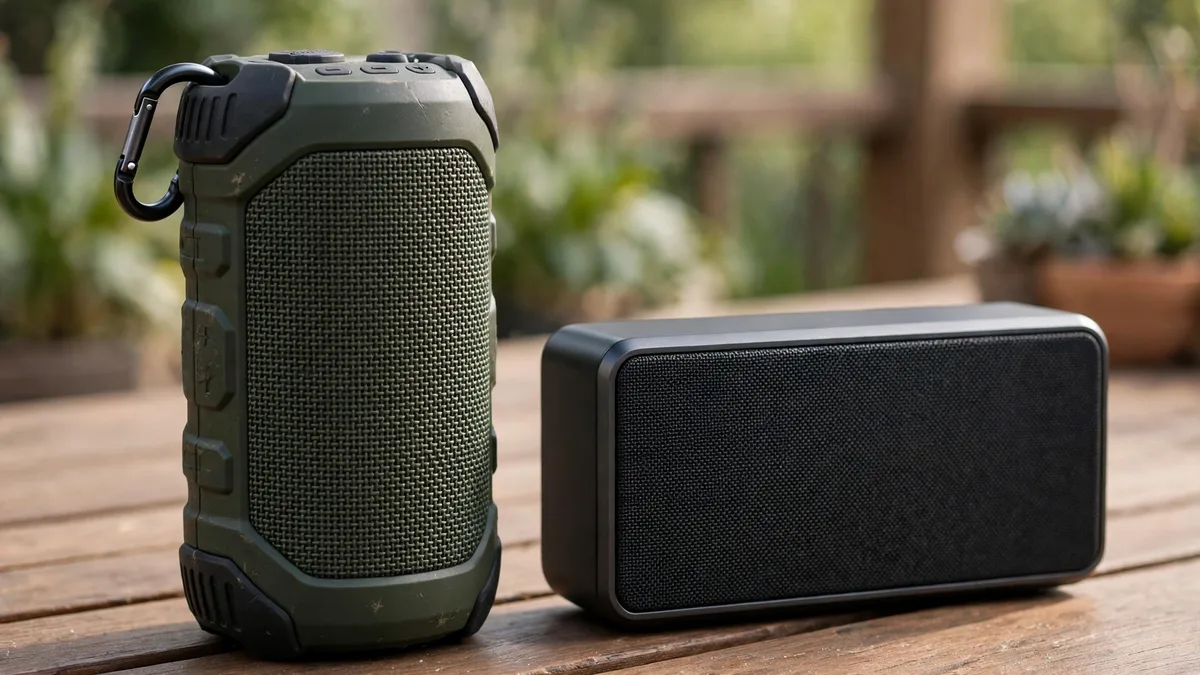
A mini Bluetooth speaker turns a kitchen, a desk or a hotel room into a better place to listen. The best small models in 2026, such as the JBL Clip or the Anker Soundcore Mini, deliver clear sound at normal volumes, pair quickly, and survive a splash.
A speaker that fits in a stocking will not fill a large room or deliver deep bass; this is a personal speaker, not a party speaker. Look for a clip or loop if the recipient hikes or cycles, and USB-C charging so it shares a cable with their phone.
Pros: Fun and portable, easy to set up, good sound for its size. Cons: Limited bass and volume, small speakers distort at maximum volume.
Braided USB-C cable set — Best budget pick
A set of braided USB-C cables is the cheapest genuinely useful gift on this list, starting from around $15 for a two-pack. Braided cables resist tangling and fraying far better than the thin cable that came in the box, and a longer six-foot cable is useful beside a bed or a sofa where the wall socket is never quite close enough.
A cable rated for 60W or 100W charging will charge a laptop as well as a phone, while a basic cable may only manage slow phone charging.
Pros: Very cheap, everyone needs spares, braided cables last longer. Cons: Uninspiring on its own, best paired with a charger or power bank.
Smart plug — Best for smart home beginners
A smart plug turns an ordinary lamp, fan or coffee maker into a device that can be switched on and off from a phone or a voice assistant. It is one of the cheapest ways into a smart home, starting from around $15, and it needs no hub with most current models. Setup usually takes a few minutes: plug it in, connect it to Wi-Fi, and name the device in the app.
Check compatibility with the recipient’s voice assistant first, whether that is Alexa, Google Home or Apple HomeKit, because not every plug supports all three.
Pros: Cheap entry to smart home control, simple setup, useful daily. Cons: Needs Wi-Fi, adds a bulky plug to a socket.
Phone grip and stand — Best for video calls
A phone grip and stand is a small accessory with an outsized effect on how a phone is used. A ring grip makes a large phone easier to hold one-handed, while a folding stand props the phone up for video calls, recipes in the kitchen or watching videos on a train. Combined grip-and-stand designs do both jobs and cost from around $12.
Magnetic grips work best with MagSafe iPhones or a phone with a magnetic ring, while adhesive grips suit almost any case but may not survive being moved between cases. A stand that folds flat is the better travel pick.
Pros: Very cheap, improves daily phone use, fits any stocking. Cons: Adhesive models can leave marks, magnetic models need a compatible phone or ring.
Mini LED flashlight — Best for outdoors and emergencies
A mini rechargeable LED flashlight is the stocking stuffer that earns its keep during a power cut, a night walk or a camping trip. Modern pocket flashlights are far brighter than their size suggests, with several hundred lumens from a device shorter than a finger, and USB-C recharging means no hunting for spare batteries.
Look for at least two brightness levels, a pocket clip, and a stated water resistance rating of IPX4 or better. Avoid novelty lights with no stated brightness or battery life.
Pros: Bright, rechargeable, useful in real emergencies, very small. Cons: Easy to forget to charge, bright modes drain the battery quickly.
How to choose
Start with the recipient, not the product. A commuter needs earbuds and a power bank; a new homeowner will get more from a smart plug; a traveller will use a tracker and a braided cable set. The best stocking stuffer is the one that fits a routine the recipient already has, rather than a gadget that asks them to build a new habit.
Then check compatibility: USB-C versus Lightning, MagSafe versus adhesive, iPhone versus Android for trackers and watches. A quick check of the recipient’s phone model avoids the most common mistake, a gift that works for someone else’s phone. If you are unsure, a power bank or a braided cable set is the safest choice. Fitness fans are a good example of matching the gift to the person: our guide to the best smartwatches for fitness shows how a wearable can anchor a set of small accessories.
Finally, set a budget per stocking and stick to it. Three $20 gifts that all get used beat one $60 gift that does not fit the recipient’s phone. Buy from a seller with a clear returns policy, and check current pricing before you buy, because holiday discounts can move a $40 gift into the $25 range overnight.
Checklist: before you buy
- Confirm the recipient’s phone model and charging port before buying cables, chargers or grips.
- Check tracker compatibility with iPhone or Android before choosing a brand.
- Look for USB-C charging so the gift shares a cable with the recipient’s phone.
- Read the stated battery life and capacity, not just the marketing headline.
- Buy from a seller with a clear returns policy in case the fit or compatibility is wrong.
- Check current pricing and holiday deals, since stocking-stuffer prices change often in December.
Frequently asked questions
What is the best tech stocking stuffer overall?
Wireless earbuds are the best all-round pick for most people, because they are useful daily, fit any stocking and start from around $25. A compact power bank is the best practical alternative if the recipient already owns good earbuds.
How much should I spend on a tech stocking stuffer?
Most good tech stocking stuffers cost between $15 and $60. A $20 to $30 gift is usually the sweet spot: enough for a quality product from a known brand, without spending main-gift money on a stocking filler.
Are cheap wireless earbuds worth buying?
Yes, if you choose a known budget brand and check the battery life and fit. Spending $25 to $40 on a reviewed budget model is usually better than spending $10 on an unknown one.
What tech gifts work for someone I know little about?
A compact power bank or a braided USB-C cable set is the safest choice, because both work with almost any phone. A smart speaker is another safe option for a home, and our guide to the best smart speakers can help if you want to scale up from a mini speaker to a room speaker.
Do Bluetooth trackers work without a phone nearby?
A tracker needs a phone in its network to report its location, and it is not a live GPS device.
Should I buy a smart plug if the recipient has no smart home?
Yes, a smart plug is a good first smart home device because it needs no hub and works with a single lamp or appliance, even without any other smart devices.
The bottom line
For most people, wireless earbuds are the best tech stocking stuffer in 2026, with a compact power bank as the best practical second gift. Both are cheap, useful every day and easy to get right, and together they cover the two things every phone owner needs: sound and power.
If you are buying for several people, build a small set around one idea per person: earbuds for the commuter, a tracker for the forgetful friend, a smart plug for the new homeowner. Check the recipient’s phone and charging port first, and check current pricing before you buy, because the best holiday deals on these small gifts rarely last long.