

What if the cheapest SUV on the lot turned out to be the most expensive one you could buy? It happens more often than most shoppers realize. The “best SUV for the money” is not a single model, and anyone who tells you otherwise is probably selling something. It is a calculation, and it has more moving parts than a window sticker shows. (Cbdc digital currency central bank money going digital)
This guide breaks that calculation into pieces you can actually use: what depreciation really does to your wallet, why reliability ratings disagree with each other, how to compare fuel costs fairly, and which mistakes quietly drain thousands from a car budget. The goal is not to crown a winner. It is to hand you a repeatable method so the answer fits your mileage, your region, and how long you plan to keep the keys.
The Sticker Price Is Only the First Number
The number on the window is the starting point, not the finish line. A vehicle’s real cost includes depreciation, insurance, fuel, maintenance, repairs, financing interest, and taxes or fees. A $34,000 crossover that holds 55 percent of its value after five years can beat a $30,000 rival that holds 40 percent, even though the second one looks cheaper on day one. (Sport utility vehicle)
That gap is not small. On a $30,000 vehicle, the difference between those two retention rates is roughly $4,500 in lost value. Add higher insurance and repair bills and the “cheaper” SUV can cost several thousand dollars more over a typical ownership period.
Practical tip: build a simple five-year spreadsheet before you visit a dealer. List purchase price, estimated resale value, annual fuel cost, insurance quotes, and a maintenance allowance. Most shoppers skip this step, then negotiate hard over a few hundred dollars of sticker price while ignoring thousands in depreciation.
Depreciation: The Silent Budget Killer
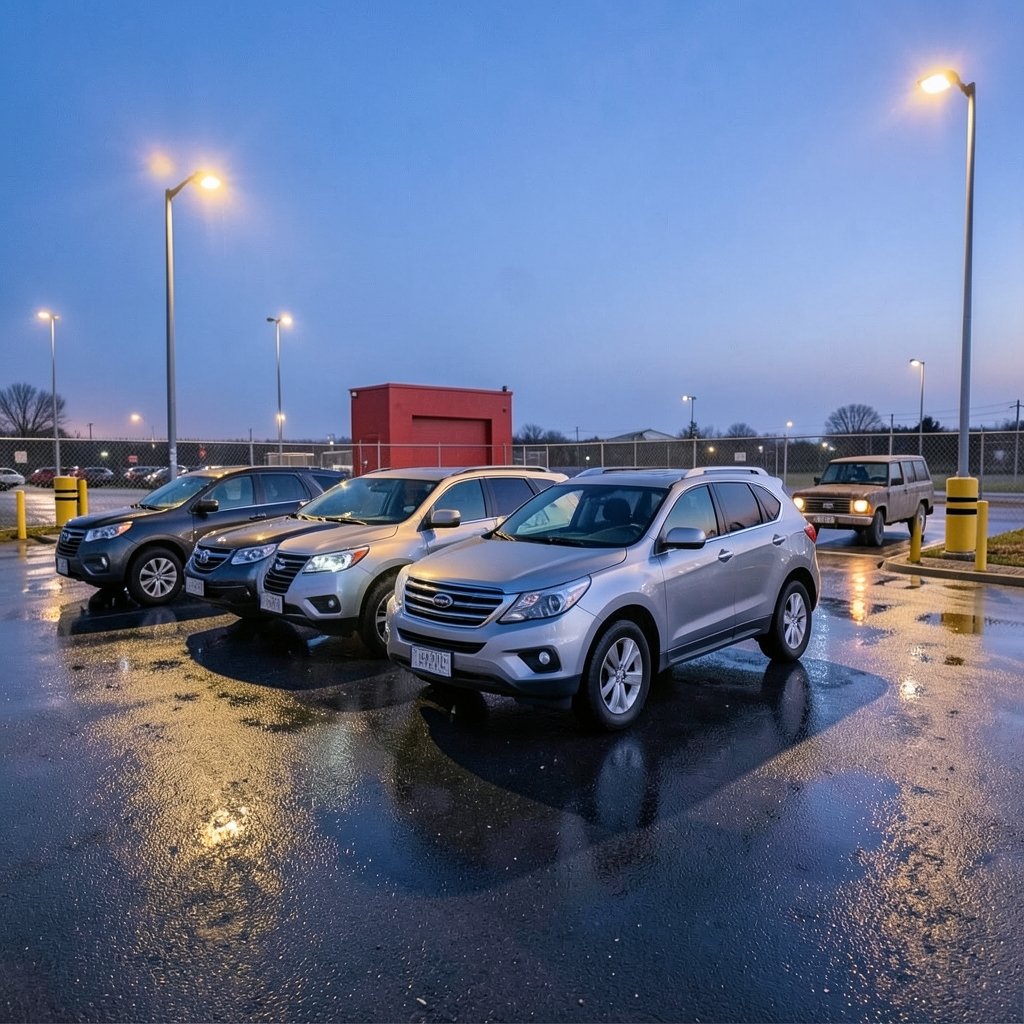
Depreciation is usually the largest single cost of new-car ownership, and it is invisible because no invoice ever arrives for it. It simply shows up the day you sell or trade in.
Three factors drive how fast an SUV loses value:
- Segment demand. Compact and midsize SUVs with strong fuel economy tend to hold value better than oversized models that get hit hardest when gas prices spike.
- Brand reputation for reliability. Models with a record of expensive repairs depreciate faster once out of warranty.
- Redesign timing. Buying the last year of an outgoing generation often means a steeper early drop when the new version arrives.
A useful rule of thumb: the first two years carry the steepest decline. A two- to four-year-old SUV with modest mileage often delivers the best value per dollar, because someone else already absorbed the sharpest part of the curve. Certified pre-owned programs add warranty coverage, which softens the risk of buying used.
Fuel Economy: Compare Like With Like
Fuel costs are the easiest ownership expense to estimate and the easiest to misjudge. The mistake most people make is comparing the wrong numbers: a hybrid’s city figure against a gas model’s highway figure, or an all-wheel-drive rating against a front-wheel-drive one.
Use the same test cycle, the same drivetrain, and the same model year for every vehicle on your shortlist. The U.S. Department of Energy and EPA publish official fuel economy data and five-year fuel cost estimates for every model year, which is the cleanest apples-to-apples source available.
Then run the math with your own annual mileage. At 15,000 miles a year, a vehicle averaging 26 mpg versus one averaging 32 mpg uses roughly 108 extra gallons annually. At $3.50 a gallon, that is about $380 a year, or nearly $1,900 over five years. Meaningful, but rarely enough on its own to justify paying $6,000 more up front.
The Hybrid Premium Question
Hybrid SUVs often carry a price premium of $2,000 to $4,000 over their gas equivalents. Whether that pays back depends almost entirely on how you drive. Heavy city driving with lots of stop-and-go favors hybrids strongly, because regenerative braking recovers energy that conventional brakes turn into heat. Mostly highway commuting narrows the gap considerably.
Do the break-even calculation before assuming the hybrid wins. Sometimes it does, sometimes the math says buy the gas version and invest the difference.
Reliability Ratings Do Not Agree, and That Is the Point
Here is where shoppers get whittled down by conflicting advice. One outlet ranks a model near the top; another places it near the bottom. Both can be right, because they measure different things: survey-based complaint rates, predicted long-term durability, owner satisfaction, or repair cost severity.
The practical response is to triangulate rather than pick a favorite source. Check recall and complaint records through the National Highway Traffic Safety Administration’s safety ratings and recall lookup, which is public and free. Cross-reference crashworthiness and crash-avoidance scores from the Insurance Institute for Highway Safety. Then treat commercial reliability rankings as one input among several, and read their methodology notes.
A few habits that work in practice:
- Search owner forums for model-specific problems rather than brand-wide complaints.
- Ask whether a known issue falls inside the powertrain warranty period.
- Check whether the model uses a first-year engine or transmission; brand-new drivetrains carry more risk.
- Price a common repair, such as a water pump or infotainment screen, before you commit.
Safety and Insurance: Two Costs That Travel Together
Safety ratings affect more than peace of mind. Vehicles with strong crash-avoidance systems, particularly automatic emergency braking and blind-spot monitoring, often qualify for insurance discounts. Vehicles with poor loss experience can carry noticeably higher premiums.
The Insurance Institute for Highway Safety publishes crashworthiness ratings and collision-avoidance evaluations, and its affiliated Highway Loss Data Institute publishes insurance loss data by vehicle class. That loss data is one of the few public sources that shows which vehicles actually generate expensive claims, rather than which ones sound safe in advertising.
Before buying, get an insurance quote for the exact trim you are considering. Trim matters: a larger wheel package or a panoramic roof can raise repair costs after a minor collision. Shoppers routinely compare insurance on the base model, then buy the loaded one and get a surprise.
Where the Money Actually Leaks Out
Beyond the big four of depreciation, fuel, insurance, and maintenance, several smaller costs quietly add up. Understanding them is part of getting real value.
Financing. A longer loan lowers the monthly payment and raises total interest. Stretching a five-year loan to seven years on a $35,000 vehicle at typical rates can add well over $1,000 in interest, and it keeps you underwater longer.
Add-ons at the finance desk. Paint protection, fabric coating, and extended service contracts are high-margin products. Some are worth it; many duplicate coverage you already have. Decline first, research later.
Deferred maintenance. Skipping fluid changes to save money is the most common false economy in car ownership. Transmission and coolant services cost far less than the failures they prevent.
Payment fraud risk. Car transactions move large sums, which attracts scammers. Buyers who put deposits on vehicles they have never seen, or who pay through unusual channels, sometimes lose money with little recourse. The pattern is similar to how a gift card scam works and why victims rarely get their money back, where irreversible payments make recovery difficult. Pay deposits by credit card or through a dealership’s verified channels, and never wire money to a private seller based on photos alone.
A Practical Comparison Framework
Rather than chase a single “best” label, score each candidate on the factors that match your situation. Here is a simple weighting scheme that works for most shoppers.
| Factor | Weight for 5-year owners | Weight for 8+ year owners |
|---|---|---|
| Depreciation | High | Medium |
| Reliability and repair cost | Medium | High |
| Fuel economy | Medium | High |
| Insurance cost | Medium | Medium |
| Purchase price and financing | High | Medium |
| Safety ratings | High | High |
Short-term owners should favor resale value and low financing costs. Long-term owners should favor durability and cheap parts, because depreciation counts for less once the curve flattens and repair bills dominate.
Matching the SUV to Your Actual Life
The most expensive mistake in this whole process is buying for an imagined life. A three-row SUV bought for twice-yearly family visits costs more in fuel, tires, and insurance every single day of the year. A compact crossover bought for occasional towing fails at the one job that mattered.
Write down your real weekly use: passengers, cargo, parking space, commute distance, and whether you ever tow. Then eliminate anything that fails the basics before comparing costs. Value only exists among vehicles that fit.
What Actually Works in Practice
A few habits separate shoppers who get genuine value from those who get talked into it.
Shop the outgoing model year. When a redesigned version lands, leftover new inventory of the previous generation often carries heavy discounts. You get a proven design at a lower price.
Get financing pre-approved before negotiating. Dealer financing can be competitive, but walking in with an outside approval gives you a benchmark and removes pressure.
Price insurance and tires before signing. Some SUVs use large, low-profile tires that cost significantly more to replace and are more vulnerable to pothole damage.
Read the warranty terms, not the length alone. Bumper-to-bumper and powertrain coverage differ widely, and the gap shows most in years three through five.
Budget for the boring stuff. A realistic maintenance allowance of $500 to $900 a year, depending on the model, prevents small issues from becoming expensive ones.
For readers thinking about the broader picture of how technology is reshaping costs across many industries, including the security spending that increasingly shows up in connected vehicles, this breakdown of where identity threat detection costs really go offers useful context on hidden expenses.
Conclusion
The best SUV for the money is not a model name. It is whichever vehicle wins on total cost of ownership for your mileage, your region, and your ownership horizon, while still fitting your actual daily life. Depreciation, fuel, insurance, and repairs decide the outcome far more than the sticker price does, and the shoppers who run the numbers before setting foot in a dealership consistently come out ahead.
Start with a shortlist that fits your real needs. Score each one on the factors that match how long you plan to keep it. Verify safety and recall data from public sources. Get insurance and financing quotes early. Then negotiate on the total deal, not the monthly payment. Do that, and the “best value” question answers itself, with numbers instead of marketing.
Frequently Asked Questions
Is a used SUV always better value than a new one?
Not always, but often. A two- to four-year-old SUV has absorbed the steepest depreciation while still offering modern safety features and remaining factory warranty on some models. The exception is when new-vehicle incentives are unusually strong or when used prices are inflated relative to new ones, which happens in tight supply periods. Compare total five-year costs in both scenarios rather than assuming.
How many years should I keep an SUV to get good value?
Five to eight years is the sweet spot for many buyers. Depreciation flattens after year five, so each additional year spreads the original loss over more time. Beyond eight to ten years, repair frequency and cost tend to rise, though a well-maintained model with cheap parts can still be economical. The key is to plan the horizon before you buy, because it changes which costs matter most.
Do hybrid SUVs really save money?
They can, especially for city-heavy driving with frequent stops where regenerative braking does the most work. The savings depend on the price premium, your annual mileage, and local fuel prices. At high mileage and high gas prices, the break-even point can arrive within a few years. At low mileage, the premium may never pay back. Run the numbers with your own figures.
Why do reliability ratings from different sources disagree?
Because they measure different things. Some rely on owner surveys about problems in the first few years, others predict long-term durability, and others focus on repair cost severity or satisfaction. Sample sizes, model years, and scoring methods vary too. Treat any single ranking as one data point and cross-check with public recall and complaint records.
What is the biggest hidden cost of SUV ownership?
Depreciation, almost always. It is invisible because no bill arrives, but it typically exceeds fuel and insurance costs combined over the first five years. Shoppers who focus only on sticker price and monthly payment often miss it entirely. Estimating resale value before purchase is the single highest-leverage step in the whole process.
How do I avoid getting taken advantage of at the dealership?
Prepare before you go. Get financing pre-approved, know the total cost of ownership for your shortlist, and decide which add-ons you want in advance. Decline anything you have not researched. Never place a deposit on a vehicle you have not inspected, and pay through traceable channels. Confidence built on numbers is the best protection against pressure tactics.



