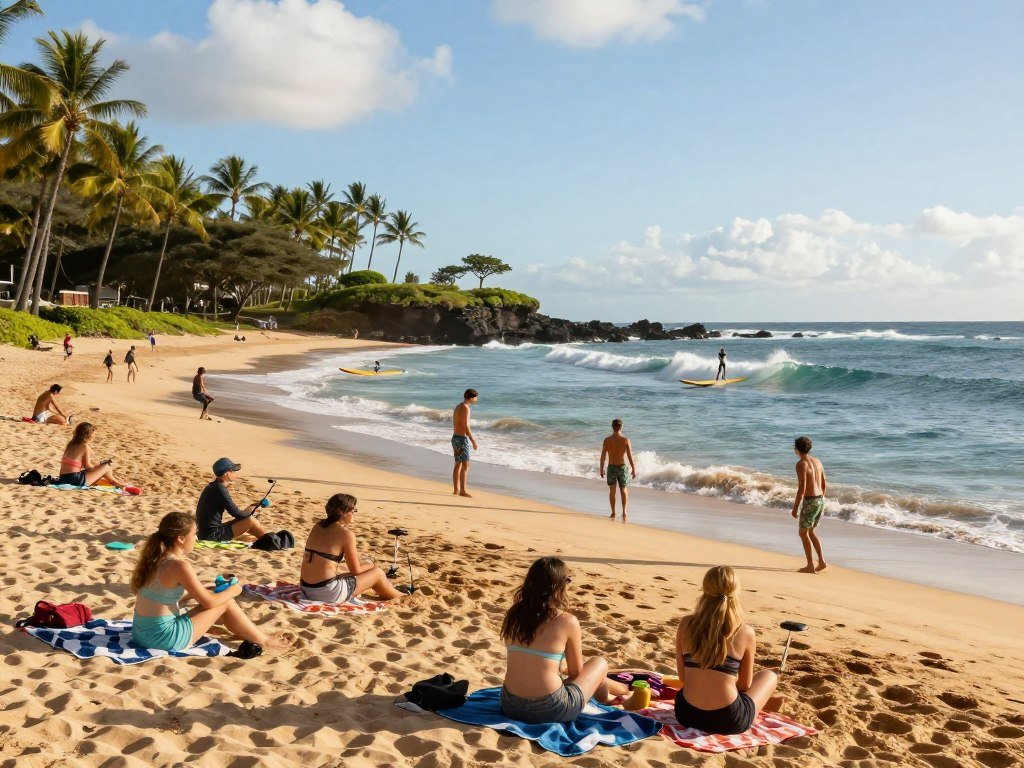
The right travel window depends on whether you want an easy all-around beach trip, winter wildlife, or a particular ocean experience. Your best time to visit Hawaii can also depend on school breaks, local events, and how much you want to move between islands. Matching your dates to your main priority makes planning simpler.
Shoulder season is the period between a destination’s busiest travel seasons, when visitor demand is often lower. It can offer a useful balance for travelers who have some flexibility. A flexible itinerary makes it easier to adapt when one coast is sunny and another is cloudy.
Key Takeaways
- May is a versatile choice for a first trip.
- April-May and September-October are useful shoulder-season windows.
- Winter is a strong choice for whale watching and big-wave viewing.
- Summer often suits travelers planning long beach days.
- Weather can differ between nearby coasts and towns.
Best Time to Visit Hawaii
May is the most versatile month for a first Hawaii trip, while September and October are strong alternatives if you want warm conditions with a quieter feel. Hawaii temperatures typically range from 75-85°F year-round, so you can plan for warm weather in every season. May stands out for its balance of pleasant conditions and seasonal flexibility.
May is the most versatile pick for many first-time visitors. Late spring and early fall can suit travelers who want warm days without choosing a peak holiday period. The nicest month depends on whether your trip centers on beach time, wildlife, or a particular event.
Choose winter for whales and big-wave viewing, or summer for long beach days. Your preferred activities can matter more than the calendar’s broad average.
April-May and September-October are strong shoulder-season windows. They give you several dates to consider if you want a balance of warm conditions and a quieter feel. Your exact experience still depends on the island and the dates you choose.
Winter better suits travelers who prioritize whale watching or watching large surf from shore. Summer works well for travelers who want long days for beach plans. Events and ocean conditions may also shape your best time visit choice.
If your dates are fixed, choose activities that fit the season rather than trying to find a perfect month.
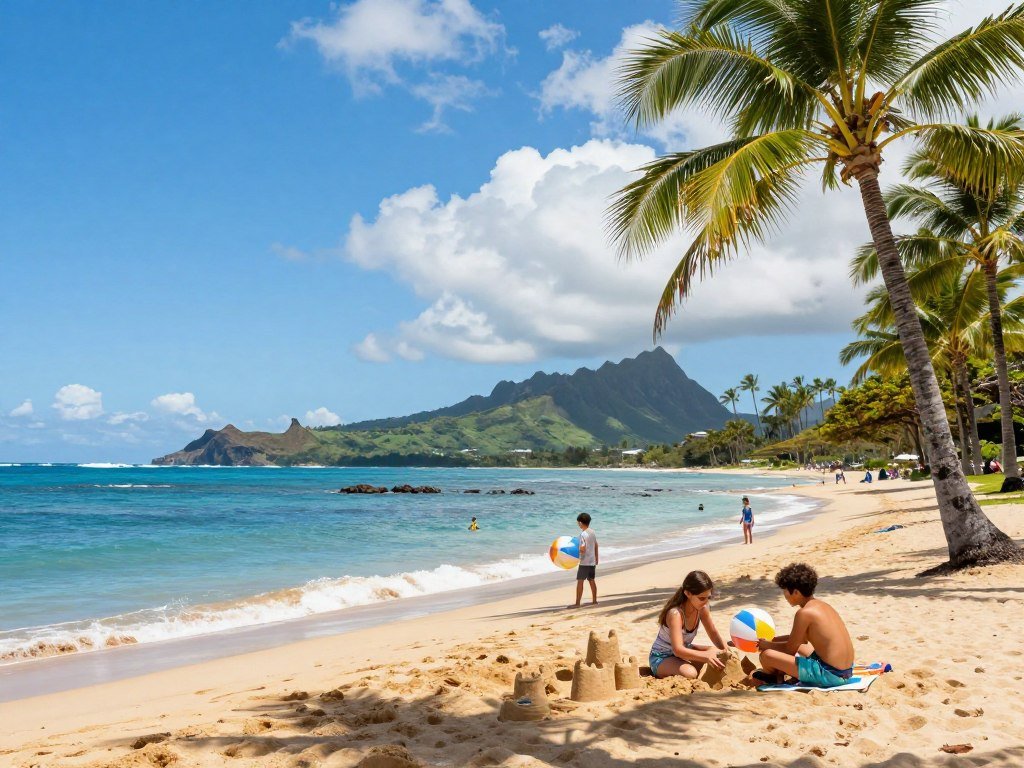
What Is Hawaii Weather Like by Month?
Hawaii’s monthly climate normals show a warm year-round pattern, but rainfall and temperatures shift across the calendar. Monthly averages help you compare seasons, not predict the weather on a particular day. Statewide normals are averages, not daily forecasts.
The figures below use 1991-2020 climate normals, a 30-year summary of typical conditions. The NOAA U.S. Climate Normals explain how these averages describe climate rather than a daily forecast. Terrain, elevation, exposure, and trade winds can all change local conditions.
| Season marker month | Average high | Average low | Average precipitation |
|---|---|---|---|
| January | 80°F | 66°F | 3.3 inches |
| April | 82°F | 69°F | 2.8 inches |
| July | 86°F | 73°F | 2.5 inches |
| October | 86°F | 72°F | 3.3 inches |
December Through February
Winter brings cooler evenings and more frequent showers in many areas. January averages 80°F for the high, 66°F for the low, and 3.3 inches of precipitation statewide. February averages 80°F and 66°F, with 3.8 inches of rain.
December averages 81°F and 68°F, with 4.6 inches of precipitation. These are broad monthly figures, so one rainy day does not describe the whole winter season.
March Through May
Spring tends to warm as the months pass. March averages 81°F for the high and 67°F for the low, with 4.9 inches of rain. April averages 82°F and 69°F, with 2.8 inches.
May averages 84°F and 70°F, with 2.3 inches of precipitation. Late spring is generally warmer and drier than winter, though local rain still varies.
June Through August
Summer is generally warm, with statewide average highs from 85°F to 87°F. June averages 85°F and 72°F, with 2.1 inches of rain. July averages 86°F and 73°F, with 2.5 inches.
August averages 87°F and 74°F, with 3.1 inches. Warm days and lower average rainfall can suit outdoor plans, but local conditions still matter.
September Through November
September averages 87°F and 73°F, with 2.6 inches of precipitation. October averages 86°F and 72°F, with 3.3 inches. November cools to 83°F and 70°F, with 4.7 inches.
A November 2026 outlook favored above-normal temperatures and below-normal precipitation across the islands. Lihue, Honolulu, Kahului, and Hilo each had a 50%-70% chance of above-normal November temperatures.
That outlook also favored below-normal precipitation from November-December-January 2026-27 through April-May-June 2027. In the week before the October 2026 outlook, sea-surface temperature anomalies around Kauai, Oahu, Maui, and Hawaii Island ranged from -0.5°C to +0.5°C. These seasonal outlooks are not daily forecasts or guarantees. Use the monthly averages to choose a travel window, then check the local forecast closer to departure.
October 2026 sea-surface temperature anomalies around the islands ranged from -0.5°C to +0.5°C during the previous week.
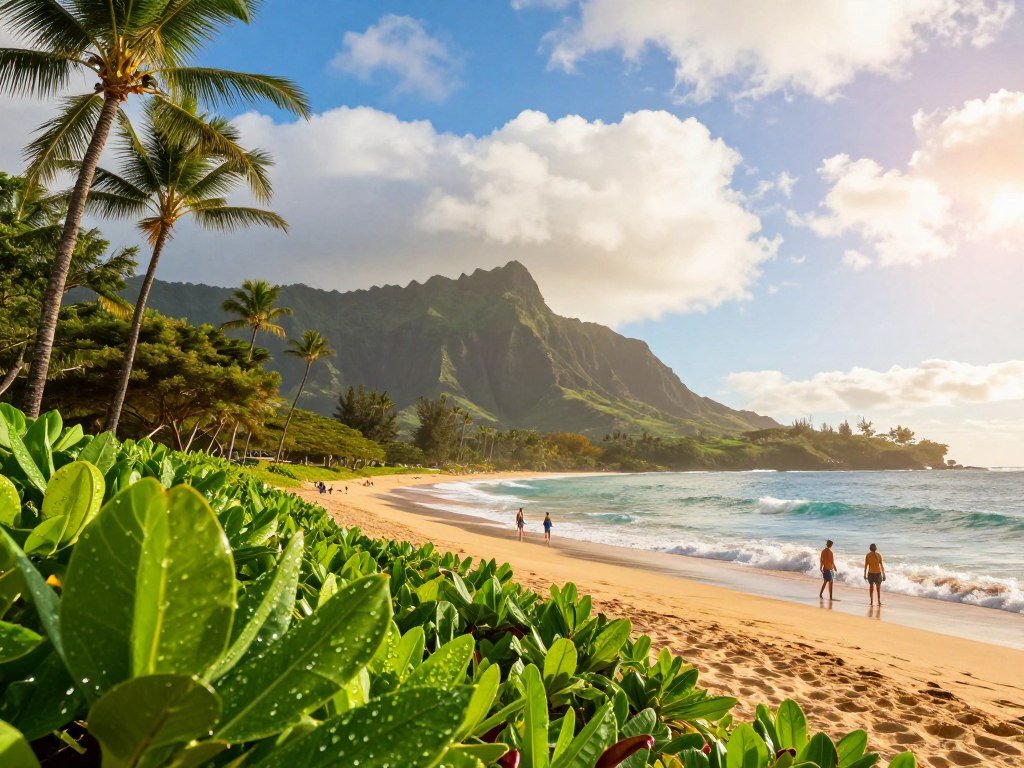
When Are Crowds and Prices Lowest?
For a quieter visit, start by comparing dates after Easter with September through mid-December. Late spring and fall are generally the quieter choices, while holiday and school-break periods bring more demand. Spring after Easter and fall through mid-December are the usual lower-rate windows.
Hotel rates are generally lowest during those periods on every island. The same month can feel very different depending on its holiday dates. A week near Thanksgiving, for example, may draw more visitors than an ordinary week earlier in November.
Use this calendar as a starting point when comparing crowds and travel costs:
- Spring after Easter
- September through mid-December
- Christmas and New Year
- Summer school vacations
- Spring break and Thanksgiving
Holiday and school-break dates often bring the strongest demand. If you want a quieter trip, late spring and fall usually offer a better chance than Christmas, New Year, or summer vacation weeks.
Two weeks in the same month can have different crowd levels when one includes a holiday or school break. Check the school and holiday calendar for your exact dates before treating a month as low-demand.
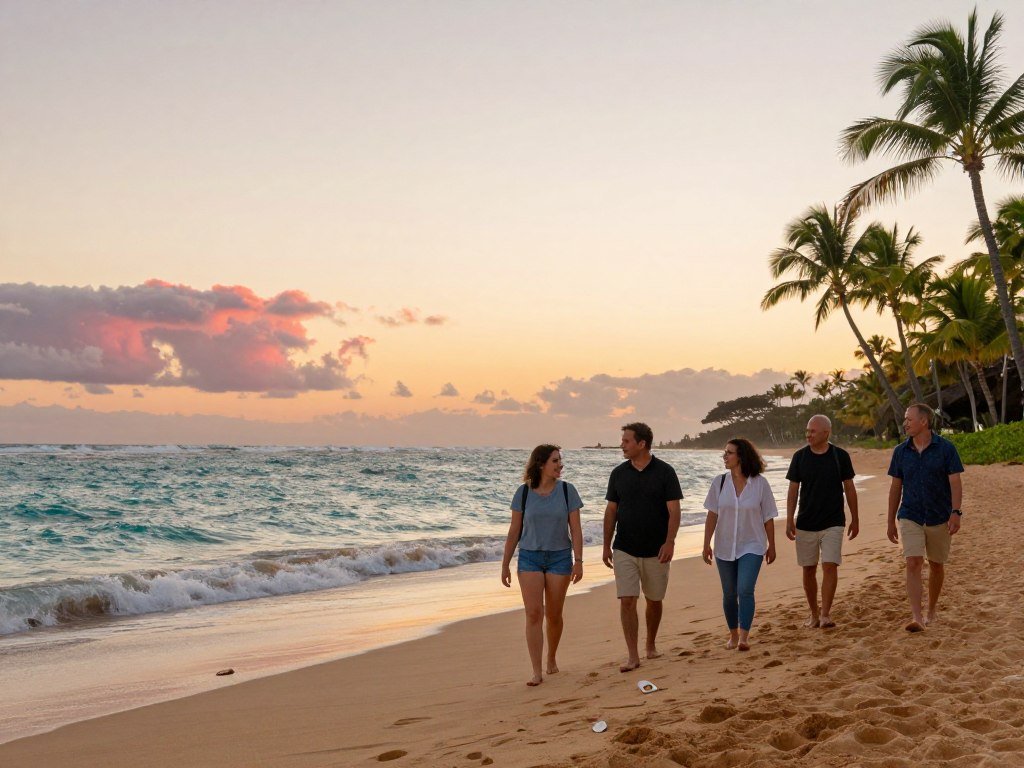
How Does Weather Vary by Island?
A sunny forecast for Honolulu does not tell you what it will feel like in Hilo or on a mountain road. Each island has local shifts in rain and temperature, and different coasts can feel unlike one another. Station readings are not whole-island forecasts.
April 1991-2020 climate normals show clear differences between five stations. Use them to compare locations, not to predict every neighborhood or beach. The Big Island, also called Hawaii Island, spans eight climatic zones.
| Station and island | Average April high | Average April low | Average April precipitation |
|---|---|---|---|
| Honolulu, Oahu | 83°F | 70°F | 0.8 inches |
| Kahului, Maui | 85°F | 67°F | 1.3 inches |
| Lihue, Kauai | 80°F | 70°F | 2.0 inches |
| Kona, Hawaii Island | 83°F | 71°F | 0.6 inches |
| Hilo, Hawaii Island | 79°F | 66°F | 9.4 inches |
Oahu and Honolulu
Honolulu is warm year-round, and April through May or September through October are good general planning windows. Honolulu is on Oahu, where the leeward side can differ from the windward side. The exact outlook depends on your visit date.
April station normals show an average high of 83°F, a low of 70°F, and 0.8 inches of precipitation. These readings describe Honolulu, not every part of Oahu.
Maui
Kahului’s April averages are 85°F for the high and 67°F for the low, with 1.3 inches of precipitation. Local weather can shift with terrain and exposure, so a station reading does not stand in for the whole island.
Kauai
Lihue averages 80°F and 70°F in April, with 2.0 inches of precipitation. Conditions can differ across the island, especially between windward and leeward areas.
Hawaii Island, From Kona to Hilo
Kona averages 83°F and 71°F in April, with 0.6 inches of rain. Hilo averages 79°F and 66°F, with 9.4 inches. That contrast shows why a single island-wide forecast can mislead.
Hawaii Island’s eight climatic zones add more local variation than a single station can capture. A forecast for Kona may not fit Hilo, an upland road, or another coast. Check the forecast for the exact town and coast where you plan to spend the day.
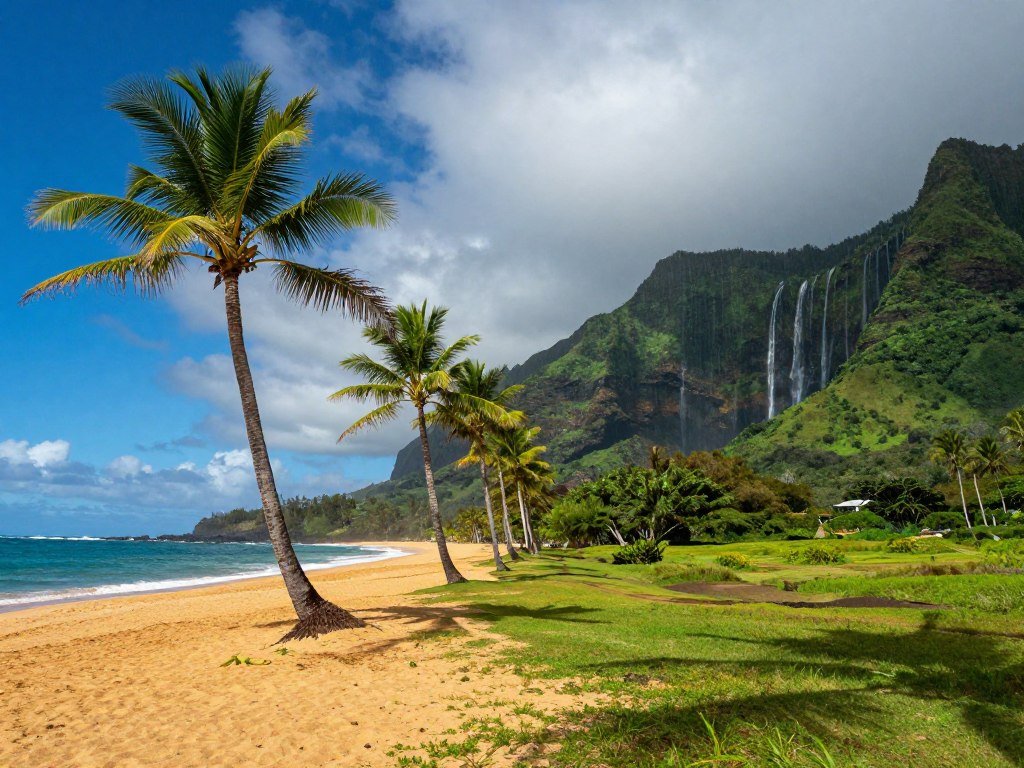
What Are Ocean Conditions Like Through the Year?
November swimming can be enjoyable on a calm, sheltered beach, but the day’s ocean report matters more than the month alone. Swimming is possible when local conditions and lifeguard guidance allow. Choose a sheltered beach and check that day’s surf, currents, and warnings.
Summer often brings calmer conditions to north-facing shores. Winter swells make those shores better suited to experienced surfers and people watching from land. Conditions vary by beach, so the calendar cannot tell you whether a specific spot is safe.
Summer Swimming and Snorkeling
Calmer summer conditions can make some beaches more comfortable for swimming and snorkeling. The water and surf can still change from one coast to another. Check the conditions at your chosen beach that day.
Snorkeling depends on visibility, currents, and surf as well as the season. A quiet-looking shoreline does not replace local warnings or lifeguard advice.
Winter Surf and November Conditions
Winter swells attract surfers to exposed shores, especially on north-facing coasts. Experienced surfers may seek those waves, while visitors can watch from a safe place on land.
The 2026 Central Pacific hurricane season runs June 1-November 30. The seasonal outlook gave a 70% chance of above-normal activity, a 20% chance of near-normal activity, and a 10% chance of below-normal activity.
NOAA forecast 5-13 tropical cyclones in the central Pacific, but did not forecast where or when storms might make landfall. The outlook describes seasonal activity, not a storm’s path or arrival date. Follow posted warnings and lifeguard instructions, and stay out of the water when conditions look unsafe.
When Can You See Whales and Attend Seasonal Events?
For the best chance of seeing humpback whales, plan for January through March. Winter is the strongest viewing period, though sightings are never guaranteed. Whales can be spotted around Hawaii from December through May.
Maui is a particularly useful base for whale-watching tours. Humpback whales travel through Hawaiian waters during the season, but their movements do not follow a visitor’s schedule. Plan the day around more than a whale sighting.
Humpback Whale Season
January through March is the best viewing period within the broader December-to-May season. Boat tours offer a way to look for whales, while sightings can also happen from shore. No specific tour can promise that whales will appear.
Season timing is useful for planning, not a guarantee for a particular trip or day. Build a backup activity into a whale-watching day in case the animals stay offshore.
Cultural and Sporting Events
Hawaii’s annual event calendar includes cultural gatherings, races, and sporting events. Their dates may shift from year to year, so confirm the schedule before you book flights or lodging around one.
- Merrie Monarch Festival
- Lei Day on May 1
- Aloha Festivals
- Ironman World Championship
- Honolulu Marathon
These events can give a trip a clear focus, but their timing alone does not guarantee entry or a spot in an activity. Check the current event dates before booking around one.
How Much Does a Hawaii Trip Cost?
A 7-day, 6-night Hawaii trip for two adults can be planned at three different budget levels, from $3,500 to $12,300 or more. These are planning scenarios, not guaranteed prices or official vacation averages. Trip style and lodging choices change the total.
The 2026 estimates below offer a starting point for comparing a trip. They include different spending levels, not one fixed cost for every couple.
| Scenario | Planning total for two adults | Trip length |
|---|---|---|
| Value-focused | $3,500 | 7 days and 6 nights |
| Mid-range | $6,660 | 7 days and 6 nights |
| Higher-end | $12,300+ | 7 days and 6 nights |
Sample Budgets for Two Adults
Hawaii visitors spent about $272 per person per day on-island in August 2026 and stayed an average of 7.55 days. That spending figure excludes the full vacation-package cost, so it is not the same as an airfare-inclusive budget.
For a value-focused trip, keep the plan simple and avoid adding costly transfers between islands. A mid-range or higher-end trip can include different lodging and activity choices. Treat each scenario as an estimate, not a promise of a final bill.
Flights, Lodging, and Island Hopping
April 2026 hotel average daily rates were $270 on Oahu, $435 on Kauai, $483 on Hawaii Island, and $544 in Maui County. Within those areas, Waikiki averaged about $252 per night, while Wailea was roughly $737.
April 2026 vacation-rental rates were $416 on Oahu, $410 on Hawaii Island, $579 on Kauai, and $609 in Maui County. Those rates are not directly comparable with hotel daily rates because the rental and hotel measures differ.
Mainland round-trip airfares in 2026 generally ran $400-$700 from the West Coast and $600-$1,000 from the East Coast or Midwest. Tuesday and Wednesday departures often cost $50-$150 less than weekend flights.
Google Flights can help compare date combinations. Compare Hawaiian Airlines options with other available fares before booking. Interisland flights booked at least a month ahead generally cost about $80-$120 one way, while walk-up fares are closer to $150.
The cheapest way to see Hawaii is to keep dates flexible, stay on one island, and choose lodging that fits your budget. Price the flights, lodging, and island transfers together before deciding that a package or a separate booking is the better value.
2026 seven-day trip estimates range from $3,500 to $12,300 or more for two adults.
What Should You Pack for Hawaii?
Pack for both beach weather and cool, wet, or windy conditions away from the coast. A flexible capsule of clothes can cover a 10-day trip without a separate outfit for every day. Plan for both coastal activities and time away from the beach.
Choose pieces that work together, then adjust the mix based on your plans and laundry access. Women can use the same approach: bring mix-and-match tops, bottoms, and layers instead of packing ten full outfits.
Beach Days and Water Activities
Bring a few swim options and clothes that dry comfortably between beach outings. Sun protection is useful during long days outside, even when clouds move in. A cover-up can also work for short stops away from the water.
Hiking, Rain, and Cooler Elevations
Mauna Kea and other high elevations can feel much cooler than the coast. A light rain layer and walking shoes help when plans include a trail or changing weather. Add warmer clothes for higher ground.
- Breathable everyday outfits
- Swimwear and a cover-up
- Sun protection
- A light rain layer and comfortable walking shoes
- A warmer layer and long pants for higher elevations
This five-part list suits a 10-day packing plan, with room to rewear clothes and do laundry. Choose outfits that work for more than one activity, such as walking shoes that can handle both town errands and an easy trail.
Leave room in your day bag for a light layer when an outing includes elevation or a change in weather.
Which Hawaiian Island Fits Your Trip?
For many first-time visitors, Oahu is the easiest all-around starting point because Honolulu, Waikiki, and a broad mix of activities are there. Oahu offers variety for travelers who want city sights, cultural stops, and beach time in one trip. Choose your island by the experiences you want most.
Maui may fit better if you want beach and resort time. Kauai can suit travelers drawn to dramatic scenery and outdoor trips. Hawaii Island offers volcanic landscapes and varied terrain, with room to see more than one kind of setting.
Oahu, Maui, Kauai, and Hawaii Island are four major visitor islands. Families may prefer one island with the right mix of activities rather than moving between several during a short stay. Honolulu and Waikiki are both on Oahu.
Pick the island that fits your top two or three plans, rather than trying to see every island in one trip.
A best Hawaiian island to visit depends on what you want to do, not on a universal ranking. Choose the island that best matches the two or three experiences you most want from this trip.
Conclusion
If you want one easy starting point, choose May for a balanced Hawaii trip. September and October are also strong options if you can travel then. Flexible dates help you match your plans to the season.
Before you book activities, check the forecast for your exact island and the ocean conditions near your beach. Pick your island and travel dates, then check its current forecast and ocean conditions before booking activities.
FAQ
What time is the cheapest to go to Hawaii?
Spring after Easter and fall from September through mid-December are usually the best periods to look for lower hotel rates. Holiday and school-break dates can bring more visitors and higher demand. Christmas and New Year, summer school vacations, spring break, and Thanksgiving are common busy periods. Compare exact dates, since a holiday week can change the feel of an otherwise quieter month.
Is $5000 enough for a week in Hawaii?
Yes, $5,000 can fit a value-focused seven-day, six-night trip for two adults, modeled at $3,500 in 2026. That estimate is a planning scenario, not a set price. Airfare, lodging, meals, and activities can shift the total. A more costly hotel, extra island flights, or higher-end activities can push the trip beyond that amount.
What is the weather like in Hawaii in September?
September’s statewide 1991-2020 climate normals show an average high of 87°F, a low of 73°F, and 2.6 inches of precipitation. Those figures describe broad climate patterns, not the forecast for a specific beach or town. Rain and temperatures can vary by island, coast, and elevation. Check the local outlook for the places you plan to visit.
Is October a good time to visit Hawaii?
Yes, October is a warm shoulder-season option for many trips. Statewide 1991-2020 normals show an average high of 86°F and a low of 72°F, with 3.3 inches of precipitation. Actual conditions differ by island and coast. Travel demand also depends on the exact dates, since school breaks or holidays can make some weeks busier.
Is $2000 enough for a week in Hawaii?
For two adults, $2,000 is below the modeled $3,500 value-focused budget for a seven-day, six-night trip in 2026. A solo traveler or a different lodging plan changes the comparison. Costs also depend on airfare, trip dates, and activities. One island and flexible travel dates can help keep a budget plan simpler.
Which island in Hawaii is best for a first-time visitor?
Oahu is a versatile starting point for a first visit, especially if you want Honolulu, Waikiki, cultural sights, and a range of activities. It can suit travelers who want both city stops and beach time. Maui, Kauai, or Hawaii Island may fit better when your plans focus on resorts, outdoor scenery, or volcanic terrain.
How much does a 10 day trip to Hawaii cost for 2 people?
Use the 2026 seven-day, six-night estimates of $3,500, $6,660, and $12,300 or more as a baseline for two adults. Then price the extra nights and your chosen flights, lodging, meals, and activities. The total depends on travel style and booking choices. A longer stay does not have one fixed cost across all islands.