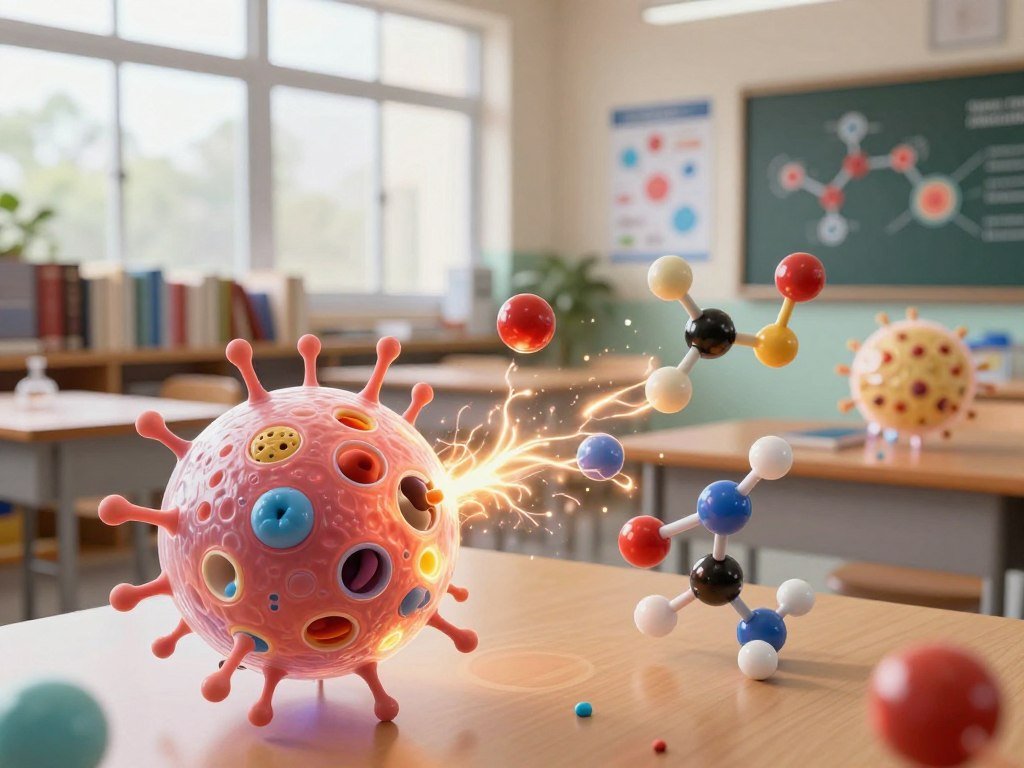
A biology question about biosynthesis is asking you to recognize how cells construct molecules. The direction of change matters because cells can build or break down materials.
ATP is the cell’s energy-carrying molecule, which transfers energy to processes that need it. This distinction connects energy use with metabolism and chemical reactions.
The answer choices may describe construction, breakdown, or another kind of change. Looking at what happens to the starting molecules helps you tell these processes apart.
You will see how molecular building uses energy, how it differs from breakdown, and what cells make. ATP is the energy-carrying molecule to keep in mind as you evaluate the choices.
Key Takeaways
- Cells build larger molecules from smaller building blocks.
- Anabolic reactions need energy, often supplied by ATP.
- Catabolism breaks larger molecules down and can release energy.
- Enzymes help cells assemble molecules in controlled steps.
- Protein structure develops through four levels of organization.
Select the Statement That Best Describes a Biosynthesis Reaction, Not Catabolism
The correct choice says that cells build larger, complex molecules from smaller building blocks using energy. Construction is the clue that separates this reaction from breakdown.
For a quiz, select the statement that says cells build complex molecules from simpler ones using energy. Anabolic reactions, also called biosynthesis reactions, use energy from catabolic reactions to build larger molecules from smaller ones.
How to recognize the correct statement
A quiz may mix biosynthesis with catabolism, a simple rearrangement, or energy release. The best describes clue is the direction of change: do small units become a larger molecule?
The use of energy from catabolic reactions helps identify an anabolic reaction. Catabolism breaks molecules down, while a rearrangement alone does not show that a cell assembled a larger structure.
For a quiz that asks you to select the statement that best describes a biosynthesis reaction, choose the option that includes both building and energy use. Look for the following terms in the choices:
- Small building blocks join together.
- A larger or more complex product forms.
- Energy enters the process.
- New chemical bonds connect the units.
Those clues point to a biosynthetic reaction, not just any change in molecular shape. For example, a statement about moving atoms around without joining units does not establish biosynthesis.
Why construction requires an energy input
Joining smaller units often forms chemical bonds that hold a larger molecule together. Cells use ATP generated by catabolic reactions to help pay for this work.
An enzyme helps bring the smaller units together and supports the assembly steps. Enzymes act on particular substances, called substrates, rather than speeding every reaction in the cell.
OpenStax Biology 2e explains how anabolic pathways use energy while catabolic pathways release it. That energy link helps distinguish the processes even when both involve several chemical steps.
A choice about breakdown or energy release describes catabolism, not the defining action of biosynthesis.
Some answer choices name an enzyme or a product but leave out the direction of change. Check whether the products are larger than the starting units before choosing.
Reject an option that describes breakdown or energy release as the defining action of biosynthesis.
How Does Biosynthesis Differ From Chemical Synthesis and Respiration?
A simple synthesis reaction combines reactants into a main product, while respiration breaks molecules down and releases energy. The direction of change distinguishes these processes.
Biosynthesis builds molecules in cells and uses energy; cellular respiration breaks fuel molecules down and produces ATP. A simple chemical reaction can show combination without naming a biological process.
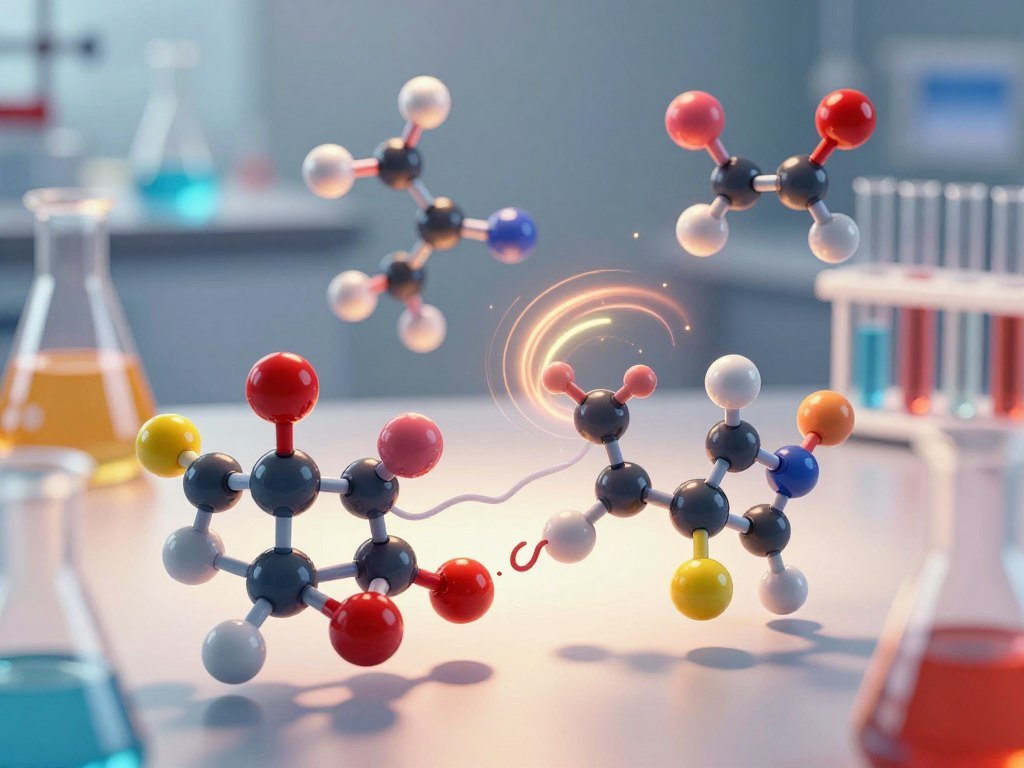
| Process | Molecular change | Energy role | Example |
|---|---|---|---|
| Simple synthesis | Reactants combine into one main product | Depends on the reaction | A + B → AB |
| Biosynthesis | Cells build larger molecules | Uses energy, often ATP | DNA replication |
| Catabolism | Large molecules break down | Releases energy | Cellular respiration |
The pattern A + B → AB shows two or more reactants joining to form one main product. It does not tell you whether the reaction occurs in a cell.
Dehydration synthesis joins molecules while producing water. It can form covalent bonds between molecular units, while a hydrolysis reaction uses water to split a bond.
Most ATP used for cell function comes from cellular respiration. During aerobic respiration, cells break down glucose with oxygen: C₆H₁₂O₆ + 6 O₂ → 6 CO₂ + 6 H₂O + energy.
This process releases energy that cells can store in ATP and use to drive biosynthesis. The equation shows glucose becoming carbon dioxide and water, rather than smaller materials joining.
Photosynthesis runs in the opposite direction for key materials: 6 CO₂(g) + 6 H₂O(l) → C₆H₁₂O₆(s) + 6 O₂(g). It forms sugar and oxygen from carbon dioxide and water.
The direction of the glucose-and-oxygen equation identifies cellular respiration as breakdown, not biosynthesis.
What Do Cells Use Biosynthesis For, and How Is It Regulated?
Cells use biosynthesis to make the materials needed for growth, tissue formation, and renewal. New molecules help cells form and replace the parts organisms need.
Biosynthesis supplies materials for new cells and tissues and helps renew organs. Metabolism names the sum of chemical reactions within a cell.
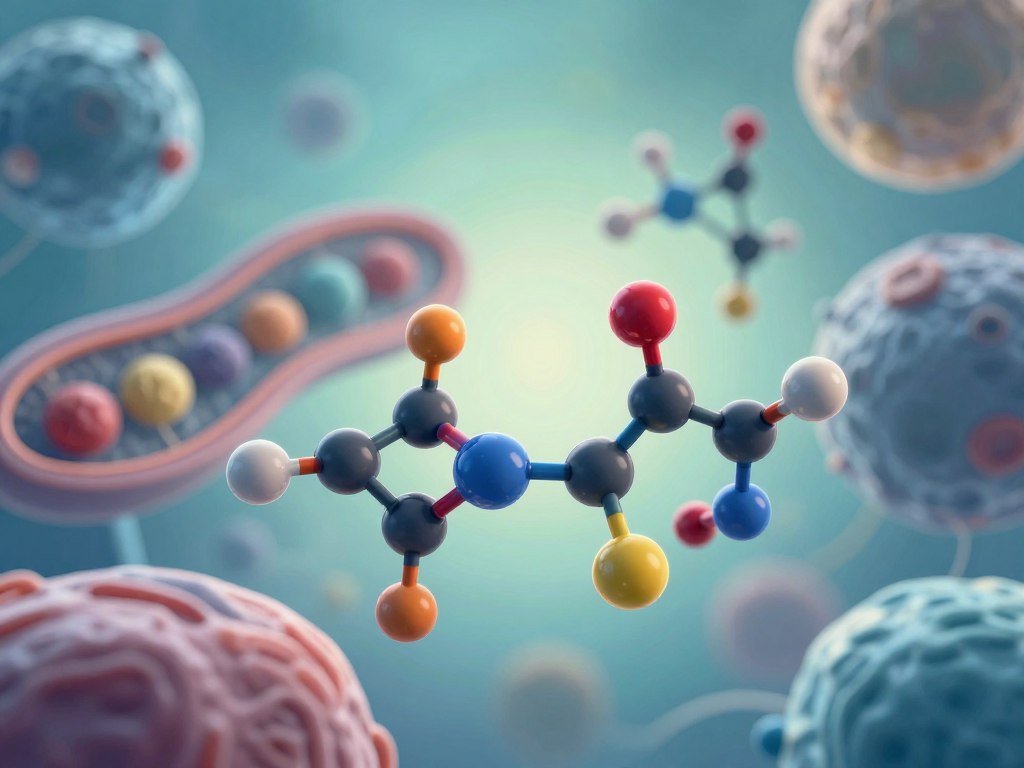
Building and renewing cell materials
Cells need a steady supply of molecules to grow and repair worn parts. Biosynthesis helps create the materials that form new cells and tissues and revitalize organs.
When a cell divides, it must copy its DNA so each new cell receives genetic instructions. That copying is one example of a pathway responding to a clear cell need.
The various chemical reactions organisms carry out together are called metabolism. Those reactions include both building processes and breakdown processes, and their balance supports cell activity.
Pathways are regulated so cells can coordinate reactions with their needs and available materials. A cell should not keep making a product when it lacks the needed starting units.
How enzymes help regulate pathways
Enzymes control the speed of reactions inside cells. Each enzyme acts on a particular substrate, and the substrate’s molecular shape helps determine whether it fits.
OpenStax Biology 2e’s enzyme overview explains how a substrate fits an enzyme’s active site. This specific fit helps control which reaction an enzyme can support.
Enzymes do not make every reaction happen at once. Their activity can shift as conditions change, helping pathways match the cell’s current work.
For example, enzyme-controlled pathways manage how cells use materials such as amino acids. If a step in a pathway slows, later steps may also slow because their products are not ready.
Carbon dioxide can also serve as a starting material in pathways that build sugars. Its role depends on the reaction and the other materials available to the cell.
A pathway’s enzymes and available substrates help determine which cellular reactions proceed.
What Molecules Do Cells Build, and How Are Proteins Organized?
A protein begins as a sequence of amino acids connected into a chain by ribosomes. The order of those units shapes the chain that the cell builds.
Ribosomes connect amino acids in the order encoded by the organism’s genome. Peptide bonds join the amino acids into a protein chain.
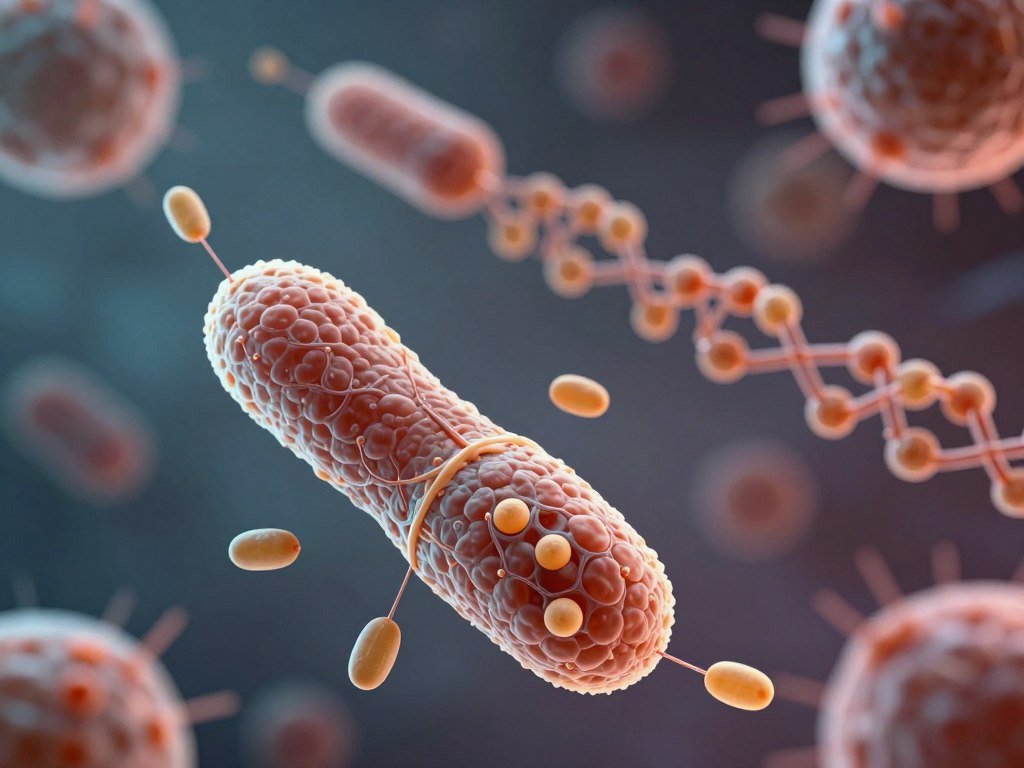
Amino acids become protein chains
A ribosome reads genetic instructions and links amino acids one by one. The sequence comes from the organism’s genome, which holds the information needed to build proteins.
The ribosome’s amino acid assembly creates a chain with a specific order. Peptide bonds connect neighboring amino acids, making the growing chain a single molecule.
That chain does not yet describe every feature of a finished protein. Its amino acid sequence provides the starting point for further folding and organization.
Other building blocks form larger molecules
Cells also combine other small units into larger molecules. These pairings show how different building blocks support different products:
- Monosaccharides combine to form polysaccharides.
- Fatty acids combine to form triglycerides.
- Amino acids combine to form proteins.
- Nucleotides combine to form nucleic acids.
DNA and RNA are nucleic acids made from nucleotide units. Their components join in an ordered chain, just as amino acids join to make proteins.
Dehydration synthesis can join molecular units while producing water. In protein chains, peptide bonds link amino acids; the resulting sequence then folds into a shape.
Protein structure has four levels
Protein structure has four levels: primary, secondary, tertiary, and quaternary. Each name marks a different degree of organization, from the amino acid sequence to groups of chains.
RCSB Protein Data Bank’s guide to protein structure describes this hierarchy. The levels help you rank the parts of protein structure in the correct order.
Primary structure is the sequence of amino acids in a chain. Secondary structure describes local patterns formed as parts of that chain fold.
Tertiary structure describes the overall three-dimensional shape of one protein chain. Quaternary structure describes how two or more protein chains fit together in a larger working unit.
To answer a question that asks you to rank protein structure levels, start with the sequence and move toward larger-scale organization. Each level builds on the arrangement before it.
Protein structure moves from one amino acid sequence to local folds, a full chain shape, and then joined chains.
For the protein structure levels, use the order primary, secondary, tertiary, and quaternary.
Conclusion
The direction of molecular change and the role of energy are the two most useful clues to carry into a biology question. Follow the molecules from the starting materials to the product.
Building uses energy, while breakdown can release energy that cells store in ATP. That check can help you classify a reaction within metabolism.
When you review a new example, underline the starting materials and circle the product. Then mark whether energy enters or leaves the process.
Try the underline, circle, and energy-marking check on the next reaction in your notes.
FAQ
What is a biosynthetic reaction?
A biosynthetic reaction uses energy to build a larger molecule from smaller ones. Cells often use ATP to supply that energy. For example, a cell can join amino acids into a protein chain. The key clue is that smaller building blocks become part of a larger product, rather than a large molecule breaking down.
Which statement is true of the following reaction: C6H12O6 6 O2 → 6 CO2 6 H2O?
The reaction represents aerobic cellular respiration, a catabolic process that produces carbon dioxide, water, and energy. Glucose and oxygen are the starting materials, while carbon dioxide and water are products. Cells can capture some released energy by making ATP, which then supports work elsewhere in the cell.
Which describes a synthesis reaction?
A synthesis reaction combines two or more reactants to form one main product. The general pattern is A + B → AB. In biology, biosynthesis also means a cell builds a larger molecule and uses energy. A simple synthesis pattern alone does not show that the process occurs in a cell or requires ATP.
What is an example of biosynthesis?
Protein synthesis is one example: ribosomes join amino acids into a protein chain. Another example is joining nucleotides to form nucleic acids such as DNA or RNA. In both cases, small building blocks become part of a larger molecule. The cell uses energy to support these assembly processes.
What is an example of a synthesis chemical reaction?
A + B → AB is the general pattern for a synthesis reaction. For a concrete example, two hydrogen molecules and one oxygen molecule can form water molecules: 2 H₂ + O₂ → 2 H₂O. This shows reactants combining into a product. It does not, by itself, mean the reaction is biological biosynthesis.